Friday, December 22, 2006

They get paid for this? (2)

Before we leave fishing, for the moment – clouded in our usual miasma of gloom and doom – we could not help but remark on the crass treatment of the issue by the Daily Mail today.

Under the by-line of Sean Poulter, Consumer Affairs Correspondent, we are told that the amount of cod that can be caught around Britain will be cut by between 14 and 20 percent next year. Most UK supplies come from around Iceland "where numbers are plentiful", burbles the egregious Poulter, but… "if fewer fish are trawled in the North Sea, prices will rise".

Now, let's see. According to this source, this one and especially this from the Frozen at Sea Fillets Association (FASFA), landings from British waters account for less than ten percent of cod consumed in the UK.

This was why the FASFA was set up - in September 2000 – representing trawler owners, importers and distributors of "Frozen at Sea Fillets" in the UK, Norway, Iceland, Faeroe Islands, UK, Russia, Germany, France and Spain. It works, "to actively counter current negative media coverage and reports about North Sea cod, which represents less than 10 percent of cod consumed in the UK."

In fact, according to the answer to a Parliamentary question posed by former shadow fisheries minister Owen Paterson:

Information available on landings of and trade in cod in 2002 indicates that landings by UK registered vessels accounted for 15 per cent. of total cod consumed in the UK during the year. However, most of the cod imported into the UK has been processed to some extent. As such on a standardised live weight equivalent basis, the landings by UK registered vessels accounted for 5 per cent. of total cod consumed in the UK in 2002.
This was publicised by the Booker column in February 2005 and, as far as we are aware, the situation has not changed.

So, if we lose 20 percent of five percent, that accounts for a one percent drop in cod landings – just supposing that the loss cannot be made up from the Faeroes, Norway and Iceland, "where numbers are plentiful".

But such does not percolate the dim little brain of Poulter, who continues to draw a handsome salary from the Mail. Of course, he could have earned it by asking why "numbers are plentiful" in Iceland, which has a healthy, expanding fishing industry (as the pictures show), while the British industry is falling apart.

However, this is the MSM we are talking about. To come up with a half-way intelligent explanation might actually require a little bit of work – and that would never do.

COMMENT THREAD

No hope, no hope at all

Every fibre of my body rebels at the thought of having to write a critique of the latest fisheries resolution to come out of Brussels. The illustration shows the sheer bulk of the crippling paperwork which no one fully understands and few read fully – with mistakes more common than not in the text.

And it is this paperwork which is killing the fishing industry. As I wrote last year, it is a cruel irony that the last formal EU ministers' meeting of the year is the fisheries council, at which the fate of fishermen throughout the EU – but especially in the UK – is decided for the coming year.

The cruelty comes, I wrote, because it is the time at which the crucial decisions on quotas for the coming year are made, under the Common Fisheries Policy – a policy which is not only morally but also technically bankrupt – invariably bringing woe to hard-pressed fishermen, just at a time when everyone else is preparing for the Christmas festivities

For as long as I can remember, each year I have been marking this ritual, the killing fields of the Brussels council chamber, where they participate in the slow, inexorable execution of the British fishing industry. And there comes a point where you simply cannot bear it any more.

One could, of course, prattle on like Charles Clover, who laments that "the fish always lose", a facile comment if ever there was. But then he gets paid to do it. In fact, it is all of us that lose, the whole nation, as we see an industry which could be worth £3 billion plus ground into oblivion, currently worth about half a billion and declining each year.

It says something at least that, as they take part in the destruction of an industry, two of the "colleagues" are cheerful. Shown here are Photis Photiou, minister of agriculture of Cyprus (left) and Hans-Christian Schmidt, Danish minister of agriculture. It says something that the agriculture minister of Cyprus has a say in the management of British waters, but the ultimate farce, or insult if you prefer, is below (left) – Joe Borg, the Maltese fisheries commissioner, the man in charge of British fishing.

You can pick your coverage – Google News has nearly 200 reports – from which this is a representative sample, here, here and here.

As the man from Scotland says, "it's another nail in the coffin", while that brainless fool Ross Finnie twitters - as he always does, every year – "I think it's the best deal there was available." If the "colleagues" stripped his shirt and underpants from him as he walked out of the Council chamber he would still say the same.

Of all the comments I have read, though, the one I prefer comes from the BBC website, citing Dr Bryce Beukers-Stewart, Fisheries Policy Officer for the Marine Conservation Society. He says:

It is astounding that the EU continues to persist with this doomed approach to fisheries management. These marginal adjustments to the quotas for cod around the UK have been going on for at least the last 20 years, but the fish stocks themselves are going down much faster. This is hardly surprising, as the quotas still allow for at least 60 percent of the fish to be removed each year - what chance does that give for recovery?
What is needed, he says, is a much more creative and proactive approach to improving the selectivity of fishing gear and practices to reduce the bycatch of unwanted or under-fire species such as cod.

Of course, there was such an approach proposed by the Conservative Party, which was gathering strength until the current leader junked the policy.

The light at the end of the tunnel is a huge express train, the letters “EU” emblazoned on it front, bearing down on us. There is no hope for the fishing industry, no hope at all. The picture above says it all: as the sun sets on the industry, the "Single European Fish" is now that much closer to reality.

Photos: Council of the European Communities.

COMMENT THREAD

Thursday, December 21, 2006

A word from our sponsors

Given the disastrous recent history of the European Airbus project, you would think the company needs all the help it can get from the EU commission. But it is not getting much support from the fragrant Margot Wallström, vice president in charge of EU propaganda.

She tells us:

The Commission adopted yesterday a very important decision: to include the aviation sector in the European Emissions Trading system. This means that the EU will continue to lead on climate change issues – while at the same time acting in a multi-lateral context like the ICAO.

I am sure that this will not only boost the credibility of our policy on climate change, but will also help European airlines to develop a competitive advantage through investing in modern technology/methods like with the example of the new Boeing 787 Dreamliner, which will use 20 percent less fuel per passenger than similarly sized airplanes.

The plane is specifically designed for the environment with lower emissions and quieter takeoffs and landings. To date, 29 airlines have logged 393 orders worth more than $55 billion making the Dreamliner the most successful commercial airplane launch in history.
Rather helpfully, the Fragrant One has included a link to the Wikipedia entry on the Dreamliner. Boeing could not have wished for a better testimonial.

COMMENT THREAD

Top of the wars

It now looks as if Somalia is at war with Ethiopia, or not as the case may be. According to the latest from Reuters (its African reports seemingly still fairly reliable) it is Somalia's Islamists that are at war, not the government.

That in itself would be an interesting development as wars, historically, have usually been considered as affairs between (or within) nations. But, as with the war between Israel and Hezbollah, and Nato against the Taliban, the old definitions and certainties seem to be breaking down.

Whatever else, although – we are told – there may be fewer wars than in the recent past, the number breaking out and the complexity of the issues is such that keeping abreast of them is beyond the capabilities of the ordinary, intelligent lay person.

Accordingly, this Blog has a suggestion. Through general lack of interest, or whatever, we understand that the BBC programme "Top of the Pops" was recently abandoned. If the slot is still vacant, we think there is room for a new weekly programme on the same lines, this one called "Top of the Wars".

Each week we could have a run-down of the wars in progress, with scores awarded to each partly on the basis of the viewers' views and partly according to how many people had been killed the preceding week. No doubt a weighting system would have to be devised, in which – presumably – civilian deaths could score higher than those of soldiers, with an added bonus for shock value and originality. European deaths would, of course, score higher than those of locals, and British even higher, with US deaths topping the league.

Anyhow, whatever the scoring system, from it would emerge the war of the week, to become that week's "Top of the Wars". It would be the topic of conversation in the offices, factories and bars of the nation and, with the BBC's genius for marketing (using other peoples' money for its risk capital), it could line up what would become award-winning DVDs of the shows.

What better way could you imagine of bringing the entertainment value of these wars to the homes of ordinary people, generating massive royalties which can be used to fund UN peacekeeping forces - and the SecGen's pension - a certain way of prolonging the misery and maximising the kill.

Add a Nobel War Prize for the best war of the year (the Peace prize is soooo last-century, don't you think?) and we could have an annual TV bonanza along the lines of the Oscars or Eurovision song contest. And, if the War Prize was as successful as its predecessor, we could look forward to the complete cessation of hostilities throughout the world within a decade.

In the meantime, the media would be able give up its pretence that it was reporting news and integrate its war reporting with its entertainment portfolio, where much of it already belongs.

COMMENT THREAD

Should we tell lies?

Despite the fact that the EU is not directly responsible for the closure of 2,500 post offices announced last week, the UK Independence Party (the only party telling you the truth about the EU) is inviting us to download a leaflet claiming that the closures arise because:

Due to European Union rules the British Government no longer has the right to provide the traditional £150m Social Network Payment which has kept small local post offices in business.
Standing aside from the usual incompetence displayed by many UKIP office holders, this claim raises an interesting conundrum. Knowing it to be untrue, should we promulgate it, in the knowledge that most people will be unaware that it is a lie – simply on the basis that we are at "war" and the propaganda opportunity is too good to miss?

Or should we try to tell the truth? Would anyone know the difference, and does anyone actually care?

COMMENT THREAD

Smoke, baby, smoke!

As a callow youth, I took membership of the Friends of the Earth so seriously that I bought a second-hand van out of my own money, to collect up the newspapers from our locality and take them for recycling. Funny, we had the branch meetings in my flat and, after the hours denouncing cars and all that went with them, it was interesting how many members wanted a lift to the pub – in my car.

But the more messianic doth become the message, the more one is repelled by it. The latest is the EU's emission plan for airlines, which will be a nice little earner for its administrators and cost us all a packet, except of course all those on expenses – like the MEPs who have agreed the plan.

Anyhow, it is good to see that the US is resisting the idea, condemning the whole thing as illegal. "The inclusion of non-EU airlines on a non-consensual basis runs counter to EU member states' legal obligations under the Chicago convention... and their bilateral air transport agreements, including with the US," a government spokesman said.

In my view, the US should go further. In the olden days when men were men, when you could take your girlfriend out for a quid and still have change left for a copy of Flight International, you had smoking inside and outside your airliners. With warbirds, I always remember that you could see a Phantom coming long before the aircraft was visible. As for B52s... who needed radar?

So, junk those prissy Airbuses and the super-clean Boeings. Bring back the 707s and the DC8s. There is nothing like a smoke trail in the sky and the smell of unburnt hydrocarbons to get the pulse racing.

COMMENT THREAD

Wednesday, December 20, 2006

I could not resist this

...in a bitter sort of way. The picture shows French armoured vehicles in Kabul today, escorting a convoy. The red signboards at the back say, "Please do not overtake the military convoy".

The vehicles themselves are the Véhicule de l'Avant Blindé or VAB ("Armoured Vanguard Vehicle") an armoured personnel carrier manufactured by the Euro Mobilité Division of GIAT Industries of France.

Under normal circumstances, the picture would be just a curiosity, of interest mainly to military equipment nerds. But what is significant is the contrast with British equipment. In Kabul, to escort our convoys, our troops are given "Snatch" Land Rovers. And they die.

The odd thing is that, the VAB actually entered service in 1976. Around 5000 were produced and, as the photograph shows, it is still doing good service. It is not ideal, not modern, but it does a much better job than any armoured Land Rover can do, or the stupidly expensive Pinzgauer coffins on wheels which will be introduced in the new year.

As we rather sadly remarked earlier, we seem to be going backwards.

COMMENT THREAD

Danger alert

"Media coverage of the murders has been out of proporation (sic), denying airtime to much more important events."

This is Martin Bell, writing from Basra in the Guardian's Comment is Free blog.

Not only do I agree with him, his piece is quite good. But I cannot believe I am writing this, except that it says little about Basra and the Iraq war that you haven't already read on this blog.

But the Guardianistas hate it ... some of the comments are hilarious.

COMMENT THREAD

Pass the sickbag

What a wonderful example we have here of the difference between the rigorous MSM with its intellectually independent and hard-hitting hacks and the sloppy bloggers who are eternally predictable in their triviality.

Extreme Mortman (a new one for me) links to the last press conference given by SecGen Kofi Annan (son of Kojo and brother of flat-owning Kobina) and quotes some of the hard-hitting questions asked by the hard-nosed, investigative journalists (hint: Claudia Rosett was not there).

Here is one very fine example:
Mr. Secretary-General, critics and commentators will say what they will about the Secretary-General, but what is important, I'd like to say, is that in your time in office, you have given hope to millions of dispossessed people. And for that, I would say, you will be well remembered. But my Q: as the Secretary-General, you convey moral leadership. Now, how does a former Secretary-General continue to use, without the bully pulpit, that former status to convey and to give moral leadership to the world?
Gosh, the sheer professionalism of that. The independence of thought!

Extreme Mortman asks:
So what do you suppose are the odds that Helen Thomas or David Gregory will treat President Bush this same way during his final press conference?
We all know the answer to that and the words chance and cat and hell spring to mind.

Never mind President Bush. Think of what that pack of hard-hitting, serious and fair-minded journalists have done about Laura Bush having a minor operation for a common form of skin cancer and ... gasp ... not telling the journalists about it. Makes one proud that the world has such a responsible and thoughtful dead-tree media.

COMMENT THREAD

Here we go again

Oh dear. Another article about the inadequacies of the blogosphere as compared to the shining professional behaviour of the MSM, this time in a newspaper I usually respect, the Wall Street Journal. Mr. Rago, who is an assistant editorial features editor on that newspaper is fulminating about "the blog mob".

This is particularly odd because the Wall Street Journal has a daily summary of the best on the web, a mixture of news stories from main-stream sources and blogs, which it sends out to anyone who subscribes for free. Run by James Taranto, it is a very useful source for anyone who wants a quick round-up of interesting developments. Presumably, Joseph Rago would not approve of it.

What exactly is it Mr Rago objects to? Possibly that asinine Time Magazine "Person of the Year" award, which goes to all of us bloggers. Well, errm, no, not all of us, as Michelle Malkin points out, only the nice leftie-liberal ones who ... how shall I put it? … is butt-kiss allowed on this blog? ... well, anyway that is what they do to the nice liberal media and politicians while having a go at the right-wing ones. Not that they are not allowed to have a go at right-wing politicians, of course, but it would be good to see Time listing some of the blogs that actually held the media to account in the last year.

Then again, Mr Rago does not mention the asinine Time Magazine cover, so, maybe, he is not that bothered by it.
The blogs are not as significant as their self-endeared curators would like to think. Journalism requires journalists, who are at least fitfully confronting the digital age. The bloggers, for their part, produce minimal reportage. Instead, they ride along with the MSM like remora fish on the bellies of sharks, picking at the scraps.
Self-endeared? Is that a word, even in a hyphenated form? Furthermore, there is a certain lack of logic in that paragraph. On the one hand, we have journalism that requires journalists (by definition, I should have thought, but we also need to define "journalist"), who are "at least fitfully confronting the digital age".

Actually, they are desperately trying to run their own blogs, spending a lot of time praising each other. As for websites, most newspapers and news agencies to my certain knowledge are grappling with the issues of the digital age, with little success at the moment.

On the other hand, bloggers are merely scavengers on the giant body of the MSM, producing little reportage of their own. As we lurch into the second month of the scandal of AP using dubious sources, not checking them and clearly reporting propaganda rather than news from Iraq, we are entitled to ask about the extent of “reportage” in the MSM on important issues.

Anyway, Mr Rago really, really hates blogs that “are written by fools to be read by imbeciles” according to him, though the original quote, by Joseph Conrad, was about newspapers. Here are a few of his venomous comments:
“The way we write affects both style and substance. The loquacious formulations of late Henry James, for instance, owe in part to his arthritis, which made longhand impossible, and instead he dictated his writing to a secretary. In this aspect, journalism as practiced via blog appears to be a change for the worse. That is, the inferiority of the medium is rooted in its new, distinctive literary form. Its closest analogue might be the (poorly kept) diary or commonplace book, or the note scrawled to oneself on the back of an envelope--though these things are not meant for public consumption. The reason for a blog's being is: Here's my opinion, right now.

The right now is partially a function of technology, which makes instantaneity possible, and also a function of a culture that valorizes the up-to-the-minute above all else. But there is no inherent virtue to instantaneity. Traditional daily reporting--the news--already rushes ahead at a pretty good clip, breakneck even, and suffers for it. On the Internet all this is accelerated.

The blogs must be timely if they are to influence politics. This element--here's my opinion--is necessarily modified and partly determined by the right now. Instant response, with not even a day of delay, impairs rigor. It is also a coagulant for orthodoxies. We rarely encounter sustained or systematic blog thought--instead, panics and manias; endless rehearsings of arguments put forward elsewhere; and a tendency to substitute ideology for cognition. The participatory Internet, in combination with the hyperlink, which allows sites to interrelate, appears to encourage mobs and mob behavior.

This cross-referential and interactive arrangement, in theory, should allow for some resolution to divisive issues, with the market sorting out the vagaries of individual analysis. Not in practice. The Internet is very good at connecting and isolating people who are in agreement, not so good at engaging those who aren't. The petty interpolitical feuding mainly points out that someone is a liar or an idiot or both.

Because political blogs are predictable, they are excruciatingly boring. More acutely, they promote intellectual disingenuousness, with every constituency hostage to its assumptions and the party line. Thus the right-leaning blogs exhaustively pursue second-order distractions--John Kerry always providing useful material--while leaving underexamined more fundamental issues, say, Iraq. Conservatives have long taken it as self-evident that the press unfavorably distorts the war, which may be the case; but today that country is a vastation, and the unified field theory of media bias has not been altered one jot.
As it happens, I am not a fan of Henry James or of his style so not being able to write like him is not a tragedy. I do recognize self-serving and inaccurate waffle when I see it.

Any journalist who thinks that right-leaning blogs do not pursue fundamental issues like Iraq has not done his homework. Anyone who thinks that blogs and the blogosphere are solely about entertainment while the MSM is, with all its faults, about solid facts and information, lives in cloud-cuckoo land.

In fact, his writing is clearly a little bit short on reportage, though the style is not bad. Not brilliant, you understand, but not bad. H. L. Mencken, he ain't. But is his opinion right now.

COMMENT THREAD

End game

As some fish stocks in the British waters continue to decline, fisheries ministers are meeting in Brussels for the annual farce that goes under the name of quota allocation. They will emerge bleary-eyed this morning with another fudge that will drive stocks down further and fishermen closer to extinction.

The net result (no pun intended) really doesn't bear thinking about – it is so depressing. But three things can never be said too often. First, the preservation of stocks in a commercial fishery is a function of management. Second, the EU's Common Fisheries Policy is, primarily, a fisheries management system. Third, it has utterly and dismally failed. Even the EU's best friends will not deny that.

And, if the EU cannot get one of its longest-standing policies right, why should anyone have any confidence in anything else it does? That is the real significance of the CFP. Cameron was extremely unwise in ditching the Tory commitment to junk it. As the policy moves to the end game, with the almost total destruction of the British fishing industry, it will come back to haunt him, again and again.

Meanwhile, the picture shows two of the industry's executioners: Ben "dover" Bradshaw (with the pink scarf), the fisheries minister, and Ross Finnie, his useless Scottish clone. They are posing with idiots from the WWF, dressed as chefs for reasons best known to themselves, as they demand fishing ground closures and drastic catch cuts.

COMMENT THREAD

Tuesday, December 19, 2006

All I want for Christmas...

Any credible foreign policy for a mid-ranking, internationalist power like the United Kingdom relies on effective military forces to back it up. However, while our forces are undoubtedly first-rate, they are equipped primarily to deal with a Soviet-era threat. Yet the greatest demand in the post 9-11 scenario is for counter-insurgency forces, which need different types of equipment, issued on a different scale.

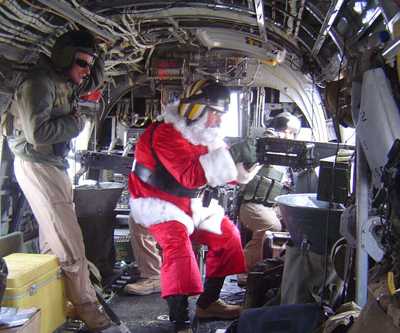
Since it is close to Christmas, we have sent a list of our needs to Santa. Read the details here.

COMMENT THREAD

Royal's international credentials already tarnished

Nothing short of political genius there. No sooner does the first woman candidate for the French presidency (and a seriously glamorous one, at that) emerge from the phallocratic structures of the Socialist Party than she manages to mess things up.

Ségolène Royal’s problem is a well-known one. Being good at winning the nomination is not quite the same as being seen as a potential winner in the real contest. Above all, she badly needs some kind of international gravitas to appear to be ready for the leadership of France. After all those jokes about stupid and ignorant Americans, particularly President Bush, we cannot have a French presidential candidate who clearly has no idea where in the world anything is. Or can we?

Early this month she trotted off to the Middle East, anxious to show that she is aware of some of the most complicated problems in the world and that France is the country to deal with them particularly if Mme Royal becomes its president. She met various people, including the leaders of Hezbollah in Lebanon and that did not go down particularly well even in France. Hezbollah is after all a terrorist organization, dedicated to the destruction of Israel and not too anxious to ensure Lebanon’s survival either.

Worse was to come. During their conversation, Ali Ammar, a Hezbollah MP in Lebanon (presumably, one of those who no longer support the duly elected government of the country) held forth on various matters, assuring Mme Royal that Israeli occupation (that means the territory of Israel with whatever borders) was akin to the Nazi regime. He also said that American foreign policy was “unlimited madness”.

It is unclear whether the presidential hopeful understood what was being said because she agreed with his “analysis on the role of the United States”. The following day she had to retract that, much to the glee of her opponents, Nicolas Sarkozy and the right-wing politicians and media.

Not that Libération was any more friendly:
Why should Ségolène Royal go into this wasp's nest, in which professional diplomats are already treading on eggshells? Was it merely to prove that she could do it?
Well, why indeed? Her rather lame excuse that she had not understood what Ali Ammar was saying and thought that she was merely agreeing with him on the subject of American involvement in Iraq and the toppling of Saddam Hussein makes one wonder what her interpreter was doing all this time.

Mme Royal continued her Middle Eastern tour but came up with no very obvious solutions to the problems. But, at least, she went there, which she is not going to do with the United States.

Her planned trip has been called off, it would appear because Hillary Clinton, reflections of whose lustre our Ségolène badly needs, has refused to meet her. From Senator Clinton’s point of view, that is very understandable. She is a serious (if deeply dislikeable) politician with serious (if rather frightening) ambitions for the White House. She cannot afford to be seen giving support to a ditzhead.

There are serious problems about supporting the French Socialists, though they may see the Clintons as friends and allies. For one thing, the Democrats, with all their faults in economic thinking, are not socialists and do not support such lunacies as the 35 hour week and wide-spread state control. And even if some of them did, they would not hope to get away with it, come 2008.

Then there is the endemic anti-Americanism of the French Left (and the French Right, come to think of it), which is not confined to dislike of President Bush or the Republicans. In fact, on present record, it is questionable whether Mme Royal knows the difference between the two parties.

Above all, however, Senator Clinton cannot afford to be seen with presidential hopeful Royal after the Middle Eastern visit and that unfortunate conversation with Ali Ammar. So, for the moment, the American trip is off.

In the meantime, Nicolas Sarkozy, who is, supposedly pro-American, at least by French standards, has joined the "let's knock the euro" brigade. In his view, the euro is overvalued thus “making European labor expensive and the labor of the rest of the world cheap”. M Sarkozy ought to work out that there might be other reasons why labour in the eurozone and the rest of the EU is too expensive.

His solution: "an economic government for the eurozone". Run on French lines, perchance?
COMMENT THREAD

The destructiveness of aid

Remember the tsunami? Remember the immediate and very welcome aid that was brought to the affected area by the US army and navy, the Australian army and navy, the Indian navy and the Japanese air force?

Well now, try to recall what happened afterwards as the lumbering transnational organizations and NGOs moved in, making sure that their own staff was well looked after and started collecting money. Some of us refused to donate to anything that looked like an NGO because of the doubts we had of their efficiency and of the money reaching the necessary targets.

Others were once again overwhelmed by compassion and hoped against hope that this time round it will all be different. Since then we have had various news about aid going astray, carefully collected material slowly disintegrating in Oxfam and other NGO warehouses; of NGOs refusing to work with the reasonably efficient Indonesian army because they disapproved of it politically; of governments refusing to help matters along and putting up so many bureaucratic barriers as to make the distribution of aid and charity almost impossible.

Of course, these are not the only reasons why aid is destructive. There is the small matter of the local economy, which is undermined by free hand-outs. Then there is the question of what is the government money that is released by the lack of need to supply basic services used for. We know the answer to that question in Gaza.

Now news comes from Aceh, a somewhat atypical province in Indonesia, where Islam is considerably more severe and extreme than in the rest of the country.
Tsunami aid sent to an Indonesian province has freed government funds for the lashing of women for purported violations of Islamic law, a report said Sunday.

Militant Islamists in Indonesia's Aceh Province now impose Shariah law and pay moral vigilante forces to harass women and stage frequent public beatings.
The story, reported in the Sunday Times this week, was picked up by UPI and a number of blogs, such as The American Thinker. The question is, will we remember any of the details the next time those collection tins are brought out?

COMMENT THREAD

They get paid for this?

On the back of the coroner's report on the death of Sgt Steve Roberts, we see over a hundred links in Google News, all the main media outlets running the story. Very few though take the story beyond simply reporting the facts (or their version of them).

The Independent, however, makes a meal of the story, giving over its front page to the Coroner's words and making them its main story.

It then has one of its journalists, Nigel Morris, list the troops' "grievances". According to this gifted hack, "Pay/allowances" comes top of the list, followed by "Recruitment/retention" and then "Mental illness". Last (and least) comes “Equipment”, which includes a mere two items:

The standard-issue army rifle, the SA80 A2, has been dogged by problems, particularly when salt-water and sand interfered with its mechanism. The rifle has been upgraded but complaints persist.

A quarter of British soldiers killed by hostile action in Iraq were travelling in "snatch" Land Rovers - vehicles designed for Northern Ireland rather than the arid conditions of Iraq and Afghanistan. They are bullet-proof, but provide no protection from improvised roadside bombs.
That is it? That is all a British national newspaper has to offer by way of a critique of military equipment deployed in Afghanistan and Iraq? And that was from the only newspaper that even made an effort. No wonder we have problems.

More to the point, when it comes to "betrayal", newspapers like The Independent (but also the rest of the media) should be looking in a mirror. Only through their laziness and inadequacies (alongside the politicians) is the government able to get away will failing to equip troops properly.

As an exercise, I wrote out a list last night of what I would like to see supplied to our Armed Forces. Later today, I will illustrate this and post it, with a link to this piece. Call it a list for Santa.

COMMENT THREAD

We did win!

It brought out the best in some, the worst in others and evoked some ill-natured comments, the like of which saddened us and diminished its authors.

And we did walk away from it. The idea of a single award for the best UK blog is highly fraught. Readers are being asked to compare totally different concepts from a limited group of entirely unrepresentative blogs and make impossible judgements. Inevitably, therefore, the contest became a tribal war.

In the end, it was resolved by the intervention of our bestest friends in the United States, rather in the manner of "my daddy’s bigger than your daddy", although I doubt Charles would be happy with that handle.

It is rather fitting, though, that Samizdata gained exactly 666 votes, and I am sure the gifted writers on that blog appreciate the joke.

Nevertheless, we do not even begin to believe that this award actually means what it says on the wrapper, and we are not sure that we will be able to take up the prize of one complimentary basic registration to the Blog World and New Media Expo. It just happens to be in Vegas, USA. Presumably, the second prize was two basic registrations…

Anyhow, with all the caveats, it was a competition and, since we were entered, it was best to win it, which we did. We held off announcing it until it was official and we had the award logo, which we only received this morning. Now we have it safely on the hard disc, we can indulge in a tiny bit of crowing before getting back to work.

EU Referendum Won! Yeah!!!!

Thank you everybody who voted for us.

COMMENT THREAD

A single European lame duck?

The EU Council yesterday refused to give the commission powers to force Austria to ditch its ban on two GM maize varieties which have been approved for use throughout the EU.

The picture shows a jubilant Josef Proell, the Austrian agriculture and environment minister (left), being congratulated by the Estonian environment minister after the meeting – a scene witnessed by an enthralled interpreter in her booth (ringed - see also enlargement, below right).

This is the latest step in a bizarre drama which has been played out ever since May 2000 when Austria drafted a Genetic Technology Prohibition Law, allowing its regions to declare themselves GM-free.

The EU Commission rejected the law but Upper Austria persevered, seeking to impose a three-year ban on the use of GMOs to "protect organic and traditional agricultural agriculture and to prevent hybridisation."

In so doing, it invoked Treaty article 95(5), the so-called "environmental guarantee" clause, which allows member states to take specific action to protect its environment, but the Commission did not accept the this application of the Treaty.

That case was referred to the European Court of Justice and, on 5 October 2004, the EU Court of First Instance ruled that Austria had failed to provide scientific justification for the measures, after the European Food Safety Authority (EFSA) published an opinion that stated that no new evidence for health or environmental risks was presented by the Region to justify its law.

Since then, the commission has been seeking powers to enforce the removal of the ban, for which it needed Council approval but, by a qualified majority, the Council has once again thwarted any attempts to bring the errant member state into line.

In a direct snub to both the commission and the court, the Council has declared that a member state has the power to restrict the use and/or sale of a GMO and that the different agricultural structures and regional ecological characteristics in the European Union need to be taken into account in a more systematic manner in the environmental risk assessment of GMOs.

On that basis, the Council considered there were sufficient grounds for rejecting the Commission's demand for new powers and that the use of the temporary precautionary measures was justified.

The campaigning organisation Friends of the Earth is delighted with the decision, but the commission, which went the extra mile in an attempt to accommodate Austria, is in serious trouble.

Its action is in response to a WTO finding that so-called "national GMO safeguards" are a breach of its rules – after a case taken by Argentina, Canada and the United States - leaving the EU as a whole in breach of its WTO obligations.

The commission was supported only by Britain, Sweden, the Netherlands and the Czech Republic and now the commission has to consider its next step, which could include a reference to the European Union Court, challenging the Council's decision.

Whatever the outcome, this is a major defeat for the commission and one that strengthens the resolve of the member states. Next in line are Hungary and Greece, where the confrontation could be repeated – with like result. If that is the case, Mr Barroso's commission will be taking on the aspect of a lame duck, presumably the single European lame duck.

COMMENT THREAD

Monday, December 18, 2006

When are they going to start doing their jobs?

"To send soldiers into a combat zone without the appropriate basic equipment is, in my view, unforgivable and inexcusable and represents a breach of trust that the soldiers have in those in Government."

Oxfordshire assistant deputy coroner, Andrew Walker today, speaking about the death of Sgt Steve Roberts and the failure of the MoD to supply him with body armour.

The danger now is that the media and (opposition) politicians will focus on this one issue - which has actually been sorted. All troops in combat areas have been issued with high-tech body armour. But there are many more fundamental shortages, from armoured vehicles, to thermal imagers and counter-mortar equipment - to say nothing of helicopters and UAVs.

So when are the media and the politicians going to start doing their jobs and demand this equipment, instead of just using troops as a source of cheap copy or stage dressing for their own publicity?

Read "Reflected glory" here.

COMMENT THREAD

A useful quote (not!)

There may be a civil war in Iraq but not in Gaza. Or so one would gather from the MSM. The fact that the place is disintegrating with at least two factions shooting at each other and casualties rising seems to mean nothing.

Furthermore, a number of the casualties are children and teenagers. So, you would expect organizations like International Solidarity Movement (they of the ineffable Rachel Corrie)to be there, protesting, standing in the line of fire, protecting Palestinian children. I may have missed it but ISM has not said anything on the subject.

Never mind, the various Palestinian politicians have been making statements of horror and blame for each other. In particular I liked this paragraph in the New York Times
The Hamas interior minister, Siad Siam, said that "the security situation is very tense due to the political conflict and to the incitement campaign and accusations." He called on all factions for "a political decision to stop this deterioration," adding, "We're seeking to put an end to what is happening but it's not as easy as some think."
Ahem, who thinks that?

COMMENT THREAD

Worse than bread riots

Bread riots spell disaster for all. Revolutions start with bread riots and revolutions lead to civil wars and civil wars lead to oppression in both camps and so on. So what can be worse than bread riots?

Strikes by bakers, of course. That is what happened in Teheran this week-end, with bakers pouring out on the streets to protest against the government’s control flour, wheat and other ingredients, necessary for making bread.

Control of such basics would indicate that there are now real shortages in Iran. Let them eat nuclear weapons or attend Holocaust-denying conferences may not turn out to be a particularly catchy phrase.

COMMENT THREAD

An institution in decay

Sometimes it is difficult to tell whether it is real, or just a false perception, reflecting your own prejudices and sensibilities. But the recent theme of this blog that the European Union is a failed, decaying political construct does seem to have some substance.

Read for instance, this extract from a recent Reuters report concerning developments in Gaza:

Gunmen fired two mortar bombs at Palestinian President Mahmoud Abbas's office in Gaza on Sunday, wounding at least five members of his personal guard as tensions with the ruling Hamas movement threatened to boil over.

Foreign Minister Mahmoud al-Zahar, a senior Hamas leader, accused Abbas's forces of attempting a "military coup" in Gaza after they overran two ministries under the control of the Islamists.

Zahar demanded the security men leave the ministries or else be arrested, a move that could provoke further violence. "What is happening is a real military coup, assassinations, attempted assassinations, the occupation of headquarters and ministries," Zahar told a news conference.
Now read an extract from this report from EU Observer, headed: "Chirac suggests bell to cut off 'endless' summit talks". It begins:

Boredom with seemingly endless EU summit discussions ran high on Friday, with French president Jacques Chirac suggesting to Germany's chancellor Angela Merkel that she use a "bell" to limit leaders' speaking time during her upcoming EU presidency.

Several EU leaders on Friday complained about the gruelling so-called tours de table which sees every member of the 25 - and soon 27 member - union have a say on the final wording of the summit conclusions.

A bullish president Chirac told journalists after the meeting that he had given chancellor Merkel, who will from January chair the EU for six months, small "advice" to "limit the speaking time of everyone to three minutes." "It is impossible for the council [EU leaders' meetings] that we speak endlessly while always saying the same," he said.
In my view, there are just too many threads coming together for this blog's thesis to be ignored. When, with so much going on in the world, leaders of the EU member states find their own creation "boring", we know it can only be a matter of time before the construct crashes and burns.

For sure, the EU is a huge apparatus, staffed by thousands of rent-seekers and supported by a massive salariat which depends for its position and influence on EU action. But readers may recall that in September we wrote a piece about how even the bureaucrats were complaining about the bureaucracy. Now their bosses are also complaining.

Looking at the "action man" picture above, showing Blair leaving Baghdad yesterday for Basra, to address "his" troops, you can quite see why he wanted to get away. Let's face it, being boss of your own country is so much more fun.

COMMENT THREAD

Sunday, December 17, 2006

Sending messages

Blair, while he happens to be in the neighbourhood, has popped in to Baghdad to meet Iraq's prime minister Nouri Al-Maliki. He pledged his full support for Maliki's government and said that British troops would stay in Iraq "until the job is done".

If they hadn't already suffered enough, Blair later went on pay a pre-Christmas visit to the British troops deployed in Basra, his fifth trip to a British military base in southern Iraq.

There, he told troops that it was vital to "stand up and fight" for people of tolerance and moderation. One assumes he was not talking about his own government.

Meanwhile, Frence defence minister Michele Alliot-Marie was in that other war zone - Afghanistan. There, just as British, Canadian, US and Afghan troops are preparing a major offensive in Kandahar, she has announced that France will pull out its contingent of 200 special forces at the start of 2007.

The troops have been deployed since 2003 in support of the US-led Operation Enduring Freedom and are not part of the main 32,000-strong NATO-led International Security Assistance Force in Afghanistan. In Kabul under Nato command are some additional 1,100 French troops and, we are told, these will remain.

Nevertheless, Alliot-Marie is no fool and neither is her boss, president Chirac. They cannot be unaware of what they are doing. At a time when Nato and, more recently US senator John McCain are urging Nato (and especially European nations) to shoulder more of the burden in Afghanistan, the decision to withdraw troops sends an unmistakable message.

It also seems to fly in the face of a resolution made at the European Council on Friday, when leaders pledged to do more to help Afghanistan stamp out the insurgency. "The EU stands ready to intensify its efforts," said the communiqué.

For once, "the EU" does not seem to include France and, with Blair in Iraq giving a completely different message, the divergence of interests could not be more evident. This is not an EU that is going places on the word stage.

COMMENT THREAD

Buy a Blair

Booker's column this week is back to its current size and makes interesting reading. The first item, headed, "National grid will totter in the prevailing wind" takes head on the increasingly dangerous group psychosis of "wind energy", pointing out the perils of relying on this intrusive provision.

Various recent reports, he writes, have highlighted one aspect of what, within a few years, will be the most serious crisis confronting this country. Few people realise just how precarious the supply of power upon which our society depends will become – even before 2014, by which time we will have closed down the nuclear and coal-fired power stations that now generate 47 per cent of our electricity.

Two reports by the Renewable Energy Foundation (REF) spell out the extraordinary risk we run through our government's obsessive desire to make us, within a few years, more than 15 percent reliant on wind power. One of these declares:

Wind turbine technology has been developing in Europe for nearly twenty years, and ample experience has been gained to show wind generated power to be variable, unpredictable, and uncontrollable. In fact, the European experience shows conclusively that the annual production is routinely disappointing, and this does not augur well for the UK's chances of achieving significant emissions abatement.
But, Booker tells us, the real import of the reports has generally been missed. It is shocking that it should be left to a small charity to reveal for the first time, using official Ofgen figures, the details of how much each of the 1,950 wind turbines in Britain actually generates. He continues:

These confirm a point familiar to readers of this column: not a single onshore turbine in mainland Britain would be economically viable without the vast hidden subsidy we all pay through our electricity bills (in effect doubling its cost). Because wind is intermittent, turbines only generate, on average, 28 per cent of their capacity. (One built by Renewable Energy Systems on the M25 at Kings Langley produces barely 8 per cent).

The real message of the REF reports, however, is, first, that wind is so unreliable that we would have to build up to a dozen new conventional power stations just to provide backup for all the intended turbines when the wind is not blowing; and, second, that the more we depend on the unpredictable wind, the more this will destabilise the grid, threatening its breakdown.

This was confirmed by another recent report, from UCTE, Europe's principal grid authority, on the
power failure that blacked out much of western Europe on November 4. A significant factor in that collapse of the grid was the growing difficulty of accommodating Germany's dependence on 18,000 turbines for 6 per cent of its power.

Yet our own Government (supported by the EU) is locked into the idea that, by 2015, 15 per cent of our electricity must come from renewable sources, mostly windfarms (which currently supply only 0.5 per cent). No proper planning has been done to take into account the problems this will create for the national grid. For example, much of the electricity will be generated by nearly 7,000 turbines in Scotland – without any system in place to transfer the surplus to England where it would be needed.

All this is only part of the much wider crisis looming as we face the prospect of losing, by 2015, that 47 per cent of our current supply provided by nuclear and coal. According to Alistair Darling, who has assumed prime responsibility for energy policy, we shall then be 80 per cent dependent on gas, half of it imported from Norway. This will make us, supposedly, less dependent than most of our fellow Europeans on politically sensitive supplies from Russia. But if Mr Darling enquired of the Norwegians, he would learn that they are not so foolish as to wish to sell off their own reserves. In fact most of what they sell us will be piped into Norway from Russia anyway.

So dilatory has our Government been in its belated conversion to nuclear that, even if we were to order new reactors from France (which derives 80 per cent of its electricity from nuclear), they would not be ready in time to fill the huge gap that will open up from 2010 onwards. Senior power industry figures are already warning privately that, from that time on, Britain's power supplies cannot be guaranteed.

And now, to make our cup run over, we have the European Commission, in the guise of energy commissioner Andris Piebalgs, calling for Brussels to assume control over all the EU's energy supplies. In the Lords last Wednesday, a junior minister, Baroness Royall, appeared to be giving our Government's support to this idea. Stand by, in short, for the day not far off when our computers, supermarkets and much else get regularly blacked out by the shutting off of power. Not a happy prospect.
And we are not alone in our reservations. Which means that this is yet another area where future historians will have cause to wonder when they write an account of this age. They will chart how peoples who were massively dependent on electricity to sustain their very civilisation were so careless of providing for its continuation that they chose mass suicide rather than regeneration.

Interestingly, in the context of Blair's legacy, when we consider prime minister Ted Heath’s legacy, apart from taking us into the Common Market, he is best remembered for the three-day week and the power cuts that went with it.

What comes round goes round. Blair’s real legacy will be the increasingly severe power cuts that we will start to suffer in just a few years. By then, however, we will have another prime minister and it will, no doubt, be the then current incumbent who will suffer the approbation.

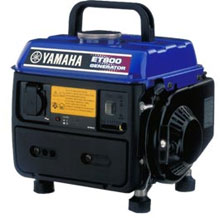
In anticipation of the failure of our supplies, though, it would be best now to start thinking of buying a small generator to keep essential equipment supplied. And, in honour of the man who made this all necessary, perhaps we should think of a new nickname for this equipment - the word "Blair" seems so appropriate.

COMMENT THREAD

Sour grapes

Pick your story, whether it be the growing crisis in Gaza, threatening to turn into a civil war, the upsurge in fighting against the Taliban in Afghanistan, the carnage in Iraq... or whatever.

Despite their pretensions to greatness, however, such matters are not of the business of the European Union institutions and – fortunately - they are powerless to intervene.

No matter though, the great power of the Union is still to be deployed on what Speigel online is calling the "Great European Vodka War".

This is the EU, at the behest of the different vodka makers, which is looking to set a standard for vodka composition, and is fighting off competing claims as to whether the genuine article should be made from potatoes, grain or grapes. So far, grapes seem to be the losers, although there is some indication that the very first recipe actually used the waste from winemaking – the original sour grapes.

Attempts at a resolution have included the ridiculous proposition of labelling non-approved vodka as white spirit, which does not seem to be going anywhere.

But such is the nature of the European Union that work on this vexed question been going on since February last - and before - consuming thousands of man hours and goodness knows how much money. Not for nothing when we first reported on this did we label the piece "...while Rome burns".

Hackneyed it may be, but it makes the point. Frustrated in its ambitions to become a political union, more and more of the energies of the EU are devoted to low grade trivia such as this. And for that, we are paid £15 billion into the subscription pot in 2005 – equivalent to half the defence budget and more than twice the amount spent annually on procurement.

Is the resolution of the great vodka war really worth that much, or should we be spending the money on winning real wars? If you are a Europhile, I suppose, there is simply no argument - it is clearly better to pay the money. Our troops will just have to fight our wars without the kit they need.

COMMENT THREAD

Saturday, December 16, 2006

Verdict on SecGen Annan

Undoubtedly, there will be many articles that will try to persuade us that SecGen Kofi Annan (father of Kojo) is basically a great and good man, who may have had the odd teensy-weensy weakness, perhaps being too nice to the people who work for him or too innocent for the wicked world he inhabits. In fact, the SecGen has tried to pre-empt his own political obituaries by making a shameless speech in Missouri.

It is worth spending a few minutes on a contemplation of the man's career and achievements. Fortunately a Wall Street Journal editorial has done it for us. It recalls that
When Mr. Annan was named Secretary General 10 years ago, he did so as the U.S.-backed candidate of reform. Jesse Helms, then-chairman of the Senate Foreign Relations Committee, told Mr. Annan that "if you choose to be an agent of real and deep-seated change, you will find many supporters--and even allies--here in the U.S. Congress."
Alas, Senator Helms's hopes and expectations were dashed and SecGen Annan is leaving the UN in an even worse state than he had found it, to a very great extent as a result of his own activity (or lack of) as head of peacekeeping operations with Rwanda and Srebrenice figuring as highlights and as Secretary General.

After summing up the various scandals of the Annan years, the article boldly shows up a difference in approach:
But the larger problem of Mr. Annan's approach is that, by insisting that only through the U.N. could the world act to protect vulnerable populations, he has made vulnerable people hostage to predatory regimes with seats at the U.N. and made it all the more difficult for the world to act. Compare the fate of the Kosovars--rescued from the Serbs by U.S. military action undertaken without U.N. consent--with that of the Darfuris, who are still at the mercy of militias supported by the Sudanese government in Khartoum, which has effectively blocked serious international intervention.
It is, as we have said repeatedly on this blog, the structure of the United Nations, constantly at odds with its stated purpose that is the weakness at the heart of the tranzi claims for moral, ethical and political superiority.

COMMENT THREAD

More turbulence on the Eastern Front

This week-end's Wall Street Journal Europe [subscription only on the web] ran a short article under the title "EU-Russia tensions rise as meat fight gets hotter". Well, no, we are not talking about meatball frying competition but the fact that the Russian government has announced that it will not import Polish meat and may ban all meat from the EU in 2007 as they cannot be sure some of it will not be from Bulgaria or Romania.

If, on the other hand, some countries will assure them that the meat being sold to Russia definitely do not come from those two countries, they will be exempt from the ban. To show that they do, indeed, mean business, they invited German and Irish officials to discuss the situation, who stated that they will continue negotiations but will also continue to follow "the European Commission's lead on trade policy".

Commission spokesman, Philip Tod, is not amused and neither are his masters:
We told the Russians that we did not think it was acceptable to only have contacts with some member states. Russia should be talking to the EU as a whole.
Brussels-based analysts are telling us huffily that the Russians are exploiting differences between member states and picking on weak points in the project, concentrating on matters to do with energy and agriculture. Well, shame on them. Of course, nobody seemed to complain when Russia was exploiting differences between the United States and various European countries, trying to drive a wedge into the supposedly strong Western alliance.

The Russians' response is that "a continentwide agreement is impossible, because any one country from which Russia refuses to buy meat could veto it". They have a point and many of us have been saying so for a long time. An EU-wide international trade policy is likely to produce more tensions than agreements between individual states could and the much-discussed common foreign policy is a potential catastrophe.

On the other hand, it is noticeable that Russia suddenly decides not to buy meat (or wine or any other produce) and not to sell gas or oil to countries they wish to "influence" in various ways or punish for opting to be pro-Western. This ought to give the Germans and the Irish something to think about but the possibility of signing agreements at the expense of other countries appear to be too tempting (rather like in the days of old-fashioned nation-state politics before the glories of European integration).

Given Russian shenanigans over the development of oil and gas inside the country and rather flexible attitude to agreements and contracts (the word Shell springs to mind) those eager negotiations that Germany in particular is indulging in may be akin to the young lady's desire to ride an apparently friendly tiger.

It is rather a pleasure to see Russia back where it belongs, among the West's enemies. I take particular delight, having written about these developments for some time, pointing out which way the country was going and having my warnings ignored or dismissed with a light chuckle. So, who's laughing now? President Putin, that's who. For the time being.

COMMENT THREAD

Obsessive navel gazing

Something we didn't pick up from the general media is a report on an English language Spanish site which headlines a piece: "EU summit on the European Constitution set for Madrid in January".

We are told that, at the "European Summit" (i.e., Council) on Friday, Spain and Luxembourg announced a joint initiative to try to recover the idea of a European Constitution. The prime ministers announced a new EU summit between the 18 countries which have already ratified the document, to be held in Madrid on 26 January.

These were Spanish prime minister, José Luis Rodríguez Zapatero and the failure of Luxembourg, Jean-Claude Juncker, the man whose one aim in life is to see his bébé come out of intensive care.

How instructive it is, though, that Blair, immediately following the European Council, jetted off to Egypt – with a brief stop-over in Turkey - in a bid to resolve the growing Mid-East crisis. He went not as a plenipotentiary of the EU, nor as one of an EU "troika" or whatever other grouping they tend to go for. He went as Tony Blair, prime minister of the United Kingdom.

Furthermore, how interesting it is was, while in Turkey, Blair met his counterpart, Recep Tayyip Erdogan and talked not of Turkey's (failing) bid to enter the EU but of how to revive peace negotiations between Israel and the Palestinians (not that that is possible if the latter are determined to rip themselves apart in a civil war).

Thus do the "little Europeans" condemn themselves. With their obsessive navel-gazing, they are not only boring us all to death but highlighting the pathetic vacuity of their agenda and their irrelevance as world players.

COMMENT THREAD

Euology

double-click to enlargeIf they can have "Kremlinology", then the word "Euology" must be just as valid.

And, as did Kremlinologists of old who could work out who was "in" and who was out of favour by the relative positioning of the politburo on the roof of Lenin's tomb during the annual Mayday parades, from the periodic "family photographs" of the member state leaders at European Councils, we can attempt to assess the "state of the union".

From this latest one, taken prior to the meeting in Brussels over the last two days (14-15 December), two things of great interest emerge. Firstly, you can see from the picture (double-click to enlarge) that the group is highly dysfunctional. These are the heads of state and governments of the 25 EU member states (plus their hangers-on) and this is their showcase to the world. It will be used widely as a publicity shot to accompany the news items about the meeting.

Yet, as you can see (especially in the enlargement), they cannot even be bothered to pay attention to the camera. Within the main group, there are a number of sub-groups each holding their own conversations, oblivious to the purpose of the gathering. This applies especially to our great leader (circled in the main photo with a cutaway right), who is one of those looking away from the lens.

But even more fascinating is Blair's positioning relative to the centre. In the heady days of 1997 when a newly-elected premier was determined to be at "the heart of Europe", this was reflected in the family photos of the European Council, this one in November 1997 where he is in the front row only a few places from the centre (circled) and very much the centre of attention.

By 2002, however, when the enthusiasm has waned and the British are gearing with the US for the incasion of Iraq, we can see this in his new positioning (circled) in the family photograph. No longer at the centre (where you will always find Jacques Chirac), you will find him on the second row, unsmiling, and being ignored by those around him. How apt it was that the slogan was "one Europe" when it was anything but.

In December 2005, it looks like Blair is back in favour, but the photograph is illusory. The UK is holding the rotating EU presidency so he is at the centre, representing the office, not his own country. And, if he is also at the centre of attention, this is the council at which he gives away billions of pounds in extra contributions.

His true sentiment, however, is best represented by his positioning this October, at the Sibelius Hall bash, in Lahti, Finland. Blair – with his cheesy grin - could not get much further away from the camera (and the centre) if he tried. Thus, 1997 to 2006 becomes a journey of ten years that tells its own tale.

But there are two other things to emerge from the Council. The first is the vacuity of the communiqué. Nothing new there, but this example is priceless:

The European Council expresses its concern about the negative impact of Iranian policies on stability and security in the Middle East. The European Council underlines that Iran needs to play a responsible role in the region. In particular, the European Council deplores Iran's failure to take the steps required by the IAEA Board of Governors and the UN Security Council, and agrees that this could only have negative consequences for relations between the EU and Iran.
Now that really will get Armoured Dinner-jacket quaking in his sandals.

For the second thing - we see very little publicity. Even China Daily is struggling and most of the western media simply ignore the event or give it token coverage. Only the Germans are vaguely interested, but that is because it is their girl next.

So does the once great vision of a united Europe slide into unreality. This lot can't even unite long enough for someone to take a proper photograph of them.

COMMENT THREAD