Thursday, December 15, 2005

In the national interest?

As flagged-up this weekend, the much-heralded Defence Industry Strategy has been published by the MoD today.

The report, running to 145 densely-printed pages, purports to set out "those industrial capabilities we need in the UK to ensure that we can continue to operate our equipment in the way we chose".

When the strategy was first announced last August, we remarked on the apparent coincidence, that it would be appearing just in time to pre-empt the publication of the EU's own list of what defence capabilities should be reserved by member states, and which should be opened out to international (i.e., European) competition.

Predictably, there is no mention whatsoever of this EU involvement and it is entirely up to the reader to decide whether the publication of the MoD document - which so admirably performs a task that the commission would require – is in fact a coincidence. Those who might believe this will probably also have a view on the tooth fairy.

The problem in assessing the merits – and the underlying political agenda – of this report is that, after years of defence procurement disasters, and a shrinking market for defence equipment which is causing considerable difficulties for defence contractors, some sort of industry strategy was needed. The MoD, on the one hand, needs to be assured that there is the capability it needs while, on the other, the industry needs some commercial stability and predictability in order to plan its business.

Predictably, the Beeb – which is amongst the first to report on the review – focuses on this aspect, with the website headline: "Defence industry faces shake-up", recording defence secretary Reid's statement that the "UK defence industry must be restructured", adding that In future the government will expect manufacturers to focus on hi-tech weapons, but basic items such as ships' hulls could be built abroad".

Stressing the objective of the review, the MoD is reported as stating that some technology is so militarily sensitive it has to be made in the UK, but it does not dwell on those areas of military production that the government feels can be allowed "off-shore".

One such, which we have covered, is the manufacture of military explosives, with BAE Systems about to close down the last facilities in the UK.

On this specific issue, the report is extremely vague. Having waxed lyrical about how we "maintain our sovereignty and national security", recognising that "industry may make independent decisions which would lead to the disappearance of indigenous capabilities required to maintain our national security", it then blithely suggests that "if offshore supply could be guaranteed there would be no need for onshore manufacture".

The fact is, of course, that the UK is already reliant on offshore producers and it is from such bland statements that one gets a sense that this long document is more window-dressing than substance, not least when it also remarks that the government is prepared to consider "new armoured fighting vehicle prime contractors being from offshore". Anodyne enough, but it does not remind us that it already has a Memorandum of Understanding with the Swedish government for the development of armoured vehicles for the FRES programme.

Nevertheless, the Beeb tells us that the CEO of BAE Systems, Mike Turner, is "over the moon" with the new strategy, but then his company is a multi-national conglomerate, the interests of which are not necessarily the same as the British national interest.

And there is the crucial issue. The report speaks often of the national interest but, distilled down to its essence, it conceded vast tranches of national defence capacity to offshore interests. Having done so in 145 pages, when the list could have been dispensed with in no more than a dozen, one gets the impression that it is burying the bad news in a welter of detail. To a very great extent, this is, as we first billed it, the final sell-out.

Photo: a Challenger 2 at speed. Copyright© 2005 BAE Systems.

COMMENT THREAD

A study in ignorance

We know it is complicated, but you would have thought that Reuters – which after all is supposed to be one of our premier news-gathering services – could get it right. But one can only cringe at the headline "EU approves rules on anti-terrorism data".

This is Charles Clarke's baby, who was in Strasbourg to see it through, saying that "This is a very important day for the European Union in its fight against terrorism and organised crime."

But, despite this, the EU did not approve the rules. Nor even, as Reuters further asserts, did the EU parliament yesterday adopt rules "to store phone and Internet data for up to two years to fight terrorism and other serious crime." Nor, indeed was "the measure was approved quickly after being proposed by the European Commission in September, and is part of the 25-nation bloc's response to the terrorist attacks in Madrid in 2004 and in London this year."

What we are dealing with is the first reading by the EU parliament of a directive, specifically "on the proposal for a directive of the European Parliament and of the Council on the retention of data processed in connection with the provision of public electronic communication services and amending Directive 2002/58/EC".

The procedure is complicated, but not rocket science. It rests on the fact that this is a legislative instrument that requires "co-decision" – i.e., approval by the Council (of ministers) and the parliament. It thus goes separately to both institutions and, only when both are agreed as to the text – which must also be acceptable to the EU commission – is the law passed.

In this instance, the Council has passed its own judgement on the law – its so-called "common position" and now, in the first (of possibly three) readings, the parliament has reached its own "common position", have amended the original commission proposal to get there.

Since there are now discrepancies between the respective positions of the Council and the parliament, there must be a further period of discussion, whence the two institutions must resolve their differences. Following that, the parliament will arrange a second reading – some time next year – and, if there are still differences between the positions, there must be a process known as conciliation. Following that, there is a third reading. If the parliament then cannot agree with the Council, the legislation falls.

The law, as it stands, therefore, is a long way from being approved and could, at some time in the future, be rejected or be withdrawn by the commission.

But what is really fascinating about this whole affair is the very fact of the parliament’s involvement. As the commission's proposal makes abundantly clear, these are "rules at EU level that guarantee the availability of traffic data for anti-terrorism purposes across the 25 Member States", which ostensibly puts them in the framework of Pillar III (Justice and Home Affairs), over which the parliament (and the commission for that matter) should have no jurisdiction.

This is reinforced by the very fact that it is the Committee on Civil Liberties, Justice and Home Affairs in the parliament which has produced the report, which under normal circumstances should only be consultative.

But here we meet the magic and mystery of the European Union. Although openly an anti-terrorism law, the legal basis cited is Article 95 of the EC Treaty. And, as readers will know, this relates to the "approximation of laws", allowing the EU to frame laws "which have as their object the establishment and functioning of the internal market" – the EU jargon for the "single market".

So there we have it. A direct incursion into the crime-fighting procedures of member states – with profound implications for civil liberties - is dressed up as a single market measure. If ever there was an abuse, that is it. Yet so far from understanding what is going on is the media that, like Reuters, they do not even understand the basic legislative procedures. No wonder our rulers get away with so much.

photo: European Parliament

COMMENT THREAD

The guy needs a job, OK?

Former Chancellor Schröder seems to be rather indignant at all the fuss about his new job given to him by his best friend Vladimir Putin.

He told the newspaper Süddeutsche Zeitung:
“Politicians and the media have spread much nonsense recently. I am only 61 years old; I want to work and not stay at home and get on my wife's nerves.”
Fair enough, but that is not precisely what has been exercising the German media or German politicians. Of course a 61 year old man can work and there are plenty of jobs around that a former Chancellor of Germany can have. There are directorships, and seats on NGOs and highly paid positions in various tranzi organizations. In his spare time he can write his memoirs or write children’s books or whatever.

The problem is that his is being offered a directorship in a consortium, whose creation has been quite controversial and one that he pushed through in the last weeks of his chancellorship.

If one adds to that Chancellor Schröder’s invariable praise for President Putin as a flawless democrat, despite the horrors of the Chechnyan war, the dubious legality of the Yukos case, the abolition of regional elections and the gradual destruction of media independence; if one remembers the Chancellor’s refusal to become involved in the Ukrainian events of last December while Poland and Lithuania negotiated a deal that enabled the Ukrainians to vote freely for the government they wanted; then one can understand why so many people (including us on this blog) are holding their noses.

There is another delightful aspect to the whole saga as described by the UPI Germany correspondent:
“Further adding to the allegations that Schroeder's job might be a 'thank you' from Moscow is the appointment of an alleged former communist spy as chief executive officer of the consortium.

Matthias Warnig -- according to media reports he denies -- has until 1989 been a high-ranking member of the communist East German intelligence service Stasi. Warnig in recent years served as the Dresdner Bank's head in Russia.

The Dresdner Bank was the first German bank to open a branch in Russia in 1993. Warnig, according to the business publication Manager Magazin secured the deal in St. Petersburg, after meeting a young city official named Vladimir Putin. Warnig and Putin became close friends since then, others say Warnig knew Putin from his days as a young KGB agent in Dresden. Both men deny such reports.”
Whichever way one looks at the story of Matthias Warning, Vladimir Putin and Gerhard Schröder, it is safe to say that Chancellor Angela Merkel will be embarrassed by her predecessor’s behaviour for some time to come.

COMMENT THREAD

I don't believe this… and neither should you

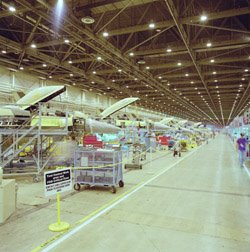
Defence secretary John Reid yeaterday gave the go-ahead for the design of the two new super-carriers, awarding work to an alliance of shipbuilders, including BAE, Babcock, Thales and the VT Group.

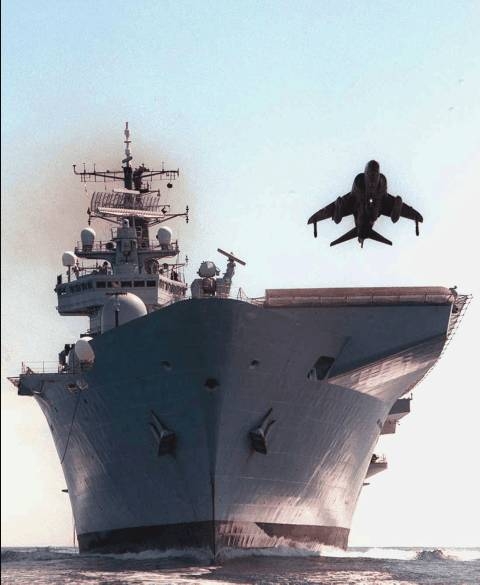
This is the £3.5 billion programme to replace for the Royal Navy's HMS Invincible, Ark Royal and Illustrious aircraft carriers, and we are told that this announcement means that firms can now embark upon detailed design of the carriers, with the MoD spending £300 million to develop the design of the ships to the point at which manufacturing can begin.

The work, we are told, is then to be carried out across Britain in four main blocks and will represent 60 percent of the work, with the remaining 40 percent to be put out for tender.

Reid claims the decision will safeguard 10,000 jobs, although the final investment decision will not be made for 12 to 18 months, to allow the designs for the two 65,000-ton ships to progress. A date for delivery of the ships, likely to be after 2013, will be agreed next year, he says.

That, at least, is the fiction but, as we reported earlier, the fate of the key component of the carrier force – the Joint Strike Fighter – has yet to be decided.

The uncertainty stems from the reluctance of the US to release key technology in relation to the JSF, and the implications have been discussed widely, not least here and here.

Should the £10 billion JSF project not go ahead, the whole carrier project will have to be revamped as only this aircraft has short take-off and vertical landing (STOVL) capabilities, which necessitate a unique design. Yet, despite the real uncertainties, today’s announcement on the MoD website is gaily accompanied by an illustration (above) showing the JSF and the specially-designed carrier.

From all accounts, however, the MoD is very far from a position of being able to confirm its continued participation in the JSF project and, therefore, at the very least, Reid's announcement seems premature. It also seems odd, as if the fate of the JSF had been settled, then surely he would have declared that at the same time.

Yet Reid is silent on the project, which suggests that there are still problems. His confident assertions on the carriers, therefore, should not be believed.

COMMENT THREAD

Wednesday, December 14, 2005

Good news from the Met

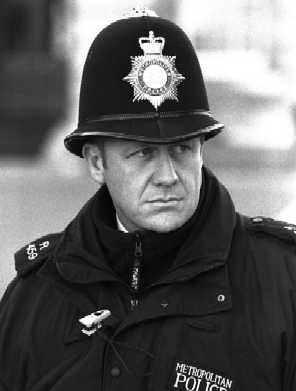
It seems that the Met (or the MPS as it likes to be called) is finally beginning to hear something they have been told for years: the public (who pays the Met's vast bill, incidentally) wants police officers on the streets and wants them out there singly, not engaged in deep discussion with their mates.

This idea is now being discussed and has, even, been implemented in one or two places. There will not be bobbies on the beat because they probably will not have a beat. The whole exercise will be called "proximity patrolling", because the officers will be patrolling singly on different sides of the street.

Three interesting points have arisen. Firstly, the younger officers are very uneasy or, if you like, plain scared at the idea; secondly, most of London and its people are now viewed by the police as being dangerous, with a few safe areas, as opposed to the opinion held even twenty years ago; and thirdly, well, let Commander Bob Broadhurst put matters into context:
“I think people will want to see officers patrolling singly more often, partly because it will send a message that the streets are safe if officers are happy to go out on their own.”
A strangely topsy-turvy view of policing and its aims.

You can read a more detailed posting on OneLondon.

COMMENT THREAD

"Simply not enough"

The UK has offered a revised EU budget package, adding €2.5 billion to overall spending, raising it to €849.3 billion or 1.03 percent of EU members' GDP – only to have Barroso dismiss it with alacrity, declaring that it was "simply not enough".

Putting the boot in further, he then added that the UK is "not realistic" in making cuts to its budget rebate conditional on reductions to European farm subsidies.

Jack Straw – who made the offer - got an equal dusty reception from French foreign minister, Philippe Douste-Blazy, who told his own Senate: "We hope that the British authorities will understand the need for a complete review of its rebate mechanism. Without a change on this point, France will not give its agreement."

A top German official, meanwhile, has said in Berlin: "The danger of failure remains considerable. There is still no solution in sight," only to elicit a dead-bat response from a British spokesman who said: "We will see no better deal this week or next year." But Barroso disagrees. The real negotiations on the budget will start at the summit itself, he says. "It will not be the last proposal, I am sure."

We will see.

Photo © European Community, 2005

COMMENT THREAD

We have a credibility problem

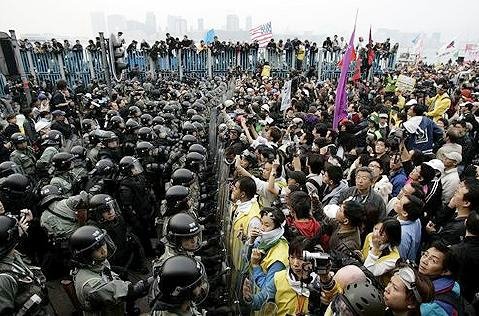
In what has become something of a tradition, mass protests are underscoring WTO talks – this time South Korean farmers, who for the second day have clashed with Hong Kong police.

Meanwhile, the war of words continues inside the convention centre, where the talks are being held, supposedly the final attempt to warp up the so-called Doha round, which is now not expected to be concluded until the end of 2006.

So far, it seems to be the United States which is making the running, accusing the EU of deadlocking the talks with its position on farm subsidies. US trade representative, Rob Portman, has told reporters that if the EU did not allow the developing world greater access to its markets, "I don't see anyone else moving".

On the other hand, EU trade commissioner, Peter Mandelson, is maintaining his position that Europe had made an "ambitious offer" on cutting agricultural import tariffs and farm subsidies and now wants the 149 WTO members to address manufacturing and services to bring the talks to a successful conclusion.

"We will not succeed, in Hong Kong or after, if we continue to focus on only one part of the round," he complains. "We cannot afford to wait again. When the finishing line is in sight, it is the time to quicken our pace."

Something of Mandelson’s frustrations come through in a personal account written by Malcolm Moore, the Daily Telegraph's Economics Correspondent, who is blogging each day from Hong Kong.

But, with a breakthrough unlikely during the six-day talks, it seems the main item on the agenda is an agreement to set a date for a further round of talks early next year "to nail down a clear outline for a final treaty." Portman is particularly keen on this, saying, "…let us set another deadline to keep the pressure on."

Perhaps, though, the bun-fight is best summed up by Deepak Patel, Zambia's trade minister, who says, "We are full of good intentions, but incapable of implementation," prompting WTO director-general, Pascal Lamy, to declare that the WTO had a credibility problem.

What more can one say?

COMMENT THREAD

Could have been worse

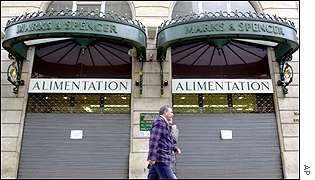
Despite predictions of meltdown, the consensus on the implications of the Marks & Spencer ECJ judgement – delivered yesterday – seems to be that it could have been a lot worse for the Treasury.

According to The Telegraph business section, the judgement "spared the taxman the prospect of having to pay billions to other businesses," by deciding that a parent company could only adopt losses where it had "exhausted possibilities" of offsetting them in the subsidiary's country.

On this basis, we are told that M&S will claw back most of the £30m refund from its Belgian and German operations, despite having argued that it should be allowed to offset losses incurred in the 1990s from now-defunct German, Belgium and French subsidiaries against profits from businesses in Britain.

The broad range of possibilities, including carrying losses forward when a subsidiary is sold, means the Treasury is unlikely to have to give companies relief except in specific circumstances.

The Telegraph reports that Treasury officials are understood to be working on the assumption that tax refunds following the judgement could be as little as £50m. But Guy Brannan of Linklaters estimates the figure is closer to £100m. Others say it could be higher.

The general view of the judgement is shared by the International Herald Tribune which also reports that the ECJ has insisted that the tax relief would only be extended once a company had exhausted all the possibilities on relief in the countries where its subsidiaries reside.

IHT also cites Guy Brannan, head of the tax department at Linklaters, this time saying that, "The strings attached to this ruling mean that the financial cost to the UK Treasury is less than expected, though the ruling does offer greater scope for tax relief to companies and it could still mean losses for governments across the EU."

Nevertheless, the EU commission is still seeking to exploit the ruling, declaring that the case showed the need for a co-ordinated EU framework for corporate tax. And the IHT says that the ruling will intensify the growing battle between those countries like France that want greater uniformity in tax policies and those like Britain that insist fiscal policy should remain firmly under the control of national governments.

The EU tax commissioner, Laszlo Kovacs, has argued that unless EU governments yield some sovereignty over corporate taxes, the European court would push tax harmonization through its rulings. Legal experts contend the European Court of Justice has become increasingly activist in recent years and that a broadening swath of its rulings on EU corporate law has gradually introduced unification of tax policies through the back door.

Brannan of Linklaters said the Marks & Spencer case was important but not an isolated indicator of the court's direction. "The court became more assertive in the mid-1990s on personal taxation issues and it has recently become more activist on regulations affecting companies," he said.

British officials are adamant that the EU should not strengthen its powers over taxation at the expense of national governments. "We want tax competition, but we do not want tax harmonisation which is not what is needed in a flexible economy," said a Treasury official.

Because of the complexity of the decision, M&S are studying it carefully before making a detailed statement, and more details may emerge once the experts have picked over the bones. One thing for sure, though, this is not the end of the matter, and we are going to see a continuation of pressure from both the ECJ and the commission, seeking to bring member state tax laws into line.

COMMENT THREAD

Hmm, things can't be that bad

In Iraq that is. As for the coalition forces that are fighting to help the Iraqis to create a better and more free country, well, no words in the MSM can be bad enough for those, especially if they happen to be American.

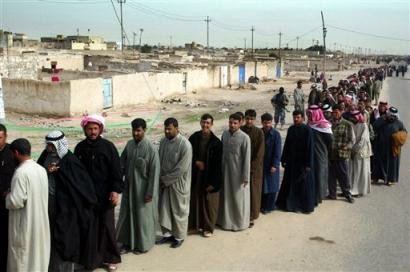
But as far as the European Commission is concerned, the on-going elections are a cautiously positive sign. At least that must be the reason for its announcement that it intends to launch trade talks with the new government of Iraq next year and to open its first offices in Baghdad.
“Negotiations on the Trade and Cooperation Agreement mark the beginning of a closer cooperation between the EU and Iraq on trade and economic issues and will lead to strengthened ties between us.”
According to ISN Security Watch, the Benita Ferrero-Waldner, Commissioner in charge of foreign affairs announced after signing an agreement to open the office with Iraqi Ambassador Mohammed Jawad Al-Doreky:
“The two moves announced send a strong signal to the Iraqi population of Europe's intention to become increasingly engaged in Iraq and to continue playing a significant role in its transition. Together they represent a real step change in relations between the EU and Iraq as we progressively build up political dialog and lay foundations for a wider relationship.”
Before we know where we are, the EU, that was endlessly proclaiming its superiority to American gung-ho forceful policies in Iraq, will begin membership negotiations with the new regime, made possible by that gung-ho forceful policies.

COMMENT THREAD

Tuesday, December 13, 2005

A fruit and nut case

First it was Marks & Spencer set to make a tidy dent in Gordon Brown’s financial plans - and now it's the chocolate-maker Cadbury.

According to the Financial Times and others, as the ECJ rules on the M&S case, bringing it to an end, another one starts, brought by Cadbury Schweppes, which could cost European governments over £300 million in annual tax revenues if the company wins.

This is over UK rules - known as controlled foreign company (CFC) legislation – which Cadbury claims infringes European law by penalising companies that take advantage of low tax rates in other EU countries. Cadbury Schweppes is challenging the British government's decision to tax profits earned by Cadbury's Treasury subsidiaries based in Ireland, one of the lowest tax jurisdictions in Europe.

Says the FT, the potential losses will add to pressure on European governments braced for the M&S judgement. Says Stefano Marchese, vice-president of the European Federation of Accountants: "There could be a flow of Treasury, finance and royalties functions to companies created in low-tax jurisdictions, increasing pressure on tax competition."

Marchese says there is substantial case law supporting the view that CFC rules are illegal within Europe, although it was possible the judgement could be influenced by political lobbying. Finance ministers have been particularly concerned about the cost of claims for tax refunds, provoking speculation that the ECJ will decide to impose limits on retrospective claims.

However, László Kovács, the EU tax and customs commissioner, has a better answer, calling for a common set of rules on company taxation. Johann Müller, an international tax expert at Dutchtax.net, an Amsterdam-based consulting company, agrees. "The case will force EU tax harmonization across the bloc through the back door," he says – which should go down like a house on fire with member states.

Either way, the somewhat embattled Gordon is facing a torrid time but, little did he suspect that he was to be shafted by a Cadbury’s fruit and nutcase.

PS: lite blogging today... off to that pointy building by the Thames.

COMMENT THREAD

Monday, December 12, 2005

Will you put up with this?

An issue that has Eurosceptics divided has emerged on the front page of the Daily Telegraph, the vexed question of the rushed re-organisation of the police into regional forces.

Because the government's intention is clearly to promote the amalgamation of the current 43 local police forces of England and Wales on these regional lines, which correspond with the boundaries of the Euro-regions, the feeling is in some quarters that this is part of a more general plot to "Europeanise" our police.

Certainly, the Euro-region agenda was pointed out by Booker over two weeks ago, when he wrote that the forces will be cut to 12, corresponding with the 10 regions of England, London and Wales (the two largest regions, South-East and North-West, can each have two forces). Wales is to have just one force, not four as now. The seven South-West forces are also to be merged into just one, from the Cotswolds to Cornwall.

Today's coverage, however, focuses not on this aspect but a point to which Booker also gave great prominence, the "astonishing speed" at which the Home Secretary, Charles Clarke, is bulldozing this through. Using the usual excuse, "the need to fight terrorism", his plans first surfaced on September 16, Booker wrote. Six days later he gave the 43 chief constables an ultimatum: they must come up with their plans for a mass-merger by 28 November, and by Christmas the entire plan must be agreed. The most fundamental restructuring of Britain's police in 170 years - since the modern police service was created in 1829 - is to be rushed through in just 12 weeks.

Clarke delivered his plan in a Home Office press release on 19 September 2005 and, although it was couched in terms of the police service being "invited" to come forward with firm proposals for the creation of strategic forces in each region, the actual letters sent to chief constables left them in no doubt what was expected.

Predictably, Clarke made no mention of any Euro-agenda, stating that he was responding to the publication the previous week of a report by HM Inspectorate of Constabulary (HMIC) which found that the current 43 forces structure was "no longer fit for purpose".

The present structure was "not sufficiently robust" to provide the necessary level of protective services, such as major investigations, that the 21st century increasingly demanded, concluding that some reorganisation of forces is necessary in the interests of efficiency and effectiveness of policing, with a figure of a minimum 4,000 officers being necessary.

Already though, on 17 November, Clarke's sidekick, Hazel Blears, in a Parliamentary answer, had already made it clear that "the very strong starting presumption is that any new force areas should not cross Government office regional boundaries." Thus, the die was set for regional police forces and the Euro-plot discussion took full flight.

Try as we might, however, we cannot see an obvious, direct Euro-agenda. The regionalisation of British police forces can hardly be seen as bringing the UK into line with European forces as there are no obvious regional models into which the proposed British force structure would fit.

Our nearest neighbour, France, has a composite of national and local forces, Belgium has two-tier forces, as does Italy, while Germany has federal and local and forces. The idea of a wholly regional structure seems unique to this present government.

What is very telling though is that, while West Mercia is the current "best performing force" and its chief constable, Paul West, has been quoted as saying that it was "nothing short of scandalous to re-configure British policing in only a few weeks", the Telegraph also reports that the “majority of senior officers” are likely to accept the mergers. They are "turkeys who will vote for Christmas", according to one leading member of their ranks.

For a long time now, we have been aware of the emergence of a group of "right-on", highly politically correct (and utterly useless) chief constables, whose approach to policing seems to have little to do with what most people want from their police. More to the point, they seem to exhibit that technocratic, managerial approach to their forces, the very attitude that typifies the soulless bureaucrat from Brussels.

Therein possibly lies the clue. This government initiative is perhaps not so much driven by "Europe" as stemming from the same intellectual well-spring, where "efficiency and effectiveness" is seen in abstract terms, divorced from the messy realities of dealing with real people. In other words, we have chief constables and the Home Office united in their pursuit of "perfect structures" in a way that is so prevalent in the European Union - bureaucrats who are more interested in their toys and guns than catching burglars.

Thus, as the Telegraph leader notes, it is proposed to subsume West Mercia into an even larger entity, including Staffordshire and, possibly, Warwickshire and the great conurbations of the West Midlands, too. Abandoning the cod-medieval nomenclature of the last reorganisation, the new force will be called, with brutal clarity, the Regional West Midlands Police.

The Telegraph argues that these changes threaten the very spirit of the organisation. To almost everyone in England and Wales outside the metropolitan centres, the natural unit of local identity is the county - and that is all one needs to know about the proper boundaries of the police. The hypothetical benefit of efficiency is entirely discounted by the attenuation of accountability in the new arrangement. There is little point in having a dedicated local bobby if he answers to a chief constable 200 miles away.

All of this is a far cry from Peel's first police force, the "Peelers" of 1829, for which he coined the nine points of policing, the core of which was that the "police must secure the willing co-operation of the public in voluntary observance of the law to be able to secure and maintain the respect of the public." Even that was too much for some contemporary leafleters, who wrote:

Liberty or death! Britons!! Honest men!!! The Time has at last arrived. We assure you that six thousand cutlasses have been removed from the Tower for the use of Peel's Bloody Gang. These damned Police are now to be armed. Englishmen, will you put up with this?
But, as Englishmen, we are being asked to put up with a great deal more, not least remote, regional forces which will never be able to secure and maintain the respect of the public, run as they are by technocrats who appear all too similar – in spirit if not in kind – to our masters in Brussels.

COMMENT THREAD

Revolving doors

All that chumminess with Vladimir Putin has served Gerhard Schröder well. As Chancellor he gave his full support to a major financial deal between Germany and Russia that created a consortium which would build a gas pipeline between the two countries.

Nothing wrong with that. Germany gets gas, Russia gets foreign currency as well as influence. And former Chancellor Schröder? Well, he get to be chairman of the Russian gas company (now state owned to all intents and purposes) OAO Gazprom’s shareholder committee.

As the Wall Street Journal Europe explains:
“Less than a month after leaving office, Me Schröder is set to become chairman of the supervisory board of the North European Gas Pipeline Company, which is building a €4 billion pipeline between Russia and Germany. Gazprom, the state-owned Russian energy giant, holds 51% of this company. Welcome to the Kremlin, Mr Schröder.”
The deal and the then Chancellor Schröder’s references to his buddy Vladimir as a “flawless democrat” were rather controversial even at the time. For one thing the new Baltic pipeline is more expensive than some alternatives could have been.

For another it bypasses Poland, Ukraine and the Baltic States, thus giving Russia a far greater leverage over the countries, described by the WSJE as her “former vassals”. And guess what? Gazprom is pressing for higher natural gas rates in all those countries.

With Herr Schröder showing such wonderful acumen in his plans for his retirement the controversy will probably revive.

COMMENT THREAD

Meaningful and positive results

It never hurts to remind ourselves about the quaint ways of that warm, liberal country called the People's Republic of China, with which the EU, courtesy of Tony Blair, has declared itself a "strategic partner".

Thus do we refer to a news story, the full details of which are brought to us courtesy of Ireland Online, which headlines the piece: "Chinese police shoot wind farm protestors".

The significance of this becomes apparent when contrasted to the The BBC Today Programme this morning which described the protest as being over a "power plant" - giving no indication as to which type. It would seem that the BBC is reluctant to mention the word "wind" in this context.

That aside, this turns out to have been a major incident, with hundreds of riot police armed with guns and shields, who surrounded and sealed off a southern Chinese village where authorities are reported to have shot dead as many as 20 demonstrators.

Residents in Dongzhou, a village in Guangdong province, said thousands of people had gathered on Tuesday to protest what they said was inadequate compensation being offered for land to be used in the construction of a wind power plant. Police fired into the crowd and killed a handful of people, mostly men, villagers reached by telephone said yesterday. Accounts of the death toll ranged from two and ten, with many missing.

Needless to say, in this liberal, open society, state media have made no mention of the incident and both provincial and local governments have repeatedly refused to comment. All the villagers said they were nervous and scared and most did not want to be identified for fear of retribution. One man said the situation was still "tumultuous".

A 14-year-old girl said a local official visited the village yesterday and called the shootings "a misunderstanding". "He said (he) hoped it wouldn't become a big issue," the girl said over the telephone. "This is not a misunderstanding. I am afraid. I haven't been to school in days," she added. "Come save us."

Hong Kong's South China Morning Post newspaper today quoted villagers who said authorities were trying to conceal the deaths by offering families money to give up bodies of the dead. "They offered us a sum but said we would have to give up the body," an unidentified relative of one slain villager, 31-year-old Wei Jin, was quoted as saying. "We are not going to agree."

This incident is one of a number of protests in China's vast, poverty-stricken countryside has risen in recent months as anger comes to a head over corruption, land seizures and a yawning wealth gap that experts say now threatens social stability. The government says about 70,000 such conflicts occurred last year, although many more are believed to go unreported. Clashes have grown more violent, with injuries on both sides and damage done to property as protesters vent their frustration in face of indifferent or bullying authorities.

Like many cities in China, Shanwei, the city where Dongzhou is located, has cleared suburban land once used for farming to build industrial zones. State media say that the Shanwei Red Bay industrial zone is to have three electrical power plants – a coal-fired plant, a wave power plant and a wind farm. Shanwei already has a large wind farm on an offshore island, with 25 turbines. Another 24 are set for construction. Earlier reports said the building of the 743-million-dollar coal-fired power plant, a major government-invested project for the province, was also disrupted by a dispute over land compensation.

Authorities in Dongzhou were trying to find the leaders of Tuesday's demonstration, a villager said. The man said the bodies of some of the shooting victims "are just lying there". "Why did they shoot our villagers?" he asked. "They are crazy!"

And just to remind you of the EU attitude to this wonderful, liberal society, readers will recall Tony Blair’s visit to China in September, for the 8th EU-China Summit, when he signed a joint statement with Chinese premier Wen Jiabao, part of which said:

The two sides underlined their commitment to the protection and promotion of human rights and continued to place a high value on the EU-China human rights dialogue. They underlined the importance of concrete steps in the field of human rights and reaffirmed their commitment to further enhance co-operation and exchanges in this field on the basis of equality and mutual respect, while making efforts to achieving more meaningful and positive results on the ground.
Well, we are certainly getting "meaningful and positive results on the ground". But will we be seeing EU condemnations of what is being seen as the largest loss of life through official action since Tiananmen Square in 1989? Will we heck.

COMMENT THREAD

Serious money

The Sunday Telegraph has come up with an interesting observation – that a reduction of Britain's EU rebate would push the public finances even deeper into the red because Gordon Brown's Pre-Budget Report last week made no allowances for it.

This, apparently, has been confirmed by the Treasury and, says the Telegraph, raises the embarrassing possibility that if Brown raises taxes again, it could be a reduction in the rebate that pushes him into it.

The story, however, would have been that much more interesting if the paper had linked with the Scotsman which is reporting that our Gordon is also facing the prospect of seeing billions of pounds drained from the Treasury's coffers this week due to a landmark ruling from the European Court of Justice on a Marks & Spencer tax complaint.

This arises out of the Treasury refusing to accept tax losses which M&S incurred from its abortive venture into the French market, the details of which we reported in December 2004, in January of this year and again in April, pointing out that the UK Treasury could lose over £5 billion if the ECJ found in favour of M&S.

Now, after five years of legal wrangling, the ECJ is due to pronounce its final ruling on the case on Tuesday and although M&S only stand to gain a maximum of £30m, hundreds of other British companies would be able to use the verdict to make similar claims against the Treasury. It would also prompt a flood of similar claims against governments across Europe.

While the rebate might prove embarrassing to Gordon, therefore, he will be doubly embarrassed if the ECJ does find for M&S – as it is expected to do - leaving the British taxpayer a whole new tranche of money to find, all arising out of our membership of the European Union. We are now talking about very serious money, big enough for even the somnambulant media and the British public to notice. It cannot but help the cause.

COMMENT THREAD

Sunday, December 11, 2005

The distinct odour of rodent

It could be a coincidence. Just as the commission is preparing to redefine the "essential interests" of member states, when it comes to awarding defence contracts to their own industries, up comes The Business reporting that Lord Drayson's review of the UK defence industry may be published as early as this Thursday.

Announced back in August, it was then described as a "sweeping review" of Britain's defence industry to determine what weapons technologies should be maintained in the UK and which can be ceded to foreign suppliers.

No prizes for guessing that the list of weapon technologies that the MoD is prepared to cede ends up looking exactly the same as the commission's list when it is published early next year.

The Business also tells us that Drayson’s review will herald ‘rigorous’ cuts, with some big-ticket programmes being scaled back. For other major projects, like the Joint Strike Fighter, we learn that no final decision has been made, but the new policy "is likely to be coloured by struggles with the US over transferring sensitive technologies to Britain for the Joint Strike Fighter."

Add another intriguing little snippet – that the review will also outline new plans to extend the life of existing assets such the ageing aircraft carriers HMS Invincible and Illustrious, and - on the back of the earlier reticence of Drayson to commit to a building date for the new super-carriers – it looks more and more like the carrier programme is about to be kicked into the long grass.

The Business remarks that the £3.5bn programme to design and build two new 65,000-ton aircraft carriers for the Royal Navy will be the first and biggest test of Drayson's partnership drive.

A plan detailing how the alliance to build them will work is seen as a central plank of Drayson's paper. Once agreed, the carrier alliance will form the blueprint for a wider grouping of naval shipbuilding firms that could lead to the formation of a new national champion in warship construction, dubbed "ShipCo".

However, without settling the Joint Strike Fighter question, it is difficult to see how the project can go ahead on anything like a definite time-scale – so we will wait with interest for the publication of the review. The nostrils are in hyper-twitch mode though, with the distinct odour of rodent in the air.

COMMENT THREAD

Well, that buggers Kyoto

One of the more startling images from the oil depot fire in Hemel Hempstead which broke out just after 6am.

Fortunately, being a Sunday morning, there were few people on site, so casualties are reported as light. However, air purity to the east of the site is threatened and one wonders how many carbon credits, co-owners Total and Texaco will have to buy to make up for the amount of CO2 dumped to atmosphere.

COMMENT THREAD

Let's end the misery

The idea of Blair walking into the European Council next week with a particularly naff kiddies alarm clock, and giving the "colleagues" an hour to reach a decision on the EU budget, is enormously appealing.

It certainly appealed to Charles Crawford, our man in Warsaw who, according to The Sunday Times has committed the unpardonable sin of telling the truth about our European Union "partners", blaming them for farm subsidies that "bloat" rich French landowners, "pump up food prices" and create poverty in Africa.

This is in an e-mail to colleagues, obtained by The Sunday Times, where he suggests Blair sets an ultimatum to "mes chers amis" and then presses the button on alarm clock, leaving a silence broken only by loud ticking. Helpfully, Crawford adds that he has a suitable alarm clock.

In the Crawford scenario, if the deal is not accepted, Britain would be able to walk away with its rebate intact. It would then be able to use money that it was prepared to deduct from its rebate to fund projects directly in former eastern bloc countries.

Crawford estimates that it would be equivalent to twice as much spent through the EU and that Britain’s help would go much further, faster and more efficiently to the countries concerned. There will not be the loss of money in "all the bollocky EU bureaucracy" and "sticky transaction costs, local and Brussels corruption, overheads and other rubbish".

Unfortunately, the e-mail is put down to Crawford's "off-beat sense of humour", and is not being treated seriously, other than as an indication of the intense sense of frustration being engendered by the obdurate "colleagues". But, just for once, it seems that at least one Foreign Office official is in tune with popular sentiment. His note is headed: "Loosen those EU budget talks — let's end the misery!"

Amen to that.

COMMENT THREAD

Hypocrisy unlimited

For all the Euro-luvvies waxing indignant about the CIA “rendition” flights, just read this in the Sunday Telegraph.

According to a previously unpublished document, the EU agreed to give America access to facilities for their so-called “secret flights - presumably airports - in confidential talks in Athens during which the war on terror was discussed, the original minutes show. But all references to the agreement were deleted from the record before it was published.

Hypocrites.

COMMENT THREAD

Saturday, December 10, 2005

And who's telling porkies?

I wonder if the subs thought through their headline on the front page of The Daily Telegraph today. As a comment on the status of the United States after it had walked out of the green-fest on global warming at Monteal, "US out in the cold at world climate talks", should perhaps have read "out in the warm".

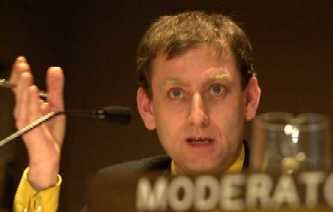
But what really is great fun about the robust, no-nonsense attitude of the US – which, despite not signing up to Kyoto, has actually cut its emissions - is that the Beeb's Environment Correspondent, Tim Hirsch (pictured above), has been badly caught out telling porkies.

For this discovery we have to thank the Shadow Chasing blog, via the indefatigable USS Neverdock, in which Hirsch is seen at variance with the official record when writing up his story of the event.

The egregious beebie has it in his story that Canadian prime minister Paul Martin made a pointed appeal to the US, urging the US to "listen to its conscience" and take further steps to reduce emissions linked to global warming.

According to the official record, however, Martin simply noted, in general terms, that, "We must heed the voice of our global conscience", without in any way addressing his remarks to the United States.

Mind you, even Charles Clover of the Telegraph seems to have caught the error bug, writing that Martin told "the reluctant countries including the United States" (his parenthesis) to listen to the "global conscience". No such phrase referring to "reluctant countries" appears in the prime minister's script.

However, Clover makes up for it, regaling us with an account of how the Americans refused to accept a covert attempt to open negotiations on a new treaty. Harlan Watson, the US chief negotiator, is reported as saying: "If it walks like a duck, quacks like a duck, then it is a duck," before stalking out.

Another joy, which Clover conveys, is that American stand-off appeared to have dashed Tony Blair's hopes of including the US in a global consensus to tackle climate change. Yet another failure for our Tone to add to his EU budget debacle.

COMMENT THREAD

The way we are

Published this morning in The Daily Mail is a piece by Christopher Booker, setting out in stark detail the nature of our current relationship with the European Union.

The headlines may be focussed on next week's showdown between Tony Blair and President Chirac, as they battle over the "UK budget rebate". So clumsily has our prime minister played what once looked like a winning hand that it now looks as though he faces humiliation, angrily opposed by every country in the EU except tiny Malta.

But the real EU story of recent months, as so often before, has not been the one played to the mass-audience but one unfolding largely out of view.

Remember last summer and all the excitement that followed the rejection of the EU constitution by the voters of France and Holland? For two years we had been warned, not least by the Daily Mail, that the constitution heralded the setting up of a "European superstate".

At last, it seemed that vision had suffered a spectacular and permanent reverse. The relentless drive to European integration was seemingly at an end. Tony Blair proclaimed that the peoples of Europe had blown their "trumpets round the city walls" and it was time the EU's leaders paused to listen.

You might therefore be surprised to learn that, since last summer, the building of the "superstate" has, in fact, been powering ahead regardless, and on many different fronts.

In recent months, the way the EU has continued stealthily to take over so many of the powers of our government and Parliament from behind the scenes - with full permission and even encouragement from our own ministers - has reminded me of a popular television science fiction series from years ago, featuring a scientist called Professor Quatermass.

Our hero discovered that Britain was threatened by an extra-terrestrial invasion - but with a vital difference. Instead of arriving in space ships, as bug-eyed aliens, the invaders had the power to take over human beings from within, so that outwardly they seemed unchanged.

When, desperate to wake up the government to the threat, Quatermass went to see all his top-level contacts in Whitehall and Westminster, he was dismayed by their bland assurances that there was nothing to worry about. Then, in each case, he observed from a tell-tale mark on their wrist, that these ministers and top civil servants had been "taken over". Britain was already in the hands of the alien power.

It may seem a lurid parallel, but in recent months I have often been reminded of the Quatermass story, by the way the EU and its allies, including Mr Blair, have been behaving just as though the peoples of Europe had never spoken.

Far from being some kind of setback, the rejection of the new constitution has turned out to be a trigger for one of the EU's biggest power grabs for decades, across a whole range of policy areas, from defence, immigration and taxation, to the way we run our police, our courts and our judicial system.

Most shocking of all is the way most of our politicians at Westminister seem oblivious to what is happening, while our ministers and civil servants - along with those of the other 24 countries in the EU - are actively urging on the drive to integration in all directions.

There are two particular ways in which the building of the "European superstate" has been powering ahead since the supposed collapse of the constitution. First and most shameless has been the sight of the EU's leaders implementing that rejected constitution just as though it was already law.

Britain and other EU countries have already, for instance, been moving to close down many of their embassies across the world, to be replaced by embassies run by the EU’s own world-wide diplomatic service. This process began as soon as the constitution was signed, without waiting for it to be ratified.

Similarly the EU is moving with astonishing speed towards building up its own police force. The new "European Police College", to train senior policemen from all over Europe in "integrated policing methods", is already in place at Bramshill in Hampshire. The 43 police forces of England and Wales are soon to be cut to 12, to match the new "Euro-regions" around which we are reshaping the UK's local government.

We are moving with equal speed towards the "harmonising" of our judicial system, as the EU sets up a "European Public Prosecutor", with power to direct court actions in every country in the EU.

Our ministers have recently agreed to a new "European Evidence Warrant", empowering foreign courts to order British police to seize documents and search premises, even just on the suspicion of an offence which is not necessarily a crime under British law.

Other examples of jumping the gun on the as yet non-existent constitution are even more blatant. Two weeks ago in Brussels, for instance, EU ministers met for what was called the first "European Space Council", to draw up a "European space programme". This is a hugely ambitious attempt to set up the EU in rivalry to the US as a fully-fledged space power, complete with its own ring of satellites, Galileo (which has already cost UK taxpayers £400 million).

But as yet the EU has no legal right to set up its own space programme. This would only be given it by Article 254 of the constitution, once it was legally ratified.

One reason why the EU wants its own satellites, independent of those run by the USA, is that they are designed to play a key role in the future operations of "Europe's" own defence forces. Significantly, a 20 percent in the ownership and running of Galileo has been bought by China, as America's most obvious potential enemy.

In recent months the integration of the EU's armed forces has also been charging ahead, co-ordinated by a Brussels-based body known as the European Defence Agency, set up last January under a former senior civil servant from Britain's Ministry of Defence.

Again, the authorisation for this was to be Article 41 of the constitution, which is not yet law. Legally therefore, the European Defence Agency should not exist. Yet already, in support of the integration the agency represents, the MoD has been pouring billions of pounds of UK taxpayers’ money into a series of massive defence contracts, for everything from missiles and trucks to aircraft and ships. These are going to European rather than British or US defence firms, often for equipment which is inferior and much more expensive.

Other examples can be seen in all directions, and at least some of these are at last beginning to attract public attention. But another process whereby the EU is taking over powers wholesale from national governments has gone almost wholly unnoticed. This is the way in which Brussels is setting up its own all-powerful agencies to rule over one important area of activity after another, by acting through national agencies which in effect become just its local branch offices.

When, for instance, the Labour Government set up its Food Standards Agency to supervise Britain's food and hygiene laws, how many people realised that it would merely be acting as a branch office for the EU's new European Food Safety Authority, based in Italy? How many realise that Britain’s largest quango, the Environment Agency, merely exists to enforce laws on pollution and waste deriving wholly from Brussels?

Everything related to aviation in the UK, from deciding which airlines are permitted to use our airports to the certifying of aircraft as fit to fly, used to be the responsibility of Britain's Civil Aviation Authority, respected all over the world. But today we no longer have any of those powers, because they have been handed over to the European Aviation Safety Agency, based in Cologne, under a policy known as "the Single European Sky".

All issues relating to railway safety are about to be handed over to the EU's Railway Agency, based in France. The EU's ports and ships are about to come under the regulatory control of the European Maritime Agency, based in Portugal.

Our chemicals industry, Europe’s largest, will shortly be subjected to a draconian regulatory regime run by the European Chemicals Agency, based in Finland. Even the enforcement of rules in British fishing waters is to be run by the "European Fisheries Agency" in Vigo, a Spanish port famously known as "the world capital of illegal fishing".

The chief reason why this massive takeover of national powers has not been more widely noticed is that the EU exercises its control from behind the scenes, so carefully disguised that even many of those directly affected still think that their own national ministers and agencies are still in charge.

But herein lies what is perhaps the cleverest of all the strategies whereby our new "European" system of government has managed to take ever greater power over our national life. It is the reason par excellence why people have not noticed the extent to which the running of our country has been handed over to this new "supranational" system.

Instead of sweeping away all the existing national institutions in each country, these have all been left standing while being hollowed out from within. Our familiar landscape of Monarchy, Parliament, Civil Service and courts is all still in place, as if nothing had changed. But their power and significance is being gradually sucked out, to be handed over to this mysterious new system of government which not even most of our elected politicians begin to understand.

We have become the victims of a "slow-motion coup d'etat". Watch the dead eyes of our ministers as they reassure us with their jargon-ridden platitudes that everything is fine, and one has chilling a glimpse of what Professor Quatermass felt when, in that science fiction series of long ago, he tried to awaken his fellow-citizens to the terrible danger which was taking their country away from them.

Today, in many respects, the true capital of our country is no longer London. It is Brussels. We are ruled, far more than most people yet realise, by a system of government which is not elected and which therefore we cannot hold to account or dismiss.

In effect, we are thus increasingly coming to live in what amounts to a one-party state. And the fact that some of our fellow-European citizens last summer tried to say "no" to any further European integration now begins to look tragically irrelevant. Our one-party state marches on, as it hopes forever.

The Great Deception: Can The European Union Survive? by Christopher Booker and Richard North is published, revised and updated, by Continuum, £9.99.

COMMENT THREAD

Hey! That's our job…

For months now, we have been watching two parallel soap-operas – the WTO talks and the EU budget, both of which revolve round that central issue, the inviolability of "farm subsidies", and the refusal of the EU to give ground.

In this, we see an organisation which is absolutely wedded to the concept of subsidies, and will defend them to the hilt. Yet, here is this same organisation which is now complaining that its member state governments are still not heeding its calls to cut state subsidies to business, or so says the EU Commission.

According to commission figures, member states spent €62 billion - or 0.60 percent of EU gross domestic product - on state aid last year, leading EU competition commissioner, Neelie Kroes, to voice her disappointment.

It seems that Malta, Cyprus and Poland - all recent EU entrants - top the list of aid payers, but Portugal, Sweden and Germany are also high on the list. Germany gives the most state support in quantitative terms, a cool €17 billion, while France doshes out €9 billion and Italy €7 billion.

But it would be wrong to run away with the idea that the EU is suddenly against subsidies. Barroso is holding out for the most he can get out of the EU budget settlement, not least so that he can dole out even more largesse. Since, as we all know, power follows the money, it is not subsidies, per se, the commission is against – it is state subsidies. In other words, when it comes to doshing out the money, the commission is saying that this is its job.

COMMENT THREAD

Friday, December 09, 2005

The Boy-King's court

David Cameron, the Boy-King of the Conservative Party, says he will be prepared to take “tough decisions” in about eighteen months’ time. It is not so much the timing that bothers me but the fact that he seems unable to open his mouth without producing another Blairite slogan. Is he going to be tough on crime and tough on the causes of crime or can he not recall that one?

So what is he going to be making tough decisions about?

“The real test will come in 18 months time when we have to show we are prepared to take the tough decisions necessary to meet the carbon reduction targets and other environmental challenges.”
I am not sure what he thinks the real test will be but if all he can produce is vast amounts of hot air full of outdated platitudes (sorry about quoting the Labour party on this one) then little will be achieved.

According to the BBC
“Mr Cameron also wants a new independent carbon audit office to measure progress on meeting the target of cutting carbon emissions by 60% by 2050.

He said he was not worried about Labour stealing his policies - in fact, he wanted that to happen so action was taken.

Climate change was an "inter-generational problem" which needed to be taken out of politics, said Mr Cameron.”
Something to that theory of “inter-generational problem” but Cameron belongs mentally to the older, outdated generation, just as he does in his (as far as we know) attitudes to Europe. The world is moving on, Mr Cameron. Cutting emissions is not a particularly useful way of dealing with “climate change”, even if we knew precisely what that consisted of.

More and more people, especially in the developing world are coming round to the view that the best way to deal with environmental problems is through economic and technological development.

Of course, one must remember that the Boy-King believes, or says he believes, in consensual politics. Roughly speaking that means decisions taken behind closed doors by a small group of people who “know what is best for everybody”. No wonder he likes the European Union. That is its basic principle.

So what do we have by way of a court? There are the appointments announced immediately: Osborne to carry on being chewed up and spat out by Gordon Brown, Davis, who for some reason known to himself considers defence a “demotion”, remains in Home, Hague, possibly quite a good choice, since unlike other politicians he knows history, in Foreign, Liam Fox in Defence.

Theresa May is Leader of the House of Commons. Having so far failed in every job she has held, we cannot wait to see what sort of a fist she makes of this. Will she talk about the Tories no longer being the nasty party? Will she wear her kitten heels? The political world is full of exciting questions.

David Willetts takes on education and may well be better at the issues than the Boy-King, who seems to be an old-fashioned statist on the subject of public services.

Peter Ainsworth will take on environment, food and rural affairs, which has to be an improvement after Oliver Letwin, who becomes policy director. Letwin is responsible for two quasi-political statements already.

As shadow environment, food and rural affairs spokesman he forbade his underlings to mention Europe, an interesting, if somewhat ignorant point of view. And Letwin it was, who told numerous journalists that the aim of the Conservative Party’s policies ought to be to win over Lib-Dim voters, even if it means ditching the core supporters. Even arithmetically, that is hard to justify.

The real excitement has been caused by the choice of people to lead the various policy committees. The Boy-King has excelled himself. We have Ken Clarke, who is happy to hand over all semblance of governance to Brussels, heading a “democracy task force”. I appreciate the fact that Clarke had to be rewarded for his support and could not be given a front-bench position but “democracy task force”?

Iain Duncan Smith, the born-again Compassionate Conservative, will be looking at “social justice”, another somewhat outdated concept that involves a great deal of governmental interference in everybody’s best possible interests.

But the best comes last. John Gummer, he of the BSE debacle and that famous hamburger, is at the head of the policy group on the environment. He will be advised by Zac Goldsmith, another rich little boy who plays at being a farmer, while living off the trust set up for him by his entrepreneurial daddy.

Goldsmith, incidentally, believes that it is globalization, that is trade, that has made people poor. Clearly, nobody has told him that countries that millions of people in South-East Asia have been climbing out of poverty as their countries have opened up their economies.

Presumably, Mr Goldsmith and Mr Gummer will not be campaigning against the protectionist European policies that are pushing many developing countries further into poverty. Before anybody pulls me up on this, I am aware of the fact that Zac Goldsmith preens himself on his supposed eurosceptic credentials. Unfortunately, he opposes the EU for the wrong reasons, seeing it as another globalizing, free-market institution.

Having attended a few days ago the Arthur Seldon memorial meeting (of which more in another posting) I am forcibly reminded of the truth that both he and Ralph Harris (Lord Harris of High Cross) believed when they set up the IEA and expressed over and over again.

The “liberal consensus” advocated by the well off great and the good have resulted in the destruction of savings, self-reliance and the whole great ethos of working class and middle class culture. The roots of that “liberal consensus” comes from a basic contempt these people have for those poorer or less fortunate (in some ways) than themselves. The rich liberals believe firmly that the workers or peasants in the developing countries or …. well, substitute your own category … are incapable of looking after themselves and knowing what is best for them or their families. They need to be taught, guided and regulated by their betters. Step forward David Cameron and Zac Goldsmith.

COMMENT THREAD

The last nail…

It seems the therapeutic value of smashing nails into inanimate objects is much overstated, as a day of assaulting timber of varying lengths has done little to improve my demeanour – although it did set me pondering as to why two short planks should be regarded as "thick", when they seem to have exactly the same dimensions, in the thickness department, as their longer brethren.

Anyhow, in the nail-braying stakes, Tony Blair could well be at a pitch where he is imagining planting short lengths of steel in the face of M. L'Escroc Chirac, or possibly even dispensing with the nails and going straight for the hammer – although the idea of a staple gun does seem particularly attractive.

So far, having had L'Escroc airily dismiss his budget plan, our revered leader is due to spend a second day meeting the “colleagues” from assorted member states in a vain attempt to carve out a new deal. In line for the Blair treatment are the leaders of Greece, Belgium, Spain, Luxembourg and the Irish Republic, having met yesterday with the prime ministers of Portugal, Finland, Slovenia, Sweden and the Netherlands on Thursday.

In what must be an example of hope triumphing over experience, Blair's spokesman has admitted that "no-one seems to be happy at the moment with what is on offer," but nevertheless believes a deal is not impossible. Well, a meteor hitting Downing Street is not impossible, but…

With that, Blair is set to come up with a revised offer, which inevitably means he will be thinking of giving away even more of our money, but there is now very little time left. On 15-16 December when the European Council must decide whether to go with Blair, or hold out for a better deal under the Austrian presidency.

My guess is that the colleagues might be better off trying to nail Blair down, and take what is on offer… but if our leader does embark on an even bigger hand-out from the taxpayers’ purse, on a domestic front this could be the last nail in his coffin.

COMMENT THREAD

The £4 million gamble

The idea was to take advantage of enlargement, detaching the Conservative group of MEPs from the strongly Federalist European People's Party (EPP), creating a new, centre-right grouping in the EU parliament under the leadership of the Conservatives, with a strongly Euro-sceptic tinge.

This was certainly the intention of Iain Duncan-Smith and the idea had its own political coherence. But there was another factor – money. Behind the scenes a secret report was drawn up, which looked at the way the UK Independence Party had organised itself.

Then with only three MEPs as part of the eighteen-strong Europe of Democracies and Diversities (EDD) Group, UKIP had managed to fund five staff from group funds, and more through pooling MEPs' allowances, then about £150,000 for each member. The whole of the EDD Group had done even better, employing over fifty group staff yet, when it came to the Conservatives within the 267-member EPP, with more than two times the number of MEPs than the entire EDD group, their dedicated group staff amounted to a meagre seven.

As part of a new grouping and employing the UKIP model, maximising the number of group staff and pooling some of the MEPs' secretarial allowances to fund joint appointments – all perfectly legal – it was calculated that the Conservative MEP group could afford a forty-strong unit, which it was intended to devote to research and policy-making – a payroll equivalent of £4 million a year.

With the deposition of IDS and his replacement by Howard, however, the plan for a new grouping was kicked into touch, with a paper thin charade arranged to "legitimise" the continued Conservative membership of the EPP, by pretending that, somehow, the MEPs were "associated" though a sub-grouping known as EPP-ED.

This, of course, was a fig-leaf which fooled no-one. At the Euro-elections, an increasingly Eurosceptic Party was increasingly at odds with its own MEPs, to the extent that many constituency parties refused to campaign for them.

Following the disastrous performance at the election, when UKIP came in with 12 seats, then leadership candidate, David Cameron, pledged immediate withdrawal from the EPP.

Even Mark Mardell, the Beeb's Europe editor, thought that, tactically it was a "brilliant move" by Cameron and when David Davis refused to follow suit, many of the Eurosceptic MEPs – not least Daniel Hannan - lined up behind Cameron.

Within half an hour of being anointed leader, Cameron confirmed he would pull the MEPs out of EPP but then passed the hot potato to his new shadow foreign affairs spokesman, William Hague. He has said in his first interview that the issue would be discussed for "many months". The promise will be implemented, he insisted before adding:

However, we will also consult with all the parties across Europe and aim to form a new grouping in the European Parliament, which I think will take some months rather than weeks.
This gives the newly re-elected leader of the Conservative group – Timothy Kirkhope - himself strongly opposed to departing from the EDD, time to work round the edges in the hope that, as previously,he can sabotage the deal and keep his group in the warm embrace of the federalists.

For the likes of Hannan, who believed that "immediate" meant just that, there is a sense of disillusionment creeping in. With resistance building to the scheme, the Eurosceptic MEPs know of old that this is an issue that is only too easy to kick into touch.

The question is, though, whether Cameron is prepared to blow away £4 million a year, that could be used to beef up his Central Office policy and research team, just for the sake of an easy life.

COMMENT THREAD

Thursday, December 08, 2005

Unremitting gloom

A cloud of unremitting gloom has descended on this blog, as we contemplate the events of the past few days. As the papers are full of the wondrous transmutation of Tory fortunes, with the ascension of the boy-child-king, the feeling is analogous to being stone-cold sober at a raving party full of drunks.

Nor is the sentiment that uncommon. Talking to a young lady sitting next to me at a recent seminar on free trade, I confided that, every time I heard the phrase, "modern, compassionate Conservatism", I felt slightly nauseous. It was some comfort that she broke into a smile of relief, and breathed, "Oh, I am so glad I'm not the only one".

But then, any Party with Francis Maude as a chairman has to be a seriously dubious organisation, but one cannot be entirely sure whether the boy-child-king is displaying a warped sense of humour in appointing Kenneth Clarke to head a "democracy task force" which, we are told, "will seek to restore confidence in politics".

What more can be said? I'm retiring to the loft to finish laying a floor, whence I am going to bray nails into some floorboards with a very large hammer. It seems the right thing to do.

COMMENT THREAD

The boy-king of the Conservative Party

Some Tories are jumping up and down with excitement: they are seeing a Conservative victory in the next election, whenever that may be. Others and many on the right, who are not exactly members of the party, are feeling very glum, indeed. Even though David Cameron’s victory in the leadership election was a foregone conclusion with yesterday’s announcement more like an anointment, the thought of the boy-king as our best hope against a fourth Labour term, this time probably under the disastrously old-fashioned redistributionist Gordon Brown, does not fill one with joy.

What do we know about David Cameron? On the one hand, rather too much but on the other hand, nothing at all. We know about his education – Eton and Oxford – his lifestyle in Notting Hill, currently one of the most fashionable parts of London and in Gloucestershire, his wife, who is creative director of the elegant Bond Street stationer Smythson’s, his children – two in number, one of whom is disabled and a third on the way.

We do not know what his political views are. And that, many of us think, is a serious handicap (oooops, that word) for a political leader. The Conservatives in Britain and a number of writers in America have somehow accepted the myth that the problem with the party was not message itself but the way this was presented and interpreted in the media. Therefore, they reason, having a nice likeable young leader, who is full of the most up-to-date jargon about modernization (wot dat?) and compassion and who has lots of friends in the media, is bound to give the Conservatives an even break.

This rests on an entirely false premise. The reason the Conservatives did no better in the last election, despite the basic unpopularity of the government and distrust for the Prime Minister, is because when they spoke about their policies directly with no media misrepresentation, they did not say what people wanted to hear. And the person who was responsible for a rather feeble election manifesto that refused to promise tax cuts, a real shake-up in the public sector, smaller government and, above all, a complete rethinking about the European Union and Britain’s membership of it? Step forward David Cameron, MP for four years, one of Michael Howard’s closest adviser and a man who seems to be constitutionally unable to outline, in however general terms, a policy.

In 30 seats the number of votes by which the Conservatives lost was smaller than the number of votes that went to UKIP, Veritas, English Democrat Party, even the BNP. While it cannot be argued convincingly that the Tories would have won all those 30 seats if they had come up with stronger policies on Europe, education, law and order, taxation and immigration, they would have had between 20 and 25 of them. It was not the delivery that was wrong – it was the message.

Unfortunately, the Conservatives have refused to draw any kind of a lesson from that or from the fact that their vote having plummeted in 1997 and 2001, has not risen in 2005. Their concern seems to be to woo the Liberal-Democrat vote, for which David Cameron is an excellent choice.

He expresses no hard ideas, seems to have few real opinions and these tend to be of the discredited post-war statist, nay, socialist variety. He is also full of emotional touchy-feeliness, which sits oddly with his Etonian tones and carriage.

The trouble is that people who vote Liberal-Democrat are unlikely to vote for a Conservative Party that is wanted and needed by the rest of the country. In fact, they are unlikely to vote Conservative at all. And even if they did, the possible numbers would be far outweighed by the deserting Conservatives.

Read the rest of the posting on Albion's Seedling

COMMENT THREAD

Wednesday, December 07, 2005

Chipping away at the edges

A muddled piece by Rory Watson in The Times today announces that "Brussels" is moving to "open up defence contracts".

This is a report based on a press statement yesterday from the Commission, following an announcement by Charlie McCreevy, the Internal Market Commissioner, on defence procurement.

Watson sees it in terms of the Commission preparing legislation "to make it easier for foreign companies to bid for lucrative defence contracts throughout the European Union", marking "a new attempt to extend the EU’s public procurement rules to a key sector of Europe's economy". He cites McCreevy saying: "Action to clarify and improve EU law on defence procurement is imperative. We must put our foot on the gas. The future of Europe's defence industry is at stake."

Actually, this is not so much – or even – a "new attempt" by the Commission as a continuation of a process of bringing defence procurement into the Community maw. It harks back to the green paper on defence procurement published by the Commission in September 2004 (see our report and, in fact, is a response to the consultation on the paper.

In a new communication, therefore, the Commission picks up on the threads of its arguments in the green paper, and its concern that member states (with the exception of the UK) were invoking the "national security" derogation afforded by Article 296 of the Treaty to exempt nearly all defence procurement from the provisions of the EU's procurement directives.

On the basis of its consultation, it now proposed to publish in the New Year a non-legislative "interpretative communication" setting out with greater clarity where Art 296 does and does not apply and, for those defence materials which, under the new regime, fall outside the scope of the Article, it is to propose a new procurement directive – acknowledging that the current procurement rules are not entirely appropriate for military spending procedures.

For the materials that remain covered by Art 296, the Commission intends to rely on the recently agreed "voluntary code of practice" although, as it remarks, it will follow it "with great interest".

So far, therefore, we see the predictable path of administrative encroachment, but there is also a very dangerous sting in the tail. "As the interpretative communication will also concern issues related to the free movement of goods," the Commission says, "it could have further consequences e.g., on intra-EU transfers for defence goods," adding, "This will be duly taken into account…".

This is precisely what we warned about in Wrong side of the hill where, slowly, step-by-step, the Commission will take control of arms regulation, first within the Community and then in terms of exports, leaving the member states entirely dependent on the EU as to what materials they can buy and under what circumstances.

By such means does the Commission chip away at the edges, further reducing national independence.

COMMENT THREAD

A most determined case of economic suicide

Some weeks ago the body of a leading member of the opposition in Kazakhstan was found with two gunshots in the chest and one in the head. A week or so before the actual election, which returned President Nazurbayev with 91 per cent of the vote, the police produced its report. The man had clearly committed suicide, they said. A most determined case of suicide, one might add.

With greater justification, one might say that Germany is a most determined case of would-be economic suicide.

It seems that the German government will not allow a continuation of a reduced level of VAT (5 per cent) on services such as house renovation, bike repairs, hairdressing etc. If no agreement is reached on it, the derogation will fall and the minimum of 15 per cent will be charged from January 1, 2006.

The German argument, needless to say, is that the people hired to do repairs of various kinds, tend to be East Europeans and by not allowing lower VAT, they are protecting their own workers.

To some extent, this view is supported by the new member states, who have benefited from the derogation, although as EUObserver says:
“Eleven countries (nine "old" member states plus the Czech Republic and Poland)currently take advantage of the derogation scheme, with the European Builders Confederation (EBC) saying 250,000 jobs could go if VAT and prices suddenly jump up.”
Why anyone should wish for even higher unemployment in the EU is something of a mystery. An even bigger mystery is why the German government is incapable of understanding that economic activity is good for a country while taxation that is so high that it prevents such activity is not. After all, if there is a lot of house repairing going on, German builders might be able to get in on the act as well.

There is some indication that the German government might change its mind in time for the derogation (a small enough thing) to be agreed to remain in place. We shall see whether Chancellor Merkel is up to even a small gesture.