Saturday, February 23, 2013

Horsemeat fraud: enjoy the moments


frigilunch.jpg

The really fun thing about this continuing shambles is variously seeing the corporates eat crow (instead of the horsemeat they've been flogging us) or comparing their website claims with their actual performances.

Thus when we get Birds Eye withdrawing foods because of horsemeat adulteration in a Belgian chilli con carne, we turn to supplier Frigilunch which tells us they have 30 years of experience and every day "raise the bar in terms of product development, creativity, quality and food safety".

Through my career, I have heard and read so much of this corporate BS, only to see the reality behind the glitz, that cynicism is the only sensible response. 

I remember, for instance, inspecting a big-name cream gateaux manufacturer, after a complaint of glass fragments in their cakes. Standing in the cream room, I had to listen while the managers told me in great detail about their glass exclusion policy, and how carefully it was implemented to ensure no glass entered the room in which we were standing. 

Throughout the performance, I said nothing. When they had finished, I looked down at my feet, where I had been idly toying with something which had taken my interest. As their gaze followed mine, they saw the object of my fascination – a number of sizeable pieces of glass, which I had spotted as I'd come into the room. 

It would be nice now to have Mark Price, the chief executive of Waitrose, eat a bit of crow as well. Only last Sunday, he was telling us that it was shoppers who buy the cheapest food that were "at risk".

But this hubris took a knock when Davigel, the high-end French catering supplier, went down. Now it is followed by the world's biggest catering company, after news that one of its products tested positive for horse DNA. 

Sodexo, which describes itself as "the UK's largest event caterer and provider of corporate hospitality packages", and provides the catering at the Royal Ascot race meeting. The company won four awards in last year's National Racecourse Catering Awards for its food. So much for shoppers buying cheap food.

We also learn that a cutting plant in Tipperary has been closed down after inspectors found it was exporting horse meat under a label in the Czech language that translated as beef. And with horsemeat from Farmbox meats being found in burgers supplied for school meals by the Burger Manufacturing Company, the number of adulteration episodes is spiralling into the two figures. 

Hilariously, Builth Wells-based BMC describes itself as on a mission to "change the reputation and image of the humble burger". It links with Sparks Catering Butchers in London, which supplies hundreds of fast food outlets, including kebab shops, in south east England and beyond and the company also makes gourmet burgers, claiming to only use only "the finest cuts of UK and Irish Farm Assured beef".

Its website boasts of an "unforgettable eating experience" and of having received many accolades for its high standards and ethics. Our products, it says, "have full traceability and can be purchased with absolute peace of mind". The firm recently gained a silver award in "The True Taste of Wales" for its "distinctive and upmarket Kobe burger".

Pity though Asda chief executive Andy Clarke who, after his firm had to withdraw adulterated products, tells us his organisation took "a very transparent approach". Methinks his protestations, like those of the rest of the industry, are indeed transparent, but not in quite the way he thinks. 

COMMENT: "HORSEMEAT" THREAD

Horsemeat fraud: a view from the inside


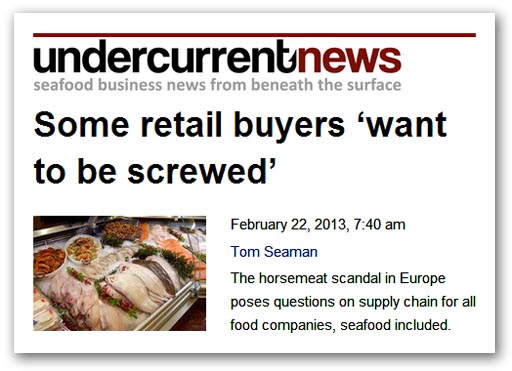
under 022-scr.jpg

As an antidote for the King cant we have an online trade journal for the seafood industry, which offersits own perspective on the horsemeat fraud. In particular, it takes on the "traceability" mantra, often bandied around by "ethical and unscrupulous suppliers alike". It can, says the journal, be engineered and isn't entirely the point here. 

It thus cites an unnamed executive supplying frozen seafood from Asia into UK retailers, who says, "Traceability is about more than a few bits of paper, it's about really knowing your supply chain and your suppliers". On the other hand, another source with a retail supplier says that some retail buyers "want to be screwed". 

These are the ones who go for the lowest bidder and turn a blind eye, as long as things look ok on paper. "They can go to their boss and say 'look at the money I saved you'. Then they point to the bits of paper that show the 'traceability' is all in place".

The journal itself has its own story to tell, referring to a certification scam certification scam on which it reported last October. 

Then, the Marine Stewardship Council (MSC) – which provides a fishery certification programme and awards a seafood ecolabel to "recognise and reward sustainable fishing" - was under fire from processors over allegations that plants in China were mislabeling certified salmon and pollock and undermining the programme. 

The story centred around the inability to distinguish by DNA testing between certified Alaskan, and non-certified Russian wild salmon, as well as Russian pollock. It alleged that Chinese processors, under pressure to deliver cheap prices to win deals in Europe, were mislabelling uncertified fish, using fake documents to authenticate them. 

Thousands of tons of fish, falsely labelled as MSC-certified, had been sold, cutting prices from $7.50 to around $6 per kg, giving processors a competitive advantage. Simple economics should have suggested that something was up, said a source. 

Said the journal, the Chinese plants were not the only companies to blame; suppliers were turning a blind eye to meet contracts from retailers looking the other way. As with the horsemeat crisis, they were all just as guilty. Food fraud is more about a lack of honesty and basic greed than traceability, it says.

COMMENT: "HORSEMEAT" THREAD
Friday, February 22, 2013

Horsemeat fraud: a "new reality"


Tele 022-kin.jpg

Alpha male and multi-millionaire Justin King, Sainsbury CEO, is sounding off in The Daily Telegraph, telling us something we might just have been able to work out for ourselves – that trust in retailers has been "severely damaged" by the discovery of horse meat in supermarket products labelled as beef.

King, at least, has a background in food although his mouth probably prevented him learning as much as he could from the experience, and he certainly does not go out of his way to make friendswith the lower orders. 

True to form, he addresses the argument that that supermarkets pushing down costs have forced suppliers to compromise on quality and safety checks and processes, and that "some type of contamination was a scandal waiting to happen".

This is as neat a straw man as you can get, and then King spends his time telling us that the industry is facing a "new reality", as the horse-meat scandal has "identified potential weaknesses in the food supply chain that must be addressed with urgency and rigour". 

Then follows several yards of corporate BS which show that this over-paid apparatchik has about as much a grasp on the issues as the greens, who put the "scandal" down to glaringly obvious "light touch regulation".

It is getting to be a characteristic of this affair that those who know least are saying most (in public, at least), joined by media pundits such as Leo McKinstry who consistently go for the cheap shot instead of getting down to the real issues. 

As far as Justin King goes, the closest he gets to being right is to doff his cap to the argument that this was "a scandal waiting to happen", even though he doesn't have the first idea why. 

On the other hand, the only thing we can aver it that the causes are complex, and we are going to get more of this type of incident unless they are addressed. And given the huge cost and disruption so far caused – right across Europe – it is worth spending the time an effort to get to the bottom of the affair, as Owen Paterson has pledged to do. 

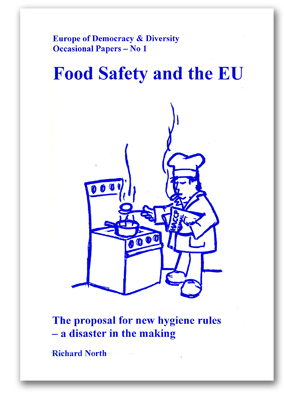
Food safety002.jpgFor me personally, the interesting thing is that, not only did I warn that this was indeed a "a scandal waiting to happen", I actually put it in writing, publishing for UKIP in September 2000, a booklet entitled Food Safety and the EU, sub-titled, "The proposal for new hygiene rules – a disaster in the making" (pictured right). 

Thus, over twelve years ago, I am on record as saying that the regime that the European Commission was then intent on introducing, was going to end in tears, and so it has come to pass. Millions have been lost, thousands of tons of food have been wasted, and industry badly disrupted. 

However, it would be wrong to say that this was a disaster wholly manufactured in the EU. As I explain in my booklet (page 18), there is a British contribution as well, which goes under the title "due diligence". 

This was a statutory defence, which I touched on briefly in an earlier piece, introduced under the Food Safety Act 1990, which allows food businesses to escape conviction for offences under the Act" if they can prove that they "took all reasonable precautions and exercised all due diligence to avoid the commission of the offence".

To be fair, the introduction of a "due diligence" defence was very necessary, as major manufacturers and retailers were being prosecuted unnecessarily, for quite the wrong reasons. I will explore this in more detail in a future post, but suffice it to say that, the EU's mandatory implementation of HACCP gave food business operators, and especially retailers, a "get out of jail free" card, which would effectively give them immunity from prosecution. 

This, back in the year 2000, had me writing that major operations would be aware of the possibilities which HACCP afforded in protecting themselves, and would "tend to devise systems which maximise the success of a 'due diligence' defence". 

Since the defence tended to rely on the documentary trail, I wrote, "emphasis will inevitably be on continuity of paperwork and recording, rather than on ensuring that systems are fully functional". That is exactly what has been happening with the sale of process meats containing horsemeat. All the retailers will have their "due diligence" defences dusted off.    

As to preventing a recurrence, Justin King didn't join Sainsbury's until March 2004, charged with restoring the fortunes of this ailing retail giant. For his shareholders' sake, I hope he is better at retail strategy than he is at this game, otherwise we will see this happening again. And next time, people might die.

The prognosis does't look good though.  Some will argue that King doesn't even particularly shine at retailing. Certainly, he needs properly to address the "new reality", about which he talks. The corporate BS on offer doesn't cut it.

COMMENT: "HORSEMEAT" THREAD
Horsemeat fraud: further complications


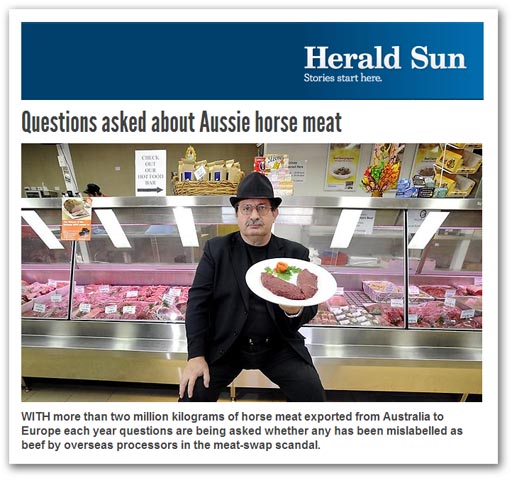
Herald 020-hor.jpg

Of some interest yesterday was a piece in the Herald Sun, pointing out that more than 2,000 tons of horsemeat is exported each year to Europe. The question being asked, down under, therefore, is whether their fine fillies are being relabelled as beef.

This tied in with the news from Iceland that the production of horsemeat there had increased last year, from 878 to 1,500 tons - by 71 percent, with exports almost tripling between 2011 and 2012, from 311.7 to 875.6 tons - by 180.9 percent. 

From here, the speculation arose that, if horsemeats exports to Europe were increasing across the board, with anecdotal evidence indicating that consumption was declining, this would give rise to a glut of horsemeat and explain why adulteration was taking place on such a heroic scale. 

Sadly, though, the raw statistics do not bear this out. According to the very far from user-friendlyEurostat (see: Production and international trade of foodstuffs: Fresh meat and meat products (food_pd_prod2)), horsemeat volume traded in the EU27 is way down even over a period three years. In 2008, internal production plus imports from third countries, with negligible external exports, amounted to just short of 100,000 tons. In 2011, the equivalent figure was around 80,000 tons. 

What we don't have, though, is any idea of what per capita consumption might be, nor any data which might give us consumption trends. The information simply isn't available. The last full dataset (food_pd_prod2) stops at 2008, while the user-functionality of other databases (such as DS_016893) is so obscure that it is frustratingly difficult to extract information from them (I spent four hours yesterday trying and failing to extract data on Australia).

Then, while we have some country-specific data on trade in the internal market, the information is all but useless. As we have seen recently, there are multiple cross-border transfers of product. The trading system is so porous that there is no way of being certain that imports into any one Member State are necessarily consumed there. Furthermore, once horsemeat is used in a processed food, even when sold quite legitimately, it loses its species identity and is recorded generically as a processed food. 

This adds a new layer of complexity to this situation, as it had been generally assumed that a glut of cheap horsemeat was taking the place (in part) of the recently banned "desinewed meat" (DSM). 

The absence of this product meant that thousands of tons of meat had to be sourced from elsewhere and at low cost, leading Dr Mark Woolfe, former head of food authenticity at the FSA, to suggest that "alarm bells" should have been set ringing. However, EU-wide DSM production probably exceeded the entire traded volume of horsemeat in Europe. The entire stock would not have compensated for the lost DSM. 

This suggests that there is something more to these adulteration episodes than has so far been identified. It also suggests that, contrary to Dr Woolfe's assertions, straightforward market surveillance would not necessarily have provided the intelligence sufficient to raise suspicions that horsemeat adulteration was being practiced on an industrial scale. Apart from anything else, EU trade statistics are not sufficiently refined to be used as a surveillance tool.

On that basis, there seems considerably greater merit to suggestions that continuous random testing is a necessary part of the surveillance process. The indirect monitoring, which underpins the EU's control philosophy, would appear to be no substitute for hands-on product quality monitoring. 

COMMENT: "HORSEMEAT" THREAD
Thursday, February 21, 2013

A pause for breath


a-pause-after-clapping.jpg

Readers will have noticed yesterday that, for the first time in weeks – and what feels like months – I was able to break away from the single subject forming our obsession, and glance at other issues.

That does not mean that we are out of the woods on horsemeat, but there are certainly signs of the tempo slackening. This is just as well, as I was already tired when the press intensity increased to crisis level, and I am hovering on the brink of exhaustion.

The slight slackening gives me time to retrench and today we have our first management meeting on the Harrogate Agenda, which now has its incorporated, non-profit company, its board of directors and its advisory panel. We may have been a little quiet on the Agenda, but we have not been idle.

Meanwhile, I'm doing catch-up on horsemeat, correcting some of my errors and confusions – as always happens when you run with a complex issues, where the information torrent so easily gets unmanageable. The details are best kept for a separate post, but what I am trying to do is define and then quantify what I am calling "adulteration episodes", in the hope of producing a definitive list.

These "episodes" are separate, discrete events, unrelated to any other, where a group of actors collectively caused one or more batches of beef to become adulterated with horsemeat. So far, I have identified five but there are more, and even with those I have, some clarifications are needed, especially with the Irish and related events which, in the early stages, I was not so assiduous in following.

What is so intriguing about current events, though, it the general media insistence in turning them into a food scare, and the reluctance to see the big picture, where this fraud is just one example of a growing criminal enterprise which is part of a much larger continuum.

On this, one wishes that journalists would read their own newspapers, as in The Independent of 10 February 2011. Almost exactly two years ago.

Then we had Meg Carter writing under the heading, "With fraud on the rise, do you know the real origin of your food?". Even then, it seems, it was generally known to be on-going problem.

One of the things Owen Paterson's "lessons learned" commission – or whatever he chooses to call it - is going to have to look at, is why food fraud appears not to have been taken seriously, and why sufficient resources and intelligence have not been devoted to it. It will have to ask why signs were missed, and assess whether they could reasonably have been spotted earlier.

The Independent, for instance, retails a (then) recent estimate – based on Food Standards Agency (FSA) surveys of a number of different individual foods – suggesting that food fraud could affect as much as 10 percent of the food we buy.

This is from Chris Elliott, professor of food safety at Queen's University, Belfast, who said those two years ago, "this is why a growing emphasis is now being placed on food fraud detection through investigating and prosecuting alleged fraudsters, and developing sophisticated tests to determine whether a product is what it is claimed to be".

Clearly, as events would indicates, if there was "growing emphasis", it did not grow fast enough or, possibly, it was not properly targeted. The indications are that the authorities allowed a major fraud to build up without detection, for many months, and possibly years. 

Furthermore, they still do not seem to have recognised the scale of the problem, nor instigated effective control measures - especially the European Commission, who are miscasting this as a "mislabelling" problem.

Irish MEP Liam Aylward certainly seems to believe that the Commission failed, calling them "lax and neglectful". He said he raised the issue of food fraud with them last year and had been disappointed with the response. 

The commission had taken the view that official controls and penalties were in place to address food fraud and there was no need to develop a specific strategy to fight it. Operation Opson carried out in 2011, said Aylward, should have sent a clear warning over the dangers of food-related crimes.

These, however, are issues for future posts. Today will be light blogging, while we take the next step towards building some semblance of democracy into our system of government. Then, it will be back to the coal face. There is still much to do.


COMMENT THREAD

Wednesday, February 20, 2013

Horsemeat fraud: planting a flag


Guardian 020-nes.jpg

Watching the British legacy media for news of the Davigel development yesterday offered an interesting illustration of the shallowness of contemporary journalism. Not one media outlet picked up the significance of a major catering supplier selling ready-meals adulterated with horsemeat, in an affair hitherto dominated by supermarkets and their suppliers.

By far the most fatuous coverage though was in the loss-making Guardian which needed three journalists to tell us that Nestlé products in the UK had tested negative for horsemeat. 

This is a classic example of "planting a flag" on an international story, behaviour which is not untypical when reporting EU affairs, something which tends to happen right across the political spectrum. 

And in this case, only later in the piece did we see the Guardian trio deign to tell us that Lasagnes à la bolognaise gourmandes, "a frozen meat product for catering businesses by Nestlé Professional produced in France, will also be withdrawn from sale and replaced with product made from 100% beef".

This was a direct copy-and-paste from the Nestlé press release, one which will no doubt go down in the annals of PR coups as an example of how to say as little as possible while avoiding accusations of a cover-up. How well Nestlé understands the media, knowing that, unless every detail is spelled out, it most likely will not be reported.

However, there is possibly a broader agenda here, in that most of the media, and especially the Guardian is anxious to hammer the supermarkets. Crucially, they seem anxious to sustain their narrative against "cheap food", presenting the image of the profit-centric capitalist running dogs in the retail sector driving down prices so much that the substitution of lower-cost horse meat was an inevitability.

In the Guardian, there is a certain amount of intellectual and ideological incoherence. A newspaper which supports the "deserving poor" on the one hand, also detests the idea of cheap, mass-produced food, and hankers after the bucolic days of local butchers, farm-fresh foods and hand-made produce.

The idea, therefore, that we have a company selling high-end catering products to pretentious French restaurants, passing off over-priced, microwaved fare as "home made", doctoring their meat so as to improve their margins, is not one that fits the current narrative. It maybe that, on a different occasion, it would serve as a running theme, but this line does not fit in with the anti-supermarket narrative. Hence, it remains conveniently obscured.

The big irony though, is that this hankering after a bucolic past is chasing an image that never existed. The "local butcher" of yore, was just as capable of defrauding the public as his modern successor, as this piece recalls.

Here, we see a Bristol-based trader fined £300 after supplying beef containing 25 percent horsemeat which ended up at a butcher's shop in Cheltenham. The only things that have changed are the scale of the fraud, and the international dimensions.

As to food safety, one needs to recall that the most deadly outbreak of E. coli O157 was traced to a local butcher who had recently won the award for Best Scottish Beef Butcher of the Year. Another major E. coli outbreak, this one in Wales, was caused by a local butcher who had also been buying frozen New Zealand mutton and passing it off as Welsh lamb, using the flock number from his farm on the paperwork.

This, incidentally, was the same local butcher who had members of staff at his local meat processing plant repackaging decomposing meat and sending it out to schools.

The point, of course, is that fraud is fraud, big or small, international or local. This current rash of food adulteration is nothing new – it is simply fraud. But, as the Guardian indirectly indicates, a series of criminal events have been hijacked to further numerous agendas, without in any way addressing the core issues.

And this is the problem with this whole affair. The root problems have been misdiagnosed, the agenda-pushers have hijacked them for their own purposes, and now we are facing the wrong remedies for wrong problems. Meanwhile, the thieves will already have  moved on to the next undefended targets.

COMMENT: "HORSEMEAT" THREAD
EU politics: send us your ravening horses


Zeit 020-rom.jpg

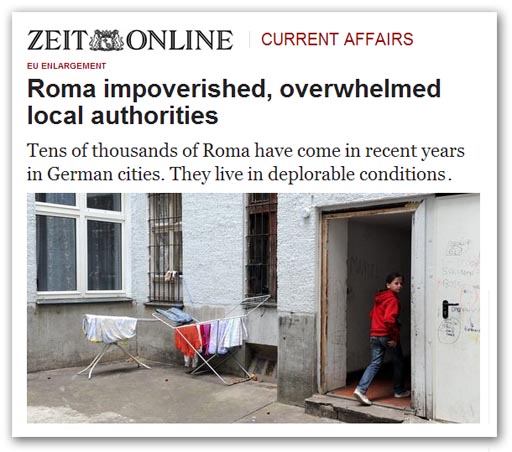
With its genius for missing the point, UKIP chose to make its stand on foster carers during the recent Rotherham by-election, instead of the very real problem of Roma immigration in the constituency. But, as we see from a report in today's Die Zeit, we are by no means alone in having to deal with the problem.

The piece features an internal report by the city council of Dortmund on poverty in migrants from Eastern Europe, which finds that, since 2006, the number of Romanian and Bulgarian immigrants to the Ruhr increased fivefold. In 2012, 3,149 lived in Dortmund, most of them in overcrowded houses fit only for demolition, paying overpriced rents.

The city speaks of 100 "problem properties" in districts that are already socially difficult. It finds that many Romanian and Bulgarian immigrants have no health insurance, and some suffer from infectious diseases such as tuberculosis.

Sub-letting is common, with families letting out already tight space to supplement their low incomes and, in a situation which mirrors Rotherham, children need to be taken into care just because of the housing situation. For vulnerable immigrants, in the Ruhr there is hardly any work, so there is much prostitution and begging.

But this is not new.  Roma have been a problem in Europe since time immemorial, and we have seenconsiderable problems in France and Italy, as well as Holland and Belgium.

The French treatment of the Roma was recently the subject of an Amnesty International Report (with a media summary here). According to this report, there are an estimated 15,000 migrant Roma living in France, most from Romania and some from Bulgaria, often fleeing poverty and discrimination in their home countries.

The French government, said Amnesty, was failing to meet EU and international human rights standards, as a result of which the population was sinking "deeper and deeper into poverty". No one was helping them and this would have "dramatic consequences for the future", president of Amnesty International France, Geneviève Garrigos, said.

At this stage, closing our borders in the near future is not an option. Desirable or not, this is not practical politics. Thus, this piece from 2009, headed, "We will send you our ravening hordes", is worth revisiting.

The lifting of the Iron Curtain in 1989 was always going to create difficulties  for the richer, developed countries of Europe, and one way to contain migration is to assist economic development in the former Soviet satellites. Perversely, buying meat from their abattoirs is one way of helping, keeping jobs local and reducing the pressure which triggers economic migration.

In terms of a solution, therefore, we can see a way forward. We should be telling the governments of the Eastern and Central European countries not to send us their "ravening hordes". They should instead send us their "ravening horses". You only need to change one letter.  

Perhaps UKIP should have a new slogan: "keep immigrants away: eat a horse". 


COMMENT THREAD

Energy: we told you so


Inde 020-war.jpg

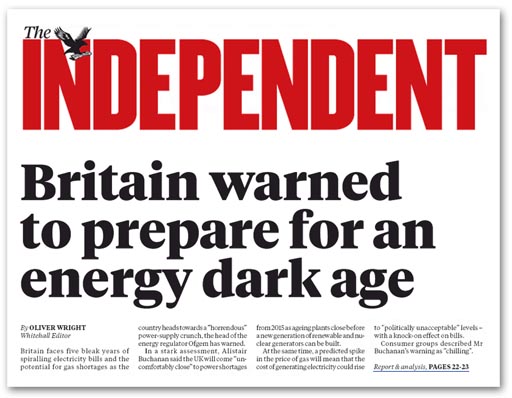
In a stark assessment yesterday, headlined by most of the legacy media, Alistair Buchanan, head of Ofgem, says the UK will come "uncomfortably close" to power shortages from 2015 …".

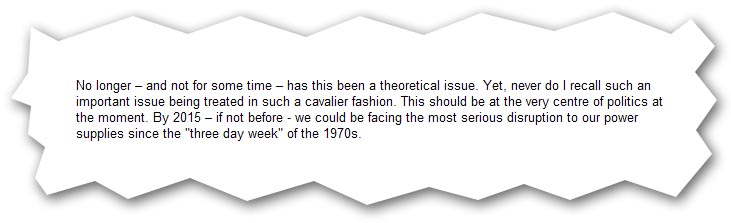
In a stark assessment published on this blog on 4 June 2008 (below), Richard North wrote, "by 2015 – if not before - we could be facing the most serious disruption to our power supplies since the 'three day week' of the 1970s".

energy 020-war.jpg

But, as this piece records, we first wrote about this issue 10 October 2004 and really got into our stride on 17 December 2006 when we strongly suggested buying a back-up generator.

We were at it again on 9 January 2006, when we were worried out the likelihood of anything intelligent being done about the problem receding, and then yet again on 28 May 2008, warning of "things to come" when tens of thousands of electricity consumers suffered blackouts.

On 29 May 2008, we were warning of a "national crisis in the making", on 4 June we were calling for an honest debate about energy and on 3 August, we did our most detailed analysis to date and backed it up with other pieces on 17 September and 22 September.

We were back on the case on 26 September, again on 2 October and yet again on 22 October. Then, on 12 November, in the context of the BBC finally doing a small piece about the possibility of power cuts, we noted the tendency of the media, by act and omission, the media, especially the broadcast media, it deciding for us what is and is not "news".

Now, after all these years, Mr Buchanan is warning that we face power cuts in 2015. And the media is at last deciding that this is news.

Well, I'm shocked.


COMMENT THREAD

Horsemeat fraud: as much a crime as stealing diamonds


Vossko 001.jpg

As things calm down here somewhat, the focus of the horsemeat fraud moves to Germany where, it appears, not one but several plants have been implicated in the beef adulteration.

Yesterday we saw the reports of Schypke, with its state-of-the-art factory in Mühlen, being implicated, but that wasn't the first. There was already another plant implicated, the Vossko GmbHfactory, at Ostbevern, also in North-eastern Germany (pictured above). 

Initially, the situation was more than a little confused, as the early reports had the retailers Aldi and Lidl finding horse meat in tinned pasta and goulash as well as fresh pasta on sale in Germany and Austria. 

To cut a very long and somewhat tedious story short, though, the action moved to Switzerland, and the Swiss Co-op, which confirmed that its own brand lasagne had been produced by Comigel, the firm at the heart of the scandal. 

There the trail might have stopped, but for the fact that it emerged that the Co-op found other products adulterated with horsemeat, and on Monday, along with several other retailers – including Lidl – removed nine further items produced by the Liechtenstein firm Hilcona.

It now transpires that the offending products were made by Vossko, which has admitted responsibility, with positive horsemeat samples having been reported by the Austrian Agency for Health and Nutrition Safety (AGES). The Swiss authorities found four products positive for horsemeat. 

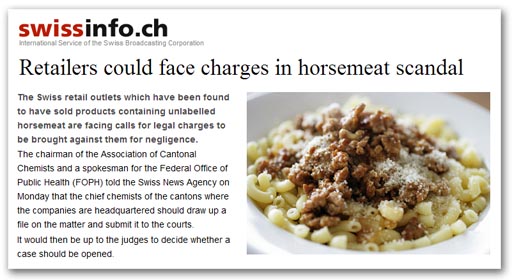
The plot now thickens in that the Swiss retail outlets which have been found to have sold products containing unlabelled horsemeat are facing calls for legal charges to be brought against them for negligence. 

Swiss 018-ret.jpg

This comes from the chairman of the Association of Cantonal Chemists and a spokesman for the Federal Office of Public Health (FOPH). He told the Swiss News Agency on Monday that the chief chemists of the cantons where the companies are headquartered should draw up a file on the matter and submit it to the courts. It would then be up to the judges to decide whether a case should be opened.

This is in marked contrast to the treatment of the retailers in the UK. Here, under the Food Safety Act 1990, it is a criminal offence to sell food which is not of the "nature, substance or quality demanded", and it is open to local authority trading standards departments to prosecute those companies which sold adulterated products.

So far, we have not heard anything of the intentions, but it seems possible that there is some reluctance to proceed with an expensive prosecution when the retailers can invoke the "due diligence" defence. All they have to do is prove that they "took all reasonable precautions and exercised all due diligence to avoid the commission of the offence".

As with the Swiss, it would be interesting if the judges were involved over here, not least to test whether the "plausible deniability" which forms the basis of supermarket control regimes would stand up to scrutiny.

On the wider front though, we now have good evidence of five separate plants producing adulterated products, still further reinforcing the view that we are dealing with an epidemic of fraud.

And while there are siren voices suggesting that none of this is very important, the scale of the criminal activity is easily equivalent to the Brussels airport diamond heist. Food adulteration is every bit as much theft as stealing precious stones. Why rob a bank when you can make more flogging dead horses?

COMMENT: "HORSEMEAT" THREAD
Tuesday, February 19, 2013

Horsemeat fraud: the game changer


CFEC.jpg

I am so pleased that Nestlé has been caught up in the horsemeat fraud. When food safety was "big" in the European Parliament, with the passage of the first tranche of the "hygiene package" which was to introduce HACCP, Nestlé was very much in evidence, lobbying hard for this paper-based system.

At the time, I was trying to forge a cross-party alliance against the scheme, warning it would be a disaster. Even to this day, I remember a conversation with Roger Helmer, hoping to get him on-side. But his dismissive response was: "well, the industry seems to like it".

One of the other big lobbyists in Brussels at the time was McDonald's, and that should have told Helmer exactly where we were going. The corporates love HACCP. It is the ultimate in bureaucratic system – devised by a giant bureaucracy (NASA) for other bureaucracies. It saves them a fortune in hands-on checks and, more to the point, giving them effective immunity from prosecution when the system goes wrong, which it is always going to do. 

Relatively low-key in Britain, reflecting the parochial, "little Englander" tendency of the legacy media, the German press are playing it big, as a German supplier, H.J. Schypke, is involved. Thus we seeSpiegel gleefully proclaiming: "horse meat scandal reaches Nestlé", one of many papers to feature the story. 

With the Irish adulteration episode, the Spanghero fraud, and now this, this is possibly the third, separate production centre to be affected, each ostensibly unrelated to each other, reinforcing the view that we are dealing with a complex network of international fraud. 

As before, the network here is complicated, involving Nestlé-branded products, apparently contracted to JBS Toledo, part of the Brazilian-based JBS – the largest beef producer in the world – and then contracted to Schypke, with its state-of-the-art factory in Mühlen, between Bremen and Bielefeld, not far from the Dutch border. 

Schypke itself is a big, prestige player, its website boasting that it sources "impeccable raw materials" to "guarantee a consistently high standard of our finished products".

This, as it is turning out, is the usual corporate BS that has now ensnared Nestlé the world's largest food producer. It has announced that it has been forced to withdraw two chilled pasta products, Buitoni Beef Ravioli and Beef Tortellini from sale in Italy and Spain. 

Davigel 001.jpg

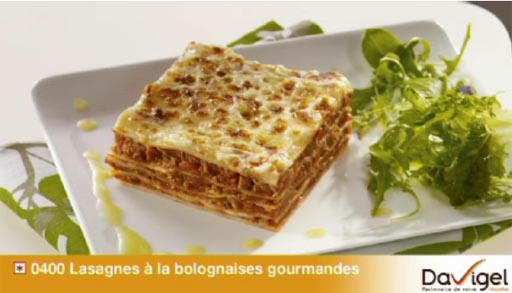
However, it has not stopped there. A high value product called Lasagnes à la Bolognaise Gourmandes (pictured immediately above), a frozen meat product for catering businesses produced in France, has also been withdrawn. With what appears to be a separate adulteration episode of a processed beef product, this further magnifies the horsemeat affair and puts it in a different league.

Crucially, this is a high-end catering product, produced by the billion-euro Nestlé subsidiary Davigel - part of Nestlé Professional - from a massive industrial complex just outside Dieppe.

Nestlé are being very coy about naming their own company, not least one assumes, because their own restaurant customers do not want their clientele to know they are being given factory-produced meals. Nor are they talking about adulteration. The press release is headed: "Supplier found to have mislabeled beef".

According to RTP News in Portugal, Nestlé has also admitted to removing the Davigel lasagne from sale in Portugal, although it did not identify Portugal in the original press release. This was the first media reference we had seen to Davigel but the adulteration is confirmed by another source. And now, the identity of Davigel has been further confirmed by FranceTV and AFP.

"One batch was affected," said Antonio Carvalho, spokesman for Nestlé Portugal, without being able to specify the quantity of products to be withdrawn or the number of customers who had purchased this lot of lasagna.

One can understand the coyness. Davigel is listed as a frozen horsemeat supplier in a business directory, as is its Belgian satellite, Davigel Belgilux NV. But the firm will be extraordinarily sensitive to any adverse publicity as it has just expanded into the lucrative hospital catering sector, with a market potential of 500 meals a year. Last year, the first contract was signed with the University Hospital of Toulouse, committing to the sale of two million meals.

Davigel says it is offering an improvement in the quality of food, with a range of dishes grouped under its "healthcare catering menu". The firm says it is scientifically proven that "patients recover faster when well nourished", suggesting that its foods "can help to reduce the period of hospitalisation".

The involvement of this catering supplier knocks into touch the idea that the horsemeat adulteration only affects freezer-fodder for the chavs, driven by pressure from cost-cutting supermarkets. Davigel is in the quality catering market, the group employing 3,000 workers, with a fleet of 550 vehicles servicing 10,000 restaurants.

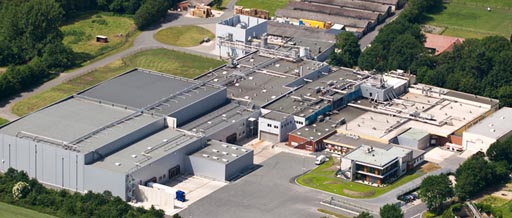
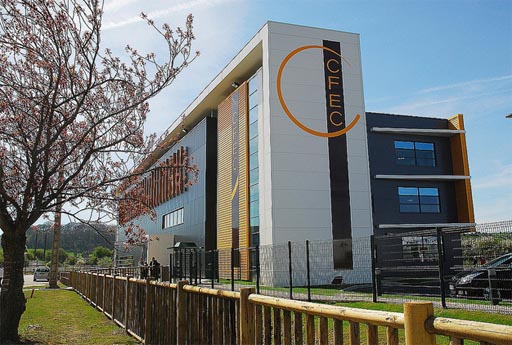
With delicious irony, Davigel opened in April 2011 a training centre for "culinary expertise" (CFEC), located in Dieppe (pictured top), to train catering "professionals" in the use and presentation of food.

Now, with the involvement of Davigel, we would appear to have four widely separated European production centres all selling manufactured products adulterated with horsemeat – the Dublin-based Glencore, Comigel in Luxembourg, Schypke in North-west Germany, and Davigel in Northern France.

Davigel is a serious game-changer. At last we are beginning to see the issue for what it is. The affair is a massive, international epidemic of fraud, involving a series of multinational companies - across the quality spectrum - which appear to be wholly unable to contain it. We are witnessing a system failure on a heroic scale, now affecting tens of millions-worth of product.

This is a gigantic economic fraud. It is about time we treated it as such, and stopped letting the lefties using the affair as a platform to pursue their multifarious agendas, ranging from anti-capitalism, to social policy, public-sector jobs and animal rights. We need to focus on the real agenda. We are dealing with a multi-million, international fraud, and should not allow ourselves to be distracted.

COMMENT: "HORSEMEAT" THREAD
Horsemeat fraud: the TV narrative


BBC 017-pan.jpg

Much against my better judgement, I watched both Dispatches and Panorama last night, both claiming to give the inside story on the horsemeat scandal.

I think it is fair to say that the programmes were very similar in their approach. Both sought to target supermarkets and both sought to ramp up the health scare, featuring Irish horses and the "bute" horse painkiller.

Panorama ran with the "cuts" meme, using a darkened profile of our newly retired meat inspector, telling us how reducing the hours of inspectors in cutting premises caused the adulteration of meat in a French-owned food processor, based in Luxembourg.

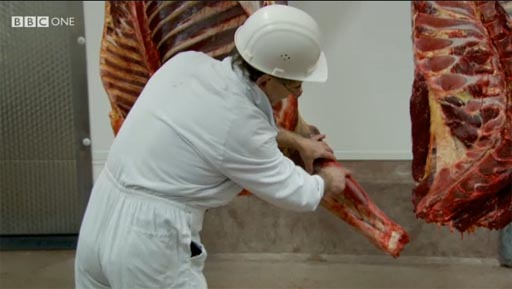
This was formula journalism at its worst. We were treated to an utterly stupid sequence, showing the difference between a horse and beef carcase (illustrated), but was given no inkling at all of how the horsemeat would have been used, and how thus it escaped detection during manufacture.

Even though the French government investigation is now in the public domain, we got nothing of the recent details about how Spanghero was at the heart of the fraud. Yet, as far as both programmes went, they were supposedly telling us who was "really to blame" for horse entering the food supply.

Needless to say, we got nothing of the "bigger picture", that this episode was but one example of food fraud, which is endemic in the food business, and that the system simply is not geared to detecting such fraud.

Nor did we hear anything coherent of the role of the EU, despite the fact that food law is an exclusive competence. Both programmes interviewed Owen Paterson, but neither had him repeating what he has so often said elsewhere, that the EU system has prevented a more hands-on regime being used.

Panorama made extensive use of Malcolm Walker, the chief executive of UK retailer Iceland, dismissive of the scare, saying his firm did not test for horsemeat, but it did not test for cat or dog either. "You can't test for everything', the programme had him say.

For us, though, it is easier to deal with what the programmes did not say. This was food fraud spanning a period of over six months, with 750 tons of horsemeat adulterating 4.5 million meals passing through a single processor. And no-one noticed. The quality regime in the factory failed, and the official inspection regime failed. Yet neither programme seemed in the least interested as to why.

And this, of course, is only one of the adulteration episodes. The original Irish findings came from another source, and we have yet to get to the bottom of it. From one of the programmes – I can't remember which one – we got a frankly risible account of how the Irish Food Safety Authority (FSAI) "thought like a food fraudster" and somehow divined that horsemeat adulteration was the thing to look for.

Perhaps the programme researchers should have read The Groocer which retailed Owen Paterson telling the Commons that the FSAI "acted on specific intelligence" when deciding to test, despite insisting that its tests were simply part of its routine monitoring.

Perhaps then we ought to leave the last word to Paterson. As recorded by the Independent, after his meeting with the supermarkets. "They all assured me that they will not rest until they have established the full picture. There is still much to be done to find out exactly how this happened and how it can be prevented from happening again... ", he said.

Whatever else, watching either Dispatches or Panorama wouldn't have told you what happened. These programmes didn't even appear to have been interested in finding out. They had their narratives, and that's all they needed.

COMMENT: "HORSEMEAT" THREAD
Monday, February 18, 2013

EU regulation: governed in ignorance


Adding to the growing evidence that public figures and the media have little idea of how we are now governed, we retail below several recent examples.

The first in line would have been seen by watchers of the Murnaghan programme on Sky yesterday, when they were treated to a dissertation from the tight-lipped Anne McIntosh, MP. She heads up the EFRA Select Committee and has been voluble in the Commons (pictured above) about imposing an import ban on processed foods, to prevent products adulterated with horsemeat reaching British consumers.

As she had done in the Commons, she cited an old case from 1979, known as the "Cassis de Dijon", as justifying an import ban. She argued that this French low alcohol product, which had been refused an import license by the German authorities, provided a precedent for a temporary ban while the issues were sorted out.

In fact, though, while import of the product had been temporarily banned, the subsequent court casevery much established the fundamentals on which current EU rules are based, effectively setting the principles by which import bans are prohibited.

Effectively, the very case that McIntosh cites as permitting a temporary export ban, is now the one used as a precedent to rule out the very ban which she calls for. She has got things completely wrong.

However, Murnaghan yesterday went on to cite the French ban on British beef as a result of BSE, but there the French government, calling in aid its own expert authorities, cited health grounds. This, in a highly contentious decision was subsequently upheld by the European Commission.

Restrictions on free movement of goods on health grounds are permitted by the Treaties, currently Article 36, but, since it is accepted that the horsemeat adulterated beef presents no risk to health, it would be difficult to invoke this Article as justifying a ban.

Today, though, we see Morrisons managing director, Gordon Mowat, tell the BBC that "a simplification of the supply chain was needed so customers knew where their products were coming from". The supply chain had been "allowed" to get too complicated.


This led to a moronic question from the BBC interviewer, who asked: "Do you think it's time the government stepped in and actually simplified the supply chain, so that an animal over here might not get slaughtered in another country, processed in another country and then sent back as a ready meal?"

You would think that the europhile BBC, which so often gives a platform to anyone prepared to extol the virtues of the Single Market, would realise that the very thing suggested there is impossible under the self-same Single Market. National governments no longer have the power to "step in" and simplify the food "chain".

Again and again, though, one confronts this startling level of ignorance which in some cases amounts to a complete refusal of europhiles to accept the consequences of our membership of the EU.

Thus, yesterday, I found myself on the Telegraph website dealing with people who refused to believe that food inspection standards were so tightly controlled by the EU that we were limited both as to the minimum standard and the maximum and, especially, as to frequency at which official inspections could be carried out.

To the claim from "putneycommon" that "each country is free to have higher standards of inspections … if they desire", I was moved to respond (in several posts) that this was not the case.

As I pointed out in my earlier piece, the organisation and procedures to be adopted by "competent authorities" are governed, down to the smallest detail. Firstly, there is – as previously explored -Regulation (EC) 854/2004" laying down specific rules for the organisation of official controls", sub-titled: "Requirements and responsibilities of Competent Authorities".

But that is not even the half of it. As to procedures, and the all-important frequencies of inspection, we have Article 8 of Council Directive 93/43/EEC, and in particular Art 8 (2).

Looking at this, we find it requires that: "Member States shall provide that all food premises are inspected at a frequency which has regard to the risk associated with the premises". On the face of it, that is pretty anodyne, but it has profound implications when we start putting it together with other parts of the acquis.

In this context, our next port of call is Regulation (EC) No 882/2004 "on official controls performed to ensure the verification of compliance with feed and food law, animal health and animal welfare rules". Article 3 is the "killer" here, with the reference of frequency of special interest.

"Member States", it instructs, "shall ensure that official controls are carried out regularly, on a risk basis and with appropriate frequency, so as to achieve the objectives of this Regulation".

Again, we see anodyne wording, but that belies its power. Competent Authorities are given a list of things they must take into account in defining the frequency of inspections, including the "food business operators' past record as regards compliance". The very clear inference from the totality is that, as long as the operator presents a favourable profile, the inspection frequency must be reduced.

If there is any doubt about this, Recital 13 sets out the key parameters, stating that: "The frequency of official controls should be regular and proportionate to the risk, taking into account the results of the checks carried out by feed and food business operators under HACCP based control programmes or quality assurance programmes…".

There, tucked into the text is the next "killer" word - "proportionate". This refers to the proportionality principle, which is actually set out in Article 5 of the Treaty of the European Union. The rule limits actions to those necessary to achieve the objectives of the Treaties – no more, and no less.

Application is further elaborated here. The principle first affected EU law, we are told, in theInternationale Handelsgesellschaft case in 1970, where it was stated: "A public authority may not impose obligations on a citizen except to the extent to which they are strictly necessary in the public interest to attain the purpose of the measure".

Proportinality is regarded as a safeguard against the unlimited use of legislative and administrative powers and considered to be something of a "rule of common sense", according to which an administrative authority may only act to exactly the extent that is needed to achieve its objectives.

Standing back from this, nowhere will you see anywhere in EU law a specific restriction, overtly stated, limiting the frequency of inspections that may be carried out - or even frequency and extent of food sampling.  EU law is rarely that specific. You have to put together Regulation 854/2004, Art 8 of Council Directive 93/43 and Art 3 of Regulation 882/2004, tie them in with Recital 13 of 882/2004 and add Art 5 of the Treaty of the European Union. Stir well and all becomes crystal clear.

Certainly, the EU's Food & Veterinary Office (FVO) is in no doubt that frequency of inspection comes within its purview, as can be seen from this report. See page 14, where reference is also made to uniformity of inspections – another key parameter, one which the FVO seeks to impose across the entire 27 Member States.

And should the FVO not intervene, the issue of proportionality is judiciable both in respect of UK law, via judicial review, and in the ECJ. It is entirely open to food business operators to challenge competent authorities in the event that they believe inspection frequencies to be excessive, as indeed I once did, on behalf of a group of slaughterhouse owners.

Complicated this may all be, but that is now part of our system of government – where the minutia of administration is dictated by an alien power. How interesting it is, as Booker observes, that those who are most in favour of it seem to be most ignorant of what it entails.


COMMENT THREAD

Horsemeat scandal: multiple agendas


We've had over a week now of high-intensity publicity and although it is abating, it is very far from over. We've had a wonderfully mad piece from Will Hutton and a classic anti-supermarket piece inThe Observer, balanced by a frankly stupid comment by Malcolm Walker, CEO of Iceland, and a thoroughly crass intervention from the Waitrose boss.

Everyone, it seems, has an agenda, using the events as a launch platform for their own ideas and prejudices. Even Rod Liddle joins the throng, with a piece vying in madness with Will Hutton.

Liddle takes exception to ministers and the UK food industry distancing themselves from blame. He attempts to parody their positions, having them tell us: "it's not Britain, with its rigorous food hygiene standards, democracy and proper drains — it's the wogs, of course, beginning at Calais". And then, says Liddle, "they distanced themselves a second time by suggesting that not only was it foreigners, but 'criminal' foreigners. Gangs, mafioso and the like, some massive organised crime being perpetrated against the British people.

Instead of getting himself worked up about shadowy unnamed foreign criminals, he rants, the environment secretary Owen Paterson "should be pointing the finger at the supermarkets and the food companies here". Otherwise, he hints darkly, "we might begin to think that the government has not entirely got our interests at heart and is concerned only with saving the reputations, and thus future income, of the likes of Tesco". 

This is "Liddle Englander" writ large. Yet, even as he prattled, the French government was revealing it had "overwhelming evidence" of a major criminal fraud perpetrated by Spanghero, while The Observer- no friend of ministers or the supermarkets - was reporting that key intermediaries involved in the horsemeat trade appeared to be using a similar secretive network of companies to the convicted arms trafficker Viktor Bout.

The two things that most media commentators seem unenthusiastic about confronting, it seems, are EU involvement and the large scale fraud pervading the food industry. On the EU front, Owen Paterson is still a lone voice amongst senior politicians in insisting that food law is an EU competence. He is also largely alone in stating that too much of the EU system is paper-based. It relies on trust; there is not enough testing.

Particularly interesting here is the silence of the supermarkets. They have the most to lose from inadequate control systems, and also from food fraud on the scale experienced, yet they are keeping quiet about these issues. We are told they are battling to regain trust, but they are not declaring their real agendas. And, while people may not understand what they are playing at, most can intuitively sense that the whole truth is not being told.

Thus, although some of the heat has come out of the issue, there has not yet been closure, and the media is still mischief-making. There is, I fear, more to come.

COMMENT: "HORSEMEAT" THREAD