Monday, May 06, 2013

EU referendum: a failure to deliver

Telegraph 006-ham.jpg

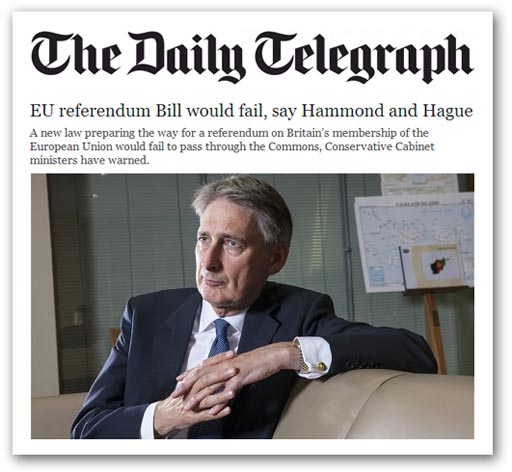
For all the rhetoric emanating from the Conservative Party, and the machinations of the back benchers, Philip Hammond and William Hague both bring their colleagues down to earth with a bump, telling them that the parliamentary party does not have enough votes in the Commons to force through a Bill on an EU referendum.

Mr Hammond said it was "the simple reality" that a Bill would be impossible to get through parliament in the face of opposition from Labour and the Liberal Democrats, a comment endorsed by Hague, who declares: "All Conservative MPs have to bear in mind that key point I'm making: we don't have a majority in the House of Commons".

As to whether the Lib-Dems would help the Conservatives out, Simon Hughes, the Lib-Dem deputy leader, is clearly ruling that out. It would be "madness", he says, to hold an EU referendum before the next general election in 2015. People's concerns, he says, are the economy, declaring, "I think it would be madness to have a referendum and spend all our time thinking about whether we should be in or out of Europe when the priority is to sort out the economy".

This is not going to put the chatter about a referendum to bed, but the reality is that we are not going to see an EU referendum this side of the general election.  That, of course, leaves the Farage Party to turn the euro-elections into a pretend referendum on continued membership of the EU, and proclaim a moral victory when it comes in with the most number of seats. Moral victories, though, don't butter the parsnips, as they say. 

Nevertheless, if Farage has his way (and he usually does), his victory line-up will include Tory re-tread Neil Hamilton, imposed over the heads of grassroot members, who complain about being "totally ignored" over selection choices.  Then, that always was the case, with The Great Leader rigging the lists whenever he could get away with it. 

All of this will get us no closer to actually holding an EU referendum, much less an in-out referendum, and it remains the case that, if the Tories actually get into office again at the general – with or without the Lib-Dems – it will be in spite of the Farage Party. Even though it may draw some support from erstwhile Labour voters, the bulk of UKIP's support (apart from ex-BNP) will come from former Tory voters. 

If Labour, with the assistance of UKIP, gets into office, the likelihood is that we will not get an in-out referendum, which is perhaps just as well. We are not in a position to win one.  Thus, it is a choice of "vote UKIP" and don't get a referendum, or "vote Tory" and possibly get a referendum, even if it is one we can't win, or one which is irrelevant anyway. 

All the time the timetable is slipping and, having given the electoral route the best part of twenty years to deliver, without a result, not a few are beginning to take the view that more direct action is needed. Certainly, those who have expectation of the Golden Boy becoming prime minister, or his forging an electoral pact with a resurgent Tory Party, and leading us to the sunlit uplands, are in for an even longer wait.

Thus, as we stir the turgid electoral swamp, a great deal of gas is released, but nothing actually gets us anywhere near our objective. Right across the board, there is a failure to deliver, leaving many to wonder quite what it is we have to do to get us out of the EU.

COMMENT: COMBINED ELECTION THREAD

UK politics: a swaggering we will go

AM 006-far.jpg

Says The Times peeping from behind its paywall: "A swaggering Nigel Farage told jittery Tories that he might help them to retain their seats if they got rid of David Cameron".

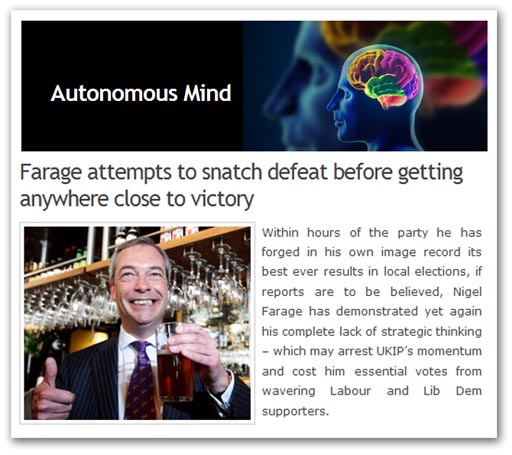
One appreciates, though, that with the Farage-mania at its height, one is not supposed to criticise the anointed one, but the news has not reached Autonomous Mind. He is not at all impressed. Furthermore, a correspondent thinks Farage may have reached the pinnacle of his hubris. 

When the dust dies down and the Conservatives stop panicking but look around, writes my correspondent, they will see that UKIP does not have all that much to offer by way of an agreement. But, more to the point, will the party members really like the idea of getting rid of their elected leader because another and much smaller and less important party is demanding it? 

AM makes the point that Farage has also undermined UKIP's apparent appeal as an entity that stands apart from the discredited three main parties; for instead of occupying the high ground above the political class in the eyes of jaded voters he has instead signalled his desperation to join with them. 

UKIP candidates who enjoin voters to reject the Lib-Lab-Con will now have to explain why given UKIP's plan is to cosy up to the Conservatives, AM adds. One might venture that this seems to be a case of "vote purple, get blue".

Tory MP Peter Bone certainly seems to think this is the case. UKIP's success, he says, made the case for an alliance between the two parties that would see them fielding a joint candidate. 

"There was a tremendous Conservative vote", Bone adds. "There were the conservatives that voted Conservative and the conservatives who voted UKIP. The trick is to get us all together again and that's what we've got to do".

The real trick, though, is how Farage will handle his new bestist friends and their ideas for a "mandate referendum". Is the golden boy in favour of renegotiation? I think we should be told. 

COMMENT: COMBINED ELECTION THREAD

Sunday, May 05, 2013

EU referendum: the way forward

000eu free future.jpg

Booker and I have often referred to the establishment of the European Union as a slow-motion coup d'état, a revolution by any other name. And if it is really the case that the EU is the fruit of a revolution, that makes eurosceptics – almost by definition – counter-revolutionaries.

It is perhaps better, though, to look forward. Rather than simply seek to undo the damage that has been done, our energies would be better directed at plotting a revolution of our own, seeking a better, more equitable society in which democracy has a chance of thriving. 

But, if it is revolutionaries we are, then we must behave like them. And that means we must have a plan – a strategic plan. No revolution has ever succeeded without one. And, like the Harrogate Agenda, my suggested plan has six points, which I conveyed to the CIB on Saturday. These are: 

1. A credible exit plan 
2. Reassurance for business 
3. An alternative to the EU 
4. A network for dissemination 
5. Agitation 
6. A coalition of allies

1. A credible exit plan

The absence of a credible exit plan, agreed by the bulk of the eurosceptic movement, is a major weakness. If we cannot agree on how to extricate ourselves from the EU, how can we expect the electorate to have the confidence to support withdrawal?

However, the emphasis must be on credibility. And such a scheme, we would argue, is to invoke Article 50 of the Lisbon Treaty, leading to a negotiated exit based on UK membership of the EFTA/EEA as an interim settlement. To ensure short-term continuity, we would have all EU law repatriated, giving time for examination and selective repeal, and the enactment of replacement legislation as necessary – all over a period of some years.

In any exit negotiations, we would also go for a "sunset clause" on any agreement, with an option to renegotiate terms at, say, five-year intervals – one aim being to strengthen the role of EFTA.

2. Reassurance for business

Although the EU has been characterised as an economic union, it is a political construct with the objective of political integration – the final state being the United States of Europe. It is the means by which we are governed.

Continued membership or withdrawal, therefore, is not a matter for business. It has no right to determine, and nor should it have any say in how we as a people are governed. We should not accept any role for business in a referendum campaign.

However, business has a right to expect a predictable and stable regulatory and trading environment, the status of which is affected by our membership. Therefore, we need to be able to assure the business community that, should we leave the EU, there would be no adverse effects.

In effect, that would mean "protecting" membership of the Single Market – which could be achieved through EEA membership. And, as long as that membership is assured, business has no locus in the broader debate.

3. An alternative to the EU

Withdrawal from the EU, simply to hand back power to the Whitehall/Westminster matrix is not an attractive option. But, as much to the point, the EU is a symptom of a greater malaise. Leaving the EU, therefore, may not solve our more deep-seated problems.

If one adds to this the general principle enunciated by Richard Stokes MP in October 1940, that it "is no use fighting for a negative object". To attract the broadest constituency, we need to mount a positive campaign, offering an alternative, more attractive vision of society.

This is where we believe that The Harrogate Agenda could have a role. This has the added advantage, from a campaigning point of view, of being incompatible with our membership of the EU.

4. A network for dissemination

Spreading the message is an essential part of any campaign, but reliance on the media is not going to be sufficient. Formal and informal networks will have to be built, some not dissimilar to direct marketing networks. Activities should include formal training and education, as well as more general propagandising.

Many revolutionary organisations have acquired their own newspapers, or news magazines, as a means of better spreading the message.

5. Agitation

Major changes in political systems are rarely achieved without a degree of what might be loosely called "agitation" – action against government through mechanisms outside the normal electoral process. In fact, working within the existing political system is rarely effective as political parties generally serve to create and reinforce the status quo.

Non-violent activities might range from street demonstrations of varying size to non-cooperation, passive resistance, and active civil disobedience. The essence it to reflect the withdrawal of consent to being governed under the current system, which has little effect unless it is communicated in very visible ways.

The problem which revolutionary groups confront, especially in England, it that we have generally a conformist and obedient society, and one which is often slow to complain, even when there is good cause to do so.

Conformity, of course, is learned behaviour, conveyed by parents and schools, and through employers, plus official actions and sanctions. By the same measure, non-conformity and outright disobedience has to be taught, with guidance and active instruction given.

Activities can range from the most simple, such as the late-payment of official imposts – such as Council Tax, water bills, BBC license fees and other such fees. Even a low-grade nuisance campaign can have an effect, such as refusing direct debit payments, and sending cheques instead (without official reference numbers). Instead of being sent to payment offices, these can be addressed personally to the private offices of chief executives, stressing their administrative systems.

A suggestion which reached me was a small sabotage campaign called "English spoken here". If we are required to provide immigrants with information about how to claim benefits, etc., let it be in English. We visit every agency, every employment office, etc. and remove all information (leaflets, brochures) not in English. Such small actions are the way to go. A lot of littles make a lot.

A very wide range of activities is in fact possible, many entirely risk-free and totally within the law. All tend to rely on numbers for their effect, but the range is limited only by the imagination of campaigners, and the extent of any networks, which are needed to spread ideas, techniques and experiences.

6. A coalition of allies

When it comes to confronting governments, we have the inherent advantage of numbers – there are always more of "us" that there are of "them". However, that advantage is only manifest if people are prepared to work together, and offer mutual support.

For that purpose, we get perennial cries for "umbrella" and "co-ordinating" groups, none of which ever come to anything. Not least, to maintain a fragile unity, compromises have to be made on strategy and objectives, which weaken strength and resolve.

Thus, the only real possibility of magnifying the effect of the disparate organisations is to form loose coalitions, willing to share information, occasionally co-ordinate action and to work towards the development of common strategies on certain issues. This will become essential in the event of a referendum campaign, where bids will have to be made for the official "no" campaign funding.

Conclusion

This outline does not pretend to be comprehensive, or in any way represent a definitive statement. It aims to make the points that a plan is needed, and then offers some elements which might be included in such a plan.

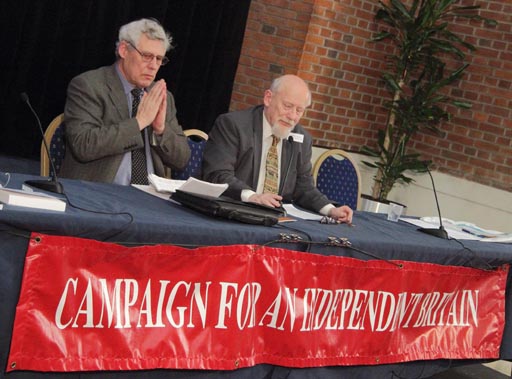
I was grateful to the CIB for inviting me to their meeting, to Edward Spalton for chairing the meeting (pictured in the previous post) and to the members for giving me a friendly and attentive hearing. The vibrant questioning was also very welcome.

Whether you agree or disagree with the detail, I would nevertheless aver that we will achieve nothing, and have achieved nothing, without strategic planning, aimed at achieving defined objectives. In my view, we either reconcile ourselves to that or we fail.

To me, that certainly is not an attractive option, and one which I intend to avoid.

COMMENT THREAD
UK politics: no further forward

CIB 005-nor2.jpg

I expected a certain amount of hostility when I raised the issue of turnout at the Campaign for Independent Britain meeting yesterday. But when I pointed out that the vote was shrinking, suggesting that this contradicted claims of a popular movement "on the march", I got a general murmur of agreement.

To judge by some reaction though, while Farage is to lauded for his "plain speaking" and "straight talking", that same freedom should be denied to anyone wishing to look beyond the media hype. 

Even Autonomous Mind is enjoined to get behind "the only team in town" and to "stop the continual sniping at UKIP". The anointed one's party, it seems, must be exempted from the normal process of critical analysis, as we bow down and hail the stupendous victory of The Great Leader. 

Actually, though, Booker is right. He sees in the "surge" for the Farage Pothole Party not any great support for the party itself, but a reaction to the behaviour of the political classes – a Europe-wide reaction which is reflected in the growth of dissident parties in Germany, Austria, France, Italy, Spain, Greece and elsewhere. 

In some senses, it perpetuates the continued degradation of the voting system, which is supposed – in theory – to pick the best individual candidate to represent the voters in their areas. In some cases we have seen elected "paper" candidates with no political experience, representing a party which has no track record in local government. 

In other words, the vote was not so much for UKIP as against the political classes, something which was picked up by Martin Hill, the Conservative leader of Lincolnshire county council. Heacknowledges that UKIP has successfully "plugged in" to this issue of EU migrants. Unease about this social change has been worsened by a feeling that Westminster is not listening to voters or speaking their language, particularly in rural areas, he suggests. 

"People feel there is a political elite a bit divorced from ordinary people", Hill adds. "On the doorstep, it wasn’t the policies, it was about the feeling of the disconnect".

This distinction is incredibly important when it comes to trying to understand the nature of the processes we are witnessing, which are otherwise swamping by the media chatter which is no more accurate nor perceptive than it ever has been. 

Crucially, we see in the response to Farage, renewed calls for a referendum, and even the idea of a "mandate referendum". This some Conservatives MPs want as early as next May, in which the public will be asked whether they want the government to negotiate a "new relationship with the EU based on trade and political co-operation".

Slated as a "UKIP killer", if this gathers a head of steam, it is very dangerous for the eurosceptic movement as a whole. 

To reject the very idea of such a referendum invites the claim that people are not interested in "Europe", to refuse a mandate is to suggest that we are happy with the way things are, and to vote "yes" gives the prime minister a spurious authority for something he can't do anyway.

On the other hand, the very last thing we want is an "in-out" referendum - which we would be certain to lose, setting back the movement for a generation. If Mr Cameron had any sense, he would offer just that, calling Farage's bluff and lancing the boil.

And it is here that the criticism of Farage is strongest - and rightly so. Ten years ago, many of us were arguing with the man that UKIP needed to develop a credible exit plan.

Ten wasted years later, the party still does not have a credible exit plan. Furthermore, last Thurday's "success" brings us no closer to getting one. Nor indeed does the party have a strategic plan to secure our withdrawal from the EU – other than perhaps getting the anointed one to Number 10 where he can wave a magic wand and lead us to the sunlit uplands.

Yet, to point out that a possible (and likely) outcome of Farage's long-term dereliction is to lead us blindly into a referendum contest that we cannot possibly win is seen by is growing band of acolytes as heresy and even worse.

But, without a plan, without a strategy, we lose. Farage's disparate bunch of amateurs are up against real professionals. Confronted with the might of the media, the political establishment, the wealth of corporate business and the power of the EU, our chances of winning a referendum always were slight. For all the energy and funds expended on the Farage folly, all we might have achieved is one step closer to annihilation.

In my next post, therefore, I will sketch out the bones of a plan, offering ideas of how we can actually go about getting ourselves out of the EU, ideas which I set out to the CIB yesterday. 

Photograph courtesy of David Wilkinson, with thanks.

COMMENT: COMBINED ELECTION THREAD

Saturday, May 04, 2013

UK politics: playing away


000Mail 004-ele.jpgI will be in London today talking to the Campaign for an Independent Britain, on the general subject of "the way forward" for euroscepticism.

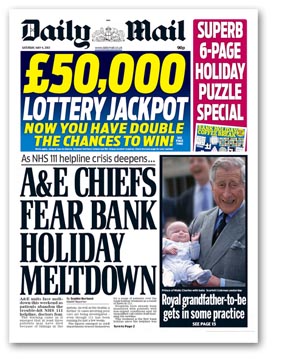
It will come as no surprise to readers of this blog that my list of things we must have in order successfully to secure an exit from the EU does not include the Farage Party, which is more and more looking like a cul-de-sac. And in a subliminal message which affirms that, we see the front page of the Daily Mail (left) where any news of the "great victory" is remarkably absent. 

Unfashionable it may be to say in certain quarters, but to attract the support of 6-8 percent of the electorate in council elections (and 9.4 percent in a by-election) is not evidence of a wildly successful popular campaign. And this is less so when, with each passing election, the pool of engaged voters steadily diminishes, as evidenced by the declining turnouts. 

As we have remarked before, the obsession with share of the vote, where turnout is in free fall, has the hallmarks of two bald men fighting over a comb – although it is more like a gang of people squabbling over its possession. 

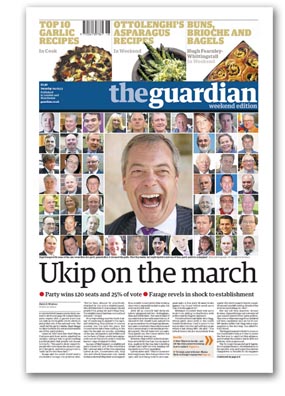
000Guardian 004-ele.jpgIt is perhaps appropriate, therefore, that the newspaper that makes the greatest front-page display of the Farage Party success is the loss-making Guardian. This left-wing newspaper is only too well aware that the only way of resuscitating the flagging Labour campaign is to big-up UKIP in the hope of damaging the Conservative Party. 

Therein lies an uncomfortable truth. However, much it may protest otherwise, at its current level of support, when it has absorbed the transferable votes from the BNP, arising from the collapse of another one-man-band, by far the greater bulk of UKIP's support comes from disaffected Conservatives. 

Come the general election, which is the only election which matters to the political claque, the Left will certainly be egging on the "party of protest" in the expectation that it will continue to do disproportionate damage to the Right. 

And, confronted with the challenge, Mr Cameron's Conservatives will do whatever it takes to neutralise the threat. For, if Farage has succeeded in anything, he has certainly got the attention of the political classes. 

The ironic thing is that the most immediate outcome of grabbing the Guardian front page is one of two possibilities – either the election of the Labour Party to office in the 2015 general election (with or without the Lib-Dems), or resurgent Conservatives who will most likely offer as the bribe to restore their fortunes an EU referendum that we cannot possibly win. 

I would find this latter even doubly ironic – for UKIP to force upon the nation a referendum for which it is wholly unprepared, where it would be completely outflanked, then to saddle us with a lost vote which will set the eurosceptic movement back a generation. 

But then, whatever else, Farage has never included amongst his attributes anything approaching tactical acumen or strategic planning. Right now, though, his dogged pursuit of a twenty-year-old game plan might now look on the threshold of a breakthrough. But the truth is that it has no better chance of success now than when he first scribbled it on the back of a beer-soaked bar mat, at the end of a boozy planning session. 

Perhaps that "plan" emanated from the Grand Old Duke of York pub, because Farage is marching his troops to the top of the hill. Too soon, he will be marching them down again, back into the intellectual cul-de-sac from which his "cunning plan" originated. 

And that is what I will be telling the CIB today, plus a few more home truths. Those views won't necessarily be welcome, but I suspect there may be a few there capable of straight thinking and I won't have to make a quick dash for the exit. We shall see. 

COMMENT: COMBINED ELECTION THREAD

UK politics: fishing in a shrinking pool


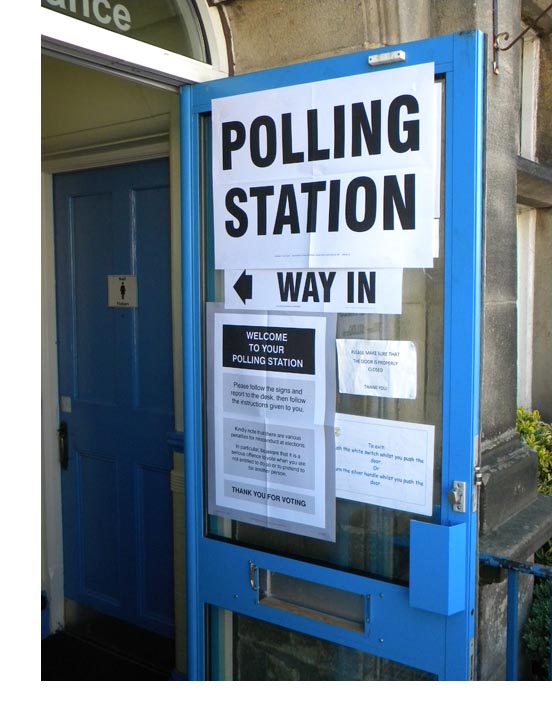
000Polling 003-har.jpgIf ever there was a justification for central government intervention, it would be over the scope and presentation of local election results on official local authority websites.

Rarely does one find any detail of size of electorate and the number of votes cast, information necessary to calculate the all-important turnout. Some counties give information by ward, in varying levels of detail, but it is incredibility difficult to find one site for the raw data that one needs for analytical purposes, from which to draw conclusions as to the state of play. 

Local newspapers are of some value though, when following through individual counties. For instance, Derbyshire County Council information is herewhich, with the official site (plus here) andWikipedia, gives one the basics. 

From these, we can calculate the votes cast, which stand at approximately 203,112, from an electorate 581,982 – yielding a turnout of 34.9 percent. This compares, incidentally, with a turnout in 2009 of 38 percent, when the Tories won overall control, and in 2005 of 63 percent – which coincided with a general election. 

In this current election, Labour has regained control, taking 43 seats, with a a 42.8 percent share of the vote, against the Conservatives who took 18 seats (losing 13) with 28.8 percent of the vote. UKIP gained 18.7 percent of the vote and took no seat, alongside the Lib-Dems who also failed to score, with 7.6 percent of the vote. 

Looking at the all-important "mandates", we thus see that Labour walks away with 15 percent, the Conservatives with ten and UKIP with 6.5 percent. In terms of its electoral reach, therefore, UKIP managed to induce less than seven percent of the electorate to vote for it, while the ruling party command the council with the just slightly more than double that. 

Derbyshire is interesting because it is one of the councils that have actually changed hands, but it can hardly be said that the result is "groundbreaking" for UKIP – at several levels. It has not only failed to induce more than one in fifteen to vote for it, its effect on the contest has not managed to enliven the electoral process, pushing up the turnout. 

Looking at another county council, this time Essex, we see UKIP gaining nine seats, with a 26.1 percent share of the vote. With a turnout of 27.6 percent (328, 435 votes cast from an electorate of 1,081,428), this gives the party a 7.2 percent proportion of the electorate that voted for it. 

Interestingly, 6.5 percent in Derbyshire gets no seats, yet 7.2 percent in Essex gives UKIP nine. However, the Conservatives in Essex, with only 9.4 percent of the electorate behind it, get 42 seats. And, to compound the anomalies, Labour, with 4.6 percent of the electorate, also get nine seats, as to the Lib-Dems with the support of a mere three percent of the electorate. 

For another home counties authority, Buckinghamshire, I am unable to find details of the size of the electorate (as a single figure), but from the official website, we see that the winning Conservatives get 41 percent of the vote, on a turnout of 30.3 percent. That gives them a mandate of 12.4 percent – the support of just one in eight of the electors. 

For UKIP, we see a gain of six seats, from 27 percent of the vote. On the turnout of 30.3 percent, it thus succeeds in attracting a "mandate" of 8.2 percent. Only one in twelve of the electorate were sufficiently enthused by this protest party to go out and vote for it. 

Going southwest to Hampshire, we see there a turnout of 31 percent, with the Conservatives leading on 37.5 percent of the vote, which brings them 45 seats for a mandate of 11.6 percent of the electorate. The Lib-Dems, who come second, gain 17 seats with 21.7 percent of the vote, giving them a mandate from 7.2 percent of the electorate. UKIP draw down ten seats with a 24.6 percent of the vote, giving them a mandate of 7.6 percent of the electorate. Labour manage four seats on a mandate of 3.1 percent. 

In the supposedly strongly contested Lincolnshire County Council election, however, turnout plunged to 29.7 percent, the votes cast recorded at 161,315 from a possible 542,759. This was seven percent down on the figure when voters last went to the polls in 2009 although, in some of the areas in the current poll, the turnout was as low as 14 percent. 

Out of 77 seats in the county, the Conservatives lost 25, losing control of the council in the process, ending up with 36 seats from a 36 percent of the vote. That gives them a mandate from a mere 10.7 percent of the electorate. UKIP, which came second with 16 seats from 24.3 percent of the vote – have the support of a mere 7.2 percent of the electorate, the same as in Hampshire. 

This is the county plagued with migrant workers from EU countries, where immigration is a real issue. Yet, when three members of the Ransome family were elected for UKIP, one explained their success as resulting from their policy on potholes. The BBC wryly remarked that none of their vox pops had mentioned road conditions. But for now, UKIP is the pothole party. 

Potholes aside, UKIP has not made a breakthrough – despite the media hype. It has undoubtedly done well, gaining 139 councillors, but it is falling short on two counts. 

Firstly, with turnouts remaining stubbornly low and in some cases falling still further from the last election, the party has failed to enliven the political process and bring new voters into the fray. Secondly, with their support from the electorate ranging from 6.5 percent to a level mostly short of eight percent, attempts to create a popular movement have not succeeded. 

Autonomous Mind points out that anger with the establishment parties runs deep, but it is only being expressed by those who remain politically engaged. Thus, as voters continue to retreat from the political process, the Farage party is fishing in a shrinking pool, with nothing new on offer

As long as elections remain a spectator sport over which the denizens of the bubble obsess, leaving the bulk of the population indifferent and uninvolved, this will not be the "sea change" in British politics - as Farage currently asserts.

COMMENT: COMBINED ELECTION THREAD

Friday, May 03, 2013

UK politics: South Shields by-election

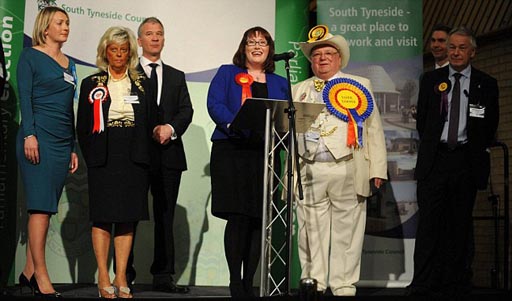
South Shields election.jpg

As expected, the South Shields parliamentary election gives the seat to Labour's Emma Lewell-Buck, with 12,493 votes. That represents 50.5 percent of those who cast a vote. 

Understandably, the political classes and the media claque want to focus on the percentage of the vote. But the a turnout tells a different tale. The 24,736 votes cast from a 63,765-strong constituency (38.8 percent based on 2010 figures) give Lewell-Buck a pathetically small mandate of 19.6 percent – less than one in five of the electorate.

Thus does the "none of the above" party win again, although this does not stop the newly-elected MP from being "absolutely ecstatic". And, in a graphic illustration of the disconnect afflicting the political classes, she burbles that the result showed Labour was connecting with voters and the coalition government was taking the country in the "wrong direction".

Aside from the winner, much hype attends the performance of UKIP, with candidate Richard Elvin picking up 5,988 votes to come a poor second. He gained 24 percent of the votes cast, displacing the Conservatives, who took second place in the general. 

Although this is a stellar performance for a party which did not field a candidate in the general election, the low turnout flatters all party performances. UKIP actually takes a 9.4 percent share of the electorate, compared with a 14.8 percent share at Eastleigh, and 7.3 percent of the available vote at Rotherham.

For the Conservatives, though, there was no relief. Candidate Karen Allen took 2,857 votes, compared with 7,886 polled by the party in the general. That put the Tories in a humiliating third place, behind UKIP, with a mere 4.5 percent of the electorate turning out to vote for them.

Ostensibly, this replicated the Eastleigh experience, where the Conservatives were also pushed into second place by UKIP. But there, the Tories lost 13.9 percent of their vote. In South Shields, they lost 10.1 percent of their general election vote. Marginally, this was a less worse performance, as is UKIP's performance not quite as good as it achieved in Eastleigh.

An independent Asian candidate, Ahmed Khan, came fourth, with 1,331 votes. This was 5.38 percent of the votes cast, which was enough for him to keep his deposit – a sign of the times perhaps.

At Eastleigh, there were ten other parties in the field, including the Monster Raving Loony Party, which collectively polled 2,056 votes. This time round, we only saw five contestants, outside the Lib-Lab-Con plus UKIP matrix. But, with the BNP (which did not stand at Eastleigh), they took a sizeable 3,046 votes, representing 12 percent of the votes cast. This fracturing of the vote is becoming a significant factor in electoral contests.

Within this, there was a collapse of the BNP vote, down from 2,382 in the general election, to a mere 711. This is the spectre at the feast. There is much talk about the source of the UKIP votes but – as with Rotherham where the BNP vote dropped from 3,906 at the general election to 1,804 in the 2012 by-election. As before – it looks as if Farage's party could be the beneficiary of the BNP collapse.

The other major story from South Shields was the misery of the Lib-Dems, the party crashing into seventh place to lose its deposit with a mere 352 votes, less than half the BNP level and not so very much more than the Loony party. This compared with third place in the general, when the candidate came third, polling 5,189 votes. 

Not all is doom and gloom though. The New Statesman sees green shoots of a Lib-Dem recovery appearing. Hope springs eternal.

COMMENT: COMBINED ELECTION THREAD

UK politics: elections 2013

Election 003-har.jpg

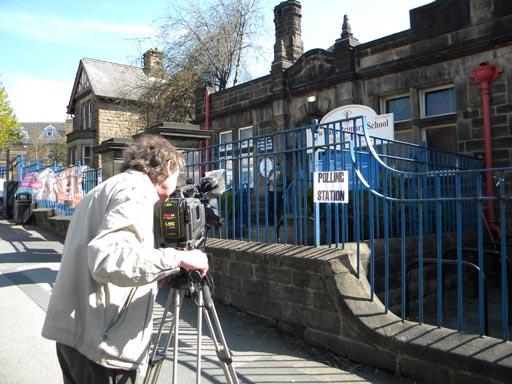
We were filming in Harrogate yesterday, assembling material for the foundation video on The Harrogate Agenda – and took the opportunity to capture some election scenes. We were due to end up at South Shields, filming the count, but our press passes were withdrawn by South Tyneside Council, so we are excluded from the scene.

That brings me back home, with the result from South Shields not due until 2 am, or later – with the local authority results trickling in over the next two days. Hence, I have set up this post, which I will keep active and add to, from time to time, linking to a forum thread, to which we can all add information. 

In the meantime, Peter Kellner is telling us that, if you're looking for simple winners and losers, stick to soccer. The world of politics is more difficult to gauge. You can't argue with the sense of that, other than to observe that the real losers are always the voters. 

Already, though, Kellner is perpetrating his own brand of spin. As far as the national picture is concerned, he says, "vote share matters more than seats gained and lost". But that is not true. What really matters is turnout – the real measure of public engagement in the political process. 

My own personal soundings, on the basis of a very limited sample, suggest that there is nothing to write home about. Despite UKIP injecting some life into the campaign, the turnout was "about normal" – i.e., low. Details of the seats up for grabs are here.

Whether my prediction holds, we will have to wait and see. As Mr Cameron is braced for a "bloody nose", we'll post more as and when we have it. 

COMMENT THREAD

Thursday, May 02, 2013

EU referendum: an absolutely decisive consideration

Guardian 002-ref.jpg

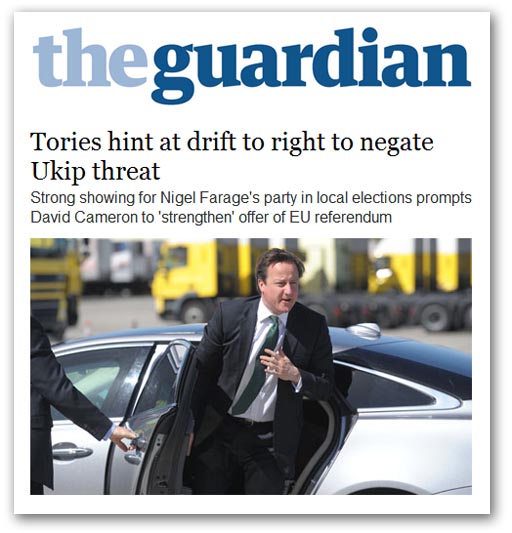
Facing the growing media hype over the local government elections, David Cameron has acted in his usual decisive fashion.

Mr Cameron, it appears, has indicated that he is preparing to hint that he is ready to give serious consideration to thinking about conceding, maybe, that there might be a possibility, sometime, of his schedule permitting him to explore the feasibility of drafting a proposal that might have a chance of going forward, the effect of which will raise hopes that there will be an elevated likelihood of a genuine debate on whether to table a motion suggesting that EU referendum legislation could be placed on the statute book before the next election, or even the one after that. 

This dangerous "drift to the right" has been picked up by the loss-making Guardian as clear evidence of something, while the Telegraph reverts to its traditional, tribal role and bigs up this very poor thing. 

Cue the duty sycophant, Peter Oborne, to tell us that voting UKIP will wreck the chances of having this referendum on "Europe".

"Stealing votes from the Tories", he whimpers, "guarantees the election of a pro-European Labour Party in thrall to the unions, which would waste no time in destroying Mr Cameron's remarkable public service reforms". 

This bizarre assertion that votes somehow "belong" to the Tories is heavily embedded in the Tory psyche, and is one of the reasons why voters are so keen to smack them in the teeth (figuratively speaking). This "entitlement culture" must be firmly dealt-with before it gets out of hand. 

Nevertheless, if Oborne got to vote today (he doesn't) he would make his mark for the Conservatives with enthusiasm. If possible, he would do so twice. As someone once remarked – her name escapes him – there is no alternative. 

There, and only there, he is right. There is no alternative to electoral fraud if the Tories are going to salvage something from this mess – unless they change their ways and begin to communicate with the electorate. Sadly for them, though, they seem to have lost the knack. 

COMMENT THREAD

UK politics: why we vote UKIP

Surrey 002-bon.jpg

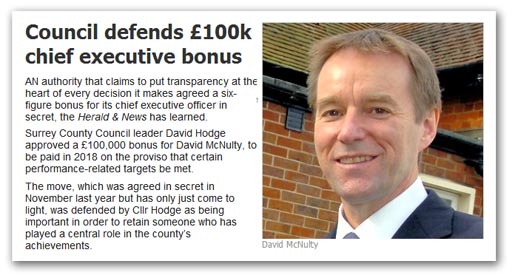
On the same day that William Hague was on the BBC urging Tory supporters not to "waste" their vote on UKIP, the Surrey Herald & News breaks the news of a "secret" deal brokered between Conservative Surrey County Council leader, David Hodge, and his chief executive, David McNulty, to pay a £100,000 bonus.

McNulty is already paid an over-generous salary of around £210,000, and his "retention package" also includes an additional £31,000 per year over the next five years - the equivalent of the employers' contribution for the CEO as a member of the Local Government Pension Scheme. Thus, this pampered public official will have an equally pampered and prosperous retirement – all at the Council Tax payers' expense. 

There can be nothing is more calculated to infuriate than the overpayment of local council management, and we are told that critics have been left "gobsmacked" that the county council agreed the bumper bonus at a time when services are being cut and taxes increased. 

Yet Cllr Hodge is entirely unrepentant. "Surrey's chief executive manages a budget of £1.8 billion and 26,000 staff", he says. "Due to the scale of this task there are few people who are able to successfully handle this while also guiding the organisation as it uncovered savings of £280 million … blah, blah, blah, blah".

Outside the bubble, there cannot be a single taxpayer who buys Cllr Hodge's message, yet this is the member of a party which has as its leader David Cameron. And it is the very same Mr Cameronwho vowed to eradicate council "waste and propaganda" during the launch of his party's local authority election campaign. 

This is precisely the "disconnect" which drives voters into the arms of UKIP – not for any intrinsic merits of Farage's creaking one-man band, but simply as a reflection of the loathing the average mortal has for the cant and hypocrisy of the political classes. 

As long as public service is now seen by its practitioners as a license to fill their boots at the public's expense, voting for UKIP will always seem attractive. It is currently seen as the only way – short of violent revolution - to bring the political classes to heel. And, whatever Mr Hague may think, that is never a waste of a vote. 

COMMENT THREAD

Afghanistan: betrayed by the Afghan police?

Afghan 001-mas.jpg

After the news broke yesterday of the first fatalities in a Mastiff protected patrol vehicle, prime minister David Cameron spoke on BBC Radio 4's World at One, promising to look "carefully" at the Mastiff.

"I'm sure we want to look at that carefully and put in place everything we can to make sure our brave men and women have the best protective equipment," he said, words interpreted by the Telegraph as a promise to re-assess the safety of the vehicles. 

Whether intentional or not, though, by focusing in the performance of the Mastiff, Mr Cameron is diverting attention from the greater threat. As we pointed out in our earlier piece safety during road travel is not achieved by protected vehicles alone, but by a package of measures, foremost of which are persistent and systematic route clearance, combined with good intelligence and observation. 

Under the collective title of "route security", British forces have had some success, with no serious incidents since the loss of six soldier travelling in a Warrior MICV in March last year - which was not the first.

Even then, it was widely recognised that, if a large enough bomb us used, no vehicle of any type will protect its crew – hence the need for the raft of measures, making the protected vehicle the last line of defence. 

Why then this incident happened now has been the subject of some speculation, including by The Week in a glorious example of media inaccuracy, taken apart by Autonomous Mind.

We ourselves suggested that factors contributing to the incident could have been complacency, or simply that not enough resources were being devoted to force protection. But the media is not even on the same page, taking the same line as the prime minister, in focusing on the protection afforded by the vehicle. 

In fact, there is nothing substantially wrong with the vehicle. It is about as good a design as can be provided for the money, and its record is superb. But there is a lot wrong with a security situation where the Taliban can place a huge bomb on a major transport route, detonate it and escape detection. 

It is thus to the standard of route security that we must look, and to ask what might have changed to make journeys more perilous. 

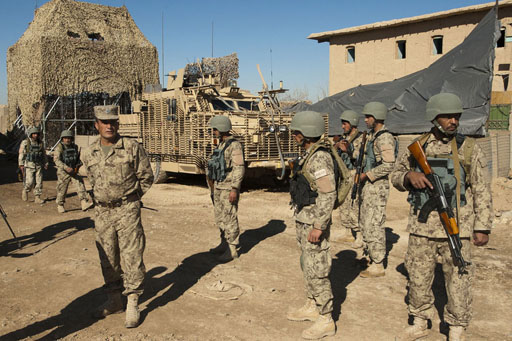
And here, there may be an answer. Hitherto, route security has been the responsibility of British forces. But, on 28 February, 70 soldiers from the Scots Guards Battle Group returned home early from Afghanistan, having handed route security on Route 611 to the Afghan National Civil Order Police (pictured above). And it is on this road that the Mastiff was hit. 

Now, it may be a coincidence that, a mere two months after the Afghan police took over security, the Taliban managed to place a huge bomb, so large that it was able to flip a 27-ton armoured vehicle. 

There again, given the known inadequacies of the Afghan police, the fact that many of them are Taliban sympathisers, and the fact that so many are open to bribery, if one was seeking to discover how the Taliban were able to mount this attack, the Afghan police are the first place to look. It is by no means beyond the realms of possibility that our troops betrayed by them. 

Worryingly, as we go through the charade of handing over more and more responsibilities to the Afghans, preparatory to our troop withdrawals next year, our soldiers will become more and more dependent on them for their safety. If there was a betrayal, it may not be the last. 

COMMENT: COMBINED MASTIFF THREAD

Wednesday, May 01, 2013

Afghanistan: the Taliban sends a message

mastiff-in-ndas.jpg

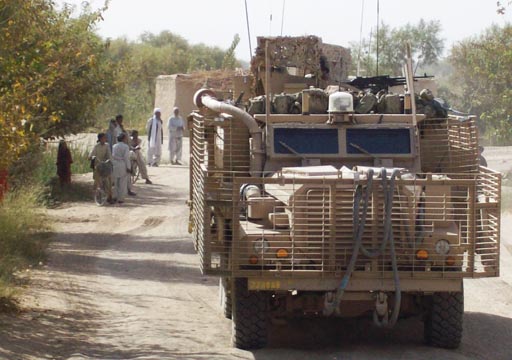
It was bound to happen sooner or later – and now it has. Soldiers have been killed – three of them – after a Mastiff protected patrol vehicle had been hit by an IED. Variously, between six and eight others are said to be injured.

Reports are patchy, but the fullest – if not necessarily the most accurate – account seems to be offered by the Mail, which describes the 27-ton vehicle as the "15-tonne Mastiff", two short of theDaily Express, which gives it 17 tons, ten short of the actual empty weight of the Mastiff II/III series. 

The vehicle was travelling in the Nahr-e Saraj district of Helmand Province, escorting a convoy along Route 611. This is a newly constructed road which had been used to showcase the reconstruction and development which has been taking place in the province, and thus a prime target for Taliban attention. It is a known IED magnet.

Some reports had it that the vehicle was specifically searching for IEDs, which is unlikely. That is the role of the Buffalo. And while some Mastiffs are deployed with bomb disposal, these would hardly be carrying solders from the Royal Highland Fusiliers 2nd Battalion, Royal Regiment of Scotland – the unit of those who died. 

Many of the media reports attest that the vehicle was hit by a very large bomb – "one of the biggest roadside bombs ever used in Afghanistan", says the Express. The blast is said to have been so powerful that it hurled the vehicle "several metres" into the air, flipping it onto its roof as it crashed to the ground. 

There is agreement in reports that the road was tarmacked, which suggests that the IED could well have been a culvert bomb. This is a classic terrorist technique, commonly employed by the Taliban, and very large bombs have already been experienced - with the threat to mine-protected vehicles identified in 2008. This is not a new problem.

As early as June 2009, three Danish soldiers were killed in a Mercedes "jeep", from a such device, estimated at 350Kg weight. But already in Northern Ireland during the Troubles, culvert bombs of 1,000lb were used, one of which took out a Saracen APC near Crossmaglen on 9 October 1975.

Ostensibly, this incident vindicates the "bigger bomb" crowd – that vociferous group of critics who opposed the introduction of the Mastiff, on the grounds that the enemy would simply respond by using larger devices, which indeed they have.

However, it has taken seven years – the period the vehicle has been in service – finally for the terrorists to overcome the formidable defences provided by the Mastiff, and even then this is not the end of the story.

One of the points of using better protection is the very fact that you then force the enemy to use "bigger bombs". This means they are riskier to transport, they take longer to place, increasing the chances of detection, and the number of suitable placement sites is reduced – also assisting detection.

With that, detection technology has considerably advanced since the IRA scourge of 1975 andmultiple techniques are now available. It is fair to say that, given the will and determination, incidents such as this current one are eminently preventable – not least through imaginative use of UAV technology, including change detection, employing video mapping.

Already, there is speculation as to why this vehicle was caught out. But, as always, the wrong questions are being asked. The issue is not the vehicle, per se, so much as the entire defensive package, of which the vehicle is but one component. 

Crucially, even standard route clearance techniques should have been able to pick up a bomb this size - assuming that a culvert denial programme was not in place. And it must be emphasised that the primary defence against IEDs is not protected vehicles, but persistent and systematic route clearance, combined with good intelligence and observation.

The fact that this vehicle was hit, therefore, may suggest that British forces have dropped the ball. Questions might be asked as to whether complacency had set in, or whether simply not enough resources were being devoted to force protection. The main problem, though, may be that route security has recently been handed over to the Afghan National Civil Order Police.

At this late stage in the campaign, though, it is unlikely that there will be any great outcry as there was with Snatch Land Rovers, especially as the bulk of troops are due to be withdrawn next year.

Despite that, this incident does have an importance that transcends even the immediate tragedy of young lives cut short. In targeting the Mastiff, and successfully taking one out, the Taliban is sending a message to the people of Afghanistan.

Effectively, they are proving that they can overcome the best that the West has to offer, demonstrating their power and the impotence of the "infidels". And although news of this incident will disappear quickly from the British press, one suspects that the message will not be lost elsewhere: when the infidels leave, they will be leaving as a defeated force.

COMMENT THREAD

UK politics: the fruitcakes' revenge

fruit_cake_16x9.jpg

The official Monster Raving Loonies strongly object to the use of the terms "fruitcakes" and "loonies" when describing UKIP, asserting that they are the true heirs to these titles. Most UKIP members and supporters "are nothing but opportunists, seeking a populist platform for their extremist views", the party says.

Not to be outdone, Marta Andreasen, is also taking a sideswipe at the establishment's favourite whipping boy.

She says that it was Mr Farage's jealousy of potential competitors inside the "one-man band" party that had prevented candidates from having their records checked. She says that Farage changed the party's constitution last year "giving him full power on everything, including the establishment of strategy, policies and selection processes for candidates for elections". 

The lady has obviously seen through the "cheeky chappie" front, adding, "He has come out saying 'we cannot vet everybody' – well he cannot vet everybody because he wants the control himself. He should have been able to establish an administration with the means to vet, even if it’s 1,700 candidates".

Notably, Andreasen says, "He's the one who put candidates all over the place in as many seats as possible … He's very attractive to the media because he's a showman but he doesn't have the patience or the interest in dealing with data".

Despite the ring of truth here, Marta is too late to dent her erstwhile sponsor. The latest poll, as reported by ITV, has Farage's "one-man band" surging to 22 percent of the vote.

Amazingly, in this poll, the Tories get 31 percent, Labour drop to 24 percent and the Lib-Dems get 12 percent. Yet, with UKIP rampant, the Tories are still being set up for the slaughter.

And so it is that the supposedly eurosceptic Express gives a spot to Ann Widdecombe, to tell us, "Why you must vote Tory not UKIP". A vote for anything other than Conservative is a vote for Labour and thus for high tax and high spend at county halls, she writes.

The irony of it all is that she is probably right … but not enough people care. This is a revolt against the political class, and people are determined to give them a kicking. That's all that matters - call it the fruitcakes' revenge.

COMMENT THREAD