Showing posts sorted by relevance for query wind energy. Sort by date Show all posts

Thursday, September 04, 2008

A confrontation shapes up

The news agency Reuters is recording a "top EU bureaucrat" telling a meeting at the Royal United Services Institute that climate change represents such a threat to global security it must be at the heart of European Union foreign policy, much as energy security is now.

This is Helga Schmid, director of the policy unit of the European Council, expressing her views, which included a statement that, "Climate change has to move to centre stage of thinking about foreign policy."

To our understanding, energy security has never been at the heart of EU foreign policy. Schmid actually concedes this, remarking that it has only become "part of foreign policy dialogue," even if it is, "a fundamental foreign policy and security issue."

The more substantive point, however, is that any move to put "climate change" at the top of the foreign policy agenda – above energy security – puts the EU in direct conflict with the UK, if Hutton's words are to be taken seriously. To an extent, it also cuts across the British addendum to the European Council communiqué published last Monday.

As importantly, Schmid's comments reaffirm the premier place of "climate change" in the EU’s hierarchy of concerns, placing energy security as a subordinate issue – something we noted last month.

The problem is that energy security does not fit easily as a subordinate to climate change. In fact, the policy requirements for each are mutually contradictory.

And, after speaking with one of the country's leading energy experts yesterday, tied in with our own research, the scale of the problem comes clear.

Central to this is that renewable energy – and in particular wind farms – will not be able to fill the looming energy gap. Even if they could provide the notional capacity, the actual output is so low and unpredictable that a hundred percent thermal back-up would be required. Thus, reliance on wind energy would actually increase our dependence on imported fossil fuels. It will reduce our energy security and massively increase costs, with the very real prospect that supplies will not be available when needed.

Given that wind energy is virtually a recipe for power cuts, it is generally recognised that the only option which can stave them off is investment in a rapid nuclear power plant building programme. Virtually the only capacity that could be brought on-line quickly is the pebble bed system.

Because of the market distortions introduced by the Renewable Obligation Certificate (ROC), though, energy investment is focused almost entirely on wind power. The subsidy payments make wind the most profitable short-term option for power generators so that is where they are putting their money.

To incentivise the rapid production of nuclear plants, two things must happen. Firstly, the government must promise a stable regulatory environment, where investors can be assured that the rules for nuclear plants will not be changed within the investment cycle. Secondly, to promote the development of new systems – such as pebble bed – the industry must be offered a financial incentive at least equivalent to that offered to the renewables sector. Without that, the industry will not invest in nuclear.

However, under EU rules, direct subsidy to a resurgent nuclear industry is not possible. But so, it seems, would be an extension of the ROC. According to BERR, the ROC system comes within the state aid rules, there being a waiver for renewables which allows them to be subsidised.

Already, the nuclear industry is in trouble over clean-up arrangements and an attempt to extend any sort of government sponsored subsidy to the industry would almost certainly be treated as illegal state aid.

The only way this could change, at an EU level, is if the commission – with the agreement of the member states – decided to put energy security at the head of the list of priorities, above climate change. Taking the cue from Helga Schmid, this seems extremely unlikely.

Thus, the UK government is in an impossible position. If it conforms with EU policy imperatives and keeps climate change on top of the agenda there will, within a matter of years, be an "energy crunch". The lights will go out. The only way that can be avoided is if the government decides, as a very clear and measured policy decision, to reject EU rules and contravene its provisions on state aid.

This sets the stage for a massive and unavoidable confrontation between the British government and the EU. If this current government ducks the confrontation, then it will be visited on the successor government – presumably led by Mr Cameron – which will have the added urgency of power cuts being that much closer.

Altogether, the conflict between the EU's obsession with climate change and the national interest of the UK, in needing to maintain continuous and affordable energy supplies, looks like it could become the defining issue in our relationship with the EU. And, when the people – to say nothing of their elected representatives – are forced to choose between membership and keeping the lights on, it is not difficult to predict where sentiment will lie.

COMMENT THREAD

Wednesday, August 17, 2011

The fantasy of wind


Robert Bryce, senior fellow at the Manhattan Institute, writes on the "wind myth". Texas, he says, has 10GW of installed wind-generation capacity - nearly three times as much as any other state. But during three sweltering days last week, when the state set new records for electricity demand, this "vast herd of turbines" proved incapable of producing any serious amount of power.

On 2 August, when electricity demand hit 68GW, output was just 1.5GW, or about 15 percent of installed capacity – equivalent to 2.2 percent of the total power demand. And this was no anomaly. On four days in August 2010, when electricity demand set records, wind energy was able to contribute just one, two, one, and one percent, respectively, of total demand.

Over the past few years, about $17 billion has been spent installing wind turbines in Texas. Another $8 billion has been allocated for transmission, bringing the total to $25 billion. That sum could have bought 5GW of nuclear or as much as 25GW of natural-gas-fired capacity.

The wind-energy lobby has been masterly at garnering huge subsidies and mandates by claiming that its product is a "green" alternative to conventional electricity. But the hype has obscured a dirty little secret: When power demand is highest, wind energy output is generally low. The reverse is also true: Wind-energy production is usually highest during the middle of the night, when electricity use is lowest.

Yet, in the UK, we are going down the same ridiculous path. It cannot be a surprise, though, that the three people whose judgement is lacking in other matters, are most supporting of renewable energy: Messrs Cameron, Clegg and Huhne.

In their profligate waste of our money, these three are collectively doing far more damage to our economy than a month of rioting, while they are enforcing real cuts on the national hospital system, which will have real effects on the lives (and deaths) of many people.

It is hard to think of a clearer example of political stupidity, or of three men who are least suited to be in a position of responsibility, much less power. Yet these are the fools who sit on top of the manure pile and crow. That we let them is our own shame.

COMMENT: PRICE OF WIND THREAD

Thursday, March 11, 2010

Germany warning

For anyone with any residual doubts about the wave of madness about to engulf us with the introduction of the feed-in tariff on 1 April, they need go no further than read a recent report from the Rheinisch-Westfälisches Institut für Wirtschaftsforschung, entitled: "Economic impacts from the promotion of renewable energies: The German experience".

Packed with detail and well-argued, its conclusions are unequivocal and coruscating. "Although Germany's promotion of renewable energies is commonly portrayed in the media as setting a shining example in providing a harvest for the world," the authors write, "we would instead regard the country's experience as a cautionary tale of massively expensive environmental and energy policy that is devoid of economic and environmental benefits."

You really cannot get much clearer than that, the result of a failed experiment based on an aggressive policy of "generously subsidising and effectively mandating renewable electricity generation" in Germany that has led to a doubling of the renewable contribution to electricity generation in recent years.

In this narrative, taken directly from the executive summary, we are told that the preference for renewables came primarily in the form of a subsidy policy based on feed-in tariffs, established in 1991 by the Electricity Feed-in Law.

A subsequent law passed in 2000 guaranteed continued support for 20 years. This required utilities to accept the delivery of power from independent producers of renewable electricity into their own grid, paying technology-specific feed-in tariffs far above their production cost of 2 to 7 euro-cents per kilowatt hour (kWh).

With a feed-in tariff of 43 euro-cents per kWh in 2009, solar electricity generated from photovoltaics (PV) is guaranteed by far the largest financial support among all renewable energy technologies. Currently, the feed-in tariff for PV is more than eight times higher than the wholesale electricity price at the power exchange and more than four times the feed-in tariff paid for electricity produced by on-shore wind turbines.

Even on-shore wind, widely regarded as a mature technology, requires feed-in
tariffs that exceed the per-kWh cost of conventional electricity by up to 300 percent to remain competitive. By 2008 this had led to Germany having the second-largest installed wind capacity in the world, behind the United States, and the largest installed PV capacity in the world, ahead of Spain. This explains the claims that Germany's feed-in tariff is a great success.

However, installed capacity is not the same as production or contribution. By 2008, the estimated share of wind power in Germany's electricity production was 6.3 percent, followed by biomass-based electricity generation (3.6 percent) and water power (3.1 percent). The amount of electricity produced through solar photovoltaics was a negligible 0.6 percent despite being the most subsidised renewable energy, with a net cost of about €8.4 billion for 2008.

The total net cost of subsidising electricity production by PV modules is estimated to reach €53.3 billion for those modules installed between 2000 and 2010. While the promotion rules for wind power are more subtle than those for PV, the authors estimate that the wind power subsidies may total €20.5 billion for wind converters installed between 2000 and 2010.

As in the UK, consumers ultimately bear the cost of renewable energy promotion. In 2008, the price mark-up due to the subsidisation of green electricity was about 1.5 cents per kWh, meaning the subsidy accounted for about 7.5 percent of average household electricity prices.

Yet, given the net cost of 41.82 cents/kWh for PV modules installed in 2008, and assuming that PV displaces conventional electricity generated from a mixture of gas and hard coal, "carbon" abatement costs are as high as €716 per ton.

Using the same assumptions and a net cost for wind of 3.10 cents/kWh, the abatement cost is approximately €54. While cheaper than PV, this cost is still nearly double the ceiling of the cost of a per-ton permit under the EU's cap-and trade scheme. Renewable energies are thus amongst the most expensive GHG reduction measures.

There are much cheaper ways to reduce carbon dioxide emissions than subsidising renewable energies. For instance, the authors say, the current price of emissions certificates in the European Emissions Trading Scheme (ETS) is only €13.4 per ton (October 2009). Hence, the cost from emission reductions as determined by the market is about 53 times cheaper than employing PV and four times cheaper than using wind power.

Moreover, the prevailing coexistence of the Renewable Energy Sources Act (EEG) and the ETS means that the increased use of renewable energy technologies generally attains no additional emission reductions beyond those achieved by ETS alone. In fact, since the establishment of the ETS in 2005, the EEG's net climate effect has been nil.

Turning to employment, while projections in the renewable sector convey seemingly impressive prospects for gross job growth, they typically obscure the broader implications for economic welfare by omitting any account of off-setting impacts.

These impacts include, but are not limited to, job losses from crowding out of cheaper forms of conventional energy generation, indirect impacts on upstream industries, additional job losses from the drain on economic activity precipitated by higher electricity prices, private consumers' overall loss of purchasing power due to higher electricity prices, and diverting funds from other, possibly more beneficial investment.

Proponents of renewable energies often regard the requirement for more workers to produce a given amount of energy as a benefit, failing to recognize that this lowers the output potential of the economy and is hence counterproductive to net job creation. Significant research shows that initial employment benefits from renewable policies soon turn negative as additional costs are incurred. Trade and other assumptions in those studies claiming positive employment turn out to be unsupportable.

In the end, Germany's PV promotion has become a subsidisation regime that, on a per-worker basis, has reached a level that far exceeds average wages, with per worker subsidies as high as €175,000. It is most likely that whatever jobs are created by renewable energy promotion would vanish as soon as government support is terminated, leaving only Germany's export sector to benefit from the possible continuation of renewables support in other countries such as the US.

Due to their backup energy requirements, it turns out that any increased energy security possibly afforded by installing large PV and wind capacity is undermined by reliance on fuel sources – principally gas – that must be imported to meet domestic demand. That much of this gas is imported from unreliable suppliers calls energy security claims further into question.

Claims about technological innovation benefits of Germany's first-actor status are also unsupportable. In fact, the regime appears to be counterproductive, stifling innovation by encouraging producers to lock into existing technologies. In conclusion, government policy has failed to harness the market incentives needed to ensure a viable and cost-effective introduction of renewable energies into Germany's energy portfolio.

On the contrary, Germany's principal mechanism of supporting renewable technologies through feed-in tariffs imposes high costs without any of the alleged positive impacts on emissions reductions, employment, energy security, or technological innovation.


Yet, this is the scheme that is to come into force in the UK on 1 April. Predictably, organisations such as the National Trust are leaping on the bandwagon, having already fitted PV to their Dunster Castle in Somerset (pictured, above). They are adding insult to injury by attracting funding from Barclays, the "Big Lottery Fund Bio-Energy Capital Grants Scheme" and the Rural Development Programme. Equally predictably, they do not tell us how much this is going to cost other electricity consumers, concentrating instead on the illusory "carbon" savings.

Delingpole, of course, gets the point (as well as making a ribald comment about the "independent" inquiry of the IPCC), picking up on the point that the British scheme, when fully developed, will cost the equivalent of four aircraft carriers each year.

Anyone with even a fragment of a brain can see the utter madness of the scheme, and the German experience simply reinforces the blindingly obvious. Yet, it seems that our current government's brain cell is flying solo.

But, if you despair that sentient creatures can be so utterly stupid, until we hear otherwise we have to continue to note that the Conservatives want a much larger scheme, set to cost £60 billion a year. That, in case you are interested, is 30 aircraft carriers a year. (Pick your own comparator if you prefer – it would, for instance, buy 50 billion bacon butties, thereby abolishing world hunger except in the Moslem world).

Forgive me for harping on, but this is so staggeringly stupid – in a land beset with stupidity – that it is difficult to take on board. One can only surmise that they really cannot be that stupid, and it is all a joke. After all, the scheme is set to start on 1 April. Sadly, though, they are serious. We are going to have to do something equally serious.

CLIMATE CHANGE – END GAME

Sunday, December 16, 2007

Madness stalks the land

Following our rather elegant "cathedrals of insanity", it is Booker's turn to have a go at what he does not hesitate to call "the maddest single decision ever made by British ministers."

This was announced by John Hutton, Secretary of State for Business, Enterprise and Regulatory Reform, the startlingly insane plan to build 7,000 giant offshore wind turbines round Britain's coast by 2020, to meet our EU target on renewable energy.

No matter that Mr Hutton's officials warned him in August it was not conceivable that we could achieve even a much lower target, writes Booker, so keen was Mr Brown that Britain should "lead Europe on climate change" that Mr Hutton was told to ignore his officials.

The interesting thing is that, by and large, the media reported his claims without questioning whether such a megalomaniac project was remotely feasible, the New Statesman in fact lauding the "U-turn" on windfarms as "important".

What is especially interesting is that no one mentioned costs. Hutton spoke of his turbines, equivalent to one every half mile of coastline, as having a capacity of 33 gigawatts (GW), a hefty chunk of the 75GW of power we need at peak demand. But Booker has worked it out.

With the cost of giant offshore turbines, as tall as 850 feet, estimated at £1.6 billion per GW of capacity, this represents a bill of more than £50 billion - equivalent to the colossal sum earmarked last week by central banks to shore up the world banking system.

But of course the point about offshore turbines is that, because wind blows intermittently, they only generate on average at a third or less of capacity. So Mr Hutton's 33GW figure comes down to 11GW. To generate this much power from "carbon-free" nuclear energy would require six or seven nuclear power stations and cost, at something under £20 billion, less than half as much as the turbines.

This, however, is only the start of the madness. Because those turbines would generate on average only a third of the time, back-up would be needed to provide power for the remaining two thirds - say, another 12 nuclear power stations costing an additional £30 billion, putting the real cost of Mr Hutton's fantasy at nearer £80 billion - more than doubling our electricity bills.

Then that are a few other minor problems. Booker asked energy expert Professor Ian Fells whether it would be technically possible to carry out the most ambitious engineering project ever proposed in Britain, one which would require us to raise from the seabed two of these 2,000 ton structures every working day between 2008 and 2020.

So we turn to Denmark for an indication. With the world's largest offshore wind resource, it has never managed to build more than two a week, and marine conditions allow such work for only a third of the year.

But it does not stop even there. The turbines' siting would mean that much of the national grid would have to be restructured, costing further billions. And because wind power is so unpredictable and needs other sources available at a moment's notice, it is generally accepted that any contribution above 10 percent made by wind to a grid dangerously destabilises it.

Two years ago, much of western Europe blacked out after a rush of German windpower into the continental grid forced other power stations to close down. The head of Austria's grid warned that the system was becoming so unbalanced by the "excessive" building of wind turbines that Europe would soon be "confronted with massive connector problems".

Yet Mr Hutton's turbines would require a system capable of withstanding power swings of up to 33GW, when the only outside backup on which our island grid can depend is a 2GW connector to France (which derives 80 per cent of its electricity from nuclear power).

Nothing better illustrates the fatuity of windpower than the fact that Denmark, with the highest concentration of turbines in the world, must export more than 80 per cent of its wind-generated electricity to Norway, to prevent its grid being swamped when the wind is blowing, while remaining heavily reliant the rest of the time on power from Sweden and Germany.

The Danes, who decided in 2002 to build no more turbines, have learnt their lesson. We British have still to learn it. Every time we hear that over-used term "green" we should remember it has another meaning: someone who is naively foolish and dangerously gullible.

So says Booker, but Spiked online has a different "take". What is being agreed in all these announcements is not government action, it says, "but rather yet more planning interrogations."

What Hutton actually did was launch a Strategic Environmental Assessment of the seas surrounding the UK, "paving the way for a possible 'third round' of wind energy development and beyond." This is a "draft" plan for a "potential" major expansion in offshore wind, and will be subject to the outcome of the Strategic Environmental Assessment.

In the housing sector, Spiked adds planning used to mean planning for more houses, but today it means preventing new houses being built. It is the same with energy.

The government now pursues offshore wind in the hope that it can avoid the fate of large onshore wind devices, which are caught in interminable objections by the Royal Society for the Protection of Birds (RSPB) and other aesthetically minded environmentalists. But New Labour exercises in planning and consultation already promise to kill nuclear energy stone dead, and will likely do the same for offshore wind.

Certainly, whichever way you look at it, Hutton's plan is not achievable – even The Guardian is sceptical – all of which would seem to suggest that we are dealing with a particularly mad form of gesture politics.

The bottom line is that this is designed to allow Gordon Brown can cosy up to his EU "colleagues" and tell them everything is in hand with his renewable energy plans. By the time it comes to deliver, he will be long gone, and David Cameron will be hooking his bike up to a generator to keep the lights on.

COMMENT THREAD

Sunday, September 14, 2008

Can it last?

On the back of the BBC having a go at subsidy wind farms, we now have The Sunday Telegraph joining the battle.

This paper is retailing a report from the Renewable Energy Foundation (REF) which asserts that wind is failing to deliver value for money and distorting the development of other renewable energy sources. Furthermore, excessive subsidies make them an expensive and inefficient way of reducing greenhouse gas emissions.

The report is actually written by John Constable, of REF, and Robert Barfoot, the chairman of the North Devon branch of the Campaign to Protect Rural England. And even this has a greenie tinge as they say the subsidy scheme is encouraging energy firms to build as many wind farms as possible because it is more profitable than investing in other more expensive forms of renewable technology, such as wave power.

Actually, the main problem is that the generosity of the subsidy scheme is diverting cash from investment in longer-term schemes such as nuclear, and also driving generators to invest in increasingly expensive gas, this being the most suitable back-up for wind.

Nevertheless, the report authors say: "The market for renewable energy is an artificial one created and maintained by government legislation. The question is whether this consumer-derived money is well spent. It is worth noting that the excessive subsidy offered to onshore wind development has drawn developers even to sites where the wind resource is very weak and the environmental impact severe."

As it stands, there are 176 wind farms operating 2,033 turbines onshore and at sea, earning approximately £223 million in subsidies. In addition, there are another 235 wind farms in the planning stage which would see 3,189 turbines, many more than 400ft tall, installed by 2013. By 2020, with 25GW installed, the subsidy could reach £6 billion a year.

As an example of the way the rip-off works, pictured above left is one of the existing subsidy wind farms – 23 x 400 KW turbines at Ovenden Moor, on the bleak flanks of the Pennines just outside Halifax. Built in 1993 at the cost of £10 million with the aid of an EU grant of £1.3 million (approx), last year the installation earned for its owners, E.on, a cool £1,004,850 in Renewables Obligation Certificate (ROC) subsidy, recovered by a surcharge on electricity bills.

This is an installation rated at 9.2 MW, theoretically capable of producing 80,592 MWh but, with a load factor of only 27.71 percent, it actually produced 22,330 MWh. At today's inflated wholesale price of £85.58 MWh for electricity, that output would earn £1.9 million in sales, potentially earning the installation just short of £3 million a year when the ROC subsidy is added. For an investment of less than £9 million, this is an extremely attractive rate of return and it is thus easy to see why generators are piling into wind.

Unsurprisingly The Sunday Telegraph also gives space to Booker for a comment piece, where he calls wind farms, "One of the great deceptions of our time".

Gradually, the message is beginning to sink in. With subsidy wind farms already growing in unpopularity, people are now waking up to the gigantic scale of the rip-off being perpetrated. As more and more people begin to understand this, it should only be a matter of time before the whole programme crashes and burns.

But, there is one minor problem ... wind energy is an EU-supported obsession. To stop the scam, we have to confront the EU. Is there a politician brave enough to do this?

COMMENT THREAD

Sunday, December 17, 2006

Buy a Blair

Booker's column this week is back to its current size and makes interesting reading. The first item, headed, "National grid will totter in the prevailing wind" takes head on the increasingly dangerous group psychosis of "wind energy", pointing out the perils of relying on this intrusive provision.

Various recent reports, he writes, have highlighted one aspect of what, within a few years, will be the most serious crisis confronting this country. Few people realise just how precarious the supply of power upon which our society depends will become – even before 2014, by which time we will have closed down the nuclear and coal-fired power stations that now generate 47 per cent of our electricity.

Two reports by the Renewable Energy Foundation (REF) spell out the extraordinary risk we run through our government's obsessive desire to make us, within a few years, more than 15 percent reliant on wind power. One of these declares:

Wind turbine technology has been developing in Europe for nearly twenty years, and ample experience has been gained to show wind generated power to be variable, unpredictable, and uncontrollable. In fact, the European experience shows conclusively that the annual production is routinely disappointing, and this does not augur well for the UK's chances of achieving significant emissions abatement.
But, Booker tells us, the real import of the reports has generally been missed. It is shocking that it should be left to a small charity to reveal for the first time, using official Ofgen figures, the details of how much each of the 1,950 wind turbines in Britain actually generates. He continues:

These confirm a point familiar to readers of this column: not a single onshore turbine in mainland Britain would be economically viable without the vast hidden subsidy we all pay through our electricity bills (in effect doubling its cost). Because wind is intermittent, turbines only generate, on average, 28 per cent of their capacity. (One built by Renewable Energy Systems on the M25 at Kings Langley produces barely 8 per cent).

The real message of the REF reports, however, is, first, that wind is so unreliable that we would have to build up to a dozen new conventional power stations just to provide backup for all the intended turbines when the wind is not blowing; and, second, that the more we depend on the unpredictable wind, the more this will destabilise the grid, threatening its breakdown.

This was confirmed by another recent report, from UCTE, Europe's principal grid authority, on the
power failure that blacked out much of western Europe on November 4. A significant factor in that collapse of the grid was the growing difficulty of accommodating Germany's dependence on 18,000 turbines for 6 per cent of its power.

Yet our own Government (supported by the EU) is locked into the idea that, by 2015, 15 per cent of our electricity must come from renewable sources, mostly windfarms (which currently supply only 0.5 per cent). No proper planning has been done to take into account the problems this will create for the national grid. For example, much of the electricity will be generated by nearly 7,000 turbines in Scotland – without any system in place to transfer the surplus to England where it would be needed.

All this is only part of the much wider crisis looming as we face the prospect of losing, by 2015, that 47 per cent of our current supply provided by nuclear and coal. According to Alistair Darling, who has assumed prime responsibility for energy policy, we shall then be 80 per cent dependent on gas, half of it imported from Norway. This will make us, supposedly, less dependent than most of our fellow Europeans on politically sensitive supplies from Russia. But if Mr Darling enquired of the Norwegians, he would learn that they are not so foolish as to wish to sell off their own reserves. In fact most of what they sell us will be piped into Norway from Russia anyway.

So dilatory has our Government been in its belated conversion to nuclear that, even if we were to order new reactors from France (which derives 80 per cent of its electricity from nuclear), they would not be ready in time to fill the huge gap that will open up from 2010 onwards. Senior power industry figures are already warning privately that, from that time on, Britain's power supplies cannot be guaranteed.

And now, to make our cup run over, we have the European Commission, in the guise of energy commissioner Andris Piebalgs, calling for Brussels to assume control over all the EU's energy supplies. In the Lords last Wednesday, a junior minister, Baroness Royall, appeared to be giving our Government's support to this idea. Stand by, in short, for the day not far off when our computers, supermarkets and much else get regularly blacked out by the shutting off of power. Not a happy prospect.
And we are not alone in our reservations. Which means that this is yet another area where future historians will have cause to wonder when they write an account of this age. They will chart how peoples who were massively dependent on electricity to sustain their very civilisation were so careless of providing for its continuation that they chose mass suicide rather than regeneration.

Interestingly, in the context of Blair's legacy, when we consider prime minister Ted Heath’s legacy, apart from taking us into the Common Market, he is best remembered for the three-day week and the power cuts that went with it.

What comes round goes round. Blair’s real legacy will be the increasingly severe power cuts that we will start to suffer in just a few years. By then, however, we will have another prime minister and it will, no doubt, be the then current incumbent who will suffer the approbation.

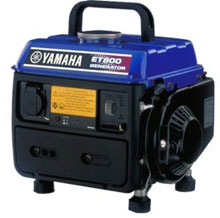
In anticipation of the failure of our supplies, though, it would be best now to start thinking of buying a small generator to keep essential equipment supplied. And, in honour of the man who made this all necessary, perhaps we should think of a new nickname for this equipment - the word "Blair" seems so appropriate.

COMMENT THREAD

Sunday, March 21, 2010

The cold wind doth blow

And so it comes to pass that The Sunday Times is picking up that which anti-wind campaigners have been pointing out since the dawn of time – that "some treasured landscapes may have been blighted for only small gains in green energy."

However, so often does the media publish the entirely meaningless capacity figure for new wind developments that it is a real change to have Jonathan Leake write that an analyses of data released by Ofgem "reveals that more than 20 wind farms produce less than a fifth of their potential maximum power output."

One site, at Blyth Harbour in Northumberland (pictured), is thought to be the worst in Britain, operating at just 7.9 percent of its maximum capacity. Another at Chelker reservoir in North Yorkshire operates at only 8.7 percent of capacity. Both are relatively small and old, but larger and newer sites fared badly, too.

Siddick wind farm in Cumbria, now operated by Eon, achieved only 15.8 percent of capacity. The two turbines at High Volts 2, Co Durham, the largest and most powerful wind farm in Britain when it was commissioned in 2004, achieved 18.7 percent. Thus does Leake write that the best achieve only about 50 percent efficiency and the norm is 25-30 percent.

Such is common knowledge so we hardly needed Michael Jefferson, professor of international business and sustainability at London Metropolitan Business School, to tell us that the subsidy encourages the construction of wind farms. "Too many developments are underperforming," he says. "It's because developers grossly exaggerate the potential. The subsidies make it viable for developers to put turbines on sites they would not touch if the money was not available."

Nevertheless, the story is picked up by The Daily Mail (online) and it also provokes a splendid leader in The Sunday Times, which declares: "Too much wind and not enough puff". And, after a reference to onshore wind as "disappointing", we are told that "solar power is likely to be even more so, especially in Britain."

Helpfully, the paper then tells us that this kind of problem arises when renewable targets are set from on high, in this case from the European Union: "It wants 20 percent of energy across Europe to be generated from renewable sources by 2020," a situation which is described as "folly of the highest order", if the only way it can be done is inefficiently and expensively and at the cost of damaging our environment. Far better, says the paper, "to push on with technologies we know can deliver, such as nuclear and clean coal."

The answer, sadly, it concludes, "is not blowing in the wind."

Even sadder, perhaps, is that this is not entirely an EU issue. Agreeing to the target in the mad days of the end of his premiership was Tony Blair, caught up in the collective hysteria of the European Council of March 2007, when the colleagues were outbidding each other to ramp up the targets to the absurd levels at which they currently stand.

And, as The Guardian informed us at the time, these targets were so unrealistic as to be unreachable. Thus does the cold wind blow, not the wind that will give us power via these useless bird choppers, but the cold wind of reality, as it gradually dawns on a wider constituency that they've been had.

That, of course, doesn't stop the likes of Dr Sue Armstrong-Brown, of the RSPB, defending her dire organisation against Booker's attack last week.

She tells us in a letter today that "as a charity concerned with the future fortunes of wildlife, we can't hide from the fact that climate change is the single biggest threat biodiversity faces. Renewable energy, such as that provided by wind, must play a part in the nation's future energy mix, as must tidal and solar energies."

The only joy to be got out of that bit of self-serving stupidity is the news that RWE is considering turning the wind farm at Haverigg in Cumbria into a site for a nuclear power station, requiring the demolition of the bird choppers. Where the RSPB fails, nuclear leads the way.

Needless to say though, Sky News describes this site as "efficient", even though it averages a load factor of a mere 35 percent. That just goes to show how far that cold wind of reality must blow before it reaches the sterile brains of the broadcast media.

COMMENT THREAD

Monday, July 21, 2008

A licence to print money

So, Royal Dutch Shell has agreed to sell its stake in the £2.5 billion London Array, the world's largest offshore wind farm, to Eon and Dong Energy, its former partners.

The utilities agreed to divide Shell's one-third stake evenly between them. Eon and Dong will now own 50 percent each.

This, we are told, "will be a relief" to the government, which has put wind at the heart of its renewable-energy agenda. When Shell announced its intention to quit the project in May, there were fears that Eon and Dong, a Nordic group, could scrap it altogether because of the soaring cost of building wind farms. However, the decision by Eon and Dong to buy out Shell means the scheme, already seven years in development, will almost certainly go ahead.

Since Paul Golby, chief executive of Eon UK, had already called the project's economics "marginal at best" as prices for turbines, ships to install them and personnel have soared to record levels, one wonders what might have changed.

The answer, not supplied by The Sunday Times, is to be found elsewhere - the "magic potion" being a change in the arcane subsidy arrangements which turn wind farming into a license to print money.

Uneconomic by any measure, the whole industry is buoyed up by a raft of subsidies and other inducements, in the forefront of which is the Renewable Obligation Certificate (ROC) which requires energy generators to contribute to a pot, paid out to wind farmers for the electricity they produce, thereby overcoming their inherent lack of economic viability.

Thus do we find that offshore wind farms, which are even less economic than their onshore equivalents, are to benefit from a 50 percent higher subsidy, lifting these installations from their "marginal" status into a profitable enterprise.

It is worth, in this context, revisiting a piece published in The Sunday Times last January, headed. "Wind farms turn huge profit with help of subsidies". This tells us that the "lavish subsidies and high electricity prices have turned Britain's onshore wind farms into an extraordinary moneyspinner, with a single turbine capable of generating £500,000 of pure profit per year."

Ofgem is then quoted. Having done its sums, it says: "We calculate that renewable energy subsidies will add £60 to consumer bills this year and that will keep rising." This is nothing more than Booker has been constantly "banging on" about, the latest instalment of his exploration into the fantasy world of subsidy wind farming coming in his column yesterday.

There, he offers "final proof" that Gordon Brown is living on another planet, our revered prime minister having boasted to last week's EU "Mediterranean summit" that "Britain's North Sea could be the Gulf of the future for offshore wind".

The absurdity of this claim is readily apparent when it is realised that the 3,000 giant wind turbines than Brown wants built round our coasts will produce a mere 3,000MW, compared with the single Drax coal-fired power station in Yorkshire, which has a capacity of 3,800MW. Thus the entire output of Mr Brown's "Gulf of the future" would be less than that of a single conventional power station.

Compare also the cost of building his turbines. Estimated at £2.3 million per MW, would be at least £20 billion (the £10 million cost of the solitary 3.5MW turbine recently built in Cromarty, Firth, ran out at £2.8 million per MW), plus the cost of building up to a dozen gas-fired power stations just to provide backup for when the wind is not blowing, and we could get considerably more electricity from two new nuclear power stations at a fraction of the cost.

The trouble is that, if Mr Brown is living on the Planet Krypton, he has, alas, been joined by David Cameron and our entire political class. Not one MP, it seems, dares question a policy the total insanity of which they could work out for themselves just by spending 20 minutes on the internet.

And therein lies the tragedy. The entire political class has bought into the myth of "renewable energy" – or acquiesced - which means the fantasy must be tested to destruction before someone finally pulls the plug. By then, of course, we will not need to do that – there will be no electricity coming though the wires any more, as we sit in stygian gloom waiting for sanity to prevail.

COMMENT THREAD

Friday, July 25, 2008

Trouble at t'grid

The importance of yesterday's story on renewable energy in the The Guardian can hardly be over-estimated.

For many month now, we have been banging on about the government's obsession with wind farms and its neglect of conventional power generation but, if this story is to be taken at face value, Brown has now taken a major step in ditching the whole wind policy.

The essence of The Guardian's story is that the UK is attempting to block proposed EU legislation that will cast in stone at a European level a requirement to give renewable electricity sources absolute priority to the national grid.

This is part of the proposed renewables directive which states that: "Member states shall also provide for priority access to the grid system of electricity produced from renewable energy sources", with Britain intervening to change "shall" to "may".

It is that "shall" which drives the whole of the wind industry for, under this legislation, once a wind farm is connected to the system, the National Grid would have no choice but to accept any amount of power produced, shedding load from any non-renewable generators to accommodate it.

At the moment, this is already a UK requirement, facilitated by the ROC system which penalises generators for not delivering its quota of renewable energy, but the EU legislation would lock this in stone.

The problem is – as Denmark and other big "wind" producers have found - is that the variability of wind power, and the fact that grid systems are not designed to accept multiple small packages of power from diffuse sources, risks destablising the grid. Thus, forcing the system to take this power – especially as the amount of renewables increases – will create serious technical problems.

This, it is quite sensible to remove any obligation to take power from wind generators but, without that guarantee of buying anything they produce, many wind farms would not only be uneconomic but also unprofitable. At one fell swoop, changing that single word could bring the "wind rush" skidding to a halt.

And neither is this the full extent of the government's row back. The proposed directive also insists that wind developments immediate access to the grid, something which, without an investment in the order of £10bn, is not technically feasible. Thus, or so we are told, 9.3GW of wind power projects are currently on hold, waiting for word as to whether they can be connected. Some completed wind farms across Scotland are standing idle.

With the proposed directive forcing this issue – if it ever came into force in its current form - the UK government is working to "clarify this obligation", officialese for junking it.

Claude Turmes, a Luxembourg MEP and architect of the directive, has got the UK government sussed: "This," he says, "would take us backwards and would weaken the possibilities of connecting renewable energy to the grid. A government that says it wants to promote renewables cannot go for other policies behind the scenes."

We have, therefore, something of an enigma. Up front, the government is making a big deal of its renewables policy, with a "commitment" to meet its EU targets by 2020, yet, on the other hand, it seems to be doing its level best to ensure that that target cannot be met.

John Sauven, of Greenpeace, puts this down to "Brown's ideological obsession with atomic power," but then he would. More likely, it is motivated by the realisation that the national grid simply cannot accommodate the amount of wind power being proposed. Thus, Brown is trying to run with the hare and the hounds – putting up a public face of promoting renewables while actually preventing their development.

He must calculate that he can keep the charade going for two years, until the Conservatives are elected, when it will become Mr Cameron's problem, allowing the new Labour opposition to sit on the margins and jeer at his failure.

For us mere mortals, however, stemming the "wind rush" is probably good news and, in due course, we may have the added bonus of enjoying Mr Cameron's discomfort as he tries to come to grips with yet another failed policy - one which, in opposition, he has fully supported.

COMMENT THREAD

Sunday, October 19, 2008

It's an ill wind …

There is some very small comfort to be drawn from this financial crisis. According to The Times, it seems that a number of new subsidy wind farms are having difficulty attracting funding.

Unfortunately, the bigger schemes backed by the larger utilities are thought to be safe – for now - but, with the tightness of finance and the falling prices of fossil fuels, some of the smaller and more speculative developments are facing funding problems.

"The debt is just not there," says John Dupont, head of renewable energy finance in the UK for Nordbank, the world's largest wind energy financier. "We are still doing deals but the market is very difficult. This could result in a big delay for wind farm projects being developed in the UK."

However, this is not unalloyed good news. Given the profitability of wind power – the example we cited delivering an annual income of just short of £3 million for an investment of less than £9 million – then if these schemes are in trouble then so is the rest of the energy industry. With the ROC, wind is far more profitable than any other form of electricity generation.

No one has yet focused on the longer-term effect of the financial crisis on the energy industry's investment plans – it is probably far too early to make an assessment. But it is a racing certainty that it is going to add to costs and, if credit does become more difficult to secure, even for conventional generation, than we are in even bigger schtuck than we thought.

The one bright side here is that a recession will reduce demand for electricity, although even that will not compensate for the effects of a harsh winter, the like of which seems increasingly likely.

To add to our ever-increasing joy, The Times also reports that the completion of Europe's first pressurised nuclear reactor is to be delayed by three years. This plant is the new station in Olkiluoto, Finland, and is now unlikely to start producing electricity until 2012.

We are told that the announcement from ArevaSiemens, the French-German consortium that is building the plant, "has alarmed the UK energy industry". The reactor technology is of the same type that EDF wants to use to build four new nuclear reactors in Britain.

Although another, similar plant is being built in France - with no problems reported so far – the delays in the £1.7 billion, 1.6 GW Finnish plant will add to potential investors' nervousness.

Thus, while it is true to say, as the full saying goes – it's an ill wind that blows nobody any good – perhaps this financial crisis is indeed just that, an ill wind. This might be especially so as The Sunday Times is telling us that, just when you thought things could get no worse … they're getting worse.

COMMENT THREAD

Sunday, June 29, 2008

The madness exposed

After our despairing commentary earlier this week, Booker returns to the fray with a vengeance in today's column, firing a 24-gun broadside against the wind farm madness.

This is the policy which that fool Gordon Brown launched on Thursday, calling it "the greatest revolution in our energy policy since the advent of nuclear power", estimated to cost us £100 billion or thereabouts for the luxury of having the lights go out.

Not least of the madness is that the intermittency of the wind means that we will need considerably more wind turbine capacity to reach the government's mythical figures than has been allowed for. According to Booker's calculations, to contribute 10GW which the system would have to produce would need 30GW of capacity. This would require up to twice as many turbines as ministers are talking about.

It is here that there is the great disconnect. To meet the target, we would have to erect new turbines at a rate of more than four every working day between now and 2020, two thirds of which would be offshore.

Yet, as Booker points out, there are only five of the giant crane barges and jack-up ships in the entire world that are capable of erecting the monster turbines that are proposed. Then, weather conditions are sufficiently favourable for them to operate only 50 percent of the time.

At upwards of £60 million each, they are required on station – weather permitting – for 24 to 36 hours to install foundations and a period of about 24 hours to erect each turbine.

To satisfy UK demand – to include transit times, replenishment and refitting – we would need a fleet of upwards of 30, at a cost of £1.8 billion, for which no provision whatsoever has been made. Nor is it likely that any private sector business would risk the investment as the relatively short span of work would not be long enough to recoup the capital outlay.

Yet, in the massed ranks of the media and the political classes, not one of them seem to have cottoned on that the policy is not only mad, but unachievable. And this is only the half of it.

Another report in the Sunday Telegraph tells us that, "wind power would be too unreliable to meet Britain's electricity needs." Confirming what we already knew, wind patterns around the country mean turbines will fail to produce enough power at times of high demand.

As turbines often fail to produce enough electricity, dropping on occasion to 4 per cent of their maximum output, backup fossil fuel plants would need to be switched on and off to make up the shortfall in supplies - a highly inefficient process that would reduce any carbon savings from wind farms.

The report retails calculations based on wind speeds and electricity demand from the past six years to work out what impact 25 GW - about 16 percent of Britain's needs - would have had on the national grid if it had been supplied by wind farms.

The results show wind is highly volatile. In January 2005, for example, wind speeds varied so much that demand on conventional plants would have varied from 5.5GW to 56GW. In that month, a 1,000MW fossil fuel plant would have had to come on and offline a total of 23 times to make up the shortfall. At 6pm on 2 February 2006 - the point of peak electricity demand for the whole year - wind farms would have been unable to provide any power at all.

Amazingly, the response of the British Wind Energy Association, representing the wind industry, is to lie. "All the research we are aware of shows wind farms produce electricity for something like 80 to 95 per cent of the time," a spokesman says. "When you look at the UK system as a whole, there is electricity coming from wind 100 percent of the time. There is no moment in time when the output of the pool falls to zero."

That, as we say, is a lie, in absolute and relative terms. Even when they are producing electricity in low wind conditions, the output is a fraction of the rated capacity.

What better a symbol of Mr Brown's broken policy, therefore, than the picture a the top of this post, a shattered turbine pictured two days ago in Sheffield University Advanced Manufacturing Research Centre, near the city's Parkway link to the M1.

The problem for us all though is that it is going to be Mr Cameron's government that is most likely to be implementing this policy, and he is just as entrapped in the madness as our current prime minister. In the fullness of time, when the lights do go out, he is going to have to stand at the despatch box, telling the nation what he is going to do. Like Nelson, I suspect that he will be saying, "I see no ships".

COMMENT THREAD

Tuesday, January 27, 2009

No better word for it

There is a madness abroad which is both unwholesome and disturbing, pointing to a society in decay, that has gone beyond the point of no return.

No other explanation can be found for the torrent of glib, technically illiterate outpourings from the serried ranks of media "environmental" reporters, gushing and gooing about the prospect of the Severn barrage lurching forwards into another realm of unreality.

At the forefront is Lewis Smith, "Environment Reporter" for The Times who uncritically prattles about "a £22 billion tidal energy project that would provide almost 5 percent of Britain's electricity".

The point, of course, if Mr Smith had stooped so low as to do any research – as Booker has done - he would easily have discovered that, at best, the barrage will deliver only 22 percent of capacity. His "5 percent of Britain's electricity" drops to about one percent … at a cost of £22 billion!

Unsurprisingly, so colossal are costs – and so meagre the returns - that no self-respecting investor will touch it with a barge pole. Thus does Smith of The Times twitter: "Tidal energy project will be funded by taxpayer."

This also has the brain-dead Louise Gray, Environment Correspondent for The Daily Telegraph rushing to the ramparts, to report that plans for thousands of wind turbines and tidal barrage "may never be realised due to environmental concerns and spiralling costs." Forget the "environmental concerns" and look at the costs. And Louise Gray is surprised?

But it is also she who imbibes the mindless propaganda that the Servern barrage "would provide five per cent of the UK's energy needs," although she does at least quote Prof David Elliott, co-Director of the Energy and Environment Research Unit at the Open University. He says that, "Quite apart from its environmental problems, the single big barrage idea is pretty hopeless in energy terms."

As regards the insane idea of littering out seas with wind turbines, we also get John Constable, policy director at the Renewable Energy Foundation. He says that international competition for engineers and materials "would make it very difficult to build the offshore wind farms and the grid could not take an extra 25 gigawatts of energy from wind."

He then adds: "There is not the money to build them, there is not the time to build them and even if you did build them you could not operate the grid with that much wind."

Thus, in the absence of any commercial or technical justification, we the taxpayers are to be forced to pay the bill, all to satisfy this mad compulsion of the greenies, and our masters in Brussels. Thus says Mr Ed Miliband, Secretary for Energy and Climate Change, "it [the barrage] could make a significant contribution to reducing the nation’s dependence on fossil fuels for energy." Despite the cost, "it highlights their [the government's] commitment to tackling climate change."

That is what I mean about madness. When we have a government that is planning to spend billions of our money on an insane scheme, just to highlight a "commitment", there is no better word for it.

COMMENT THREAD

Wednesday, August 27, 2008

The £6 billion rip-off

In sleepy rural North Shropshire, a battle is being played out which represents the cutting edge of resistance to the growing insanity of this government's energy policy.

As part of the EU's plan to generate 20 percent of the UK's electricity using renewables, seven giant 340 ft, 2MW wind turbines are being planned on a remote corner of the district, known as Lower Farm, Bearstone, attracting objections from 2,333 residents and businesses, six Parish Councils, two MPs and the neighbouring Borough Council.

Yet, despite only five letters in support of the wind turbines, being developed on behalf of Nuon Electricity, the local planning officer has recommended its approval, citing the over-riding need to meet national quotas for renewable energy.

What is particularly shocking about the whole affair, however, is that the local plan permits approval of developments only if they "make a positive contribution to the economic health of the community" yet, through the good offices of local MP Owen Paterson, it has emerged that this is anything but the case.

Not only will the local residents have to pay top dollar for the electricity produced, through the government's incentive scheme to encourage building wind farms – known as the Renewable Obligations Certificate – they will have to pay twice over. The total sum amounts to a colossal £43 million over the life of the project.

This is worked out of the basis of ROCs being paid out at the rate of £53 per MWh of electricity produced, which is added to consumers' electricity bills. The turbines will produce an estimated 32,377 MWh a year, producing a subsidy of £1,715,981 for each of the 25 years the permission to operate lasts, totalling just under the £43 million.

Why this should be a wake-up call for the rest of the nation is that this illustrates the huge scale of the hidden incentives involved. Energy companies are not so much building wind as subsidy farms, such is the bonanza to be grabbed.

By 2020, the government hopes to have 25 GW capacity in offshore wind farms – attracting 1.5 times the standard ROC, on top of 14 GW of onshore capacity. With ROCs paid out at a rate of £53 per MWh, the total annual sum for British electricity consumers will amount to a staggering £6 billion – a total of £155 billion paid to wind subsidy farmers over the expected life-times of the projects (equivalant to the cost of building over 50 nuclear power plants).

Given that the entire electricity market at 2008 prices is somewhat less that £24 billion, the effect of reaching the EU's target on wind energy would be equivalent to adding 25 percent or more to the price of domestic electricity – on top of which consumers will also have to fund the building of power stations to produce electricity when the wind is not blowing, as well as an estimated £10 billion for extensions to the National Grid to enable the turbines to be connected.

Few people at the moment realise quite what is at stake, as the ROC "contribution" is not identified on consumer bills and is currently less than £400 million a year. But, as each mast is erected to disfigure the countryside, the costs will ratchet up until we are all paying this incredible sum of £6 billion a year for the privilege.

And, such is the grip of the greenie monster that is driving this insanity, even when people have expressed a clear rejection of a development, the officials plan to go ahead regardless. And to think we once lived in a democracy.

COMMENT THREAD

Friday, September 05, 2008

Candour from the Beeb

A remarkable programme was aired yesterday on BBC Radio 4, remarkable in the sense that it allowed criticism of the great God wind energy – the totem of the greenie religion.

This was The Investigation with Simon Cox, which can be heard here, with a back-up piece on the BBC website.

Cox actually takes on the "poster boy" for wind power, Denmark, visiting the offshore Horns Rev wind farm – 80 400ft towers with a rated capacity of 160 MW, stuck out five miles into the North Sea.

But, while Cox establishes that wind power produces 20 percent of Danish electricity, he also finds out that this is not actually consumed in Denmark. The figure is a statistical illusion. Only nine percent of the wind energy generated is actually used in Denmark.

At times of peak capacity, the power cannot be absorbed into the grid so it is exported. Much of the power goes a system of inter-connectors, mainly to Norway which has a high proportion of hydro-power and therefore is able to shut down its own capacity very rapidly in order to take the Danish feed.

This, Cox does not actually tell us. Nor does he reveal that the power is sold very cheaply to Norway – which is thus the main beneficiary of the Danish system – or that the Danes have the highest electricity bills in Europe.

But he does elicit from Peter Jorgensen, the vice president of Energinet, the Danish national grid company, that it would be "very difficult to run the system without the inter-connectors." "We are very dependent on our *neighbours", he concedes.

Challenged as to whether Denmark could rely on an independent system, Jorgensen admits that "You could build a system that would balance on it own, but it would be very costly".

That, in fact, is what the UK is committing to. Cox finds that the National Grid has no plans for a system of inter-connectors and, therefore, we will never be able to balance our system with the aid of our neighbours. Thus, Britain will be reliant on back-up power stations for the many days when there is not enough wind

Cox even allows his listeners to hear how much this will cost us, retailing an estimate from E.On of £10bn per year to finance the back-up, adding £400 to the average annual household energy bill.

That brings in Dieter Helm, professor of energy policy at Oxford University, who warns that this back-up will probably have to be gas-fired power stations as these are the easiest to turn off and on. But this will mean a "dash for gas" leaving Britain badly exposed. It would be "about the worst possible thing that one could conceive of given what's going on in Russia and given our dependence on Russian gas supplies", Helm says.

This is, of course, nothing new to EU Referendum readers but the fact that it was the BBC airing these views was very new. And what we have covered is by no means to whole of it. We’ll have a look at the rest in another post.

COMMENT THREAD

Friday, January 15, 2010

The way the money goes round


The happy snap shown above, taken at the end of March last year, shows Mr Tulsi Tanti shaking hands with a certain R K Pachauri. And despite the poor quality of the photograph, it is quite evident that Dr Pachauri has a demeanour not dissimilar to a cat that has just swallowed the cream – which, in a sense, he has.

Mr Tanti is no ordinary well-wisher. He is the chairman and managing director of the multi-million Indian energy firm, Suzlon Energy, which has major interests in renewable energy. It is the world's fifth leading wind turbine maker and also has solar power interests. And he has just signed an agreement with Dr Pachauri promising to fund a programme in renewable energy engineering and management at one of Dr Pachauri's spin-off enterprises, the TERI University.

The sum to be handed over – as so often – is undisclosed, but it is likely to be substantial. It will, of course, secure the goodwill of the chairman of the IPCC who will no doubt have warm feelings towards yet another of his Institute's commercial benefactors.

But this is by no means the full extent of the financial links between Suzlon Energy and Dr Pachauri, but through a trail so tortuous that no possible connection could be proved.

But following that trail provides a graphic example of the murky world of climate change financing, using a network of commercial companies, "charitable" foundations, NGOs and other activist groups, where huge sums of money can be channelled to organisations and individuals, with no accountability whatsoever and no means of identifying the original sources.

Returning to Suzlon Energy, we see an example of that dynamic in play – with absolutely no question of any money passing directly from the company to Dr Pachauri or any of his numerous enterprises.

It is, therefore, a complete and totally unrelated coincidence that Suzlon Energy owns a company called Hansen Transmissions International NV, an "established global wind turbine gearbox and industrial gearbox designer, with a leading position in the wind turbine gearbox market" – a company which, incidentally, has a considerable European presence.

It is, also a complete coincidence that, at the beginning of last year, Suzlon sold a ten percent stake in the company to a London-based investment house called Ecofin Ltd, a company with about $3 billion under its management, which specialises in the global utility, infrastructure, alternative energy and environmental sectors.

Therefore, it is just as much a coincidence that Ecofin Ltd - now earning a not inconsiderable amount from Suzlon - has a "charity" called the Ecofin Research Foundation, set up in May 2007 with a staff of one, the sole objective of which is to hand funds from Ecofin Ltd – its sole donor – to environmental "charities."

So far, Ecofin Ltd has given a few pounds short of £1 million to its Foundation and it is yet another complete coincidence that the major recipient of the Foundation's grants is an outfit called the European Climate Foundation (ECF), to the tune of £743,071 in the year ending 31 December 2008.

Thus, it is just another complete and utter coincidence that, in the grant year 2009, the ECF made a donation of an unspecified amount, direct to TERI India, to "facilitate meetings between Dr R K Pachauri and key European decision makers in support of an international agreement on climate change."

Thus, as we pointed out earlier, there is absolutely no connection whatsoever between that money, Suzlon Energy and Dr Pachauri. But then, there is absolutely no connection between the electricity that you use in your home and the supplier whom you pay. The electricity it and other utility companies generate all go into the same pot. What you take out at the other end could have come from anywhere.

Equally, however, it cannot be assumed that the ECF money was an altruistic gesture and came without "strings". As a study financed by the ECF points out, the payments are devoted to developing "a strategy to influence key decision makers". The "primary audiences are EU politicians and politicians from each member state," and a special "opinion leader" is Rajendra Pachauri, to whom the ECF has been so generous. His statements are "reckoned to have substantial influence on media and members of the primary audiences."

In fact, therefore, Suzlon Energy need not have been involved at all. Indirectly - several stages removed from the final destination - it is simply putting money into a pot. But it has to be said that what comes out the other end is by no means harmful to the interests of Mr Tulsi Tanti and his wind turbine business.

PACHAURI THREAD

Friday, September 26, 2008

This is too much ...


This blog is characterised as "right wing" and it is fair to say that our natural sympathies are with the Conservative Party. But, as readers will have gathered from our many posts, our support for the Party is conditional. We regard ourselves as "candid friends", critical when we feel the need, especially when we think that the Party is departing from its principles or taking a wrong direction.

And it is doing precisely that.

Sent to us is an illustration of an appallingly inept move by the Party, allying itself with the major progenitor of wind power, the company Ecotricity, which has teamed up with the Party to run a competition "where one lucky Conservative Friend or Member will win a year's worth of free electricity".

This is a specific alliance with the Conservative Party, which extends an already dubious affinities programme, clearly implying an endorsement of the company.

On the one hand, therefore, you have Conservative MPs fighting tooth and nail against onshore wind farms and, on the other, you have the Conservative Party getting into bed with a wind farm developer that likes to project itself as one of the leading players in wind energy. It happily proclaims itself a "partner", enjoying joint logos on promotional material, while Ecotricity is allowed to use the Conservative logo on its site.

We are far from being alone in our concern. Just one of many anguished e-mails sent by members to the Conservative Party reads as follows:

Quite how you can endorse a company like Ecotricity is infuriating. Ecotricity is in the business of installing wind turbines to make MASSIVE profits, mostly coming from the huge hidden subsidy we all pay for in our electricity bills while blighting the areas where they build the turbines. Have a look at the Save our Silton website – although it is Dorset the 6 proposed Ecotricity wind turbines will blight the landscape in our local area, including parts of Wiltshire and the Cranborne Chase & West Wiltshire Downs AONB and adversely affect the local tourism industry.

Did you look into Ecotricity at all or did they just offer you that nice little carrot of free electricity for a year and you jumped at it without thinking. It is a disgrace and you should disassociate yourself from this company immediately.
With energy policy being a key issue and wind energy a highly contentious component, the Party is totally compromised by its association with Ecotricity. At the very least, this is exceedingly poor judgement. But, with Goldsmith's behaviour on the Kingsnorth affair, one fears that it could be worse than that.

However, whatever the motivation, this association is unacceptable. The Conservative Party is a political party, not a green advocacy group and it should behave like one. It would do well to heed the advice of its own members and disassociate itself from Ecotricty.

COMMENT THREAD

Friday, March 19, 2010

Doomed


There are four tranches here in what has been a developing post, expanding as different aspects of the policy are explored. However, this is so much like shooting fish in a barrel that further exploration seems unnecessary, and a little tedious. Clearly, the Conservatives have not been able to get to grips with the idea of an effective energy policy. For what it is worth, therefore, the narrative starts here:

A lack of coherence

Whether you agree with it or not, a useful measure of a policy produced by a political party is its coherence – whether it actually makes sense within the parameters it sets itself. Taking a deep breath and diving into the Conservative Party green paper on energy policy, that is what one needs to look for – and it is something you will not find.

Page 26 sinks the entire edifice. It is there that one learns of the abhorrence of permanent energy subsidies, which "are ultimately paid for by consumers – whether as additions to their energy bills or through taxation." Energy markets, therefore, "must be sustained without permanent subsidy to any form of generation."

Thus we fund that, where subsidies are required, "it is with the restricted and time-limited purpose of overcoming the initially higher costs of the research, development and deployment of emerging technologies."

If we now go back to page 20, we see advocated not only the perpetuation of the system of feed-in tariffs that will be launched in April, but a massive extension of the system. There is, of course, no reference to cost, or duration, but the current system is based on commitments of 20-25 years.

We can, of course, play with words here, but in political terms, that length of time is, effectively, permanent. It will most likely see me out.

But there is another dynamic at play here – the careful choice of the battlefield, and the closing down of the discussion. The Conservatives chose to major on "permanence", not cost. Consumers, on the other hand, might prefer a very small "permanent" subsidy as against a massive, "non-permanent" subsidy lasting 20-25 years.

Needless to say, that is not one of the options on offer. The battleground has thus been defined – we can be ripped-off mercilessly, as long as it is not "permanent".

The illusion of value for money

For want of coherence, however, this Green Paper prefers to playing to the gallery. Choosing the theme "value for money" (page 13), and picking words they know their readers will want to see, the authors tell us that: "For businesses and for households, energy is a major component of their costs."

No shit, Sherlock!

Government, we are thus wisely informed, "should seek to minimise the costs of energy to consumers." And so we learn that: "Trading arrangements should expose, not distort, the full costs of each form of energy."

If that was the cases, of course, the hideously expensive forms of electricity generation, such as wind solar power, would fall by the wayside. In an undistorted market, we would go for nuclear, coal and gas.

But, built into the Green Paper is an inherent and fatal contradiction. Not only do we require energy, the paper helpfully tells us that: "We are required to raise our proportion of renewably-sourced energy to 15 percent from 2.5 percent today" and, "We have committed to reduce our greenhouse gas emissions by at least 34 percent from 1990 levels".

The Conservatives have fully bought into these targets, which means massive costs. The one thing not on offer, therefore, is value for money.

Instead, contrary to their professed aversion to distorting the market, they aim to develop the UK's very own version of "cap and trade", with a floor price for carbon on the Climate Change Levy (page 16). They then intend to apply it to electricity generators, using it as a top-up charge when they think the EU's ETS carbon price is too low.

Thus, the Conservative idea for bringing us "value for money" is to take the utterly mad EU scheme and add to it with one of their own, making it even more expensive. Then, by favouring insanely expensive renewables, they aim to distort the market by making investment in the most inefficient forms of electricity generation more profitable than conventional generation.

And this is what is supposed to be a Conservative policy?

Being different

"Ultimately the cost of achieving a diverse and resilient energy system has to be paid for by consumers. Reducing that cost depends on incentivising the necessary investment in the most economically efficient way – which is what this reform will deliver," says the green paper (page 17).

"We will reduce costs to consumers and risks to investors by allowing feed-in tariffs to be used for future investments such as round three of the offshore wind development programme and wherever this would offer better value for money to the public and reduce the cost of capital for investors," it then goes on to say (page 20).

Our actions are "focused on ensuring that Britain has a more robust, more diverse, less polluting and lower cost supply of energy," we are then told (also page 20).

"Our policy aims to reduce the rise in consumer prices compared with what would happen if Labour's policies were to continue" (page 24), the legend continues.

"In the coming decade, the biggest challenge ... will be in achieving Britain’s targets under the EU Renewable Energy Directive ... Because so little progress has been made on renewables under Labour, the drive to reach our committed level now has to be made over an inappropriately compressed timetable, with all that implies in terms of cost" (page 24), is the next offering.

And so we come to: " ... we will reform energy policy with aim of reducing and offsetting the cost of the investment required. It is not possible to say that the cost of electricity in the uncertain future will be less than the cost in the past, when fossil fuels were cheap plentiful and secure. Our aim has, therefore, to be different: it is to ensure that the cost of energy will be lower than it would have been had Labour's policies continued. (page 25)"

That is our future – we will pay more, but not quite as much as we would have had to pay under Labour. But, given that the Conservatives neither cost their ideas, nor offer an analysis of Labour's costs, we only their word for it.

However, this policy makes a great play of reducing the cost of investment (in renewables) while seeking to reach the EU target. Our best hope of savings, though, is the current of muddle, where the uncertainties have dissuaded investment in the ruinously expensive renewable technology.

To that extent, the best defence we have is Labour's incompetence – if that's what it is. This allows the utilities quietly to get on with building a new generation of CCGT plants – cheap and highly efficient – while playing lip service to the renewable quota.

Thus, while Labour's headline policy might well be more expensive than the Conservative plans, its real policy is actually one of constructive failure – or "benign neglect" if you prefer.

Under those circumstances, a much desired failure to meet the renewables quota is far less expensive than a heroic success, which is cheaper on paper but in fact costs a whole lot more. If being "different" means a zealous drive towards meeting EU "commitments" at a theoretically reduced but actually massively increased cost, then we need to invest in failure.

And Labour seems to be very good at that.

A capacity guarantee?

Now entering extremely murky territory, the green paper addresses the very real issue of insufficient generating capacity (page 15). The Conservatives believe that developers should be incentivised to build enough generating capacity to provide a reliable electricity supply at times of peak demand.

In this, they recognise the problems arising from the ongoing loss of old power stations and the increasing penetration of variable forms of generation, such as wind power. If, as is the case, wind continues to be given preferential access to the grid, then conventional standby sets will only called upon to deliver at peak periods, and when the wind drops.

The power supplied by these units will be very expensive, meaning – as the green paper suggests – that "price spikes could get even spikier", as the grid has to pay eye-watering spot prices to keep the system running.

It says something of how far the Conservatives have departed from their traditional principles that they expect this to provoking public pressure for regulatory curbs on prices which could make back-up capacity uneconomic.

The problem thus having been created by the regulatory requirement for renewables (and the regulatory-mandated market distortions), this then creates price peaks in conventional generation. Yet the party seems quite at home with the idea of regulatory controls, which make the provision uneconomic.

Rather than address the original distortions, of course, the Conservatives are intent on exacerbating them, and then they propose other interventions to overcome the consequences. One of the suggestions is "to acquire the power to secure the new capacity required – either directly, as a requirement on suppliers to have sufficient contracted capacity available."

One really cannot see the government actually building its own power stations – which is what the first part of this statement appears to mean – which leaves forcing utility companies to build capacity. And how would it do that? And, bearing in mind the restrictions on government under EU state aid rules, who would pay?

Unsurprisingly, no detail is offered, leaving us to move on to another option – capacity payments. This, as the description would imply, are payments to generators simply for having the capacity available. The Labour government has already abandoned this system but the Conservatives would consider reintroducing it, with a new regulator to determine and administer the payment system.

Remarkably, this is the very antithesis of a market system. And, whatever its failings, the market is far better at judging the market. Administratively set capacity payments are more likely to distort energy prices and result in over-investment, leading to even greater costs than the system was set up to avoid. Yet here we have the Conservatives going for a statist, bureaucratic, regulatory approach.

This tells us a great deal about a party that aspires to government - perhaps all we need to know.

COMMENT THREAD