We have covered the Tillack case once or twice before. It is time to return to it, as events have taken an interesting turn.
Last month, Hans-Martin Tillack, the former Brussels correspondent of the German magazine Stern was awarded the Leipzig Prize for the Freedom and the Future of the Media. This was given to Herr Tillack jointly with Seymour M. Hersh, Britta Petersen and Anna Politkovskaya.
There are, however, certain differences in the lives and careers of the four journalists. Mr Hersh is a long-standing American investigative journalist who has a number of political scalps to his credit, though, oddly enough, all of them seem to be Republican. Must be an accident, since it is unlikely that a canny and experienced hack would not have noticed that there has been the odd problem or two with Democrats as well.
Mr Hersh’s latest coup was the publication of the shocking Abu Ghraib pictures, though it ought to be pointed out that what he managed to find was a leak from the ongoing Pentagon administration. Still, those pictures had to go into the public domain.
Mr Hersh, needless to say, has suffered no ill consequences either personally or professionally, as is only right and proper in a society that values freedom, however inconvenient that might be.
Britta Petersen is also a remarkable person. She reported from Afghanistan in 2002 for the Financial Times Deutschland. While there she realized that our ordinary understanding of journalism was inadequate for the understanding of the war-torn country.
It seems that what she meant was that the concept of independent media is a difficult one to establish in countries like Afghanistan, though as German media outlets tend to be linked to political parties, it may not be the best example to take.
Ms Petersen’s response was surprisingly sensible: she founded the Free Press Initiative, which unites experienced journalists to train beginners in Afghanistan. Apparently, she travels outside Kabul – a most unusual course of action for journalists or, for that matter, NGO workers of any kind – and, thus, puts her life in danger. Still, she is highly valued by the society in which she functions.
Then there is Anna Politkovskaya. Her case is in a very different league. She is an astonishingly courageous woman who has written truthful and shattering accounts of developments in Russia and of the war of attrition the Russian army is waging against Chechnyan civilians.
Ms Politkovskaya, being one of only two journalists who has managed to penetrate into Chechnya and the surrounding areas (the other one being Arkady Babitsky, also on the Russian hit-list) was trying to make her way to the Beslan siege last autumn when she was poisoned and barely escaped with her life. Neither she nor Babitsky, who was, at the same time, arrested on trumped-up charges of hooliganism in Moscow, managed to get to the school siege and report on it.
Where can we put Hans-Martin Tillack on this scene? While he has not suffered to the extent Ms Politkovskaya has, neither has his life been too easy. After writing articles about abuses in OLAF, the Commission’s anti-fraud office and a book about corruption in the EU (from a basically Europhile point of view, one may add, though whether he still holds that opinion must remain doubtful) Herr Tillack was arrested, his home and office raided, his notes and computer confiscated.
Tillack was held by the Belgian police for ten hours, while they looked for evidence that he had bribed officials at OLAF to obtain information. They came up with charming little comments about wishing they were in Burma or Central Africa where, according to them, they know how to deal with journalists.
It was subsequently shown conclusively that the request to the Belgian police originated in the OLAF offices and, to add insult to injury, various officials have made public allegations of bribery, none of which have been substantiated.
Tillack and his employers have taken the case to the European Court of Justice demanding the return of the files and the computer. He has had the support of the International Federation of Journalists but, it seems, there is not very much they can do.
Crucially, Tillack and Stern magazine have gone to the German court, demanding that Joachim Gross be prevented from repeating the slander (as there is no evidence) that Tillack had bribed OLAF officials.
In September, the lower court, the Landgericht Hamburg, came down on Herr Tillack’s side and Joachim Gross was banned from repeating the allegation. Gross, supported by the Commission, appealed.
Hamburg’s highest court, the Oberlandesgericht, has found against Tillack and Stern. It is not that Joachim Gross is deemed to have spoken the truth. Far from it. The decision is more interesting than that.
It seems that no court can order a present or former employee of the Commission to desist from spreading lies or slander. A protocol of April 8 1965 grants EU civil servants a life-long immunity from legal proceedings “in respect of acts performed by them in their official capacity, including their words spoken or written”. And that includes setting the Belgian police at an investigative journalist.
What have Mr Hersh and Ms Petersen to say about that?
Showing posts sorted by relevance for query Hans Martin Tillack. Sort by date Show all posts
Showing posts sorted by relevance for query Hans Martin Tillack. Sort by date Show all posts
Wednesday, February 02, 2005
Thursday, January 31, 2008
The story is over .... maybe
 Only EUObserver has bothered to report the fact that after several years of unpleasantness the Belgian police have dropped their case against the Stern journalist Hans Martin Tillack.
We have followed the story since 2004 and here is the link to all of the postings, so our readers, should they wish to, can read them in order.
The end of the whole sorry tale is summed up here:
The Belgian police have said they will return almost a thousand pages of documents to a former Brussels journalist, ending a years-long saga that was judged a violation of freedom of expression by the European Court of Human Rights.Well, that’s nice. On top of that the Belgian authorities have agreed to abide by the instructions of the European Court of Human Rights and pay “€10,000 for "moral damages" as well as €30,000 in costs”. Mr Tillack said that he would donate the €10,000 to the relief fund of the International Federation of Journalists who had supported him in his travails.
On Wednesday (30 January), Belgian police commissioner Philippe Charlier informed the Brussels office of German news magazine Stern that the documents confiscated in 2004 will be returned.
This is a somewhat unusual event in that the IFJ actually helped someone to win. Normally, they just wring their hands about press freedom suddenly disappearing because of war on terror. As we have pointed out before, the IFJ seems to live in a world of its own in which they could actually make this comment in 2005:
…the war on terrorism amounts to a devastating challenge to the global cultureAt the time, we wrote this and see no reason for changing a single word:
of human rights and civil liberties established almost 60 years ago…/span>
Excuse me? Global culture of human rights and civil liberties that has existed for almost 60 years?None of that matters except for the war on terror even though Anna Politkovskaya has, in fact, been murdered, as have several other Russian journalists. Considering that the IFJ has spent all this time simply helping Mr Tillack’s get his papers back (and he has not yet been given them, merely promised), the Federation’s ability to aid and defend its own is limited.
Those 60 years saw, among other developments, Stalin’s second purge, the Communist purges in Eastern Europe, the murder of many millions of Chinese under Mao’s regime (and if there is a culture of human rights and civil liberties in China, I must have missed it), the rule of Ho Chi Minh in Vietnam and of the Khmer Rouge in Cambodia, not to mentionKim Il-Sung and Kim Jong-Il in North Korea.
Those 60 years saw the devastation of one African state after another to the point where human rights and civil liberties are not words most of the unfortunate people of that Continent can even begin to understand.
Those 60 years saw the rule of the two Assads and of Saddam Hussein, not to mention other tyrants in the Middle East and the Gulf region.
Shall I go on? Well, yes, the last couple of years saw a rapid movement back into autocracy in Russia, temporarily, we hope, in Ukraine, more permanently in Belarus, Moldova, Kazakhstan and all the other stans.
It seems the murder of Gongadze in Ukraine and the near murder of Anna Politkovskaya in Russia (to pluck two cases at random – there are many more) are not a challenge, devastating or otherwise to human rights or civil liberties, as established nearly 60 years ago.
Its notion of how to tell the world about the Russian government’s treatment of the media is to hold a conference in Moscow. Apparently the organizers are indifferent to the sort of impression that might create in the remote possibility of anybody apart from World Politics Review noticing it.
Apart from all that, one wishes Hans Martin Tillack well. One would, however, like to know what his opinion about the European Union is now. At the beginning of this whole mess, as I recall, he was a europhiliac and was rather shocked that he, a supporter of the project who wished to see it reform itself in order to appear more attractive to the people of Europe, should have been treated in such a dastardly fashion. Has he progressed from that position at all?
Thursday, October 05, 2006
How appropriate
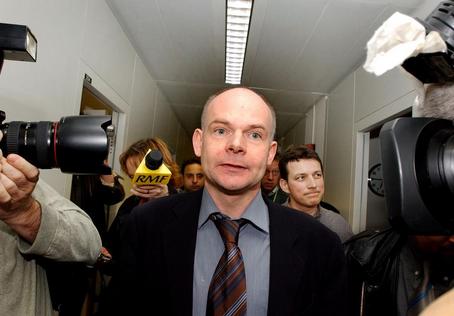 Two items on Danish June Movement MEP Jens Peter Bonde’s website seem to go together like horse and carriage. Well, sort of. He tells us that this coming Monday and Tuesday the European Parliament will be hosting a conference on “clean accounts” and members of various national parliaments have been invited. Mr Bonde makes various suggestions for urgent discussion, such as not giving any more money to the EU until at least one set of accounts is signed off by the European Court of Auditors and to ensure that full access is given to “all accounts for all controlling bodies”.
I wish Mr Bonde well but I suspect he knows that none of his suggestions are ever going to be put into effect. One has to admire his pertinacity, though.
The other item on Bondes Briefing for October 5 concerns the German journalist Hans-Martin Tillack who had committed the unpardonable crime of writing about corruption in Eurostat.
For that he has been smeared by past and present employees of OLAF, whose job, theoretically, is to deal with the waste and fraud in the Commission and related bodies. Instead, it would seem, they sent the Belgian police to raid Mr Tillack’s office. Said police, finding it much easier to deal with a German journalist than, let us say, Marc Dutroux, the paedophile murderer, confiscated Mr Tillack’s computer and various files.
Since then, we have had numerous legal cases with Mr Tillack trying to retrieve his files, trying to prevent OLAF from seeing them and trying to punish those who had slandered him with unsupported accusations of bribing OLAF officials. Despite support from some MEPs, the European Ombudsman, the International Federation of Journals and, above all, his own publication, the magazine Stern, he has lost every case.
So it has come again. The Court of First Instances has, as expected, decided against Mr Tillack.
"The court considers that there is not a sufficiently direct causal link between the forwarding of the information [that Mr Tillack bribed EU officials] by OLAF to the Belgian judicial authorities and the damage claimed in order for liability to be established on that basis," the Court of First Instance judgement stated.Of course, the case is not quite over yet. Mr Tillack may well appeal to the higher court in the European Union, the ECJ but that is unlikely to go against a decision given by the Court of First Instances. Or he and his magazine might go to the European Court of Human Rights, which might decide in his favour, after due consideration of, say, a decade. If that were to happen we might well see a scrap between the two European courts.
The decision clears the way for the EU-anti fraud office, OLAF, to examine the reporter's contact books - currently in Belgian police hands - in its hunt for an internal leak that helped Mr Tillack break major stories about EU corruption back in 2002.
It is also set to discourage other people from bringing similar accusations against non-transparent forms of cooperation between the EU anti-fraud authorities and national police.
And it further clears OLAF of smearing the journalist's name with public bribery allegations between 2002 and 2004, in a judgment that Mr Tillack and the International Federation of Journalists see as a blow against press freedom and democracy in the heart of the European Union.
Tuesday, April 26, 2005
We return to the Tillack case
Some stories just go on and on without getting any better. We have reported on the Tillack case from the earliest days of this blog.
We wrote of the fact that his office was raided twice, his computer confiscated, his boxes broken into. We mentioned the fact that although the raid was carried out by the Belgian police, it had been clearly initiated by OLAF, the Commission’s own anti-fraud investigative body, because Hans-Martin Tillack of Stern magazine had written some hard-hitting exposés about them.
We have also mentioned that, for some reason, the British government continued to view this matter as an internal Belgian one, until the former head of OLAF explained what happened to the House of Lords Sub-Committee.
Mr Tillack, as we reported, has received the Leipzig Prize for the Freedom and the Future of the Media, though one rather wonders whether there is much future for the freedom of the media in the EU.
At the same time the highest court in Hamburg, the Oberlandesgericht, ruled that it could not prevent present and former members of OLAF from sppreading unsubstantiated slanderous stories about the journalist, as a protocol of April 8 1965 grants EU civil servants a life-long immunity from legal proceedings “in respect of acts performed by them in their official capacity, including their words spoken or written”. And that includes setting the Belgian police at an investigative journalist.
Now, to take up the story. If national courts have no jurisdiction, reasoned Tillack and Stern, then they must go to the European Court of Justice, to ensure that the Commission will not be able to see the notes and documents the Belgian police had confiscated from the journalist. These have not been returned although he has not been charged with anything.
Last October the Court of First Instance absolved OLAF from inciting the Belgian police to arrest Mr Tillack and refused his plea that OLAF and the Commission be prevented from seeing the documents.
Now the European Court of Justice quashed Tillack’s appeal against the ruling of the Court of First Instance, in effect allowing the Commission and OLAF access to the documents and, potentially, to the names of the journalist’s sources.
So far the Commission has not asked to see anything and, in fact, the spokeswoman for the Administrative Affairs Commissar, Siim Kallas (himself in the past under investigation for improper political financial affairs in his home country) seemed to be giving muddled statements:
But then, according to the same spokeswoman, “under EU staff regulations, officials are obliged to blow the whistle if they see evidence of wrongdoing”. And then they have every right to be bullied, threatened and persecuted.
Mr Tillack and his employers, backed by the European Federation of Journalist, who have been wringing their hands somewhat impotently on the sidelines, plan to go to the European Court of Human Rights, to retrieve those documents.
To be continued.
We wrote of the fact that his office was raided twice, his computer confiscated, his boxes broken into. We mentioned the fact that although the raid was carried out by the Belgian police, it had been clearly initiated by OLAF, the Commission’s own anti-fraud investigative body, because Hans-Martin Tillack of Stern magazine had written some hard-hitting exposés about them.
We have also mentioned that, for some reason, the British government continued to view this matter as an internal Belgian one, until the former head of OLAF explained what happened to the House of Lords Sub-Committee.
Mr Tillack, as we reported, has received the Leipzig Prize for the Freedom and the Future of the Media, though one rather wonders whether there is much future for the freedom of the media in the EU.
At the same time the highest court in Hamburg, the Oberlandesgericht, ruled that it could not prevent present and former members of OLAF from sppreading unsubstantiated slanderous stories about the journalist, as a protocol of April 8 1965 grants EU civil servants a life-long immunity from legal proceedings “in respect of acts performed by them in their official capacity, including their words spoken or written”. And that includes setting the Belgian police at an investigative journalist.
Now, to take up the story. If national courts have no jurisdiction, reasoned Tillack and Stern, then they must go to the European Court of Justice, to ensure that the Commission will not be able to see the notes and documents the Belgian police had confiscated from the journalist. These have not been returned although he has not been charged with anything.
Last October the Court of First Instance absolved OLAF from inciting the Belgian police to arrest Mr Tillack and refused his plea that OLAF and the Commission be prevented from seeing the documents.
Now the European Court of Justice quashed Tillack’s appeal against the ruling of the Court of First Instance, in effect allowing the Commission and OLAF access to the documents and, potentially, to the names of the journalist’s sources.
So far the Commission has not asked to see anything and, in fact, the spokeswoman for the Administrative Affairs Commissar, Siim Kallas (himself in the past under investigation for improper political financial affairs in his home country) seemed to be giving muddled statements:
“For the moment the question does not arise, as the matter is still under investigation.Since the individual national authorities had been incited by OLAF; since no charges have been preferred; and since OLAF officials have been slandering Mr Tillack with no national authority having the right to stop them, that last statement can best be described as disingenuous.
Press freedom and the right of journalist to protect their sources are enshrined in the European Convention of Human Rights.But press freedom is not granted without limitation. [Or, in other words, press freedom stops when EU officials are investigated.]
If a journalist himself becomes a suspect or is linked to an investigation, it is for the individual national authorities to decide which measures can be justified and whether they can be justified.”
But then, according to the same spokeswoman, “under EU staff regulations, officials are obliged to blow the whistle if they see evidence of wrongdoing”. And then they have every right to be bullied, threatened and persecuted.
Mr Tillack and his employers, backed by the European Federation of Journalist, who have been wringing their hands somewhat impotently on the sidelines, plan to go to the European Court of Human Rights, to retrieve those documents.
To be continued.
Monday, April 14, 2008
I am shocked
 I am shocked, I tell you, shocked. It seems that after years of denying it, OLAF has admitted that, ahem, yes, actually “senior official did ask to see documents obtained by Belgian police when they raided the offices of a German investigative journalist”.
We are once again talking about the case of Hans-Martin Tillack, the German journalist whose painful saga we followed assiduously.
According to the European Voice, a spokesman for OLAF, Alessandro Buttice, “told the head of the international journalists association API in an email on 28 March that a director at OLAF had requested access to the files of Hans-Martin Tillack”. This had been strenuously denied by Franz-Hermann Brüner, OLAF's director-general, and Siim Kallas, the European commissioner for the fight against fraud to journalists, the Toy Parliament in Strasbourg (or was it Brussels?) and the Court of First Instances.
Herr Brüner has now realized that some of his statements were or, to be precise, “one element” in his statements was not factually correct. That was, as it happens, the most important element to do with OLAF’s involvement with the Belgian police’s “investigations”.
How did they find this lack of factual correctness? Well, it seems that a new broom appeared.
The error was detected when Thierry Cretin, who was appointed director at OLAF for investigation and operations, reviewed the case. The request was made by Cretin's predecessor Alberto Perduca, who is now working at the EU mission in Kosovo.Well, it’s good to know that old officials of OLAF, however improperly they may have behaved do not die or even fade away. They just go to another EU appointment. But then you knew that, I expect.
Interestingly, Herr Brüner apologizes for misleading the International Federation of Journalists and the International Press Association but makes no mention of the fact that he and Commissar Kallas also misled the Toy Parliament and the Court of First Instances. Normally, it is considered to be rather bad form to mislead a court of law.
Needless to say, there will be an internal enquiry.
Monday, October 18, 2004
Journalists protecting their sources? Not in the EU
We return to the Tillack case, which we have covered not once, but twice already. (Um, three times.) However, it is not about to go away. Hans Martin Tillack, a journalist with the Stern magazine, was not known for particularly sceptical views about the European Union. This may have changed as a result of the treatment he has received and continues to receive. Or it may not.
Whatever his political views, he is clearly a good journalist and he wrote a series of extremely hard hitting pieces about EU fraud and the shenanigans within its institutions. It was clear that much of his information came from inside sources, in particular, probably from OLAF, the Commission’s fraud-busting organization that has had a somewhat chequered reputation itself.
Tillack’s flat and office were raided by the Belgian police in March, his documents and computer confiscated and he himself kept incommunicado for ten hours. His crime, allegedly, was the bribing of an official inside OLAF. This charge was quickly dropped but his papers stayed confiscated and it became obvious that the police raid had been carried out at the behest of OLAF, which is keen to identify Mr Tillack’s sources.
Backed by his publisher and the International Federation of Journalists, Mr Tillack filed a lawsuit at the European Court, his intention being to block the Commission’s access to his documents, still with the Belgian police. If OLAF or the Commission managed to get hold of them, Mr Tillack argued, his sources would be compromised.
A journalist’s right not reveal his (or her, for that matter) sources has been acknowledged, however grudgingly, by all the governments in the free world and has been upheld by the European Court of Human Rights. This is not an EU court but of the Council of Europe. Nevertheless, it is supposed to provide guidance to civic and human rights throughout Europe.
Let us also remember that the EU prides itself on its supposed historical heritage of freedom, democracy and human rights. Despite that, the ECHR has had to rule in the past against the EU courts in defence of press freedom and the need to protect journalistit sources.
The EU Court of First Instances has ruled against Tillack, deciding that the case was strictly Belgian matter, despite clear evidence that the Commission had organized the raid, his arrest and the confiscation of papers. The Commission will, presumably, now allowed to sift through the documents and deal with the possible sources as it sees fit.
This is not quite the situation in, for instance, Russia, where Radio Liberty/Radio Free Europe has complained about the constant harassment meted out to its journalists and the highly regarded Valentina Politkovskaya was poisoned on her way to cover the Beslan siege. Nevertheless, such a cavalier disregard of the essentials of press freedom ought to worry some people. Strangely, there has been hardly any coverage in the British media. Ambrose Evans-Pritchard has been following the story and wrote about it today in the Daily Telegraph; over the week-end there was a piece on EUObserver; today the Sydney Morning Herald picked up the story. One assumes Stern will write about it in due course. What of the others?
Whatever his political views, he is clearly a good journalist and he wrote a series of extremely hard hitting pieces about EU fraud and the shenanigans within its institutions. It was clear that much of his information came from inside sources, in particular, probably from OLAF, the Commission’s fraud-busting organization that has had a somewhat chequered reputation itself.
Tillack’s flat and office were raided by the Belgian police in March, his documents and computer confiscated and he himself kept incommunicado for ten hours. His crime, allegedly, was the bribing of an official inside OLAF. This charge was quickly dropped but his papers stayed confiscated and it became obvious that the police raid had been carried out at the behest of OLAF, which is keen to identify Mr Tillack’s sources.
Backed by his publisher and the International Federation of Journalists, Mr Tillack filed a lawsuit at the European Court, his intention being to block the Commission’s access to his documents, still with the Belgian police. If OLAF or the Commission managed to get hold of them, Mr Tillack argued, his sources would be compromised.
A journalist’s right not reveal his (or her, for that matter) sources has been acknowledged, however grudgingly, by all the governments in the free world and has been upheld by the European Court of Human Rights. This is not an EU court but of the Council of Europe. Nevertheless, it is supposed to provide guidance to civic and human rights throughout Europe.
Let us also remember that the EU prides itself on its supposed historical heritage of freedom, democracy and human rights. Despite that, the ECHR has had to rule in the past against the EU courts in defence of press freedom and the need to protect journalistit sources.
The EU Court of First Instances has ruled against Tillack, deciding that the case was strictly Belgian matter, despite clear evidence that the Commission had organized the raid, his arrest and the confiscation of papers. The Commission will, presumably, now allowed to sift through the documents and deal with the possible sources as it sees fit.
This is not quite the situation in, for instance, Russia, where Radio Liberty/Radio Free Europe has complained about the constant harassment meted out to its journalists and the highly regarded Valentina Politkovskaya was poisoned on her way to cover the Beslan siege. Nevertheless, such a cavalier disregard of the essentials of press freedom ought to worry some people. Strangely, there has been hardly any coverage in the British media. Ambrose Evans-Pritchard has been following the story and wrote about it today in the Daily Telegraph; over the week-end there was a piece on EUObserver; today the Sydney Morning Herald picked up the story. One assumes Stern will write about it in due course. What of the others?
Friday, January 09, 2009
End of the Tillack saga?
 Media for Freedom reports that the accusations of bribery against the journalist Hans-Martin Tillack have been dismissed by a Belgian court for lack of evidence. Aparently the International Federation of Journalists is now calling on the EU "to tell the whole truth" about the complaints and why they were made. I guess it is a little difficult to work out why there should be ridiculous legal attempts to silence journalists who write about corruption about the European Union and its anti-corruption unit, OLAF.
Herr Tillack's supporters are calling for a formal apology from EU officials. We are calling for a full display of the Porcine Air Force in the skies above Brussels.
Daniel Hannan gives the full story in First Post, adding:
On Tuesday, the Belgian state was ordered to pay Tillack €10,000 in compensation and €30,000 costs. At least the poor fellow will get his hands on the moolah while there still is a Belgian state to pay him.The first commenter wonders why he has not seen anything about this outrage in the British media. Well, perhaps, he should have been reading EUReferendum. We covered the subject exhaustively. But there's none so blind ...


Monday, July 19, 2004
Bertelsmann fights back
Europe’s biggest publishing company, Bertelsmann, the parent company of the news magazine Stern is taking the Commission to the European Court of Justice. Understandably, the company is not best pleased that its star investigative journalist, Hans-Martin Tillack had had his home raided, his files confiscated and his good name impugned.
Though Herr Tillack has been accused of bribing OLAF officials, he has not been charged with any offence. It seems that OLAF’s own officials passed information on to the Belgian police urging it to confiscate documents and demand information on the sources of Tillack’s stories.
OLAF, the Commission’s anti-fraud body is seen, on the basis of information and documents acquired by Herr Tillack, as inefficient and corrupt, and its watchdog committee has been described as being “out of control”.
According to an article in this morning’s Times,
The first hearing is tomorrow and this will be followed by a court case that will investigate whether the Commission and OLAF had acted responsibly.
As the author of the article Anthony Browne adds wryly:
Click here to read the full story.
Though Herr Tillack has been accused of bribing OLAF officials, he has not been charged with any offence. It seems that OLAF’s own officials passed information on to the Belgian police urging it to confiscate documents and demand information on the sources of Tillack’s stories.
OLAF, the Commission’s anti-fraud body is seen, on the basis of information and documents acquired by Herr Tillack, as inefficient and corrupt, and its watchdog committee has been described as being “out of control”.
According to an article in this morning’s Times,
At the court hearing tomorrow, Stern is expected to demand that the Commission, which runs Olaf, is barred from getting access to its documents, annuls the transfer of documents to the Belgian authorities, and pays €250,000 (£166,000) in damages.Stern has also launched cases against the Belgian prosecutor’s office, against Franz-Hermann Brüner, the head of OLAF for slander and against Joachim Gross, a former Commission spokesman who first spread the story of the alleged bribes paid to OLAF officials. Gross maintains that he had heard this from an editor at Stern, who denies the story. A German court has ordered Joachim Gross to desist from repeating the accusation.
The first hearing is tomorrow and this will be followed by a court case that will investigate whether the Commission and OLAF had acted responsibly.
As the author of the article Anthony Browne adds wryly:
The court case could seriously damage the credibility of the Commission and hinder its attempts to give the EU more powers of prosecution.Indeed, it could. And we wouldn’t want that.
Click here to read the full story.
Friday, July 09, 2004
More on the Tillack case
Our readers have, no doubt, followed the saga of the German journalist Hans-Martin Tillack, who has been subjected to quite an astonishing amount of persecution by the Belgian police because he has had the temerity to write stories about OLAF, the Commission’s anti-fraud organization.
Tillack’s stories have shown conclusively that the organization is, at best, inefficient, at worst itself corrupt. It has not changed at all from the old UCLAF, which was famously blasted out of the water by an independent enquiry.
All this has been confirmed recently by Raymond Kendall, the head of the OLAF supervisory body, who has told a House of Lords Committee that there is no control over OLAF. This, too, is something we have reported in the past and shall, no doubt, be returning in the future.
Now the Daily Telegraph has overtaken the blog. They have managed to get hold of some papers that show quite clearly that Tillack’s persecution was initiated and and orchestrated by OLAF itself. This is not, in itself, a surprise but nice to have it in writing.
What is a little more worrying as the article reminds us, is that
To read article in full click here
Tillack’s stories have shown conclusively that the organization is, at best, inefficient, at worst itself corrupt. It has not changed at all from the old UCLAF, which was famously blasted out of the water by an independent enquiry.
All this has been confirmed recently by Raymond Kendall, the head of the OLAF supervisory body, who has told a House of Lords Committee that there is no control over OLAF. This, too, is something we have reported in the past and shall, no doubt, be returning in the future.
Now the Daily Telegraph has overtaken the blog. They have managed to get hold of some papers that show quite clearly that Tillack’s persecution was initiated and and orchestrated by OLAF itself. This is not, in itself, a surprise but nice to have it in writing.
What is a little more worrying as the article reminds us, is that
The EU continues to acquire a plethora of judicial, prosecution and intelligence bodies. It is creating a justice department - Eurojust - and a counter-intelligence "tsar Brussels" on top of the Europol agency that handles cross-border crime.And the record up till now does not exactly inspire one with confidence.
To read article in full click here
Sunday, March 20, 2005
Booker
The column today – the first story, at any rate – is a labour of love. Having dragged himself from his sickbed to write it, Booker nevertheless enjoyed the opportunity of tacking one of the most odious politicians in Nu Labour's ranks – and that is saying something – the egregious environment minister, Elliot Morley.
Last week, Morley made the mistake of having published in the Sunday Telegraph a letter attacking fly-tipping as an "anti-social and potentially damaging crime". He was not prepared, he said, to tolerate the criminals responsible for it any longer.
What made this outburst "curious", Booker writes, leading the reader gently to gave at the elephant trap about to be constructed for the minister, was that Mr Morley himself recently authorised one of the most glaring examples of fly-tipping in the country. This was the granting of a licence for a further 200,000 tons of rubbish to be dumped this year in one of the most beautiful bays in Cornwall.
The local community along the shores of Whitsand Bay, south-west of Plymouth, is outraged by Mr Morley's agreement that the Ministry of Defence should be allowed to use their bay to dispose of vast quantities of spoil being dredged to clear a channel in the nearby Tamar estuary. Video evidence shows that this includes rubber tyres, metal offcuts and piles of assorted man-made rubbish, which has already turned the clear waters of the bay into a dirty fog, inflicting serious damage on the seabed and marine life.
The protesters, who include local politicians, such as Tory county councillor Sheryll Murray and Lib Dem MP Colin Breed, scientists, GPs and representatives of tourist businesses, are baffled as to how Mr Morley could have agreed to the dumping without a proper environmental impact assessment.
The highly-respected Marine Biological Association nearby has offered to assess the scheme, but – amazingly - Morley preferred to rely on his own officials from the Centre for Environment, Fisheries and Aquaculture, whose report is still not available months after the scheme was given the go-ahead.
What makes the Whitsand Bay dumping scandal even odder, adds Booker, is the contrast it provides with the fate of the Cornish Calcified Seaweed Company, forced to close at Christmas when English Nature refused to renew its licence to dredge for the dead remains of calcified seaweed off Falmouth, for use as a valued organic fertiliser.
A scientific report had shown that commercial dredging was doing much less damage to the seaweed deposits than natural wave action. But English Nature - which has not objected to the Whitsand Bay dumping - ended the licence to meet its targets under EC legislation.
Now work to clear a channel to Falmouth harbour will require the dredging of 174,000 tons of calcified seaweed. But when the company asked whether it could buy this for use as fertiliser, English Nature ruled that the seaweed remains - worth millions of pounds - must be dumped at sea.
Morley's letter last week was, of course, a reply to Booker’s item reporting that the cause of the current epidemic of fly-tipping is the deluge of EC environmental directives which have recently made it much harder to dispose of waste legally.
Since Mr Morley – like the BBC - astonishingly, denied that there is any connection, Booker suggests he sends for last year's special issues of Your Environment, published by the Environment Agency, which focussed on how "waste experts fear new waste rules could see illegal dumping soar this summer".
Here he would see his own officials predicting that new EC rules greatly extending the categories of waste classified as "hazardous", combined with their massive reduction in the number of sites licensed to take such waste, were about to create a waste "nightmare", with "criminals dumping it illegally" in an epidemic of fly-tipping.
Morley's officials have proved to be spot on. Yet his only response is to write petulant letters to the press, making claims he surely must know are not true. To compound this strange behaviour, he himself authorises perhaps the most reckless example of fly-tipping anywhere in Britain.
Why minister like Morley are so keen to parade their environmental credentials, and support the EU’s dire laws, defeats me.
Anyhow, for Booker's second story, he recounts how a year ago today he was talking to Hans-Martin Tillack, a German journalist. At six the previous morning he had been woken by six Belgian policemen, who came into his flat, held him prisoner for 10 hours, then confiscated his computers and all his papers.
This was done at the behest of the EU's anti-fraud unit, the "Office européen de lutte anti-fraude" or "Olaf", following what turned out to be a wholly fabricated charge that Tillack had paid for evidence to be used in articles exposing EU corruption in Stern magazine.
When Mr Tillack went to the European Court of Justice to prevent his papers being handed over to Olaf, the ECJ last Christmas found in the EU officials' favour, even though it was shown that the evidence on which they had ordered his arrest was concocted, and that the judgment was in clear breach of rulings by the European Court of Human Rights that a journalist has the right to protect his sources.
Mr Tillack's ordeal fitted in only too neatly with what has now become a classic pattern. Anyone in Brussels who gets too close to the corruption rife in the Commission will face ruthless attempts to bully and intimidate them into silence. The list of whistleblowers subjected to this treatment grows ever longer, from Bernard Connolly and Paul van Buitinen, the auditor whose revelations forced the resignation of the Santer Commission in 1999, to Marta Andreasen, the Commission's former chief accountant.
Miss Andreasen, who was appointed to clear up the irregularities in the EU's accounts, was sacked last October for doing precisely what she had been hired for. All her efforts to improve the system had been rebuffed, not least by Commissioner Neil Kinnock, supposedly responsible for making the Commission more honest.
Booker then picks up the story we ran on this Blog, commenting on the Muis story broken by Ambrose Evans-Pritchard in The Daily Telegraph.
He draws the same conclusion as us, pointing out what a far cry the commission’s behaviour is from the other face of the commission presented by Margot Wallstrom, its vice-president charged with selling the EU to the peoples of Europe.
Last week, Booker reminds us, she regaled readers of her weekly internet "blog" with a toe-curling account of a recent visit to Ireland, where she described looking in on "a training centre for people with mental disorders", meeting representatives of organisations ranging "from churches to aid workers, to anti-poverty, to environment", and being moved by the sight of a young girl to think sadly that she is too old to have any more children.
Quite what this touchy-feely stuff has to do with the arguments for the European Constitution, Booker writes, is not very clear. But then the two contrasted faces of such omnipotent institutions - the one bullying and the other soppily sentimental - are far from unfamiliar.
For his final story, Booker is definitely “off topic” when it comes to the EU. He describes how he read with particular sympathy how Michael Howard's wife Sandra found her beloved old banger so comprehensively trashed in a station car park that it was a write-off.
Four days earlier, he had had the same experience, finding my 16-year old Fiesta XR2 in a "Euro Car Park" near Bath station smashed in such an identical manner that today's vandals seem to be working to a manual.
Mrs Howard had to deny reports that the police had arranged for her car to be taken to a breaker's yard. Like her, Booker obtained the statutory crime number from the police (before the RAC with their usual efficiency took my own wreck away).
The only consequence was a letter from Avon and Somerset's finest three days later offering Booker their counselling service, joined in the same post by a council tax demand showing that charges for our "police service" had again risen at twice the rate of inflation.
The thought occurred, writes Booker, that we might be better off handing over chasing criminals to the RAC, while renaming the police the Crime Number Issuing Agency. At least, if they are writing crime numbers, they are not locking people up for not paying their council tax, I suppose.
Last week, Morley made the mistake of having published in the Sunday Telegraph a letter attacking fly-tipping as an "anti-social and potentially damaging crime". He was not prepared, he said, to tolerate the criminals responsible for it any longer.
What made this outburst "curious", Booker writes, leading the reader gently to gave at the elephant trap about to be constructed for the minister, was that Mr Morley himself recently authorised one of the most glaring examples of fly-tipping in the country. This was the granting of a licence for a further 200,000 tons of rubbish to be dumped this year in one of the most beautiful bays in Cornwall.
The local community along the shores of Whitsand Bay, south-west of Plymouth, is outraged by Mr Morley's agreement that the Ministry of Defence should be allowed to use their bay to dispose of vast quantities of spoil being dredged to clear a channel in the nearby Tamar estuary. Video evidence shows that this includes rubber tyres, metal offcuts and piles of assorted man-made rubbish, which has already turned the clear waters of the bay into a dirty fog, inflicting serious damage on the seabed and marine life.
The protesters, who include local politicians, such as Tory county councillor Sheryll Murray and Lib Dem MP Colin Breed, scientists, GPs and representatives of tourist businesses, are baffled as to how Mr Morley could have agreed to the dumping without a proper environmental impact assessment.
The highly-respected Marine Biological Association nearby has offered to assess the scheme, but – amazingly - Morley preferred to rely on his own officials from the Centre for Environment, Fisheries and Aquaculture, whose report is still not available months after the scheme was given the go-ahead.
What makes the Whitsand Bay dumping scandal even odder, adds Booker, is the contrast it provides with the fate of the Cornish Calcified Seaweed Company, forced to close at Christmas when English Nature refused to renew its licence to dredge for the dead remains of calcified seaweed off Falmouth, for use as a valued organic fertiliser.
A scientific report had shown that commercial dredging was doing much less damage to the seaweed deposits than natural wave action. But English Nature - which has not objected to the Whitsand Bay dumping - ended the licence to meet its targets under EC legislation.
Now work to clear a channel to Falmouth harbour will require the dredging of 174,000 tons of calcified seaweed. But when the company asked whether it could buy this for use as fertiliser, English Nature ruled that the seaweed remains - worth millions of pounds - must be dumped at sea.
Morley's letter last week was, of course, a reply to Booker’s item reporting that the cause of the current epidemic of fly-tipping is the deluge of EC environmental directives which have recently made it much harder to dispose of waste legally.
Since Mr Morley – like the BBC - astonishingly, denied that there is any connection, Booker suggests he sends for last year's special issues of Your Environment, published by the Environment Agency, which focussed on how "waste experts fear new waste rules could see illegal dumping soar this summer".
Here he would see his own officials predicting that new EC rules greatly extending the categories of waste classified as "hazardous", combined with their massive reduction in the number of sites licensed to take such waste, were about to create a waste "nightmare", with "criminals dumping it illegally" in an epidemic of fly-tipping.
Morley's officials have proved to be spot on. Yet his only response is to write petulant letters to the press, making claims he surely must know are not true. To compound this strange behaviour, he himself authorises perhaps the most reckless example of fly-tipping anywhere in Britain.
Why minister like Morley are so keen to parade their environmental credentials, and support the EU’s dire laws, defeats me.
Anyhow, for Booker's second story, he recounts how a year ago today he was talking to Hans-Martin Tillack, a German journalist. At six the previous morning he had been woken by six Belgian policemen, who came into his flat, held him prisoner for 10 hours, then confiscated his computers and all his papers.
This was done at the behest of the EU's anti-fraud unit, the "Office européen de lutte anti-fraude" or "Olaf", following what turned out to be a wholly fabricated charge that Tillack had paid for evidence to be used in articles exposing EU corruption in Stern magazine.
When Mr Tillack went to the European Court of Justice to prevent his papers being handed over to Olaf, the ECJ last Christmas found in the EU officials' favour, even though it was shown that the evidence on which they had ordered his arrest was concocted, and that the judgment was in clear breach of rulings by the European Court of Human Rights that a journalist has the right to protect his sources.
Mr Tillack's ordeal fitted in only too neatly with what has now become a classic pattern. Anyone in Brussels who gets too close to the corruption rife in the Commission will face ruthless attempts to bully and intimidate them into silence. The list of whistleblowers subjected to this treatment grows ever longer, from Bernard Connolly and Paul van Buitinen, the auditor whose revelations forced the resignation of the Santer Commission in 1999, to Marta Andreasen, the Commission's former chief accountant.
Miss Andreasen, who was appointed to clear up the irregularities in the EU's accounts, was sacked last October for doing precisely what she had been hired for. All her efforts to improve the system had been rebuffed, not least by Commissioner Neil Kinnock, supposedly responsible for making the Commission more honest.
Booker then picks up the story we ran on this Blog, commenting on the Muis story broken by Ambrose Evans-Pritchard in The Daily Telegraph.
He draws the same conclusion as us, pointing out what a far cry the commission’s behaviour is from the other face of the commission presented by Margot Wallstrom, its vice-president charged with selling the EU to the peoples of Europe.
Last week, Booker reminds us, she regaled readers of her weekly internet "blog" with a toe-curling account of a recent visit to Ireland, where she described looking in on "a training centre for people with mental disorders", meeting representatives of organisations ranging "from churches to aid workers, to anti-poverty, to environment", and being moved by the sight of a young girl to think sadly that she is too old to have any more children.
Quite what this touchy-feely stuff has to do with the arguments for the European Constitution, Booker writes, is not very clear. But then the two contrasted faces of such omnipotent institutions - the one bullying and the other soppily sentimental - are far from unfamiliar.
For his final story, Booker is definitely “off topic” when it comes to the EU. He describes how he read with particular sympathy how Michael Howard's wife Sandra found her beloved old banger so comprehensively trashed in a station car park that it was a write-off.
Four days earlier, he had had the same experience, finding my 16-year old Fiesta XR2 in a "Euro Car Park" near Bath station smashed in such an identical manner that today's vandals seem to be working to a manual.
Mrs Howard had to deny reports that the police had arranged for her car to be taken to a breaker's yard. Like her, Booker obtained the statutory crime number from the police (before the RAC with their usual efficiency took my own wreck away).
The only consequence was a letter from Avon and Somerset's finest three days later offering Booker their counselling service, joined in the same post by a council tax demand showing that charges for our "police service" had again risen at twice the rate of inflation.
The thought occurred, writes Booker, that we might be better off handing over chasing criminals to the RAC, while renaming the police the Crime Number Issuing Agency. At least, if they are writing crime numbers, they are not locking people up for not paying their council tax, I suppose.
Tuesday, April 27, 2004
German journalist’s office is raided by Belgian police …. Again
The hapless Hans-Martin Tillack, Brussels correspondent of Stern magazine has had his office raided again just a month after it had happened the first time. Since the first raid on March 19 he had kept most of his files in sealed boxes. On April 21 the Belgian police (that had spent rather a long time finding, arresting and charging Marcel Dutroux, whose trial is now dragging on) brought in a locksmith to break open a sealed-off cabinet and extract hundreds of pages of notes. Then they confiscated some other notes and Herr Tillack’s laptop computer, which had already been in police custody.
Herr Tillack apparently could have avoided the second raid if he had given the police at least one of his contacts’ names, despite the fact that all human rights and press freedom agreements, to all of which the EU and its members enthusiastically subscribe, allow for protection of journalists’ sources.
Letters of protest have gone to OLAF (the EU anti-fraud agency) chief Franz-Hermann Brüner, the Belgian prosecutor overseeing the case and Diemut theato, chairwoman of the European Parliament budgetary control [sic] committee.
The investigative journalist insists that EU topics will continue to be investigated. “We will not let them scare us.” Just as well, perhaps, that not all member states have implemented the EU arrest warrant.
Herr Tillack apparently could have avoided the second raid if he had given the police at least one of his contacts’ names, despite the fact that all human rights and press freedom agreements, to all of which the EU and its members enthusiastically subscribe, allow for protection of journalists’ sources.
Letters of protest have gone to OLAF (the EU anti-fraud agency) chief Franz-Hermann Brüner, the Belgian prosecutor overseeing the case and Diemut theato, chairwoman of the European Parliament budgetary control [sic] committee.
The investigative journalist insists that EU topics will continue to be investigated. “We will not let them scare us.” Just as well, perhaps, that not all member states have implemented the EU arrest warrant.
Monday, October 09, 2006
Death of another courageous journalist
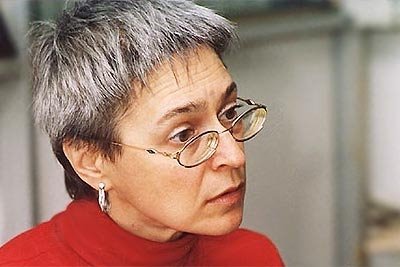 Well, they finally got her. Anna Politkovskaya, one of the world’s most courageous journalists, who wrote openly critical pieces about President Putin and his system, who managed to get through to Chechnya and report truthfully about the war there, who was nearly murdered when she was trying to get to Beslan to find out what was really happening in that unfortunate place, has been assassinated.
Her body was found by the lift of the apartment block she lived in, with a gun and ammunition beside it. According to Russia-IC the investigation into the murder “is being led by the General Procuracy of Russia under personal control of department's head Yury Chayka”.
Her husband expressed the opinion that he did not think the murderers would be found, which is quite likely, unless the General Procuracy can find some little minnow in the conspiracy who can be blamed. Mr Politkovsky has also said that his wife had been receiving threats for the last two years. It is not clear, says the news agency, whether she had reported these threats to the police. I can think of several reasons why Anna Politkovskaya might not want to deal with the Russian police in this matter.
This blog has written about this extraordinarily courageous woman before, mentioning the Leipzig Prize for the Freedom and the Future of the Media, which she shared with Hans-Martin Tillack, Britta Petersen and Seymour M. Hersh. Even Herr Tillack’s travails pale into insignificance (well, almost) compared to the life and death of Anna Politkovskaya. The other two recipients are alive and well with Mr Hersh being feted up and down the “drive-by media” of the United States.
There are words of horror being expressed by various journalists’ organizations but, as we have pointed out before, it is not always clear that the biggest and most important of these, the International Federation of Journalists has a clear idea of what is really going on in the world. I suggest they compare the events in Anna Politkovskaya’s life to those in Seymour M. Hersh’s. It is entirely possible that they will not be able to see the difference.
For those of us who would like to see Russia take her rightful place as one of the truly great countries in the world this assassination, coming so soon after the assassination of Andrei Kozlov, Deputy Chairman of the Russian Central Bank, who was trying to clean up the banking sector, marks another tragic and bloody step downwards for the whole country.
Sunday, May 01, 2005
The International Federation of Journalists lives in a world of its own
Well, actually, it lives in Brussels, which has not exactly enabled it to protect one of its own, Hans-Martin Tillack. Presumably, having made all sorts of statements, it did not really want to fall out either with the Belgian government or the European Commission. The IFJ is, after all, down the road from the Commission, on the Rue de Loi.
On May 3 the IFJ is having a special conference. Apparently the day is World Press Freedom Day. World Press Freedom Day? Exactly how much of the world has a free press?
Africa? Russia? Central Asia? Venezuela? Various Middle Eastern countries? Does the IFJ know what happens to journalists who express the mildest criticism of the Palestinian Authority or of Hamas? Is there a free media in Syria or, for that matter, Belarus?
Apparently yes, because the theme of the conference and the report that it will launch will be: How the War on Terror Puts Pressure on Press Freedom. Right, so it is the wicked West that is at fault again and never mind the attacks on journalists in, say, Putin’s Russia.
The IFJ seems to have been living in a fool’s paradise for some time. How else can one explain the sub-theme of the conference:
Those 60 years saw, among other developments, Stalin’s second purge, the Communist purges in Eastern Europe, the murder of many millions of Chinese under Mao’s regime (and if there is a culture of human rights and civil liberties in China, I must have missed it), the rule of Ho Chi Minh in Vietnam and of the Khmer Rouge in Cambodia, not to mentionKim Il-Sung and Kim Jong-Il in North Korea.
Those 60 years saw the devastation of one African state after another to the point where human rights and civil liberties are not words most of the unfortunate people of that Continent can even begin to understand.
Those 60 years saw the rule of the two Assads and of Saddam Hussein, not to mention other tyrants in the Middle East and the Gulf region.
Shall I go on? Well, yes, the last couple of years saw a rapid movement back into autocracy in Russia, temporarily, we hope, in Ukraine, more permanently in Belarus, Moldova, Kazakhstan and all the other stans.
It seems the murder of Gongadze in Ukraine and the near murder of Anna Politkovskaya in Russia (to pluck two cases at random – there are many more) are not a challenge, devastating or otherwise to human rights or civil liberties, as established nearly 60 years ago.
Only the war against terror is. I don’t know about anyone else but I cannot take the IFJ seriously until they at least manage to retrieve Herr Tillack’s notes and documents from the Belgian police as well as silence the OLAF officials who continue to slander him with impunity.
On May 3 the IFJ is having a special conference. Apparently the day is World Press Freedom Day. World Press Freedom Day? Exactly how much of the world has a free press?
Africa? Russia? Central Asia? Venezuela? Various Middle Eastern countries? Does the IFJ know what happens to journalists who express the mildest criticism of the Palestinian Authority or of Hamas? Is there a free media in Syria or, for that matter, Belarus?
Apparently yes, because the theme of the conference and the report that it will launch will be: How the War on Terror Puts Pressure on Press Freedom. Right, so it is the wicked West that is at fault again and never mind the attacks on journalists in, say, Putin’s Russia.
The IFJ seems to have been living in a fool’s paradise for some time. How else can one explain the sub-theme of the conference:
‘…the war on terrorism amounts to a devastating challenge to the global culture of human rights and civil liberties established almost 60 years ago…’Excuse me? Global culture of human rights and civil liberties that has existed for almost 60 years?
Those 60 years saw, among other developments, Stalin’s second purge, the Communist purges in Eastern Europe, the murder of many millions of Chinese under Mao’s regime (and if there is a culture of human rights and civil liberties in China, I must have missed it), the rule of Ho Chi Minh in Vietnam and of the Khmer Rouge in Cambodia, not to mentionKim Il-Sung and Kim Jong-Il in North Korea.
Those 60 years saw the devastation of one African state after another to the point where human rights and civil liberties are not words most of the unfortunate people of that Continent can even begin to understand.
Those 60 years saw the rule of the two Assads and of Saddam Hussein, not to mention other tyrants in the Middle East and the Gulf region.
Shall I go on? Well, yes, the last couple of years saw a rapid movement back into autocracy in Russia, temporarily, we hope, in Ukraine, more permanently in Belarus, Moldova, Kazakhstan and all the other stans.
It seems the murder of Gongadze in Ukraine and the near murder of Anna Politkovskaya in Russia (to pluck two cases at random – there are many more) are not a challenge, devastating or otherwise to human rights or civil liberties, as established nearly 60 years ago.
Only the war against terror is. I don’t know about anyone else but I cannot take the IFJ seriously until they at least manage to retrieve Herr Tillack’s notes and documents from the Belgian police as well as silence the OLAF officials who continue to slander him with impunity.
Thursday, July 01, 2004
Edith Cresson can continue to enjoy her substantial pension
A Belgian court has dropped all charges against former French Prime Minister and former Commissioner Edith Cresson with the Assistant Prosecutor explaining that the charges were political and should not have been presented in a court of law. This does raise the question of who actually presented those charges. Not the Prosecutor or the Assistant Prosecutor?
The decision to drop all charges was taken after a meeting behind closed doors so the arguments presented by the defence are not available.
Mme Cresson was, naturally, delighted that the research contracts she had awarded her personal dentist as well as other contracts to other friends and relations, were not found to be in any way criminal or fraudulent. She happily explained that all this was a result of political tittle-tattle, gossip and hysteria. At the time, as some of our readers may remember, she shrugged her shoulders and wondered aloud why she should be persecuted by those puritanical Scandinavians and Anglo-Saxons for normal political practices.
Mme Cresson is not completely out of the woods. There was another hearing yesterday, also behind closed doors. The Commission has to decide whether Edith Cresson failed in her duties as a Commissioner. If they find that she did, the case may go to the European Court of Justice.
There is no need for our readers to hold their breath. Mme Cresson has already announced that the Commissioners, several of whom are her former colleagues were sympathetic to her point of view, understanding that:
On the other hand, the people of the European Union may not be entirely in agreement with Mme Cresson, the Belgian court or the Commission. It is notable that Paul van Buitenen, the whistle-blower who had triggered off the investigation into Cresson’s and others’ eccentric mode of accounting and awarding contracts is now in the European Parliament as is a colleague of his as part of a Transparency Party.
In the meantime there has been some plain talking from the Chairman of OLAF’s supervisory body. OLAF is the Commission’s anti-fraud organization that has been more interested in getting information about the sources for German journalist Hans-Martin Tillack’s stories than in dealing with dubious financial proceedings.
During a hearing in the House of Lords in the UK on 19 May, the Chairman of the supervisory body, Raymond Edward Kendall, said that OLAF had been given "enormous powers with no legal supervision".
He cited the case of Herr Tillack, as being an example of raids carried out and documents confiscated by the Belgian police on the basis of “hearsay” supplied by OLAF.
It is good to know that there are times when the Belgian law-enforcing authorities become very active and take even hearsay seriously.
Meanwhile Edith Cresson continues to draw a handsome Commissioner’s pension and complain about being a victim of a political witch-hunt.
The decision to drop all charges was taken after a meeting behind closed doors so the arguments presented by the defence are not available.
Mme Cresson was, naturally, delighted that the research contracts she had awarded her personal dentist as well as other contracts to other friends and relations, were not found to be in any way criminal or fraudulent. She happily explained that all this was a result of political tittle-tattle, gossip and hysteria. At the time, as some of our readers may remember, she shrugged her shoulders and wondered aloud why she should be persecuted by those puritanical Scandinavians and Anglo-Saxons for normal political practices.
Mme Cresson is not completely out of the woods. There was another hearing yesterday, also behind closed doors. The Commission has to decide whether Edith Cresson failed in her duties as a Commissioner. If they find that she did, the case may go to the European Court of Justice.
There is no need for our readers to hold their breath. Mme Cresson has already announced that the Commissioners, several of whom are her former colleagues were sympathetic to her point of view, understanding that:
“…as commissioner, you are at the mercy of no matter whom ... if Kafka forms part of European culture, they have had an example of it there."French politicians do seem to have a habit of parading their cultural sophistication, whether it is appropriate or not.
On the other hand, the people of the European Union may not be entirely in agreement with Mme Cresson, the Belgian court or the Commission. It is notable that Paul van Buitenen, the whistle-blower who had triggered off the investigation into Cresson’s and others’ eccentric mode of accounting and awarding contracts is now in the European Parliament as is a colleague of his as part of a Transparency Party.
In the meantime there has been some plain talking from the Chairman of OLAF’s supervisory body. OLAF is the Commission’s anti-fraud organization that has been more interested in getting information about the sources for German journalist Hans-Martin Tillack’s stories than in dealing with dubious financial proceedings.
During a hearing in the House of Lords in the UK on 19 May, the Chairman of the supervisory body, Raymond Edward Kendall, said that OLAF had been given "enormous powers with no legal supervision".
He cited the case of Herr Tillack, as being an example of raids carried out and documents confiscated by the Belgian police on the basis of “hearsay” supplied by OLAF.
It is good to know that there are times when the Belgian law-enforcing authorities become very active and take even hearsay seriously.
Meanwhile Edith Cresson continues to draw a handsome Commissioner’s pension and complain about being a victim of a political witch-hunt.
Wednesday, May 26, 2004
Is press freedom in the EU our business?
Apparently not, according to Her Majesty’s Government. Replying to Lord Tebbit’s question about the case of Hans-Martin Tillack, the investigative journalist, who had been manhandled by the Belgian police and whose files and computer have been confiscated [see German journalist's office is raided by the Belgian police ... Again ], Lord McIntosh of Haringey reiterated several times that this was a matter for the Belgian courts and we could not intervene.
When Lord Lamont asked whether “we should not be concerned” that “the Belgian police or OLAF were in any way more interested in the suppression of evidence about fraud, rather than in combating fraud”, Lord McIntosh merely suggested that nobody would like it if “the parliament of another member state were to start to intervene in the activities of a British court”.
Of course, the situation is not the same at all, as a number of peers pointed out. We are not talking about the British parliament intervening in a purely internal Belgian matter, say, the Dutroux case, which is still rumbling through the courts. Tillack was investigating fraud and irregularities in the Commission’s anti-fraud unit. Its remit ought to be the investigation of how our money among others’ is spent or mis-spent. Instead of which, they merely want to suppress a journalist’s legitimate right to report on these matters.
As we, too, contribute and rather a lot to the funding of the EU, we ought to be materially interested in the fate of those funds; as we are part of the EU, we ought to be materially interested in freedom of speech and press in it. This is not, pace Lord McIntosh of Haringey and his advisers, an internal matter for the Belgian courts to decide on.
To read the full debate click here.
When Lord Lamont asked whether “we should not be concerned” that “the Belgian police or OLAF were in any way more interested in the suppression of evidence about fraud, rather than in combating fraud”, Lord McIntosh merely suggested that nobody would like it if “the parliament of another member state were to start to intervene in the activities of a British court”.
Of course, the situation is not the same at all, as a number of peers pointed out. We are not talking about the British parliament intervening in a purely internal Belgian matter, say, the Dutroux case, which is still rumbling through the courts. Tillack was investigating fraud and irregularities in the Commission’s anti-fraud unit. Its remit ought to be the investigation of how our money among others’ is spent or mis-spent. Instead of which, they merely want to suppress a journalist’s legitimate right to report on these matters.
As we, too, contribute and rather a lot to the funding of the EU, we ought to be materially interested in the fate of those funds; as we are part of the EU, we ought to be materially interested in freedom of speech and press in it. This is not, pace Lord McIntosh of Haringey and his advisers, an internal matter for the Belgian courts to decide on.
To read the full debate click here.
Thursday, June 30, 2005
Set a tranzi to catch a tranzi
Vice-President Siim Kallas, the Commissar of Anti-Fraud matters, no stranger to fraud investigations in his own country, has been very busy.
He was the fifth Commissar to travel to Ukraine since the setting up of the EU-Ukraine Action Plan in February.
According to the Commission’s press release:
Still the man means business. He has announced that there will be an investigation of charities and NGOs in the EU as well.
The actual investigation into the 32 charities, NGOs and aid organizations, who are accused of “double dipping” is being carried out by OLAF, the anti-fraud office of the Commission.
It seems that these promoters of “noble causes” may well have asked for funds from the EU, the UN, the US government and the World Bank for the same project, submitting separate proposals and invoices.
The whole subject of aid giving by the EU is fraught with problems quite apart from the general difficulties to do with the subject of aid.
The Court of Auditors has lambasted ECHO the European Commission Humanitarian Aid Office on numerous occasions, generally and on the subject of specific projects.
As Ambrose Evans Pritchard’s article in yesterday’s Daily Telegraph said:
Other problems have arisen.
The ongoing problem of aid to the Palestinian Authority has been discussed on numerous occasions. In 1997 the Court of Auditors found that none of the projects that were supposed to have been built were anywhere near completion, some not having been started and the money had vanished either into the hands of the PA or those of EU officials. No proper accounts had ever been presented.
There have also been accusations that EU money has been used to finance terrorist activity and open anti-Semitic propaganda in schools in the Palestinian territory and various Arab states.
After due investigation that they were forced to carry out, OLAF solemnly reported:
But then OLAF itself has not been free of taint. In fact, the dishonesty and lack of accountability within its own office have been commented on adversely by the self-same Court of Auditors.
And it is OLAF, whose doings were recorded by Hans-Martin Tillack, the German journalist, which set into motion the various arrests, confiscations of material and persecutions by the Belgian police, at the instigation of the anti-fraud office.
So far Mr Tillack’s attempts to get back his documents, to prevent OLAF and the Commission from finding out the names of his sources and to stop various past and present OLAF officials from slandering him have been unsuccessful.
One can’t help looking forward with some anticipation to the final report produced from bunch of … ahem … not entirely accountable officials on another similar bunch.
He was the fifth Commissar to travel to Ukraine since the setting up of the EU-Ukraine Action Plan in February.
According to the Commission’s press release:
“He met President Yushchenko, Deputy Prime Minister Bezsmertnyi in charge of administrative reform, Interior Minister Lutsenko, Justice Minister Zvarych, the Head of the National Security and Defence Council Poroshenko, the Head of the Parliament’s Committee on Organised Crime Stretovych as well as representatives of civil society.Well, quite. Who better to preach the need to fight corruption than a Commissioner of the European Union?
A key topic of the discussions was the state of play in the implementation of the Action Plan adopted jointly by the EU and Ukraine on 21st of February in the framework of the European Neighbourhood Policy, in particular the reforms of the administration and the judiciary, and the fight against corruption.”
Still the man means business. He has announced that there will be an investigation of charities and NGOs in the EU as well.
“Citizens have the right to know how their own money is being spent, including that given to NGOs. Because an awful lot of money is being channelled through organisations that we hardly know in the name of ‘noble causes’.”One of those organisations, if the fragrant Margot is to be listened to, is the Commission itself and we don’t always know how the money is being spent in the name of all sorts of causes, noble or otherwise.
The actual investigation into the 32 charities, NGOs and aid organizations, who are accused of “double dipping” is being carried out by OLAF, the anti-fraud office of the Commission.
It seems that these promoters of “noble causes” may well have asked for funds from the EU, the UN, the US government and the World Bank for the same project, submitting separate proposals and invoices.
The whole subject of aid giving by the EU is fraught with problems quite apart from the general difficulties to do with the subject of aid.
The Court of Auditors has lambasted ECHO the European Commission Humanitarian Aid Office on numerous occasions, generally and on the subject of specific projects.
As Ambrose Evans Pritchard’s article in yesterday’s Daily Telegraph said:
“European auditors still have no idea what happened to payments of almost €1billion in Russia over a seven-year period for cleaning up unsafe nuclear power plants.”Or, for that matter, the money that was sent to deal with a non-existent food-shortage after the collapse of the rouble in 1998.
Other problems have arisen.
“Much of the EU's humanitarian aid programme to Zimbabwe has fallen into the hands of the Mugabe regime, since funds had to be exchanged at the vastly over-valued official exchange rate - going straight into the coffers of the central bank.”The same pattern has been seen with numerous other aid programmes in Africa, but, one might argue, that is true with aid given by all governments and international organizations.
The ongoing problem of aid to the Palestinian Authority has been discussed on numerous occasions. In 1997 the Court of Auditors found that none of the projects that were supposed to have been built were anywhere near completion, some not having been started and the money had vanished either into the hands of the PA or those of EU officials. No proper accounts had ever been presented.
There have also been accusations that EU money has been used to finance terrorist activity and open anti-Semitic propaganda in schools in the Palestinian territory and various Arab states.
After due investigation that they were forced to carry out, OLAF solemnly reported:
“The European Anti-Fraud Office (OLAF) has closed its investigation into the European Commission’s Direct Assistance to the Palestinian Authority’s budget. On the basis of the information currently available to OLAF, the investigation has found no conclusive evidence of support of armed attacks or unlawful activities financed by the European Commission’s contributions to the budget. However, the possibility of misuse of the Palestinian Authority’s budget and other resources, cannot be excluded, due to the fact that the internal and external audit capacity in the Palestinian Authority is still underdeveloped.”Nice way of putting hat, “underdeveloped”. One assumes it means, nothing was noted or could be proved anywhere.
But then OLAF itself has not been free of taint. In fact, the dishonesty and lack of accountability within its own office have been commented on adversely by the self-same Court of Auditors.
And it is OLAF, whose doings were recorded by Hans-Martin Tillack, the German journalist, which set into motion the various arrests, confiscations of material and persecutions by the Belgian police, at the instigation of the anti-fraud office.
So far Mr Tillack’s attempts to get back his documents, to prevent OLAF and the Commission from finding out the names of his sources and to stop various past and present OLAF officials from slandering him have been unsuccessful.
One can’t help looking forward with some anticipation to the final report produced from bunch of … ahem … not entirely accountable officials on another similar bunch.
Monday, February 13, 2006
Launch another strategy
 A telling analysis of the Fragrant Margot's new EU communications strategy is delivered today in the German periodical Politik und Kommunikation by authors Christophe Leclercq and Kristina Weich Hondrila from EurActiv.com.
Entitled "Wallström's Hopes", it notes – to the surprise of no one – the "poor state of EU communication policy", but then remarks that "the new measures taken by commissioner Wallström hardly deliver anything new and had no effect in the past."
The key problem remains, the authors opine: "the request for more communication has to be addressed to those people in the member states who are in any case responsible for communicating EU policies to its citizens. These are parliaments, parties, politicians, media, educational institutions, NGOs etc."
There, the problem is that no one – particularly any national government - is really that keen on highlighting just how much the EU has taken over the reins of power. Thus, the EU is not going to get much help from the sources it identifies.
Nevertheless, on her blog, the Fragrant One waxes lyrical on her new strategy, but her blog itself has proved the classic example of why the commission itself cannot succeed.
Not least, on the subject which has dominated the headlines over the last week or so, Wallström is silent while her bog comments have now been taken over by an intervention from Hans-Martin Tillack, demonstrating that, even when she controls the medium, she cannot dominate the agenda.
Thus it is that a pattern is emerging, one which we see so commonly in EU affairs. At the end of 2006 the commission intends to present a White Paper on the information and communication policy of the EU, whose impact will be felt before 2008 – just before the European elections in 2009.
In the absence of action, the commission simply produces another strategy.
COMMENT THREAD
Wednesday, March 16, 2005
The two faces of the commission
Following through our three postings in the Muis e-mail yesterday, here, here and here, we promised an analytical piece today, drawing together the threads and implications.
What comes over from the e-mail, and by far the most important issue, is not that the financial arrangements of the EU are unsound – that we knew already – but quite what an unpleasant organisation the commission really is.
In fact, we knew that already. Bernard Connolloy made that very clear, when he dared to write his book about the "Rotten Heart of Europe", and there are the other "whistleblowers", not least Van Buitenen and Douglas Watt, all of whom have retailed their first hand experiences of what is it like to be at the receiving end of what is, in fact, a very vindictive organisation.
More recently, there is the disturbing case of the German journalist Hans-Martin Tillack, arrested by the Belgian police at the behest of the EU's anti-fraud body, OLAF, and the case of Robert McCoy, who lost his job as financial controller for the Committee of the Regions after revealing to MEPs in 2003 that he had uncovered widespread abuse of travel expenses.
One also must not forget the fate of Dorte Schmidt-Braun, a Danish official who was seriously harassed when she rang alarm bells over corruption in Eurostat, where over €5 million disappeared into black accounts in what investigators described as "a vast enterprise of looting". She received no support from the commission and, while she was not fired, suffered a nervous breakdown and returned to Denmark.
Even then, it is perturbing to learn, direct from the horse's mouth of Jules Muis, an official drafted in from the upper reaches of the World Bank and at the top of the hierarchical tree in the commission that he too was not immune from the vindictiveness, having been told that "we have ways of breaking people like you".
But there is also the dishonesty. For those of us who remember the tumultuous days of the end of the Santer commission, when the whole shabby crew resigned en masse – only to be back at their desks after a long lunch break - the follow-on was Prodi, full of honeyed words about "reform".
What comes over from Muis, however, is that the reforms were resented, were half-hearted at best, and were never in any case fully implemented, leaving the commission still with "sordid accounting" that cannot and is not intended to function effectively.
Nor is this dim and distant history. Muis wrote his e-mail in September of last year and he paints a picture of the commission effectively as it stands today, a sinister "autocratic body with an 'incestuous esprit de corps' that uses its bureaucratic muscle to 'trash' any official who dares to question its methods."
Compare and contrast, therefore that account, with the glowing, "touchy-feely" presentation of the communications commissioner, Margot Wallström, a person we like to describe as "the commissioner for truth and reconciliation".
In her latest blog, she describes her recent visit to Ireland, where she tells us she "saw a training centre for people with mental disorders, a girls college, a very good exhibition on James Joyce and met representatives of civil society: all kinds of organisations from churches to aid workers, to anti-poverty, to environment."
What she doesn't tell you, however, is that she went to Ireland at the invitation of the National forum on Europe, a Europhile propaganda body and then made statements to the Irish media which were clearly aimed at influencing the forthcoming EU referendum, possibly in contravention of the Irish constitution.
Instead, towards the conclusion of her piece, she writes:
But what one must remember is that Wallström is part of the same commission of which Muis wrote about and she is being paid, quite handsomely, to put a "human" face on the organisation. No one can be under any illusions that the commissioner for communication is participating in a carefully conceived strategy to improve the commission's tarnished image.
The implications that can be drawn from the Muis e-mail, therefore, are that the commission has the "touchy-feely" Wallström "front" and the dark, sinister reality that lurks behind it. It is an organisation with two faces, and neither of them is very pretty.
What comes over from the e-mail, and by far the most important issue, is not that the financial arrangements of the EU are unsound – that we knew already – but quite what an unpleasant organisation the commission really is.
In fact, we knew that already. Bernard Connolloy made that very clear, when he dared to write his book about the "Rotten Heart of Europe", and there are the other "whistleblowers", not least Van Buitenen and Douglas Watt, all of whom have retailed their first hand experiences of what is it like to be at the receiving end of what is, in fact, a very vindictive organisation.
More recently, there is the disturbing case of the German journalist Hans-Martin Tillack, arrested by the Belgian police at the behest of the EU's anti-fraud body, OLAF, and the case of Robert McCoy, who lost his job as financial controller for the Committee of the Regions after revealing to MEPs in 2003 that he had uncovered widespread abuse of travel expenses.
One also must not forget the fate of Dorte Schmidt-Braun, a Danish official who was seriously harassed when she rang alarm bells over corruption in Eurostat, where over €5 million disappeared into black accounts in what investigators described as "a vast enterprise of looting". She received no support from the commission and, while she was not fired, suffered a nervous breakdown and returned to Denmark.
Even then, it is perturbing to learn, direct from the horse's mouth of Jules Muis, an official drafted in from the upper reaches of the World Bank and at the top of the hierarchical tree in the commission that he too was not immune from the vindictiveness, having been told that "we have ways of breaking people like you".
But there is also the dishonesty. For those of us who remember the tumultuous days of the end of the Santer commission, when the whole shabby crew resigned en masse – only to be back at their desks after a long lunch break - the follow-on was Prodi, full of honeyed words about "reform".
What comes over from Muis, however, is that the reforms were resented, were half-hearted at best, and were never in any case fully implemented, leaving the commission still with "sordid accounting" that cannot and is not intended to function effectively.
Nor is this dim and distant history. Muis wrote his e-mail in September of last year and he paints a picture of the commission effectively as it stands today, a sinister "autocratic body with an 'incestuous esprit de corps' that uses its bureaucratic muscle to 'trash' any official who dares to question its methods."
Compare and contrast, therefore that account, with the glowing, "touchy-feely" presentation of the communications commissioner, Margot Wallström, a person we like to describe as "the commissioner for truth and reconciliation".
In her latest blog, she describes her recent visit to Ireland, where she tells us she "saw a training centre for people with mental disorders, a girls college, a very good exhibition on James Joyce and met representatives of civil society: all kinds of organisations from churches to aid workers, to anti-poverty, to environment."
What she doesn't tell you, however, is that she went to Ireland at the invitation of the National forum on Europe, a Europhile propaganda body and then made statements to the Irish media which were clearly aimed at influencing the forthcoming EU referendum, possibly in contravention of the Irish constitution.
Instead, towards the conclusion of her piece, she writes:
I went bowling with two 11-year old boys – both of them utterly surprised when I won! On the way back, I watched a beautiful and mischievous girl and for a moment I felt a deep sadness about the fact that it is definitely too late to have another child – a girl…Politicians in general need to be careful about harnessing their own private lives to the service of their cause and you can imagine the uproar in this country if senior politicians had utilised a government website (and Wallström's blog is an official EU site) to rehearse such private issues in a transparent attempt to improve their government's image. The newspapers would have been full of it.
But what one must remember is that Wallström is part of the same commission of which Muis wrote about and she is being paid, quite handsomely, to put a "human" face on the organisation. No one can be under any illusions that the commissioner for communication is participating in a carefully conceived strategy to improve the commission's tarnished image.
The implications that can be drawn from the Muis e-mail, therefore, are that the commission has the "touchy-feely" Wallström "front" and the dark, sinister reality that lurks behind it. It is an organisation with two faces, and neither of them is very pretty.
Subscribe to:
Posts (Atom)