Monday, April 24, 2006

Going backwards

In a sense, it is great fun watching politicians and the increasingly vacuous media correspondents struggle to come to terms with their own unpopularity. For such – as been correctly diagnosed – is the real reason for the apparent surge in popularity of the BNP.

But this is only entertaining in the way that one used to derive pleasure from plucking the wings off flies and seeing them squirm. It is an entirely destructive activity which leads nowhere.

However, given that the political classes are both so inept and detached from the realities of everyday life, it has come to pass that the only meaningful political activity left to ordinary people is to watch politicians squirm. The more one can engineer such situations the better, which makes voting BNP the obvious option. It is equally destructive, but has the same entertainment quotient as dismembering flies.

Eventually, one hopes, dissatisfaction will build up to such an extent that it will turn a quiescent, cowed population into an active, rebellious force, which will re-impose democracy on the political classes, and demand change. But, like many, we are not holding our breath.

What is particularly depressing, at the moment, is that we lack a credible opposition though which our energies can be channelled. A bad government is tolerable, to an extent, if there is prospect of change and there is hope of something better on the horizon.

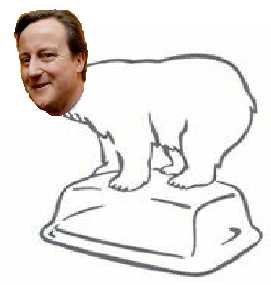
But when as Lord Onslow points out, we have an opposition which has retreated from its task, and we have a vacuous leader, communing with glaciers, there is little chance of a change of government bringing any relief.

To that extent, our main preoccupation, the battle against the European Union takes on an entirely new dimension. As we have ceaselessly pointed out, our membership continues only with the acquiescence of government and the permission of Parliament and its is through our own domestic legislature that we must seek salvation.

But when we have both government and opposition refusing to engage on the issue, then we are deprived of any “legitimate” mechanism for expressing our dissatisfaction through the democratic system, and no means by which we can secure change. Parliament, therefore, ceases to be an expression of the will of the people, but a barrier to it. And at the front of that barricade is the Boy King.

Thus, in terms of our campaign against the European Union, we are going backwards. No longer is there any mainstream political party which will even address the concerns of a huge proportion of its electorate.

The alternative is a weakened, self-obsessed UKIP, which has long ceased to offer any hope of political relief. That, in every sense, is no alternative - which leaves only the BNP, as the last remaining party which opposes our continued membership of the EU.

One wonders, therefore, if the Boy King, in calling on voters to support any party other than the BNP, really knows what he is doing. At one, he is telling us not to support a party which holds a view which we would support, yet he is offering no alternative.

If we take his injunction at face value, therefore, we have no alternatives at all. Which leaves only one other option – the Boy King must go.

COMMENT THREAD

No wonder we are in such trouble

Danny Kruger is supposed to be one of the brighter writers on The Daily Telegraph staff and today he writes on the theme, "If councils had real power, people wouldn't dream of voting BNP".

That is hardly a novel idea for our readers as we said as much last Friday, with the words:

On the ground, what we see, progressively is the growing inability of government simply to govern, whether at local or national level, combined with a complete take-over by the apparatchik – rule by officials, whether at local, national or supranational level. And, in this process, political parties and politicians seem irrelevant to the extent that it matters not what colour they come in – they are simply not worth voting for.

In effect, therefore, it is the vote that has been debased. No longer is there any direct (or even indirect) relationship between casting a vote in the ballot box and securing change at any level of government.
However, the idea warrants repetition and it is good to see Kruger catching up. But what is not good to see is the following commentary:

Simon Heffer, in these pages on Saturday, pointed out that the local Conservative campaign for "better composting" will hardly send voters rushing to the polling station.

But the fact is that waste disposal is about the only thing in which the council has a free hand. If candidates offered policies on the issues people really care about - more money for schools, say, or more police, or a new hospital, or increases in benefits, or more housing, or the opposite of these policies - they would be lying.
Can this man really mean it when he says: "waste disposal is about the only thing in which the council has a free hand."? Can he really be that ignorant? Has he never heard of the Landfill Directive, or the Waste Framework Directive?

Is he totally unaware that waste disposal policy, whether composting, recycling paper, or whatever, is totally defined by the EU and that local authorities are committed to an expenditure of £10 billion just for the infrastructure requirements of the latest tranche of EU laws?

When you get a Telegraph writer displaying such almost unbelievable ignorance, it seems there is no hope left. No wonder we are in such trouble.

COMMENT THREAD

A Tory peer speaks

The Lord Onslow of Woking is one of the most consistently entertaining and hard-hitting speakers in the House of Lords. It is hard not to know his opinion on many things from scatological poems by ancient authors to the common fisheries policy.

After he was elected to be one of the Conservative peers to remain in the House, he was heard (by me among others) to remark gleefully: “And that is more than Baroness Jay ever was.” She just happened to be wafting along the corridor in the right direction at the time.

In yesterday’s Observer Lord Onslow takes the Boy-King to task. He does not mention glaciers but points out that the Conservative Party, if it is anything, is the party of individual freedom:

“From our beginnings in the Restoration parliament as defenders of church and king, we have seen ancient liberties as the key to the advancement of our fellow citizens.

Throughout the centuries, that Conservative-Tory tradition has been used for the immense benefit of our people. Peel's Tamworth Manifesto stated that so clearly in 1834. That is why we have been the most successful and long-lasting political party in history. From the Stuart kings to the modern, mass-political democracy, our great party has defended our constitution and benefited our country.”

At a time when we have a government that is inexorably eroding liberties (ancient or otherwise) the Conservative Party has not taken much of a stand on these issues

“It was dozy on the Civil Contingencies Act until the excellent Peta Buscombe in our house took it up; this from the party which, since the restoration of Charles II, has been so jealous of our constitution. Have we a guilty secret? Remember Burke saying: 'All that is necessary for the triumph of evil is that good men do nothing.' Why are we not shouting from the hustings that we will return to the people their ancient liberties?

Why, Mr Cameron, is the Conservative party passing by on the other side while our old liberties fall among thieves?”

Read the whole column. There are also some very funny and seriously ignorant responses. Well, this is the Observer that shares readers with the Guardian.

COMMENT THREAD

Sunday, April 23, 2006

Tough

At a conference with OPEC representatives in Doha this weekend, on the ever-increasing price of crude oil - standing at $75 a barrel, some 40 percent higher than it was a year ago - EU energy commissioner, Andris Piebalgs, was heard to complain that the current high oil prices were destroying EU growth.

This is according to Reuters, which recorded that all delegates present agreed that the current record price was a danger to everyone. Needless to say, no solutions were offered on how to bring prices down.

However, as always, nothing is quite what it seems. In inflation-adjusted terms, the price of oil went above $80 a barrel in 1980 and, according to Bill Jamieson in The Business, citing Richard Batty, analyst at Standard Life Bank, the price of oil has been so deflated by the US consumer price index that it "would have to be above $110 a barrel to match the prices seen in the early 1980s".

This raises an interesting issue, which those with longer memories will affirm. In 1973 – the year we joined the "Common Market" - I recall paying 33p a gallon for four-star petrol at the pumps at a time when a comfortable salary for a professional was in the order of £2,000 a year. Now, an equivalent salary is £25-30,000 and the petrol at the pumps is just over £4 per gallon. By my reckoning, the price to earnings ratio is just about at parity.

But there is another factor. Back in those days, I was driving a Hillman Imp, which could produce 30 mpg on a good day. Currently, I can get that out of my 3.5 litre BMW and an equivalent modern small saloon could produce nearly twice that mileage. Therefore, the amount spent on petrol, for equivalent mileage, is considerably lower than it was.

To an extent, the same applies to industry, and even home energy consumption. More efficient equipment in the factories, and things like double glazing, wall insulation and hi-efficiency boilers in the home, have slashed energy costs, making us proportionately better off, despite the current price levels.

And there's the rub. If equivalent energy costs – and especially oil prices - are actually lower than they were 30 years ago, then in the interim period, they have been relatively cheap. It could be argued, therefore that, far from the economies of the EU member states now being excessively burdened, they have been enjoying a "free ride" on the back of oil producers for the best part of three decades.

Having absorbed the relative price drop in providing benefits for their pampered populations, they now find they cannot cope with what, effectively, amounts to a price adjustment, and are bitching about the damage to their economies.

Given that each member state takes a far bigger cut from the retail price in taxation than the producers ever get, however, it is hard to find much sympathy for the egregious Mr Piebalgs and his European colleagues.

COMMENT THREAD

We are not alone

"If I read another word about climate change, I shall go mad," writes Edward Celiz of Bodham Halt, Norfolk in today's Sunday Telegraph letters. in so doing, he echoes precisely our sentiment, expressed in a recent posting, where I declared that, "if the Boy King mentions his 'green revolution', once more, I shall scream."

Edward Celiz's letter is preceded by one of slightly more weight, written as it is by 41 scientists who, according to the heading, "debunk global warming alert". All of them eminent in the climate field, they venture the opinion that "global climate changes all the time due to natural causes and the human impact still remains impossible to distinguish from this natural 'noise'". They also note that "observational evidence does not support today's computer climate models, so there is little reason to trust model predictions of the future".

For anyone who cares to explore the subject, there is no end of sources that will confirm that view, the sum of which affirm that, far from being consensus, or the issue being fixed, the arguments over global warming are far from resolved and the issues are, in fact, highly contentious.

But Edward Celiz puts the common sense view. "Of course the climate is changing. That is what climate does, and has done so for billions of years," he writes. "Do these scare-mongering pseudo-scientists really believe that puny man can control the unimaginable forces of nature by sticking a windmill on his roof, throwing away his fridge and planting a few trees?"

The tragedy is that, for want of being able to address the grown-up issues that really affect this nation, like immigration, tax, education, defence, the European Union, and a host of other pressing matters, the children – of all ages – who have hijacked the Conservative party really believe they can sweep to power on a wave of "eco-chic".

St George, whose day we commemorate today, would be turning in his grave.

COMMENT THREAD

Passing off

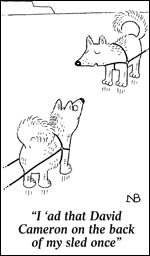
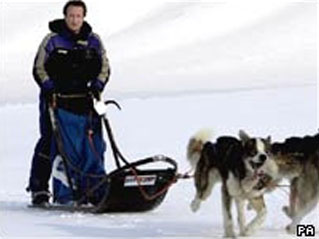
Cameron talking to a dog... the figure on the left is the dogIn one positive development in an otherwise bleak landscape, Booker has been pulled out of semi-obscurity in the inside back page of the Sunday Telegraph, where we was consigned by the erstwhile, unlamented editor Sarah Sands. He has been returned to his former glory by the new editor, Patience Wheatcroft, in what we hope will now be the start of the paper's reversion to a proper newspaper.

In his column, Booker charts the damage John Prescott has done to British democracy, and also points up Defra's latest gaffe – a hilarious reporting error.

He then takes up our evaluation of the Boy King's cosmetic environmentalism, remarking on the "blights on the British landscape" that our new "green" Tories opt to remain silent about.

His obsession with the "environment", writes Booker, seems to be limited to no more than puerile and futile gestures. Nothing better exemplified this, he adds, than his statement last week on the recent epidemic of fly tipping, which has soared by 43 per cent, including dramatic rises in the dumping of vehicles, builders' rubble, asbestos and electrical goods.

Instead of honestly explaining that this has been caused by a swathe of EC directives which make it much more difficult and expensive to dispose legally of rubbish, all the Tory leader can offer is a pledge to spend even more taxpayers' money on hiring even more officials to track down and prosecute the offenders.

Booker concludes with the question, "How green can you get?"

Learning first-hand about global warming?Although we have done the Boy King to death of late (unfortunately, only metaphorically), before leaving him alone in the obscurity he truly deserves, we cannot help but note the story in The Times yesterday, which reported the Boy in trouble over his choice of car.

No sooner was he back from Norway in his gas-guzzling private jet, having communed with his melting glacier, than the Greens were protesting that he had failed to pick the most environmentally-friendly option for his next chauffeur-driven car - to be provided at the taxpayers' expense, on top of the Boy's £125,000 salary.

The Greens wanted him to take a petrol-electric hybrid Toyota Prius but, instead, the Boy opted for a Lexus GS 450h. Currently retailing at between £31,000 and £48,000, it is advertised by its maker as having a "combination of power and luxury that's truly electrifying" and "uncompromising luxury".

Actually, the emissions are lower than some of the other choices he could have made, but who the hell cares? Once you start up on a mindless "greener than thou" crusade, every action you take – from how much water you put in your kettle to the detail of your travel arrangements – is going to be under intense scrutiny, inviting scope for endless ribaldry whenever there is a lapse. The Boy is going to regret he ever opened this can of worms.

However, that has not stopped him prattling away in a vacuous opinion piece in the Sunday Telegraph, the centrepiece of which is his "radical agenda for greener cars" which he is to announce tomorrow.

The Boy wants – or so he tells us – "Britain to be at the forefront of international efforts to build a new generation of motor vehicles that are much less environmentally damaging." Such a programme, he adds, "will include significant incentives to encourage the ownership of newer, greener vehicles."

Unsurprisingly, these "international efforts" are remarkably similar to those set out by the EU last year, which rather proves ours and Booker's point. The Boy has simply bought into the EU "green agenda" and, what is worse, he is now trying to pass it off as an expression of "traditional Conservative values".

COMMENT THREAD

Saturday, April 22, 2006

Continuing with the theme

The young Lenin - celebrated on a 1 kopek Soviet stamp

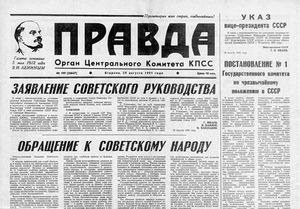
Our readers will be pleased to know that the theme is not the Boy-King. Instead, I am picking up the subject of environment and anniversaries. Today is not only the anniversary of this blog’s beginning (and of Pravda's in 1912) but it is also the birthday of V. I. Lenin, without whom there would have been no Pravda or many other things in the twentieth century.

Then again, it is also Earth Day (I guess, Earth can survive idiotic “days” of that kind). Since 1970, as today’s Wall Street Journal points out, the day has been marked as a reflection on the state of the environment.

As part of that reflection, the article gives some figures:

“Since 1970, carbon monoxide emissions in the U.S. are down 55%, according to the Environmental Protection Agency. Particulate emissions are down nearly 80%, and sulfur dioxide emissions have been reduced by half. Lead emissions have declined more than 98%. All of this has been accomplished despite a doubling of the number of cars on the road and a near-tripling of the number of miles driven, according to Steven Hayward of the Pacific Research Institute.”

In various other ways the environment, certainly in the developed countries and even in the more advanced developing ones is getting cleaner. This has been acknowledged by various organizations but the Green lobby, instead of feeling triumphant, is getting more and more hysterical and not a little ridiculous.

“This year, for example, Vanity Fair has inaugurated an "Earth Issue," comprising 246 glossy, non-recycled pages of fashion ads, celebrity worship and environmental apocalypse. Highlights include computer-generated images of New York City underwater and the Washington mall as one big reflecting pool. The magazine also includes a breathless essay by U.S. environmental conscience-in-chief Al Gore. The message is that we are headed for an environmental catastrophe of the first order, and only drastic changes to the way we live can possibly prevent it.”

Al Gore is not a lucky politician, not just for the obvious reason of what happened in 2000 but in his campaigning about environment, fossil fuel and oil companies. There is, for example, the undoubted fact, that for many years both he and his father worked for Armand Hammer, a man responsible for a good deal of fossil fuel production.

Then there was the time when Gore gave a crucial (to him) speech in New York about the dangers of fossil fuel usage and the evilness of oil companies. Alas, he chose a day that turned out to be the coldest for several years and most New Yorkers were all too grateful to the oil companies.

Now he is about to release a shock-horror “documentary”, which tells us in graphic and highly imaginative detail that the dangers of globalization are greater than those posed by terrorism and can be compared only to those posed by Nazism in the thirties.

I have a feeling that he will turn out to be unlucky again. The Greens have a credibility problem.

“But as Mr. Hayward notes in his "Index," the environmental movement as a whole has developed a credibility problem since the first Earth Day 36 years ago. In the 1970s, prominent greens were issuing dire predictions about mass starvation, overpopulation and--of all things--global cooling. Since then, population-growth estimates have come way down, biotechnology advances have found ways to feed more people than the doomsayers believed possible, and the global-cooling crisis has become the global-warming crisis without missing a beat.”

As we know global warming has become a new religion with Kyoto as the Nicene Creed. There have been disgraceful campaigns waged against scientists who have expressed scepticism about this unproven and unargued faith; an attempt to silence all those who are not of the true religion; a refusal to listen to economic arguments from either the developed or the developing countries.

All the same, voices are being heard that say: look at the evidence. Not only the environment is getting cleaner because we can afford to make it so, but it is clear that the best way forward is through private property, private enterprise and better technology.

Global warming is not precisely happening at the rate that was predicted. A rise of 0.7°C in 150 years is not a catastrophe by any standard and is no different from previous climatic changes. Its causation by human activity remains unproven. But none of that is of any importance to the true fanatic.

“Thus the cause of global warming has come at a fortuitous moment for clean-air warriors looking for alarms to ring. It is global in scope, will take decades to come to fruition--or to be revealed as another false alarm--and provides endless opportunities for government intrusion into the economy. It is, if you'll pardon the deliberate reference to a faith-based phenomenon, the green equivalent of manna from heaven. Or would be, if the greens hadn't spent so much time over the last three decades talking up scares that never came to pass.

This credibility deficit, combined with the slow-motion nature of the putative warming, has led to some desperate tactics by the global-warming true believers. To cite just one example, careful expounders of the idea of human-caused global warming used to take pains to distinguish between "climate" and "weather." Thus, snow storms in April or cold snaps in September were merely "weather" and told us nothing about long-term trends.

Then Katrina hit the Gulf Coast, and the environmental movement pounced. The image of an American city filled with water proved irresistible to those who have been warning for years about rising sea levels--never mind that the cause was one unusually powerful storm and that New Orleans was built below sea level in the first place. As Mr. Gore puts it, Katrina "may have been the first sip of a bitter cup which will be proffered to us over and over again until we act on the truth we have wished would go away." If that language sounds familiar, that's because Mr. Gore borrowed the image from Winston Churchill, who used it to describe the Nazi menace in Europe in the 1930s.”

The trouble is, most of the rest of us can see through this nonsense and understand it for what it is: another campaign by various governments and, above all, transnational bureaucrats to impose endless regulations on the rest of us “for our own good”.

COMMENT THREAD
Sadly, they noticed

Courtesy of - i.e., nicked from - The Times

Just like the behaviour of some truly embarrassing member of the family, the antics of the Boy-King of the Conservative Party would, we were hoping, stay within this country. After all, why should anybody else be interested in all this stuff?

Sadly, that was not to be. The American Thinker, for one, has noted the Great Expotition to the Glacier. Describing the British Conservative Party as hapless, the posting refers back to the Daily Mail for the true environmental cost (if you believe in these matters, as the Boy-King appears to do) of the trip was:

“Unfortunately before he jumped on his canine caravan in Norway, Mr Cameron had been driven from London to Farnborough, Hampshire by Government car.

Over the 38-mile journey his Vauxhall Omega spewed out 30lb of carbon dioxide. At Farnborough, he boarded a ten-seater private jet, which flew him and his entourage to Longyearbyen, Svalbard.

That trip, covering 1,909 miles, deposited five tons of CO2 per passenger into the atmosphere.”

And then he saw one glacier that is retreating, without bothering to look at the various others that are advancing. But, never mind. We are told by the co-ordinator, the World Wildlife Fund – UK (I didn’t realize glaciers counted as wild life. You learn something new every day.) that the Conservative Party will have to contribute £200 to some renewable energy projects in order to offset all that carbon dioxide. This whole enterprise becomes madder by the minute.

As Vasko Kohlmayer says on The American Thinker:

“The whole Norwegian episode would be rather funny and amusing had it featured as protagonists the Left’s usual suspects. But these are the British conservatives who have not only lost their bearings, but – it would seem – also their sense of dignity and self-respect.

Teardrop… teardrop… teardrop… boohoo!”

Weep and howl might be even more appropriate.

COMMENT THREAD

Two years old

Sharing our birthday - if not our styleAlright, the Queen might have a few years on us, and come in a day earlier with her birthday, but today we are two years old.

Starting on 22 April 2004 – on the same day, incidentally, that Pravda, the voice of the Soviet Union Communist Party, started publication, now 94 years ago – we have since weighed in with 3,728 posts (not including this one) and are currently standing at over 750,000 hits, well on our way to our first million.

Together with our attached forum, which boasts nearly 450 members and just short of 18,000 posts, we are part of that new phenomenon in popular publishing, the "blogsphere" and are pleased that we have been able to participate in this exercise in applied democracy.

That said, the rationale for starting this blog was the then expected referendum on the EU constitution, promised by prime minister Tony Blair two days earlier on 20 April 2004. Thus, we declared, we intended to "rehearse and discuss the issues relating to one of the most important political issues of the day - the UK referendum on the EU's constitutional treaty."

With the rejection of the constitution by the French in late May 2005, and the Dutch in early June, however, the hopes of a British referendum evaporated. With it went the expectation of an upsurge of interest in EU affairs, leaving us without an immediate role and a question mark as to whether we should continue.

In the event, with a change to our strap-line, which became: "To discuss issues related to the UK's position in Europe and the world," we have since broadened our scope to cover a wide range of current affairs, domestic and foreign, all loosely related to "our position in the world".

Inevitably, as befits our title – which we retain in the hope that, one day we will be given a referendum on our EU membership – our primary focus is on the European Union, the progress of which we have endeavoured to chart in our own halting and inadequate way.

Apart from its complexity, what partially defeats us is the range of the issues covered by the "project", which would keep a far larger team than us two fully occupied. But the biggest handicap of all is the sheer tedium. For what should be a vibrant, all-absorbing political experiment, the great genius of the "colleagues" is transform issues of great importance and relevance to us all into an exercise in applied boredom.

Many a night, as we have sought to follow the tradition of putting up on overnight posting – which we have come to call our "Horlicks", after the eponymous bed-time drink – we have groaned inwardly at the leaden, inane prose that confronts us, wondering how on earth we can present something, anything, that will entertain and inform our readers.

So far, we have managed, with greater or less success, and we must be pleasing (and, we hope, irritating) some people. For, although the Blog has not produced a spectacular growth in readership, the pattern has been a slow, consistent and entirely unspectacular increase, to the extent that we now routinely record 2,000 "hits" in a day.

By some happy chance, that means we recorded some 250,000 "hits" in our first year and just over 500,000 in our second – doubling our readership. That leaves us with an entirely unreasonable expectation of pulling in a million in our third and a warm but completely unrealistic fantasy that – at the current rate of growth – in ten years hence, we will be taking 500 million "hits" in the year. Such is the power of wishful thinking.

Nevertheless, we believe we have proved that there is an niche market for opinionated, occasionally obnoxious and undoubtedly misinformed (as our critics would aver) commentary on the affairs of the EU, the ubiquitous tranzies and the machinations of the Boy King as he seeks power without in any way recognising where the real power lies in this country.

Melting glaciers notwithstanding, we shall continue to develop that niche for as long as we are able and for as long as our long-suffering and loyal band of readers continues to frequent our site, in anticipation of our third birthday or Armageddon – whichever comes sooner.

COMMENT THREAD

A reality check

A water laboratory... £600 a time to test your water, courtesty of the EUAs British politicians fall over themselves to demonstrate their "greener than thou" credentials – the Boy King having to burn off 50 tons of fuel in his private jet to Oslo, in order to enunciate them – thousands of small businesses in Scotland are having to come to terms with the reality of the obsession with environmentalism.

These are the businesses which have the misfortune to have their own private water supplies and, as we learn from the Scottish Herald, they are going to have to fork out annually an average of £600 each to test their supplies in accordance with the latest amendment of the EU's Drinking Water Directive, looking for up to 70 different bacteria and chemicals.

Says the Herald, small bed-and-breakfast establishments, coffee shops and other tourist facilities will be affected, and their woes do not stop with the testing fees.

As is so often the case, in amending the Directive – originally promulgated in 1980 as 80/778/EEC - the EU has ramped up the standards, slashing the allowance for lead from 50 µg/l to 10 µg/l, introducing more stringent values for certain pesticides, which must be measured down to 0.03µg/l, reducing copper from 3 to 2 mg/l and phasing in some new standards for "parameters" such as trihalomethanes, trichloroethene, and tetracholoroethenes.

Many of the levels set for existing parameters are based on WHO standards, supposedly on the assessment of a "notional significant risk to the health of a consumer", usually over a lifetime of consumption. However, there is little evidence to support any claims of health risk at the levels set for the majority of so-called contaminants – many of which occur naturally - yet still the levels have been ramped up, imposing considerable extra compliance costs.

An independent economic assessment carried out for the Scottish Executive has estimated these costs are likely to vary from £500 to in excess of £10,000, averaging around £1150 per supply affected. Against this, there are grants of 50 percent available, up to a maximum of £800, from the executive.

Despite the costs, which will affect the supplies of approximately 150,000 people in remote parts of Scotland, and tens of thousands of visitors, there is no evidence whatsoever of any systemic problem or ill-health arising from pre-EU standards, with were imposed on an ad hoc basis by successive public health acts.

In my days in Yorkshire, testing private water supplies, this was very much simpler and cheaper, and funded entirely by local authorities, which did the work in the broader interests of public health - an option which is no longer permitted.

Now, for many of the operations affected, they will be saddled with absurd costs and few have any possibility of obtaining mains supplies. Yet Brussels has decreed that they shall be better protected. And "protected" they shall be, even if, as is feared, a substantial number of small businesses become ex-businesses as a result.

COMMENT THREAD

Friday, April 21, 2006

No direction but down

Taking the piss?I do not think any of us could have believed quite how bad the Boy King would turn out but, if the YouGov poll in The Telegraph today is any guide, he has blown it completely.

Following on from the Spring Conference in Manchester, where the DOYK (Don’t Overfill Your Kettle) Party has hardly been out of the headlines, if it was going to capture the hearts and minds of the great unwashed, now was the time. Instead, DOYK has managed to produce a distinctly lacklustre 33 percent, trailing woefully behind ZaNu Labour at 35 percent.

But what perhaps is more indicative is the score for "best prime minister" with Blair topping the poll at 30 (down from 38 percent at the general election) compared with the Boy King’s 21 percent, down from the 25 that Michael Howard scored at the general election.

If that is not dismal enough, the really crucial figure is the "don't knows". These stand at an incredible 40 percent, up from 19 at the general election. This may indicate that voters have yet to make up their minds but the more probable explanation is that they reflect the "none of the above" tendency. Given a choice between a discredited, sleaze-ridden Blair and the Boy King dressed up in a duvet and driving a dog-mobile, voters are turning away in their droves.

Not so the BNP, it seems, which are storming in from nowhere at seven percent – hoovering up UKIP votes on the way - indicating, as Anthony King puts it, "a restless and unpredictable electorate."

That is only one way of putting it. A less generous – but possibly more accurate – way might be to venture that the electorate is mightily sick of the vapid posturing of the political élites and has pronounced a plague on all their houses.

Over the last few weeks, we have read (and listened to) innumerable, laboured commentaries on what the established political parties much do to counter the BNP "threat" but none seem fully to have grasped the nature of the phenomenon confronting them.

On the ground, what we see, progressively is the growing inability of government simply to govern, whether at local or national level, combined with a complete take-over by the apparatchik – rule by officials, whether at local, national or supranational level. And, in this process, political parties and politicians seem irrelevant to the extent that it matters not what colour they come in – they are simply not worth voting for.

In effect, therefore, it is the vote that has been debased. No longer is there any direct (or even indirect) relationship between casting a vote in the ballot box and securing change at any level of government.

Thus, while it seems that the Boy King is seeking to convince the voters that his new-forged DOYK Party represents change – and is using the "environment" to demonstrate that change has occurred, at the coal face, voters are not convinced that his brand of change will make any difference to the way their nation is governed.

No direction but downOf course, the Boy King could use the "environment" to demonstrate that the UK needs an independent policy, and is no longer going to be slave to the dirigiste rule of Brussels. But, since he has bought into the Brussels-favoured myths on global warming, he has bought into the project anyway, and is simply messing around at the edges.

However, we would be deluding ourselves if we thought that the Boy King could salvage his experiment by taking a robust view on EU legislation. But the very fact that he has avoided taking on this issue at all is something of a touchstone. That he cannot cope with Brussels means also that he is incapable of addressing in any form the growing power of the apparatchik, which also means that he and his DOYK Party is a waste of space.

Given the results of the current round of polls – which we fully expect to see replicated – we now believe that the Boy King has dragged his Party into an irrecoverable position. There is no direction he can go but down.

COMMENT THREAD

This must seem so familiar to the Russians

Assuming that news of the latest Court of Auditors report on the efficacy of the TACIS programme gets any airing in Russia, the people there will shrug their shoulders. This will all seem very familiar to them.

According to a Reuter’s report of the press conference given by Jacek Uczkiewicz, the report’s author:
“The auditors concluded that out of a sample of 29 projects that were completed by the end of 2003 and worth 56 million euros, 12 did not achieve their objectives and eight did so only partially. They judged the results of only five "sustainable."

They highlighted a heating and power project for a city that did not want it and another aimed at harmonising road standards that failed because the EU itself lacked a common standard.”
The only newspaper that seems to have reported the disappearance of billions of euros in that black hole known as the Russian economy is the Times, which, for some reason known to its sub-editors, headlined the article “Gone east: how €7bn EU cash melted away with the Cold War”. Cute but irrelevant. The Cold War had little to do with any of it.

TACIS (Technical Assistance for the Commonwealth of Independent States) is a programme set up by the EU soon after the dissolution of the Soviet Union and the formation of the CIS. Its purpose was to help those states in their transition to a market economy, so far with no beneficial result whatsoever. In fact, one could argue that with President Putin gradually bringing the main sources of Russian income – gas and oil producers – under state control the country has actually moved backwards.

By far the biggest proportion of the money (40 per cent) has gone to Russia and this is what the Court of Auditors has been reviewing.

According to its own summary:
“The objective of the Court's audit was to assess whether the TACIS projects managed by the Commission in the Russian Federation had been effective, i.e. whether they had achieved their objectives and created a lasting impact (sustainability). The Court examined a random sample of 29 contracts (projects) implemented mainly in 2002 and 2003, i.e. the most recent projects for which the sustainability could be assessed. The total value of the contracts audited was 56 million euro which is more than half of total expenditure on relevant projects.

Overall the Court concluded that nine of the audited projects (29)achieved their objectives. In eight cases the objectives were partially met and in twelve cases they were not achieved. The results of only five of the audited projects were sustainable. The above audit conclusions show that the effectiveness of the use of TACIS funds in the Russian Federation has been very low. Thus the Court cannot assess the performance of TACIS projects in the Russian Federation positively. On the other hand, the audit revealed that the performance of contractors and monitors met the requirements of their contracts.”
We have had a certain amount of jumping up and down from MEPs, especially Hans-Peter Martin, who has, to be fair to the man, been quite active in highlighting corruption and inefficiency in the Toy Parliament as well. But his comments about nobody caring are not entirely true.

The media seems not to care – another €7 billion gone to waste, what a yawn. But there were questions in the past raised by members of the House of Lords about money going to Russia and what controls were provided either by the EU or by the Russian government. The peers who asked the questions were usually fobbed off by meaningless assurances by the government.

Well, now we know the answer: none. Although Mr Uczkiewicz, quite correctly, points out that it was not in the remit of the Court investigation to look at what the Russian government has been doing or not doing, the implication is quite clear: the money was not controlled in any way.

At the end of the summary, there is a curious and completely bland paragraph:
“During the audit, the Court co-operated with the Russian Supreme Audit Institution, the Accounts Chamber of the Russian Federation in the question of methodology. The Russian auditors conducted parallel audits on the use of TACIS funds, examining the performance of the Russian authorities. The Accounts Chamber's report was published in February 2006. The Court intends to publish a common communiqué with the Russian SAI on the parallel audits in the near future. The main aim of the communiqué will be to present the broader picture of TACIS funds performance in the Russian Federation.”
That should make interesting reading.

Of course, one could argue that the idea of spending vast amounts of money by the EU, whose idea of a free market is a score board to be ticked off and about a dozen new regulations every day, on large projects in countries, whose people are used to manipulating such funds for their own benefit was always somewhat faulty.

The problem with all the external EU projects is the same and it is in keeping with the whole institution: there is no accountability (in the literal sense of the word) and no fiscal discipline.

TACIS has been going for 15 years. This is the first time any of it has been audited and only in necessarily general terms. The individual projects are never audited. They do not have to comply with market discipline or those ever more stringent and often impossible regulations that the EU itself (and, let us be fair, the US legislature) inflict on private firms.

It is, of course, particularly delightful that this report should see the light of day just as we are getting daily news or President Putin using economic muscle, largely Russia’s enormous natural resources of gas, to bully politically all around him inside and outside the country. TACIS has, indeed, been a success.

COMMENT THREAD

Scream

Echoing the thoughts of millions, I bet, Mick Hume of Spiked online writes for The Times today, declaring. "I will never vote for a leader who makes an ethical spectacle of himself".

The May local "pollszzz", he writes, have been set up as the "ethical elections", in which political leaders seek to show off the virtues of their personal commitment to the environment but, Hume tells us, I would not vote for the Conservatives because their leader rode a bicycle to work, spent thousands on an eco-makeover for his house, or felt the pain of a Norwegian glacier – after a ride on his dog-mobile.

Nor, he adds, would I vote for the Liberal Democrats because their leader has stopped driving his big Jag. Nor would I vote new Labour because its leaders claim to have pioneered the politics of ethical behaviour.

Warming to his theme, Hume decides that "this fashion for ethical politics is a desperate attempt to compensate for the melting away of principles." Politicians who have no distinctive vision of the future are reduced to standing on their personal record of ethical correctness. Instead of a battle between competing worldviews, we are left with a contest to see which party leader has the biggest windmill.

"These 'I'm a good girl, I am!' gestures", he declares, "are designed to demonstrate that one is a decent person. They are the modern equivalent of the affectations of the genteel mode of living in Victorian times."

Actually, Hume is too kind – even genteel. This "environmental correctness" is the last refuge of the intellectually depleted political class who, devoid of any ideas about, or capability to manage, their own affairs, have retreated into puerile fantasies about the way the world should be.

Then, armed with moral rectitude, having convinced themselves that theirs is the only true way, they feel empowered to lecture everybody else on the minutia of the conduct of their lives.

Small wonder that the statist, interventionalist, small-minded dodos of the EU commission find environmentalism so attractive. As a retreat from their own failings, it is very hard to beat. The "fault" must be shared by the whole of humanity.

That said, Hume gets his conclusion right: "there should surely be a moral right to reach for your gun any time a politician tries to play the ethical card," he says.

Short of that, today, I am going to overfill my kettle, turn the central heating up four degrees, leave the lights on all day and go for a completely unnecessary drive in my gas-guzzling 3.5 litre BMW, having thrown my newspapers in the dustbin.

And if the Boy King mentions his "green revolution", once more, I shall scream.

COMMENT THREAD

Thursday, April 20, 2006

Off message?

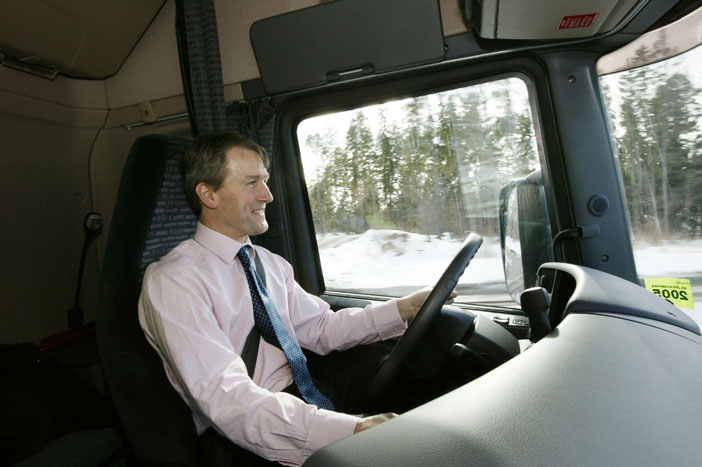
Shadow transport minister Owen Paterson at the wheelThe Boy King may be hugging his (retreating) glacier in Norway today, choosing an eco-friendly dog sleigh as his mode of transport to deliver him to the famous site.

Recently, across the border in Sweden, however, his shadow transport minister, Owen Paterson, chose a more practical, although slightly less eco-friendly form of transport – a 60 ton "super-truck".

Not content with powering it round the Scania test track, Paterson then exuded enthusiasm for this 72 ft long rig, declaring that, "These trucks are far from being anti-environmental". Compounding his felony, he added, "I think the Government has muddled up large volumes with high weight. The way to do it in this country is to think about low-weight, high-volume products; breakfast cereals for example. If you talk about 60-tons no one will listen."

Parking your truck on the Boy King's lawn?His enthusiasm did not escape the attention of truck enthusiasts on the Big lorry blog who headed a posting: "A politician talking sense about heavy trucks? Shurely Shome mishtake." "A Tory MP in favour of trucks…?" they spluttered, barely able to believe what they were hearing.

Paterson is now calling for limited trials of what are known as LHVs, on the basis that their introduction in the UK could drastically reduce the number of trucks pounding up and down the motorways.

But, as he pounds the Arctic wastes in his dog-mobile, one wonders whether the Boy King knows what his transport spokesman is saying. Perhaps he should be told?

COMMENT THREAD

Perfect timing

Straw - friend of Hamas?

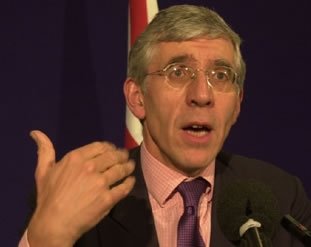
Presumably, it was a pure coincidence that Foreign Secretary Jack Straw chose Hitler’s birthday to announce that the UK is prepared to overlook Hamas’s intransigent attitude to Israel. (Well, it is also Harold Lloyd’s birthday, the day on which the Curies isolated radium in 1902 and the Red Army entered Berlin in 1945.)

Travelling round the Middle East Foreign Secretary Straw said that, of course, Britain would prefer it if Hamas recognized Israel’s existence but, really, there was no need to make too much of a fuss about it. Certainly there need not be any kind of announcement or changes in Hamas’s charter.

“Referring to a Hamas recognition of Israel, Straw stressed he did not expect a formal declaration by the group's leaders. According to Straw, Hamas must accept Israel's existence as a fact, but a change in the organization's charter that calls for Israel's destruction is not a necessary condition for negotiations between the two sides.”

Oh that’s nice. Negotiations between whom, precisely? Hamas says Israel must be destroyed and, therefore, there is no point in negotiating; Israel says that it cannot negotiate with an organization, whose aim it is to destroy the country. Something of an impasse, most people would call it.

The point is not in the negotiations but in money. Straw is preparing to hand over British taxpayers’ money to the Hamas-led PA (remember that funds for humanitarian projects had never been cut off, though how much they achieve remains questionable) with the usual proviso:

“Straw suggested that Britain renew fund transfer to the Palestinians, and that international monitors will work to oversee the financial transactions and see to it that the money is not used by terrorists.”

That’s always worked so well in the past. Whatever happened to all those millions that had gone to the late unlamented Chairman Arafat and his friends and relations, not to mention the Al-Aqsa Martyrs’ Brigade?

The timing is perfect. A couple of days ago we had another major suicide/homicide attack in Tel Aviv. Admittedly, it seems to have been done by an ex-member (very ex after the attack) of Islamic Jihad but Hamas immediately proclaimed its support and, later, demanded an apology from Mahmoud Abbas because the man had actually condemned it.

Meanwhile, another player is making itself heard. If there is one country that is not going to sit back and do nothing when the Israelis pull out from the West Bank, it is Jordan. Back in the late sixties and early seventies, the Jordanians had experienced the joys of PLA (the predecessor of all these different organizations) presence in their country.

It all ended badly – for the Palestinians. In September 1970 after various attempts to assassinate King Hussein and take over large areas of Jordan, martial law was declared and the Jordanian army attacked the PLA headquarters in Amman and swept through various Palestinian camps. When Syria tried to help the PLO, Jordan requested and got American and Israeli help. But most of the fighting was done by the Jordanian army and by September 27, it was all over.

The number of Palestinian casualties were estimated at between 3,000 and 5,000, far greater than any Israel has inflicted at any one time. Though King Hussein and Arafat signed an agreement in Cairo on September 27 that allowed Palestinian groups to operate in Jordan, this was superseded by another agreement on October 31.

This one returned control over Jordan to the King, requiring the dismantlement of Palestinian militant bases and banning their members from carrying unconcealed weapons.

This and subsequent agreements were consistently broken and a war raged between the Palestinians and the Jordanian army until January 1971, when the army regained full control of the country, Fatah and the PLA had to withdraw to Lebanon (with dire results for that country) and Jordan survived. Number of casualties? Probably tens of thousands.

The reason for this historic digression is that Jordan has made an interesting discovery.

“In the latest political headache for Hamas, Jordan has announced that it has uncovered a cache of Hamas weapons in the country and postponed a visit by the Palestinian foreign minister, Mahmoud Zahar, who is also a senior Hamas leader.”

Hamas is denying the accusations, insisting that it does not interfere in the internal affairs of other Arab countries, fighting only Israel. King Abdullah and his government, it seems, beg leave to doubt.

Other Arab countries remain somewhat unhelpful while professing eternal support for Hamas.

“Hamas is calling on Muslim countries to step in and provide additional assistance, but so far the response has been tepid.

Iran and Qatar recently pledged to send $50 million to the Palestinian Authority. However, the Palestinian Authority needs at least $150 million every month just to pay the salaries of government workers and provide basic services, Palestinian officials say.”

So you see, it is absolutely essential that the British taxpayer steps in and provides funds for this peaceful and delightful organization.

COMMENT THREAD

From the Conservative History blog

On April 15, the Conservative History blog celebrated the anniversary of that great Tory Dr Samuel Johnson’s achievement: the first publication of the Dictionary.

It occurred to me that readers of this blog might like to know the verse critique published by Dr Johnson’s friend, David Garrick:

“Talk of war with a Briton, he’ll boldly advance,
That one English soldier will beat ten of France;
Would we alter the boast from the sword to the pen,
Our odds are still greater, still greater our men …
First Shakespeare and Milton, like gods in the fight,
Have put their whole drama and epick to flight …
And Johnson, well arm’d like a hero of yore,
Has beat forty French, and will beat forty more!”

The forty French were, of course, the Academicians, whose number has been that since the founding of the Académie by Cardinal Richelieu in 1535 to this day.

One can only say: they don’t write ‘em like that any more.

COMMENT THREAD

Back in the real world

SA-15 Gauntlet anti-aircraft missile systems - 29 of which are due to be delivered to IranFor those who can tear themselves away from the gripping drama of the Boy King communing with glaciers, out in the real world there are still, fortunately, some grown-ups minding the shop.

This we hear from AFP, via DefenseNews (no link), which tells us that the US is applying pressure on Russia to cancel a contract to deliver SA-15 Gauntlet anti-aircraft missiles to Iran.

As we pointed out earlier, here and here, these missiles would give Iran a quantum improvement in her air defence capability and severely restrict the attack options, should either Israel or the United States chose to neutralise Iran’s nuclear capability by means of air strikes.

AFP cites as its source the Russian Vedomosti daily, which claims that, "Observers say that under pressure from the United States, Russia could cancel this deal and are already saying that it has been suspended." This paper in turn cites "a political analyst close to the Kremlin", Sergei Markov, saying that delivery of the air defence systems had been delayed until the autumn out of consideration for US worries.

However, the paper also referred to "a source close to Russia's arms export agency", Rosoboronexport, saying that the delay in fulfilling the order - originally signed last November - was due to the need to train personnel.

"The deal with Iran could only be broken in the event of the purchaser failing to pay. Cancellation of the contract under pressure from the United States would damage Russia's reputation as an arms exporter," the paper quoted an analyst, Konstantin Makiyenko of the centre for Analysis of Strategies and Technologies, as saying.

Under the contract, signed in November, Iran is to pay more than $700 million for 29 of the sophisticated short-range air defence systems and their delivery, if it happens, will change the strategic balance in the Middle East, for the worse.

One dreams occasionally of the Boy King raising such issues, and even calling on our government to lend support to the US in preventing this development. But, as long as we have a man that seems to be more interested in what we do with our kettles, I suppose that dream will remain filed under the category "fantasy".

COMMENT THREAD

How inconsiderate

Galileo heads for the stars - notHubris seems to be something of a speciality in the European Union, not least in the child-like glee expressed at the launch of the Airbus A380 "superjumbo".

But it has also been evident in abundance over the EU's Galileo satellite navigation project, matched in equal measure by triumphalism which was very much to the fore at the launch of the test satellite last December.

But even then there were rumours of cash shortages and overspends, which came to the fore in the New Year, only to disappear under the welter of laudatory press reports which crowed about how the "Europeans" had put one over the war-mongering Americans and their "military" GPS.

Now, however, courtesy of the Financial Times, the tales of woe are re-emerging, with unnamed "experts" claiming that the EU could be forced to cut back on the number of satellites because of "financial constraints".

Although the €3.5 billion programme originally planned to deploy 30 satellites – including three back-ups – with a timetable of 2008 for full operation, delays have occurred through difficulties in securing funding. Even now, the financing has been secured only for the first validation phase, involving about four or five satellites.

Now, Philippe Busquin, a former European research commissioner who now oversees Galileo as a member of the European Parliament, is saying that the programme could manage on 24 or 25 satellites, in order to ease budget problems.

However, for a system that claims to be so much better than the US "Navstar" GPS, that shortfall could undermine the quality of the system. Fewer satellites would reduce the coverage and precision of the system, leading one despairing expert to remark that: "Europe wants Galileo to become the post-GPS generation, not a sub-optimal system."

Perversely, the main problem lies in the EU budget agreement last December which, although more generous than we wanted it to be, was not enough to fund the commission’s ambitions for its transport portfolio – from which Galileo is funded. And other potential beneficiaries are fighting their corners, resisting moves to transfer funds to the EU flagship.

All this leaves the fate of the Galileo project very much in the air or – to be more accurate – firmly on the ground, unless the "colleagues" can be persuaded to stump up with some more money. In the meantime, all those projects which were to use Galileo – including the German motorway toll system - will now have to continue relying on, er… the US Navstar system.

It is no wonder the Americans are so unpopular – not only are their satellites up and flying, and working well, they are also supplying the system to the Europeans entirely free of charge. How inconsiderate is that?

COMMENT THREAD

Wednesday, April 19, 2006

If only Peugeot had been American

If only Peugeot had been American its workers might not face the problems they do. According to research done by Nottingham University and reported in the Edinburgh Evening News

“Workers whose firms are taken over by American multinationals are likely to see a significant rise in their salaries within two years, researchers today claimed.

On average, skilled workers can expect to see their earnings increase by eight per cent, while unskilled workers' pay goes up by 13 per cent.

However, staff at firms taken over by multinationals from continental European Union countries feel no such benefit, figures collected by researchers from Nottingham University suggest.”

Of course, firms might still close down if vast amounts of taxpayers’ money is not flung at them to protect the jobs but in the meantime, a good time is had by one and all - as long as they're working for Americans.

COMMENT THREAD

The Boy King does it again

The Cameron 'care bear' and his incredibly shrinking glacierAs he flies off in his ozone-guzzling jet to commune with glaciers in Norway, the Boy King leaves behind him instructions for the plebs on why they should "vote blue" to turn green – all with a distinctly local tinge.

Bemoans the Boy, there are more abandoned and burnt-out cars, with the number of burnt-out cars having soared by a third, from 35,162 across England in 1997 to 46,660 in 2004. Equally, there is more fly-tipping. Since 2001, the Environment Agency has had to deal with an increase of 43 percent. Last year they dealt with some 5,399 cases in total. The illegal dumping of waste during 2002 accounted for 14 percent of all the serious pollution incidents dealt with by the Agency.

Now, it just so happens that much of these ills can be put directly at the door of the EU's ill-considered Landfill Directive, and related environmental legislation. This, we have observed on this Blog, such as here, here and here. Furthermore, the infrastructure costs, alone, of implementing the directive amount to £10 billion, all of which must come from Council Tax.

But, as we know, the Boy King doesn't "do" Europe. So, instead of tackling the problem at source, what do we get from the Boy?

Well, the modern, compassionate Conservatives answer is curiously old-fashioned – and un-Conservative. In page after page of gushing prose, he tells us how conservative councils are going to throw even more public money and employ even more public officials at the problem.

"We have to think globally and act locally," chirps the Boy. Moi? I'd settle for a little bit of thinking. But then, the Boy doesn't "do" that either.

COMMENT THREAD

Statists all hang together

Stephen Pollard has an excellent piece in the Times, reprinted on his blog. In it he manages to take to task Lord Heseltine who appears to have given a particularly idiotic interview to that newspaper, the Conservative Party, the Labour Party and assorted European politicians. Not bad for one article.

It seems that

“In his interview with The Times yesterday, he berated his own Conservative Party for talking about the public sector as “a bloated, badly run, inefficient impost on the taxpayers’ back”.”

As Pollard says:

“The elder statesman of the party first managed to accuse it of doing something it doesn’t — but which it should. Then he dismissed as a baseless caricature a view of the public sector that is wholly accurate. Quite a feat.”

The truth is that the public sector is bloated, is badly run and is an “inefficient impost on the taxpayers’ back”. What is a supposed Conservative doing defending it or pretending it ain’t so?

But then,

“About the only firm policy announcement made by David Cameron has been to commit the party to unending support for the NHS. The Conservative Party simply does not refer to the public sector in hostile tones. Would that it did.”

We all would that it did, but then we all would that the Cameroonite modern compassionate Conservative Party did many things, such as displayed the conservative principles of individual freedom, small government, law and order, national independence, strong defence, and constitutional democracy.

Instead we get feudal paternalism masquerading as modern compassion. But I digress.

As Stephen Pollard points out:

“It is no wonder that the leitmotif of Lord Heseltine’s career has been his Eurofanaticism, since his embrace of public sector corporatism is of a piece with his fellow Europhiliacs.”

France may be the worst example of an unreformable economy, completely in hock to its public sector. But we are not far behind.

Read the whole piece.

COMMENT THREAD

When the lights go out

Happier days: September 2001, with staff at the Ryton celebrating the half-millionth 206 to be built in Britain. Manufacturing director, Christopher Gauthier, said ,'we are well placed to continue with our stunning success.'It was only just over a year ago that Peugeot pledged that its plant in Ryton, near Coventry, would play "a key role in the company's manufacturing strategy". It would, said company officials, "become the main European production site for the car for several years to come".

Yesterday, however, union officials were called to a meeting with the firm's chief executive, Jean Martin Folz, where it was disclosed that a detailed study had been carried out at the start of 2006, the results of which showed the Ryton plant to have high production and logistical costs. This meant, said Folz, that the group was unable to justify the investment needed for the production of future vehicles.

Despite the government having offered £14.4 million towards the cost of developing the plant in order for it to deal with more than one model, and having also provided funds towards collaborative R&D projects involving Peugeot, the plant is to close next year with the loss of the 2,300 jobs of those directly employed. Many others, who rely on the plant, will fall by the wayside.

The production of a new model, it seems, it to go to Slovakia, where wages are said to be one fifth of those paid to British workers, but the key political question being asked is why the British factory, rather than one of the French plants, is being closed down.

Derek Simpson, general secretary of the union Amicus declares that, "it is inconceivable that workers on this scale would be laid off on this scale." Somewhat illogically, he then argues that "weak labour laws are allowing British workers to be sacrificed at the expense of a flexible labour market", unconscious of the fact that the jobs are being exported to a country where labour laws are even weaker.

Ryton - one of the most efficient plants in Europe - but it still had to go - to protect French jobs?But it took the economics correspondent of the BBC to point out that this is what happens if you allow foreign – and especially European – ownership of key manufacturing enterprises. Given an unfavourable economic wind, it will always be the plants on the periphery that go first.

This may be an inevitable part of the general process of globalisation – and, in the short-term – is a direct consequence of EU enlargement, for which we are paying so dearly – but the closure has broader implications.

With BAE Systems pulling out of Airbus, what confidence can we have that assurances made about the continued employment of British workers will be honoured? And while the withdrawal of Airbus manufacturing would have profound economic implications, this is only the half of it.

If, as is rumoured, BAE Systems are planning to pull out of missile-maker MBDA, the prospect of strategic defence manufacturing facilities being withdrawn from Britain must surely be on the cards, and any assurances to the contrary must be about as believable as those given to Ryton workers by the Peugeot management last year.

Since we have already seen BAE Systems dismantle Royal Ordnance factories and transfer production offshore, we have no guarantees that what is happening at Ryton will not also happen to the rump of our British-based defence production.

Pledges, as we are finding, are one thing – guarantees are another. And when the last remnant of defence production moves offshore and they switch off the lights in the very last British factory, what will we do then?

COMMENT THREAD

Surely we should be debating this?

Dave, the green chameleon, one of the guises identified by Nu LabourI suppose what really irritates about the Boy King and his faux environmentalism is the closeted nature of his thinking. On the one hand, he preaches the internationalist dimension, à la Kyoto, while, on the other, he rejects any discussion of the European Union. Yet, as our readers are fully aware, "environment" is wholly an EU competence and, therefore, UK law is entirely dictated by Brussels.

Effectively, without declaring this openly, the Boy King is buying in to the whole EU charade, despite its manifest absurdities and the enormous costs it imposes on our economy.

There is no better example of this that the EU's Water Framework Directive, which features in yesterday’s Telegraph in a story headed: "Farmland 'must go back to the Middle Ages'".

This is based on a report from Professor Roger Sylvester-Bradley, who is responsible for fertiliser research at the Agricultural Development and Advisory Service (ADAS). He has concluded that it will be impossible to maintain any significant degree of arable farming in East Anglia and, at the same time, comply with the directive's expected criteria on water quality, specifically in terms of nitrate levels.

Continuation of arable cultivation, he warns, will put the UK in breach of the directive, risking huge fines in the European Union Court of Justice, the only alternatives being to revert to the practices of the Middle Ages, turning the land back to grass or forestry – or possibly energy crops grown with little fertiliser.

This crisis has arisen, the Prof says, because intensive cultivation has given rise to an upward trend in "diffuse" pollution from nitrates and phosphates which is proving difficult to reverse. The EU has set a legislative timetable under the Directive for returning all drinking water supplies and water in rivers, ponds and lakes to "good" water quality by 2015 and, at present 95 percent of all water bodies in England and Wales would fail the standard.

There is, apparently, no explicit standard for nitrates, but experts say it is inconceivable that "good" water quality will be less stringent than the 50 milligrams per litre set out in the existing nitrates directive.

That standard, incidentally, is of those arbitrary figures that bears no relation to any real threat, and has been cobbled from the usual junk science which the EU commission so loves. Largely, the standard is predicated on the risk of "blue baby syndrome", which has been totally discredited.

However, on the basis of this, we look to see a major and traumatic change in the economic base of East Anglia, which will undoubtedly have a significant effect on the economy as a whole, and it will come sooner rather than later. The EU is demanding that water management problems are identified by next year, with plans to tackle them to be in place by 2009 and working by 2012.

Thus, come the most significant comments from Professor Sylvester-Bradley. He believes that EU regulators will eventually have to recognise that it is unrealistic for agriculture not to have an effect on water supplies in heavily populated northern Europe and thus says, "Having good ecological status in our waters will present us with an enormous cost. Surely we should be debating this?"

Indeed, we should be debating this, and much, much more. We should be debating whether the regulatory approach to recycling, with the heavy, inefficient and expensive public sector involvement, is the most effective way of conducting our affairs.

We should be considering whether the obsession with wind turbines is a sensible way to meet some of our energy demands, we should be considering whether we really want to build a network of massive refuse incinerators, to satisfy the commission's paranoia about landfill.

All these things we should be debating, on top of which there should be a structured and honest debate about whether it is really a sane policy to bankrupt our economy in order to deal with global warming.

But none of these debates will be led by the Boy King, or any of his acolytes. They have bought into the "green revolution" – a 60s concept if ever there was one – and we must all change our ways (and not over-fill our kettles) to satisfy his mad evangelism. Therein lies the measure of the disaster that has fallen upon the Conservative Party, and the nation.

COMMENT THREAD

Tuesday, April 18, 2006

Just in case something was done

Some of the 200,000 refugees in Chad, the fate of whom depend on the outcome of the AU negotiations

One of the Pulitzer Prizes has gone to Nicolas Kristoff of the New York Times for his reporting from Darfur and making the horrors of the place known to the American public. Very admirable, but as the American Thinker asks, will the NYT, a virulent opponent of John Boton’s give the latter credit for actually trying to do something about the situation.

Mr Bolton has called for UN sanctions against four named Sudanese officials accused of genocide and various slightly lesser crimes. This would send out a signal, if nothing else, that the UN was prepared to tackle the worst humanitarian disaster at the moment and to deal with the individuals responsible for it.

It will not happen. Russia and China have already announced that they would oppose any sanction against anybody in Sudan, speciously expaining that the situation with regard to the African Union negotiations was delicate and this was no time to start imposing sanctions.

As Radio Netherlands puts it on its English language website:

“The Chinese have said they don't want to interrupt the peace talks currently underway in Abuja in Nigeria, and Russia too has called the situation 'fragile'. However, some observers have pointed to the fact that both China and Russia are Sudan's largest arms suppliers. Peter Mosynski is a contributor to the UK-based Sudan Update. He believes there's another motive too:

"Sudan is very crucial right now to Beijing's search for additional sources of oil for its rapidly industrialising economy and both Russia and China are rather against the idea of countries being indicted for their human rights records. Neither has too clean a record themselves."

The deadline for the completion of the AU negotiations is April 30. One wonders if the UN will bother to impose sanctions then.

COMMENT THREAD

Why does the BBC give this prominence?

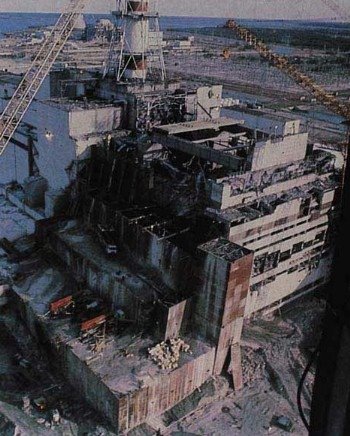
The headline on the BBC website is a model of the Corporation’s objectivity: Greenpeace rejects Chernobyl toll. A little out of date, I thought to myself, but they get there in the end.

In fact, the real story was last October when the UN-led Chernobyl Forum came up with considerably lower figures of probable deaths as a result of Chernobyl. The report said between 4,000 and 9,000 (quite a large difference) and explained that there had been difficulties in calculating casualties.
“In the report, the World Health Organization dramatically lowered the estimated Chernobyl death toll, suggesting confusion had been caused over the accident's impact.

Many emergency and recovery workers, the report suggested, had died since 1986 from natural causes which could not be attributed to radiation exposure.”
Up with this Greeenpeace will not put. Having, so far as anyone can work out, done next to no research on the subject, it has, nevertheless produced a report that gave as its considered estimate that

“… there will be 270,000 cases of cancer alone attributable to Chernobyl fallout, and that 93,000 of these will probably be fatal.”
And the BBC solemnly reported this, interviewing Blake Lee-Harwood, campaigns director at Greenpeace, who explained on the Today programme:

“We're also looking at intestinal problems, heart and circulation problems, respiratory problems, endocrine problems, and particularly effects on the immune system.”
Maybe and maybe not. As Greenpeace campaigner Jan van de Putte told Reuter’s (another organization that seems to think this is worth reporting):
“Our problem is that there is no accepted methodology to calculate the numbers of people who might have died from such diseases.”
So you can make up any figure you like, in the certain knowledge that the word nuclear will send shivers down the spine of certain parts of the media. Here are the comparative figures as presented by the UN and Greenpeace reports:
  • Acute Radiation Sickness (ARS) deaths in 1986: 28
  • ARS patients who died later: 19 (some from other causes)
  • Others who died during explosion: 2
  • Child thyroid cancer deaths (1992-2002): 15 (UN figure)
  • Predicted extra cancer deaths: from 4,000 (UN) to 93,000 (Greenpeace)
  • Estimated deaths from non-cancer causes 1990-2004: 107,000 (Greenpeace)
  • Dozens killed in accidents building sarcophagus (according to an engineer)
  • The discrepancy seems so great as to be laughable. Let us remember that neither the UN nor the WHO are known for underplaying disasters or numbers of deaths caused by human agency. In fact the original report had suggested a probable death toll of 600,000 but for some years there was a tendency in the region to attribute everything to Chernobyl.

    One possible explanation for the discrepancy is given by WHO spokesman, Gregory Hartl:
    “The Greenpeace report is looking at all of Europe, whereas our report looks at only the most affected areas of the three most affected countries.”
    If they really are looking at all of Europe, calculations of what may or may not have been caused by Chernobyl become even more random.

    Reports of effects, twenty years on, of the biggest nuclear catastrophe in the world have varied, some citing immunological weakness in those who were in the area as babies and children, others pointing to the remarkable lusciousness of what has in effect become a natural resort around what was Chernobyl. Both positive and negative reports need to be read with an understanding of the effect on people and nature other Soviet and immediate post-Soviet policies may have had.

    Mr Lee-Hartwood alleges dark plottings on the part of the nuclear industry, which was, according to him, severely embarrassed by Chernobyl. That, of course, is as untrue as the rest of the Greenpeace spiel. WHO is unlikely to be in hock to the nuclear industry – quite the opposite, in fact. And said industry was not nearly so embarrassed as the left was, who had excoriated nuclear energy but only in the West, assuming that the benign Soviet government would ultimately look after its people.

    Chernobyl showed up the political corruption and sheer mind-boggling inefficiency of the Soviet system. That is why it was the biggest nuclear disaster in history. (Though the suppressed Urals one may well run a close second.) But Greenpeace is not about to admit such inconvenient truths. The question is why anyone should take their blathering seriously.

    COMMENT THREAD

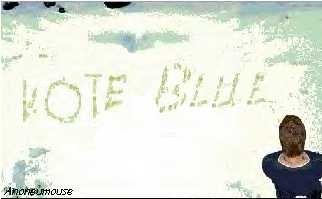
    Vote blue – go green

    I reckon the headline to Rachel Sylvester's piece in the Telegraph today is spot on. "Voting for the BNP is about rage rather than race," it proclaims, a notion which entirely accords with my experience.

    Sylvester then spoils it all by writing the piece underneath, positing that the motivation is "fear of change". This, she writes, "remains a powerful force". But then she did not write the headline.

    The central theme though, is correct. Generally, people neither know nor care about the details of BNP policies, and certainly have no expectations of the party sweeping to power. Voting for them is simply an opportunity to put two fingers up to the political classes, reciprocating the contempt that they so obviously have for us all.

    More to the point, it is a way of telling the Boy King what to do with his own, newly emergent BNP – the Be Nice Party – and where to stuff his "green revolution".

    And there could be no better illustration of how firmly the Boy King has imbedded his head up his own backside with a slogan that is almost magnificent in its utter vacuity - "vote blue, go green".

    Courtesy of the BBC, we also see how this brainless Tory Toff speaks to the "people" whom he so earnestly wishes to lead.

    Prior to helping distribute recycling boxes to residents (i.e. posing for a photo-call holding a plastic box), he told reporters in Brentwood, Essex, that he wanted to see what he called "green growth" - a combination of economic growth and a sustainable environment.

    "Some of the green lobby and a lot of the media tend to look at the environment and climate change as, look you've got a binary choice, you can either have economic growth or you can have a sustainable environment, and the truth is we've got to have both. We've got to have green growth," he says.

    The trouble is chuck, we've got a "binary choice" when it comes to a vote. And you ain't it.

    COMMENT THREAD

    The groundhogs are gathering

    When even the Financial Times starts making comments about groundhogs, you just know that something is badly amiss. But there it goes, with it columnist Alan Beattie suggesting that, If Bill Murray wanted to make a sequel to Groundhog Day, he could do worse than set it in the Doha round.

    Barring a miraculous acceleration in the discussions, the end-April target for agreeing numbers for farm subsidies and goods tariffs will join the lengthy list of missed deadlines since the talks began in 2001, Beattie writes.

    And ain't that the truth.

    We need not trouble you with all the details. With the EU, the USofA, the Cairns Group, the G8, the G20 – which includes some but not all of the Cairns Group, but not all of the time – and the less developed nations, plus the bundle of NGOs, China, Russia, Uncle Tom Cobbley and all... with the permutations, combinations, coalitions, alignments, alliances and non-alliances – with all their different agendas, trade-offs and offset deals, to say nothing of the compromises and sacrifices...

    You get my drift.

    Alan Beattie compares it with one of those logic puzzles which involve getting a fox, a hen and a bag of corn from one side of the river to the other without the fox eating the hen or the hen the corn. A solution remains elusive, he says.

    Elusive? Down right impossible, I would say. We're going to see a lot more groundhogs.

    COMMENT THREAD