Sunday, May 07, 2006

Oh, whoops!

UKIP leader, Roger Knapman (right), discussing enlargement with one of his members"Anti-migrant party leader hires Poles" says The Sunday Times this morning, fingering Roger Knapman, MEP and leader of the UK Independence Party (UKIP).

He has imported cheap east European labourers to renovate his West Country mansion, operating though his son, who runs a company that specialises in bringing foreign labour to Britain.

Over the past 11 months, says The Times, the Poles have been working 10 hours a day, six days a week, while living dormitory-style in Knapman’s attic. His son’s company claims east Europeans are up to 50 percent cheaper than their British counterparts.

Knapman, whose party was the only British group in the European parliament to vote against allowing east European states, including Poland, into the EU, boasted to an undercover reporter he could help supply Polish labourers to do similar work for British customers. He said using cheap foreigners is much better since “they work so much harder”.

The disclosure will surprise supporters of UKIP, which has warned that enlarging the EU to incorporate east European states would lead to a "flood of migrants" that would be "bad for Britain".

Its 2005 manifesto said the rate of immigration had to be stemmed because "the numbers of those permitted to enter legally has been rising sharply as a result of both the eastern expansion of the EU and deliberate government policy. The Labour government's untenable excuse is that we need large numbers of immigrant workers".

In public, Knapman, a former Tory MP, claims to take pride in supporting British business and boasts of owning two Rover cars. However, last week he told an undercover reporter that for the past 11 months he had been using a team of Polish workers to restore his grade II listed home in the west Devon village of Coryton. For much of that time he has had three or four workers, who have been provided with an old television, sleeping in his attic.

"They have a very good work ethic and work so much harder than anyone over here," he said. "You know they are not going to go off to another job as they are there specifically for you... Many workers here just aren’t skilled enough to do the work involved in renovating an old property. These men work 10 hours a day, six days a week and then we give them Sunday off. It's a 60-hour week, but they want to do it."

Knapman said he could help arrange teams of east Europeans to carry out building work through the firm run by his son William. "He will bring over some Polish workers according to what you need and they won't let you down," he said.

William Knapman runs Billdar, a Polish-registered company that sources east Europeans for jobs in Britain. The workers, whom he described as "like an army of ants", are paid about £50 a day — about half of the cost of a British builder.

William Knapman told an undercover reporter he used mostly Polish workers but also some Slovaks, Latvians and Swedes and quoted £4,000 for two men working for six weeks, from which the company takes an unspecified fee. "I think it's anywhere between 20 and 50 percent cheaper (than using British workers) doing it this way," he said. "The important thing is we’re not talking Monday to Friday, nine to five, with a tea break. They work 8am-6pm six days a week."

Roger Knapman said he would be employing the men, who have refurbished much of his property, for a further three months. When challenged yesterday, Knapman said there was "no contradiction! between what he was doing and the objectives of his party. On UKIP’s opposition to letting Poland join the EU, he said: “That is talking about political union, that is not talking about people working.”

When it was pointed out to him that they could freely work here because of the political union, he said: "I don't see that is relevant at all. We have three people who come here, they are very nice people and when they finish they go home."

Perhaps Knapman had better have a word with his fellow MEP, Godfrey Bloom. On his website, he declares:

With EU enlargement, workers in Eastern European countries have been given the right to work in Britain. When Britain recruits skilled workers from abroad, it causes a "brain drain" effect. Poorer countries still emerging from the spectre of the old Communist bloc cannot afford to lose their key workers. But with the opportunity to work in richer European countries, we are effectively exploiting the Eastern European countries.
And who is this "we", paleface?

COMMENT THREAD

Saturday, May 06, 2006

Success with the Poles?

Felicity Lawrence over at The Guardian is speculating what might happen if all the migrant workers in the UK were to find their voice and demonstrate their presence as those in the US did last week.

A few days without migrant workers here could bring life to a halt soon enough, she writes:

What if there were no eastern European au pairs to work long hours so that thousands of professional women can get to work early and come home late; no African migrants to sweep out the station concourses and their coffee shops before dawn; no cheap contract cleaners in the financial centres of the City; no Kosovan car washers for the executive cars; no Filipino carers in the old people's homes; no Polish plumbers to fix the leaks; no Ukrainian builders on the construction sites; no Brazilians in the sandwich factories. No South Africans to pack the supermarket fruit and veg. You'll be able to add your own list of debts to newly arrived workers.
Low paid migrants, she adds, keep so many parts of our globalised economy going that any collective action would have a dramatic effect. Our food supply system is perhaps the most vulnerable sector. Centralised supermarket distribution and "just in time" ordering means nothing is kept in stock anymore. It would only take a shutdown of a few key points for a few days to paralyse the country. In the last fuel strike we very nearly did run out of food.

"But will migrants here ever rebel and exert their power?" she asks, then telling us that there are signs that they are organising. For instance, one group was brought into the country last summer, with false promises to work in a meat factory in Wales and had extortionate housing and visa fixing charges deducted from their wages.

"With the confidence of new EU citizens," chirps, Lawrence, "they became union activists, got new jobs, sleeping under the bushes while they struggled to find new accommodation and waited for their first pay packets." From such small beginnings and individual determination, movements grow.

Of course, if they are really in trouble, they could always go to one particular UKIP MEP, who – we are informed – would be happy to put them up in his attic.

COMMENT THREAD

A hidden victory

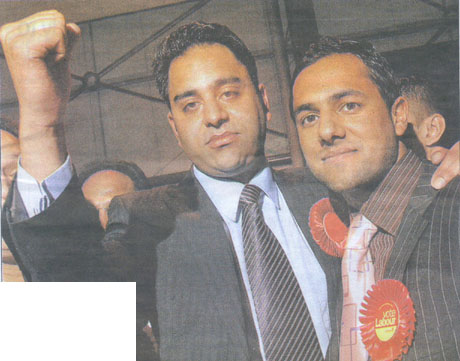
This was the face of victory in Bradford, yesterday, with Imran Hussain bucking the national trend. He won one of the six seats for Labour, making his party the largest in the borough, wresting the crown from the ruling Conservative group.

Yet, behind this anomalous result, on a night that brought the Tories 316 seats nationally and control of 11 councils, is a story which the mainstream media have missed, but which the national politicos would be unwise to ignore.

Part of that story is the resurgence of the Muslim Labour vote, which had deserted the party in droves over the Iraqi invasion. Three of the Labour victories occurred in wards heavily populated by Muslim communities and, elsewhere in Muslim areas, the Labour vote held firm.

But the second part of the story is BNP. Although the headline news had the party losing two seats and gaining one, representing a mediocre result, the detail tells a different story.

In all, BNP stood contested 16 of the 30 wards up for grabs and, in addition to winning one of them, came second in nine, third in four seats and fourth in only two. Moreover, in the seats contested by BNP candidates, their share of the vote was 27.5 percent, beating marginally the national share of the Lib-Dems, and beating Labour by a margin of nearly two points.

Contrasting the projected national share of the vote for the Tories – at 40 percent - in the wards contested locally by BNP, their overall share struggled to reach 29 percent, less than two points ahead of their right-wing challenger. Labour fared even less well in those wards, taking 27.4 percent of the vote overall – actually less than the BNP, while the Lib-Dims made a mere 20 percent.

That, effectively put the party rankings in these wards as Conservatives first, with BNP a strong second, Labour third and the Lib-Dims fourth. Such is the perversity of the first past the post system, though, that the Conservatives gained only five seats, Labour seven, the Lib-Dims three and the BNP only one.

It is difficult to estimate the effect the BNP had on the results, but is certainly not the case that, in Bradford, the party was drawing exclusively from Labour. In at least two wards – but probably more – without BNP intervention, seats that went to Labour or Lib-Dim could have gone to the Tories.

To that extent, the election result represents a "hidden" victory for the BNP and, from some accounts, it is not the only council in which they had an effect. Not least, their leaflet (illustrated) was the best-produced and persuasive of all the parties. Thus, despite being largely ignored by the local media, the party is buoyant and well-prepared for the next electoral contest.

The danger for the Boy King and the London-centric media is that the phenomenon seen "oop here" in the North – and the lessons – may escape their attention. For too many of them they get nose-bleeds if they come this far from London. But, like it or not, the BNP are here, and they do not intend to go away.

COMMENT THREAD

A matter of nearly complete ignorance

The EU commission yesterday released a special Eurobarometer on the "Future of Europe", subtitled, "EU listens to citizens".

There are, in fact, two reports, one a detailed opinion poll and the other outlining the results of qualitative research (focus groups).

Predictably, the commission emphasises the favourable (to it) elements of the research, pointing out that "comparable living standards, followed by the introduction of the Euro in all Member States, and a common Constitution are elements which are of most importance for the future of Europe." It thus claims that, "expectations for more Europe remain solid, in relation to key issues: fight against unemployment, protection of social rights and economic growth."

The fragrant Margot seizes on these findings, to declare:

Citizens want Europe strong. There is a feeling of solidarity and a need for common solutions. The EU is associated with security: from social security, security against terrorism and crime, security in health, living and environmental conditions to job security. The EU is expected to harness globalisation, bring solutions in terms of peace, democracy, living standards as well as research, innovation and economic performance. This should be the foundation of the EU policy agenda, which will help reinvent and renew the EU ahead of its 50th anniversary.
However, not all is what it seems (is it ever?). Although the copious detail tells the commissioners and Margot Wallström what they want to hear about "citizens" views of the European Union, there is a bloated worm at the core of their apple.

There is, says Eurobarometer, "near-zero knowledge and understanding of the functioning of the Union, its institutions and their role." The only institution (more or less) clearly identified is the European Parliament: not that much is known about it in actual fact, but its name suggests an identity and a role comparable to those of a national parliamentary assembly. It goes on:

The Commission is sometimes (not always) known by name, but what it is and does remains nebulous – both as regards how Commissioners are nominated, its institutional role, its relations with the other institutions and how it works. Mentions are even made of "commissions" (in the plural) without any notion of what they may stand for.
As if that is not enough, it adds: "The Council is practically completely unknown as an institution. The institutional workings of the Union and how decisions are taken is a matter of nearly complete ignorance."

Our own experience over many years demonstrates that where ordinary people are fully informed of the nature of the EU and how it works – particularly the decision-making processes – invariably, they become hostile to it. By that measure, it can be said that any enthusiasm shown for the "project" is a function of the "complete ignorance" about it.

Expressions of enthusiasm, therefore, must therefore be tempered by these findings – to the extent that they are, effectively invalid. Certainly, no one can infer that they give any mandate for action, as we are not dealing with informed consent. The "citizens" may want "Europe strong", but only because they know nothing about it.

COMMENT THREAD

Friday, May 05, 2006

Meanwhile back in the big bad world

It is hard to imagine but the rest of the world continues to function despite not participating in the British local elections.

One who is doing rather well is the Danish Prime Minister Anders Fogh Rasmussen, who has brushed off any problems that the War of the Cartoons might have created for his country. Police in Pakistan might be registering cases of blasphemy against the editor and publisher of Jyllands-Posten and anyone else who may have published those cartoons but that bothers Mr Rasmussen not at all.

A lawyer who bears the unlikely but suggestive name Iqbal Haider, who runs Awami Himayat Tehrik or People’s Support Movement, even wants Interpol to find the guilty parties and for the Pakistani government to extradite them. Something makes me think he doesn’t really understand how extradition laws work. Maybe he should petition for Pakistan to sign up to the European Arrest Warrant.

Michelle Malking transmits a report (based on a single source) that a dozen young jihadists are supposedly travelling to Denmark to kill the cartoonists. (Keeps them off the streets, I suppose, and gives them some employment.)

Meanwhile, Mr Rasmussen has told the Washington Times that there was no intention to pull Danish troops out of Iraq.
“It is clearly our intention to stay in Iraq as long as we are requested by the Iraqi government, as long as our presence is based on a U.N. mandate, and as long as we believe we can make a positive difference on the ground.”
Mr Rasmussen is about to visit Washington for talks about Iraq and other matters and has been invited, together with his wife, to Camp David.

The American ambassador to Denmark, James P. Cain said quite reasonably:
“I think if some of our other allies -- France, Germany and Italy for example -- could do on a pro rata basis what the Danes have done, let's just say the world might be a safer place than it is now.”
Opinion polls in Denmark have shown that the government has not suffered at all for its defiant attitude in support of freedom of speech.
“Peter Viggo Jakobsen, a senior researcher at the Copenhagen-based Danish Institute for International Studies, said the remarkable thing about the cartoon incident was how little impact it has had on Danish foreign policy, despite images of burning Danish flags and violent anti-Denmark riots in Muslim capitals around the globe.

"There was a high consensus before the cartoons to be active and carry a high profile in the world, and there is still a high consensus on that point," Mr. Jakobsen said.”
So small countries have no influence in the modern world?

COMMENT THREAD

Results and commentary

FINAL

With all the results now in, Conservatives have gained 316 seats, now holding 1830, Labour are down 319 to 1439 and the Lib-Dims have gained two bringing them to 909. Labour lost control of 19 councils including some key boroughs in London and the Tories gained 11, including Hammersmith and Fulham, which they have not held since 1968. The Lib-Dims gained one.

The weakness in the Tory result is that there is no "breakthrough" in northern cities. They failed to win any seats in Manchester, Liverpool or Newcastle. In Bradford, Labour actually increased its number of seats from 30 to 36, at the expense of the Tories who went down from 35 to 33, making Labour the largest party.

If the polls had been held nationwide, the Tories would have gained 40 percent of the vote, Lib-Dims 27 and Labour 26 percent. Turnout is estimated at 36 percent - down three points from 2004.

Despite this, we have had Francis Maude leering from the TV, crowing that people had made a "positive statement" about "modern compassionate Conservatism". From a man who is just about as compassionate as a snake looking at its next meal. The Boy King, himself, is feeling "very positive", saying his party had now broadened its appeal and was "on its way back".

The Lib-Dims have done poorly, gaining hardly any seats. Ming has invented a new word for failure: "consolidation" - although his Party has knocked the Tories off their perch in Harrogate. They are, however, making much of having moved to second position in their share of the vote - by one percent.

BNP have got 11 seats (out of a possible 13) in Barking. They say it's a revolt against the entire liberal political establishment. They're probably right. Dewsbury in Kirklees looks interesting. BNP gain two, bringing their local representation to three. After some losses, and total gains of 27, they now hold 53 seats in England.

Respect gained 11 seats in Tower Hamlets bringing their overall total as a party to to 13. UKIP gained only one councillor, at Hartlepool, despite predicting nationwide gains of 20. The Greens did get 20 seats, bringing their total to 29.

Chris Davies, leader of the Lib-Dim MEP group has been forced to resign over offensive remarks in an e-mail to a Jewish constituent. And they have the nerve to condemn the BNP for being "extreme"?

Meanwhile, the election results have been somewhat eclipsed by Blair's "biggest ever" reshuffle. Clarke is toast! Despite being offered other jobs, he has been sacked and has left the government to return to the back benches. He is replaced by John Reid - one to watch as a possible heir to the Blair throne. Des Browne takes over Defence.

Jack Straw goes, demoted to Leader of the House. He is replaced by Margaret Beckett - promoted after her catastrophic failure on single farm payments. Hoon is moved back into Cabinet to take the post of Secretary of State for Europe.

The "Europe Minister" is now Cabinet rank (although there is some confusion about this). If this is the case, the post of foreign secretary has effectively been split into two - Europe and the rest of the world. One wonders whether the Conservatives will reciprocate with a shadow. David Milliband, incidentally, takes over DEFRA.

Prescott has kept his title of DPM (the initials also stand for Disruptive Pattern Material, the army camouflage material), with his Cabinet salary and grace-and-favour residences - and his government Jag. He is, however, stripped of departmental responsibilities. These are taken over by Ruth Kelly - at least she will not have any "problems" with her diary secretary. Alan Johnson takes over education.

Alistair Darling moves from the joint post of transport and Scotland secretary to take trade secretary, while Douglas Alexander takes his post as transport secretary and takes on the additional role of secretary of state for Scotland.

The election results were a "warning shot" for the government, says Gordon Brown. On the other hand, Hazel Blears, who becomes "chair" of the Labour Party, believes the message from the elections is that "people want us to press on ... do more, go further".

Right.

COMMENT THREAD

Pity the commission

The commission would not approveThere they are trying to foster their "cuddly", consumer-friendly image, telling us that sunscreen manufacturers are misleading consumers with confusing labels and products.

Not only that, the commission is rushing to the rescue, saying it will table new rules on the marketing of the products. It will require makers to use better labels and get rid of words such as "sunblocker", which, it says, give a false impression of total protection from the sun's harmful rays.

And nobody – in Britain, at least - is taking a blind bit of notice. You'll have to take my word for this, but I'm pretty sure the newspapers are not holding their front pages – even if the subject offers some tremendous picture opportunities (see above).

The main story in the "heavies" is speculation on a snap reshuffle if the election goes badly, although they cannot provide any results yet. Nor, at the time of writing, had enough results had come through over the wires to make an intelligent guess of the overall situation.

However, the impression is that NuLab has not done quite as badly as might have been predicted and the Conservatives have done well but have not achieved a "breakthrough", achieving a five percent swing. Not have they done especially well outside their heartlands. The Lib-Dims, have also made gains but, overall, they are unspectacular. As expected, though, the emerging story of the night is the BNP, which has done well, if not better than it expected.

The "big picture" is not going to be evident until the London seats are declared, but the early results show that the BNP is storming in which a substantial number of seats in Barking.

For the nerds and masochists, Tory Diary is staying up all night to follow the action. This blogger is going to bed.

COMMENT THREAD

A mother is allowed - just

Associated Press gives an account of the ending of the Moussaoui trial, with the judge deflating his self-aggrandizing statements by informing him:
“You will spend the rest of your life in a supermaximum security prison. ... It's quite clear who won ... and who lost. You came here to be a martyr in a great big bang of glory but to paraphrase the poet T.S. Eliot, instead you will die with a whimper.”
I do not suppose Zacarias Moussaoui knows who T. S. Eliot is or what he did but even he must have understood the gist of what he was being told.

One reason why I approve of the jury’s decision to sentence him to life imprisonment (interesting that it is the jury that decides in these cases, not the judge) rather than having him executed is that there will be less chance of dumb Europeans and moonbat Americans holding candle-lit vigils, awarding the monstrous creature prizes and generally making complete fools of themselves.

It may happen anyway but not so much.

According to the same report:
“In France, Moussaoui's mother, Aicha El Wafi, said, "Now he is going to die in little doses. He is going to live like a rat in a hole. What for? They are so cruel."

French authorities said Thursday they may eventually press the United States to have Moussaoui serve his life sentence in France under agreements providing for transfer of convicts. They were awaiting formal word of his sentencing conditions.”
The likelihood of the man being handed over to the French authorities are remote. It will be interesting to see how hard they will try for that transfer.

One appreciates that a mother feels differently from the rest of the world, but it might be a good idea if Aicha El Wafi made up her mind what line she was going to take.

Part of the defence was that little Zacarias was badly treated by his father, who also beat his mother; that he had spent time in children’s homes; that his sisters, who appeared on a video talking about their little “sweetheart” brother were suffering from mental problems; that he had been badly treated by his French girlfriend’s parents.

Indeed, that is still the line the BBC is taking. But the report also mentions the supposed fact, also advanced by Moussaoui’s mother and discussed in the Daily Telegraph today, that the lad was perfectly OK until he came to London and was taken in hand by various extremist preachers.
“Young men like Moussaoui were fed into the machine and emerged as hardline religious terrorists, primed for slaughter. His mother, Aicha al-Wafi, who along with her husband was born in Morocco, has echoed the complaints of the French counter-intelligence service, the DST, accusing the British authorities of being far too permissive in the years before 2001.

"I would say that England is responsible for many things because it allowed this fever to spread around the country," she told the Canadian television channel CBC. "These young people go to England, and then they scream hatred and vengeance in front of mosques. They let the fever spread." His brother, Abd-Samad, agreed: "I believe that Britain has fed a snake at its bosom, and has been bitten by the snake.''”
The detailed description of Moussaoui's radicalization in Britain, his travels to military training camps and subsequent return to this country (needless to say) in the nineties, disposes of his own screaming outbursts about his particular hatred for America. Britain certainly did feed a snake at its bosom.

While it is undoubtedly true that Britain, much to the disgust of other countries in the West and the Middle East, allowed extremist preachers to run riot for years and extremist organizations to multiply for as long (hence the name Londonistan, much used by security services in other countries), I do feel that, perhaps, the media should stop quoting all these various contradictory excuses for Moussaoui’s criminal behaviour produced by his family.

COMMENT THREAD

Thursday, May 04, 2006

A letter to the Finchley Conservative Party

We have been given permission by the author of this letter, Charlie Wolf of TalkSPORT Radio, to publish it on the blog. Charlie is a good friend of ours, a great radio talk show host and a very angry man.

He is a staunch conservative both in British and American terms and has always voted for that party. He is also immensely proud to be living in Margaret Thatcher’s old constituency.

In the local elections today he took the unusual step of voting Labour, explaining his thinking to the local Conservative Party:

May 4, 2006

Cllr John Marshall, President
Mr Jonathan Herbst, Chairman
Finchley & Golders Green Conservative Association
212, Ballards Lane,
Finchley, London, N3 2LX


Dear Cllr. Marshall & Mr. Herbst,

Re: May 2006 Local Elections

I am a conservative voter though not a Conservative Party member in the Woodhouse Ward. I am generally quite happy with the job that has been done here by the Tories –the level of public services such as clean streets, well maintained roads and a modest rise in Council Tax (bar Mayor Livingstone’s portion)—it is with regret that I must inform you that my votes this morning went to the Labour party. This was a protest vote so it is important that I write and tell you why.

My vote, as small as it may seem, counts, and it is one of the most precious and powerful things I have in a democracy. I am a conservative commentator and talk-show host on a national radio; as strong a position as that is, it does not count as much as my individual vote.

I am sending you a message through my vote. As long as David Cameron is party leader I will not be voting Conservative. This hurts me to do this – there are many good friends who are honourble, hard working MPs and workers at all levels of the party. Lady Thatcher, along with President Reagan, are two heroes of mine and now I live in her old constituency.

In some respects my vote at the council elections will have little consequence for the following reasons;

· The Conservatives will probably continue to control Barnet and I wish you the best of luck in this endeavor.
· The local councils have little bearing on events in England or in their locals. Unlike, for instance, the United States, they have very little tax raising powers or control over essential local services such as schools or the police. Ultimately you are at the control of central government and in this case, John Prescott.
· Mr. Prescott, or for that matter, whatever party is in power has little control with most local issues decided by EU Directive.

This affords me the ability to send you a message that at this stage should have little effect on your party’s fortunes at present, but is more powerful than if I either did not vote or just spoiled my vote.

Where my vote will have more consequence –and the reason you should heed the warnings of this act of conscience in the local elections—is what actions I will take at the next general election.

As long as David Cameron is the party leader I will not vote for Conservative candidates.

At the last election Labour held this “true blue” constituency by a margin of just 741 votes. I voted for the Conservative candidate. In the next election there is ‘all to play for’ but I am afraid to say that as long as David Cameron is the leader of the party you will be able to count on neither my vote nor my support. I cannot say at this juncture who I will vote for but I can promise you whom I will not.

(There is only one standing exception to this pledge not to vote for the Conservative Party, that is the London Mayoral election. Ken Livingstone is an anti-Semite and a loud mouth thug. In that instance you have my assurance of doing whatever possible to see him removed from politics.)

I expect the Conservatives to mount a proper opposition to the current government, not for the leader to faff about with visits to glaciers. I can appreciate the leader’s own personally held beliefs on ‘the environment’ but all he has produced so far is stunt politics that are very little thought out. The trip to Norway was a gaff of monumental proportion that has made the party a laughing stock. It represented empty symbolism and nothing more and has held him up to ridicule and, from myself, contempt.

On what issues Mr. Cameron has pronounced (and I don’t expect a full policy manifesto at this stage), I have found these generally disturbing. His Shadow Chancellor mentions ‘wealth redistribution’, the reform of the NHS is off the table; he has stifled any talk on the EU by telling Eurosceptics there is no place for them on his front bench.

Mr. Cameron needs to drop the spin of Mr. Blair and stop trying to play an outreach programme to the Liberal Democrats. He doesn’t need spin when he has the principles of the Conservative Party and can stand on the shoulders of giants like Thatcher, Churchill and Disraeli. Instead of trying to appease LibDems who will not vote Tory he should be appealing to Middle England, the backbone of this nation that works hard, gets little reward, and is being squeezed until the pips squeak by the Chancellor. President Reagan proved –and now George W. Bush has confirmed—that a low tax economy works and stimulates an economy yet we have heard no firm promises from Mr. Cameron (or Mr. Howard during the last election) to cut taxes.

I expect Conservatives to talk about conservative issues such as better management of the economy the lowering of the tax burden and the overall improvement of services such as the police; the cutting of red tape and interference by government (UK and European) in our lives, the dictum that “the government that governs best governs least” – not to what level my kettle should be filled or the need to hug my neighbour or the other ridiculous suggestions from your spring conference. I find the Conservative Party at present an insult to my intelligence. This is not the party of Thatcher.

Please take this message to your party, Cllr. Marshall & Mr. Herbst. We should not have to worry about electorates voting for the BNP or other fascist parties; there is no need to insult UKIP (who many in you party feel better speak for them), if you would only speak for the people yourselves with a message of positivism and hope. Save the shallow environmental shenanigans –which even on their own don’t intellectually address the issue properly—to others.

Yours truly,

CHARLIE WOLF, Radio Talk Show Host
TalkSPORT Radio
(Writing as an individual)


COMMENT THREAD

Toothless tigers

Toothless tiger - the weaponless attack helicopterOne should always be a little cautious about gloating over the failures of military equipment, purely on the basis of people living in glass houses…, and all that. British industry has come up with some spectacular failures – the Nimrod Airborne Early Warning system comes to mind.

However, it is a while since we had a good picture of a "toy" on the blog and, since the story is about "Eurocopter", the temptation to go ahead and gloat anyway is irresistable – so here goes.

According to the Australian Courier Mail, Eurocopter "Tiger" attack helicopters, newly supplied to the Australian Army cannot fire their weapons, meet load or crash resistance requirements, fly over water or hit engine reliability targets.

The first four aircraft are being manufactured in, and delivered from France; the remaining 18 aircraft are being manufactured in France, and assembled in Brisbane.

The press story itself is based on a recently released report from the Australian National Audit Office, amongst which delights are included:

An Australian Military Type Certificate was awarded on 26 October 2005, which limited operations of in-service aircraft to flights where: there are no icing conditions; the maximum all-up weight is limited to 6100 kilograms; there are no shipborne operations; and the weather permits operations under visual meteorological flight conditions. In addition, the Service Release, which was also issued on 26 October 2005, limited the aircraft to test activities, instructor training, and demonstration and ferry flights. The Service Release limits operations involved in these activities to: no prolonged flights over water; no flights with sand filters fitted; no night flights using night vision devices; no flights where the radar altimeter is to be relied upon, and; no take-off, landing or operations close to the ground above 5000 foot pressure altitude.
The newspaper source states that the $1.9 billion contract to the armed reconnaissance helicopters is in disarray, with the supplier, Australian Aerospace Limited (a subsidiary of Eurocopter), asking for an extra $625 million to fix the problems. This has been rejected as "unjustified" and the supplier has been told to come up with a new proposal.

A Single European Tank?The Tiger was supposed to be an "off-the-shelf" solution, but has developed into what auditors describe as a "developmental program" with huge increases in schedule, cost and capability risk. The original contract signed in 2001 was valued $1.5 billion. A year after the first two helicopters had been delivered in December 2004, the army still could not use them.

All the same, one really cannot gloat too much. Did I hear anyone mention the Apache and the MoD? Nevertheless, the idea of a European attack helicopter that cannot fire weapons is vastly appealing - a bit like my Single European Tank really. It sort of sums up the whole EU "project".

COMMENT THREAD

A fundamental objective of the Union…

Woops!  No bordersRecent events relating to deportations and the lamentable performance of the Home Office have focused on the deportation of "third country" criminals, the amount of unrestricted immigration from EU member states has not escaped attention, particularly as only recently we saw the second anniversary of the accession of ten new member states.

However, while the debate on this aspect of immigration has centred around its economic and social effects (some good, some bad), very little attention has been paid to the underlying political agenda in promoting the free movement of "EU citizens" across member state borders.

It is as well to remember, therefore, that there is a strong political agenda at the European Union level, which is expressed in Directive 2004/38/EC, which came into force last week.

This is the directive "on the right of citizens of the Union and their family members to move and reside freely within the territory of the Member States", replacing the earlier directive 64/211/EC, and it is in the recital to this new directive (point 17) that the agenda is explicitly stated:

Enjoyment of permanent residence by Union citizens who have chosen to settle long term in the host Member State would strengthen the feeling of Union citizenship and is a key element in promoting social cohesion, which is one of the fundamental objectives of the Union. A right of permanent residence should therefore be laid down for all Union citizens and their family members who have resided in the host Member State…
What comes over from this is the hope that the movement of "union citizens" from one country to another, and the conferral of rights of residence on them, will, on the one hand, dilute the homogeneity of national populations and, on the other, create bodies of people within member states which owe their allegiance more to the European Union than they do the national governments.

Hence, we see, that promoting cross-border movement is "one of the fundamental objectives of the Union", in a move which, it is hoped, will eventually create a "European" demos.

The problem with this theory, of course, is that long-term residents – and certainly their children – tend to absorb the values and customs of their host nation and thus become attached to their new nation, rather than amorphous notion of "Europe". To that extent, one can thus see why there is also the attachment to "multiculturalism", which seeks to prevent immigrant populations becoming fully integrated.

The trouble is that this has spectacularly backfired with the Muslim communities who have taken up residence in European countries, but the fact is that the policy stems from the desire of the European Union to break down national identity and rebuild it at a European level.

The oft-used phrase "chickens come home to roost" comes to mind – but, as always, it is the PBI who suffer the consequences.

COMMENT THREAD

We support freedom and democracy, we do

Well, some of the time we do, though not when it comes to shelling out money on projects in the Third World. This, incidentally, applies to the British government as much as the EU. It’s just the EU does more shelling out.

There is a road from Blantyre to Mozambique, which was built largely out of EU funds, being a vital highway for Malawi to trade and to receive foreign aid (mostly the latter, one suspects).

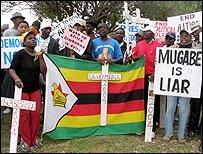
Despite protests from various human rights organizations, many of the courageously based in Malawi itself, the road has been renamed Robert Mugabe Road to honour the great freedom fighter, as he is described by various people in Malawi.

“Opposition Malawi Democratic Party leader Kamlepo Kalua also said it would be inappropriate to honour the Zimbabwean leader personally.

"It would be a serious oversight to decorate and honour a leader who is classified as an outright dictator," he told the Malawian Sunday Times.

"We can't have a leader who is demolishing people's houses without giving alternatives, using the intelligence and the army to arrest political opponents, honoured here."

He has since been arrested for his role in an alleged plot by Vice-President Cassim Chilumpha to topple President Mutahrika.”

The EU is a tad embarrassed (as it was when it transpired that EU money was being used to finance the publishing of anti-Semitic textbooks in Egypt) but there is little it can do.

It is hardly in a position to lecture Africans, after all. Despite the much trumpeted sanctions against Mugabe, his cronies, friends and relations, there is always some reason why one of them is allowed to come to a meeting in a European country.

According to the independent newspaper The Zimbabwean:

“In defiance of the EU travel ban on senior Zanu (PF) officials, the Belgian Embassy has granted a visa to enable Finance minister Herbert Murerwa to attend a meeting of ministers from Africa, the Caribbean and Pacific in Brussels this week.

In January the EU extended for another 12 months a series of sanctions including an arms embargo and travel ban against various officials in protest against the Zanu (PF) regime's continued violation of human rights, freedom of speech and freedom of assembly.

An embassy spokesman said the other EU countries had agreed that the visa be granted and that Murerwa would not meet Belgian officials.”

I doubt if that will bother Mr Murerwa very much.

COMMENT THREAD

Assault on batteries

waste batteriesThere was a time, once, when the UK was the world leader in recycling lead acid batteries – the type you have in your cars – recovering over ninety percent of discards. The system worked without any costs to the taxpayer or consumer and with minimal regulation, providing a good living to the small number of scrap merchants who specialised in the trade.

Then, along came the EU with its battery directive – building a web of regulation, red-tape, inspectors and controls. Scrap merchants went out of business and, to cover the regulatory costs, battery sellers had to impose a charge on consumers. Almost immediately, the percentage of batteries recovered fell to around sixty percent and batteries started appearing in hedge-backs and other fly-tipping sites.

Having failed totally to learn the lesson of this disaster – or even understand that there was a lesson to learn, the EU is back in business with a new battery directive, extended to cover a wider range of products. The directive will, according to the IHT, cost battery producers some €200 million and €400 million a year, placing an obligation on them to collect and arrange the cycling of their products.

By this means, the EU hopes it will encourage the recovery of the annual 158,000 tons of batteries sold to the domestic market, starting in 2012, when a quarter of all batteries sold must be collected, leading to 2016, when the target will rise to 45 percent.

Like all EU recycling initiatives, this one is producer rather than market-led, and will prove a disaster, leading to the sort of problems like this in the US – where the greenies have over-regulated their system in the interest of "saving the planet".

Needless to say, the mindless loons in the Toy Parliament are expected to approve the measure within a couple of weeks and, soon thereafter, it will come into law. They will never learn.

COMMENT THREAD

Wednesday, May 03, 2006

Give me money...

"I cannot print money, I cannot paint money, I can only propose how best to use it," says EU budget commissioner Dalia Grybauskaite, so give me some.

For "use", read spend, and that is exactly what the commissioner is proposing, with her budget for 2007 just out. She wants €126.8 billion for the year from the member states - compared with €112.0 billion this year - in a package she calls "minimalist".

This is the first tranche of the 2007-2013 settlement over which there has been so much grief, and includes money for Romania and Bulgaria, which are expected to join the EU in 2007.

"It's not enough, it's not sufficient and we are not able to pay for all our agreed priorities," laments Grybauskaite, noting that the overall sum is limited to 1.0 percent of the collective GDPs of the member states. Sadly, it means the commission is not able to commit as much money as it would have liked to its "priority areas" such as education, enterprise and innovation.

As before, though, a large part of this EU budget will be spent on agriculture subsidies, although it remains to be seen whether British farmers will actually get any of it.

COMMENT THREAD

Not of this world

Having today watched the Prime Minister's Questions, the subsequent statement by Charles Clarke and the debate following, I am assailed by that familiar feeling attendant on such occasions of not being on the same planet.

More to the point on this occasion, watching the interplay between Blair and the Boy King, you got the impression that the pair were actually in parallel universes, the Boy asking questions, Blair answering and then the Boy responding with pre-prepared clutch of sound-bites that bore no relation to the answers he had been given.

The details with have to wait for Hansard but my impression is that, to one of the questions posed, Blair actually responded with what sounded like a reasoned and plausible answer, packed with statistics and information, only to have the Boy bounce up and declare –from his script – "that doesn’t even begin to answer my question…".

Thus did Blair escape any mortal damage from the attack of the Boy King, as did indeed Clarke, under more a more focused but non-the-less "soundbitish" attack from his shadow, David Davis. Despite the dismal performance of his department, therefore, Clarke looks set to live another day.

However, had the attack been properly directed, it could have been mortally damaging, because the centre-piece of Clarke’s counter-attack was a proposal for legislation that created a "presumption for deportation" in the event of any foreigner committing and imprisonable offence. This, he maintained, would replace the current rules which had no provision for automatic detention, with foreign criminals being merely "considered" for deportation.

But, as we pointed out in our earlier, this is not possible. The UK is bound by both the EU Treaties and law, and by the European Convention on Human Rights, which seriously limit his ability to act.

So complex are these rules that, have spent the best part of several days researching them, I am still not fully au fait with the provisions and, therefore, will have to save the details for a later post.

Suffice to say, at this stage, that these details also seemed to elude the MPs present, so that none thought to mention that the Home Secretary simply could not do what he claimed he would do. In all, this was a classic example of the "elephant in the room" which gave the debate a surreal texture, making it definitely not of this world.

Not least, although the murder of policewoman Sharon Beshenivsky was raised by a number of MPs – including David Davis, none of them got the point. The Home Office had been claiming that Mustaf Jama had been considered for deportation in 2005, but could not be sent back to Somalia because of the political situation then. Because of this, he was not included in the 1000 plus offenders that had been released.

However, this was a gigantic smokescreen, trying to conceal that Mustaf was released without deportation being considered – in January 2003, after he had served 18 months of his three-year prison sentence. Under the normal rules for third-country nationals, anyone having been handed down a sentence of a year or more should have been considered for deportation and, had this been the case with Mustaf in 2003, he could have then been deported as the situation in Somalia was relatively stable.

The trouble was, though, that Mustaf was not an ordinary immigrant. He had been awarded "refugee status". Under the European Convention of Human Rights, amplified by the case of Moustaquim v. Belgium, he could only be expelled after having been convicted and received a prison sentence of five years or more – unless he was a "persistent offender".

That latter status is effectively determined by an immigrant being convicted three times and thus, it was only after his third prison sentence, in the Spring of 2005, that Mustaf was considered for deportation. By that time, the political situation in Somalia had deteriorated and he remained free in this country.

Clarke, was in fact asked whether, had his provision for "automatic deportation" been in force, people like Mustaf would have been deported. The home secretary blustered, but the answer was, effectively "no". This was not picked up though, and the unreal world continues, with none of us any further forward - or better protected.

COMMENT THREAD

In their tender care

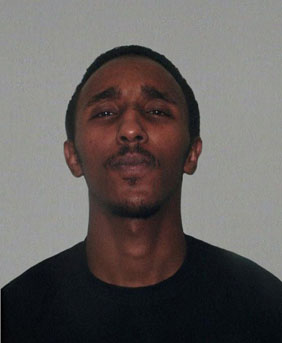
Mustaf (aka Mustafa) JamaWITH UPDATES

Last November, residents of Bradford were shocked to hear of the murder of policewoman Sharon Beshenivsky and the attempted murder of her female colleague. They had been called to an Asian travel agents and, as they arrived at the scene, were gunned down by armed raiders.

Not long afterwards, police were able to name three men in connection with the shooting, Somali-born Yusuf Jama, 19, his brother Mustaf (aka Mustafa) Jama, 25, and 24-year-old Asian, Muzzaker Imtiaz Shah (British-born in Burnley).

Yusuf Jama and Shah are in custody, have appeared in court and have been remanded in custody until their trial. Mustaf Jama, however, is still at large and police are unsure even that he is in the country.

However, it now turns out that Mustaf has something of a history. He entered Britain in 2000 as an asylum seeker and was given “leave to remain”, for seven years.

Showing a true sense of gratitude for the generosity of his adoptive country, Mustaf then embarked on an unrestrained criminal career, being described by the authorities as a "serial offender", finally to have been caught and convicted in July 2001 for an armed robbery in Sheffield. The Count handed down a sentence of three years and, having served half of it, Mustaf was released in January 2003.

Apparently, then living now with his brother and mother in North Kensington, who had also come to England, from Holland, he remained "known to the police”, then becoming involved in the Bradford shootings.

On the basis of his criminal career and sentence, he should have been marked down for deportation on completion of his sentence. Thus, it appeared, that he was one of the 1000-plus criminals who had been released into the community by the Home Office without checks.

At first sight, this could have finished the embattled home secretary's career, having let loose a cop-killer. But never fear - with one bound, Charles Clarke was free. We are now told by the Home Office (whom we believe completely) that Mustaf was considered for deportation. So that's alright then.

On review of his case, though, it was decided that he could not be sent back to Somalia because of the political instability there and, in any case, there were no direct flights to the country, by which he could be sent.

Thus, a known and dangerous criminal was let loose on society, with the tragic consequences of which we are now only too aware. And they wonder why people are considering voting for the BNP?

UPDATE 1

According to The Times, Home Office say Mustaf's deportation case was considered in spring last year. Since he completed his prison sentence in January 2003, that means it must have been considered more than two years after he had been released. Er...?

UPDATE 2

The Daily Telegraph tells us that, in May 2001, Mustaf was sentenced at Woolwich Crown Court to 15 months in prison for aggravated vehicle taking and road traffic offences. It was two months later, the paper adds, that he was jailed for three years at Sheffield Crown Court for two offences of robbery.

Thus, when he was released from jail in 2003, he was not considered for deportation. It was only after he had been given another three months at Harrow magistrates' court for burglary in February last year, that he was finally considered for deportation. As we now know, that was rejected. And, in the November, he struck again.

The Telegraph adds that all four Bradford area Labour MPs, including Gerry Sutcliffe, the consumer affairs minister, confronted Mr Clarke at the Commons yesterday and warned him that they would demand his resignation today unless he came up with a full explanation of the Jama case.

Terry Rooney, the MP for Bradford North, is reported as saying: "We told him that, unless we are satisfied with his answers, the people of Bradford will demand his resignation."

It has also emerged that detailed rules about deporting foreign prisoners were issued to prison governors 13 months ago. But the Home Office was mistakenly freeing foreign criminals for a year while the rules should have been in force.

COMMENT THREAD

This is entertainment?

Normally the BBC devotes acres of news-time to its own doings and the comings and goings of its staff. This little item, though stayed in the Entertainment section for some reason.

Apparently an independent committee, chaired by British Board of Film Classification president Sir Quentin Thomas found that well, how shall I put it? That the BBC, which is, naturally
“committed to being fair, accurate and impartial and UK viewers regarded it as unbiased”
is, apparently, less than so when it reports on the Middle East. There’s a surprise. Most of us have been saying that for years.

But then we had been saying for years that the BBC was considerably less than fair, accurate or impartial on the subject of the EU and Britain’s membership of it until there was a report that confirmed all that and promised to improve matters. Nothing ever came of that and, I expect, nothing much will come of this.

The report did suggest that next time the BBC reports about someone detonating a bomb on a bus full of civilians, the act be called terrorism. I presume that applies to bombs being detonated outside falafel stalls as well. We shall see whether the BBC complies with that. At least, the young lady reporter who wept tears over Arafat dying is no longer reporting from there.

COMMENT THREAD

Tuesday, May 02, 2006

Changing the brand

Now we know it is really in trouble. The EU commission has recruited Simon Anholt, a British brand consultant who - the Financial Times tells us - who has worked with Microsoft, Unilever and Coca Cola.

His job is to chair a panel of branding experts on European identity, in an effort to help the European Union recover its image after the rejection of the constitution by the French and Dutch last year.

Anholt is certainly after grabbing the headlines, likening the structure of the EU to al-Qaeda, with separate cells inspiring each other but no overall control. It differs, he says, from the centralising approach of Joseph Stalin.

That, Anholt continues, highlights the difficulty of changing a multinational brand rather than one based on a single country or company where the command structure is clearer. “It is the biggest branding challenge in the world after Nigeria and the USA,” he adds.

Clearly, also, Anholt has lost no time in picking up the Community jargon, advising that said changing one's brand required “concrete actions”. Perhaps with a puckish sense of humour, he then states: "You usually get the reputation you deserve."

Rolf Annerberg, chief of staff to the fragrant Margot then adds to the discourse, complaining that, "The EU has a brand but it is competing with 25 national brands. It is very seldom you use them as a unit. The Ryder Cup golf that plays against the US is about the only case."

He believes the EU has lost its central narrative: that it brought peace to a war-torn continent. "That means nothing to young people today," he says.

However, there are those – like this Blog - who doubt whether Brussels can do much. John Wyles, of consultants G-Plus Europe, who worked on the campaign to promote the euro currency, agrees: "You cannot reach the citizen from Brussels. You are dependent on national politicians."

And, as we know, national politicians – like our very own Boy King – are not into product placement. They have their own brands to market.

Nil desperandum, though. As our illustration shows, we have a suggestion for the commissioners.

COMMENT THREAD

Are you thinking what we're thinking?

Illegal immigrants at DoverThe events over the last few days, variously described as the "meltdown" of Blair's NuLab experiment, go to prove yet again that all politics are local. No matter how much the EU tries to get itself noticed, the activities of a sexual predator in the Cabinet or the serial incompetence of a Home Secretary will always seem to take precedence over what the media still insist on calling "foreign news".

It is slightly odd, therefore, that when domestic politics are to the fore – and not even the inventiveness of this Blog can actually make the EU look interesting at the moment – the Telegraph should choose in its main leader to feature immigration demonstration in the USA.

However, the Telegraph turns even this into domestic politics, with the headline, "We can no longer dodge the immigration issue". It starts by noting the contrast between the attitude of immigrants to the United States and France, stating that Hispanic illegals do not swim the Rio Grande or slither under barbed wire simply in search of work, but because, by and large, they wish to become Americans.

By contrast, across the Channel, many of the younger so-called sans papiers actively despise France; some of them have embraced a mixture of criminality and extremist Islam - apparently disparate world views that, as bemused European liberals are discovering, can be slotted together with surprising ease.

Nicolas Sarkozy, the French interior minister has thus coined the slogan: "Love France or leave it," raising the question as to whether Britain should embrace the same solution.

The answer, suggests the Telegraph is that the Labour government might have left us no choice. During the course of 2004 alone, around one per cent of our existing population took up residence here - and this does not include illegal immigrants. The government, it says, would be incapable of managing immigration even if the European Union allowed it to: it cannot even deport released foreign murderers and rapists.

Thus, domestic politics suddenly become EU politics. What is not generally realised is that, under Article 39 of the consolidated treaty we have no powers to exclude nationals of EU member states from these shores, except "on the grounds of public policy, public security or public health". And, by a succession of EU court of justice rulings, "public security" has been so tightly drawn that such a national criminal has to serve a five year sentence before being considered for deportation – as opposed to one year in the case of those from third countries.

Even then, the exclusion cannot be permanent and we are obliged to permit re-entry after 15 years, or a lesser period if the applicant can prove that their "personal circumstances" have changed.

Thus, although, as the Telegraph reminds us, Britain benefits from a certain influx of legal immigrants, we are also confronting ever larger numbers of immigrants, legal and illegal, who despise everything about this country except its welfare provisions and the criminal opportunities opened up by politically correct policing.

Yet, as long as those immigrants come from or via the EU, there is nothing we can do about them. As a result, says the Telegraph, "Love Britain or leave it" is not a refrain that any serious politician is likely to use in the near future, and we are not recommending that they do. But, it adds, that is what more and more people are thinking.

Strangely, therefore, it is the very issue that politicians of all parties have been so keen to avoid discussing that is eventually going to rise up and bite them where it hurts.

COMMENT THREAD

The Poles have a government (for the time being)

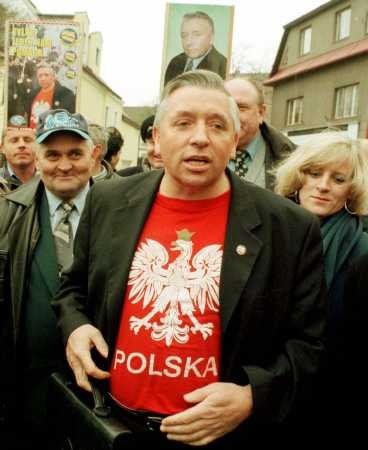
Andrzej Lepper

One of the fascinating aspects of the political situation in Poland (if that is not too strong an expression) has been the absence of a government since September. There has been a Prime Minister, Kazimierz Marcinkiewicz, and a Defence Minister, Radek Sikorski, who is given to many pronouncements, including suggestions of a “better” constitution for Europe.

This happy state of affairs (the absence of government not Mr Sikorski’s pronouncements) has come to an end temporarily with the leading party, Law and Justice, signing a coalition agreement with Andrzej Lepper’s Self-Defence Party and the Catholic League of Polish Families.

The latter two parties are usually described as being eurosceptic and anti-reform and Mr Lepper’s appointment as Deputy Prime Minister in charge of agriculture is “causing concern in Brussels”.

Much more to the point, it is causing concern in Poland. For one thing, the new government is still 13 seats short of a parliamentary majority, which means that it is likely to collapse within a few months. For another, something like 70 per cent of the country’s population oppose the formation of the coalition.

The boorish, thuggish, backward looking, anti-semitic Mr Lepper is one of the reasons why Poland reluctantly voted for membership of the European Union.

Politics in Eastern Europe divides along faultlines that are different from those in Western Europe. The question that faces the electorate, whether overtly or covertly, is whether the country is to become part of the modern world, look outwards, take its rightful position as a European nation. The other side of the debate is obscurantism, nasty, often anti-semitic nationalism, economic backwardness and a feared exclusion from the developed world.

It is unfortunate from the point of view of the eurosceptic cause that in most of the post-Communist countries the opposition to EU membership was propounded either by unreconstructed communists or virulent nationalists, both members of the latter political group.

In the end, the referendums were all won but the turn-out was low in most countries, the sort of result you would expect in the circumstances.

Now, terrifyingly for the Poles, one of those politicians has acquired a high position in the government, though probably not for long. The most likely outcome of that will be that the Poles who have had growing doubts about the EU will cling to it for dear life as they perceive rule by the likes of Andrzej Lepper to be the alternative.

In the meantime, Radek Sikorski, who, one assumes, will remain Defence Minister, has been complaining with some justification that once again Poland is being disregarded by Russia and Germany in their agreements.

Speaking at a conference in Brussels Mr Sikorski attacked the planned gas pipeline between Russia and Poland that will allow Russia to cut off energy supplies to Belarus and, by implication, Poland without hurting Western Europe.

“The $5bn (£2.7bn) pipeline, agreed in September 2005, will connect Babayevo in Russia to Greifswald in Germany.

The 1,200km (744 mile) pipeline is now under construction and will deliver Russian gas to Germany - and eventually to other Western European nations - by 2010.”

Naturally enough, in that case, the West European countries would not go to the assistance of the East Europeans who might be losing out.

The threat to Belarus must be there in case there is a change in government. As Aleksander Lukashenka is President Putin’s closest ally and supporter, there seems no particular reason for cutting off their gas.

Poland is another matter, of course. Defence Minister Sikorski became quite heated in his analysis and compared the building of the pipeline to the infamous Molotov-Ribbentrop Pact of 1939, whose secret clauses gave Stalin the Baltic States and divided Poland between Germany and the Soviet Union.

This sort of behaviour, said Mr Sikorski (no relation to the general), called into question the whole concept of a common foreign policy. Well, yes, one could put it that way. One assumes the Defence Minister was ironic but with politicians you can never tell.

COMMENT THREAD

Fox's glacier hints

Dr Liam FoxDavid Cameron's emphasis on environmental issues risks eclipsing traditional Conservative messages on crime and discipline. So says Liam Fox, via the Guardian, which has picked up on Sunday’s GMTV interview with the shadow defence secretary – further analysed on the Tory Diary site.

Fox is warning that the party risks being "tilted too much in one direction", hinting that the Boy King has perhaps gone a little too far with his "Vote blue, go green" campaign. The Tories needed to show they were a broad coalition by combining traditional Conservative policies - such as wealth creation and being tough on crime - with a social agenda that dealt with domestic violence, mental health and green issues.

The Boy King, however, may feel he is on a roll, with a recent survey carried out for Friends of the Earth which suggests that “most Brits” want the government to go green.

In fact the claim is that over three-quarters of 1,233 adults aged between 16 and 64, interviewed online by TNS - from 25 to 27 April 2006 - would support the mandatory (but unspecified) measures to reduce carbon dioxide emissions by three per cent each year – something which the Boy King favours.

One wonders, though, whether the public support would be quite so strong if the precise measures had been specified, and their economic consequences, or were aware of the latest “green” scam, reported by the BBC.

Power firms, it seems, are set to make a £1bn windfall profit from the EU Carbon Emissions Trading Scheme, benefiting from increases in electricity prices brought about by the scheme without needing to make any extra investment in return.

The problem is that firms have been given, free-of-charge, the carbon emissions permits on which the scheme is based, which they can then sell on at a handsome profit when – if as is likely, they manage to come under the limits set.

This rather demonstrates the fatuity of directly involving state organs in such complex matters by, since the scheme is a mainstay of the EU's policy for meeting its Kyoto obligations, nothing us likely to change and a lot of people are going to be laughing all the way to the bank.

Not laughing though is Ruth Lea who, in yesterday's Telegraph business section, succinctly debunks the idea that everyone agrees on climate change. It is a fallacy, she writes.

She is supported by a group of leading climate scientists who have announced the formation of the New Zealand Climate Science Coalition, aimed at refuting what it believes are unfounded claims about man-made global warming.

They are particularly critical of the UN International Panel on Climate Change (IPCC) and its "effective monopoly on public announcements", and are aiming at fostering a new "sceptical consensus" to act as "auditors" of the IPCC.

Needless to say, Rees-Mogg, in The Times believes that "Lucky Dave" has got his strategy right. Given that Mogg almost invariably gets it wrong, the Boy King seems doomed.

The Independent certainly points the way if the Boy sticks to his "environment" line, having already run a story on how his "image as green leader" has "gone up in smoke" since it emerged that he is followed by his official car when he cycles to work. It and the Guardian now take every opportunity they can to remind their readers of this little faux pas.

With that, and Fox's glacier hints, it seems the Boy may have to learn how to be a real opposition leader, on substantive issues – especially as there may now be a sensational development in the offing on the foreign criminals that Clarke let loose on society.

COMMENT THREAD

Monday, May 01, 2006

Accession plus two

Migrant workers on a British farmToday, two years ago, the EU fifteen became twenty-five – adding ten more states to the evil empire, eight of them former satellites of the USSR.

In the spirit of friendship and solidarity, the bulk of the existing member states had already decided to refuse to open their jobs markets to the new entrants, the exception being Britain, Ireland and Sweden.

Now, to celebrate the anniversary of "Accession Day", the Independent reports on a survey which tells us that employers prefer workers from new EU states to "lazy" Britons.

As if we didn't already know, the paper informs us that migrant workers from the new states are filling jobs that indigenous UK workers are not prepared to do, but for much lower wages.

This is according to "new research" by the Europhile Joseph Rowntree Foundation, which claims that three quarters of the employers it interviewed said they believed enlargement had been good for business.

Its full survey, of 1,000 migrants and employers, found that employers used highly qualified migrant workers for low-skilled and low-waged work, especially in the building, hospitality and agricultural sectors. The employers found migrant workers “reliable” compared with UK workers, some of whom were described as "lazy".

The reason given is that migrant workers were prepared to tolerate low-skilled work and poor conditions because the pay was significantly better than the wages in their own countries. "Sometimes they put up with negative aspects of their jobs in order to learn English or because conditions were only temporary," the Foundation said, while some employers admitted to “bending the rules” on employment law.

Needless to say, the TUC is unhappy. Its spokesman said: "This survey confirms that migrants workers are exploited in a number of sectors. Unions need to step up their recruitment and government must do more to enforce legal standards."

Furthermore, not a few British workers are unhappy. My colleague in Somerset reports that two of the largest factories in his district are now employing exclusively Polish workforces, while a third factory – newly built only five years ago – is being demolished after the operation moved to Poland.

Although Finland, Spain and Portugal, and also Greece are now to lift restrictions, with the British experience in mind, France, Germany and Austria are among countries keeping them in place.

COMMENT THREAD

A present for Mrs Prescott

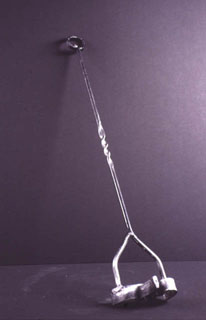
If the lady does not do the deed, with this handy kitchen accessory, let us hope that the MPs and the media combined can put up enough of a case to put the deputy prime minister out of his misery.

However, rather than his recently reported activities, there is a much more powerful reason why John Prescott should be removed from office as soon as possible. For, although he is widely regarded as a buffoon, it is largely this man who, almost single-handedly, has put the EU-related regionalisation programme on the Labour Party’s agenda, and kept it there.

The story of contemporary developments starts, in fact, in 1994, with the creation of creating ten Regional Government Offices (RGOs) by John Major – under pressure from the EU commission which virtually made their establishment conditional on the continued flow of EU funds.

But, while the Labour Party had endorsed the concept, in 1995 it backed off from its own proposals to established fully-fledged regions with their own elected assemblies. Instead, it settled for indirectly elected regional chambers, which would not compete with local government.

A similar approach was adopted in a 1996 Labour policy document entitled: "A New Voice for England's Regions", and in the 1997 manifesto. Both documents made it clear that, where there were calls for the creation of regional assemblies, popular approval would first have to be demonstrated in regional referendums.

This, however, was not acceptable to John Prescott. As an entirely private initiative, he established a "Regional Policy Commission", chaired by Bruce Millan, the former Secretary of State for Scotland and European Commissioner for Regional Policy. This recommended that each region should have a Regional Development Agency (RDA) "to promote economic development in the region with an accountable and strategic regional framework".

Such was the power of Prescott that he managed to put on the Party’s manifesto a reference to RDAs and, in the Queen's Speech of 14 May 1997, the newly elected Labour government, under Tony Blair, announced its intention to create them. The RDAs themselves, were to be Prescott's "Trojan horse" – embryonic organisations which would, in the fullness of time blossom out into full-blown regional governments.

However, the Labour Party remained lukewarm on further regionalisation, and there were indications of tension between Blair and Prescott on the issue. For instance, in July 1999, the EU commission was proposing to cut the assisted areas in the UK, from covering 34 percent of Britain's population to 29 percent. Prescott was reported as seeing that the "obvious answer" to the cuts was to press on with "the next stage of devolution" - setting up elected assemblies in the eight English regions outside London.

The same report observed that this was "far from obvious" to Blair, who was held to believe firmly that central government should only move in this direction when there was a clear demand coming from the regions.

As a further indication of where Prescott stood, the report continued:

Nevertheless, some regional politicians want to move a bit faster. Last week, the North-West Regional Assembly, which is the unelected supervisory body for the regional development agency, agreed to set up a "constitutional convention" chaired by the Bishop of Liverpool, to work out a plan for an elected assembly. A similar body has already been set up in the north-east. All of this activity is being enthusiastically egged on by Mr Prescott.
By January 2001, however – with talk of election in the air – "insiders" were noting the emergence of a Prescott-Brown axis in support of regionalisation. The chancellor had promised that a second-term Labour government would strive to create a "Britain of nations and regions" as part of its bid to secure an economic renaissance outside the prosperous south of England.

Brown then suggested a new package of regional policies could be unveiled in the manifesto, or shortly after the election, hinting that this might include a commitment to directly elected regional government. "As we develop regional policies that are locally generated and managed, there has to be local and regional accountability too", he told a conference at the University of Manchester Science and Technology Institute.

Members of the pro-devolution Campaign for the English Regions had welcomed the Chancellor's comments, suggesting they were the result of an alliance between Brown and Prescott, "who is strongly in favour of regional government".

Prescott's aides had also been "raising the stakes in the internal battle to commit the party to a strong regional dimension in its forthcoming manifesto". Late the previous year Richard Caborn, the trade minister and a close friend of Mr Prescott, had told a Fabian Society meeting in York: "I believe the radical programme of constitutional change we embarked on in 1997 is incomplete without an answer to the so-called English question. Regions need a clear voice to promote economic development and that in my view is best achieved through (elected) regional assemblies".

Prescott seemed to have got his way in March 2001. Blair, "known to be cool on further devolution in the wake of the creation of the Scottish and Welsh parliaments" told business leaders in Cardiff that the government was ready to go further. But only with the consent of people living in the regions. This was regarded as a "massive boost" to regional campaigners. Two weeks earlier, Prescott had promised delegates at Labour's spring conference a green paper on regional government.

Despite this, when the Labour Party issued its manifesto just before the June election, it was content merely to "strengthen regional economies with venture capital funds and new powers for reformed Regional Development Agencies". And its promise to make provision for directly elected government in the regions was vague, hedged with the referendum caveat and the condition that "predominantly unitary local government" had to be established.

The tension between Blair and Prescott continued when there was no reference to English regions in the Queen's speech announcing the newly elected Labour government's legislative programme. This brought an intervention from Europhile Peter Mandelson, former Northern Ireland secretary and then "self-appointed champion of the regions". He warned that unless Westminster shed more power to the regions it would risk a two-tier England that was "dangerously unbalanced".

The pressure succeeded. At the earliest possible opportunity after the election, with the manifesto condition for "unitary authorities" far from satisfied, Prescott pushed out not a green but a white paper. Never mind that, with his co-author, Stephen Byers, he was besieged by the problems of Railtrack and an almost complete breakdown in the rail system. Clearly, for Mr Prescott, elected regions were more important – even to the extent of confronting his own prime minister.
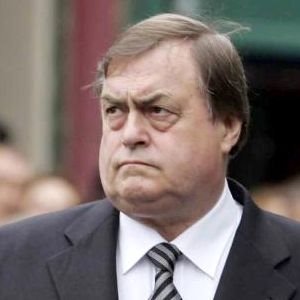
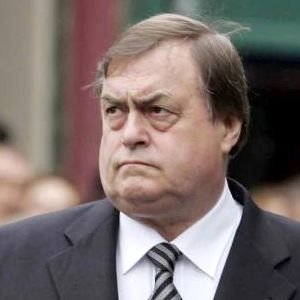
John Prescott - no ordinary politicianBut then, Mr Prescott, born in 1938, is no ordinary politician. Best known for his garbled syntax, behind the façade of an amiable – and sometimes not so amiable – blunderer, lies a man with an iron will. As a 17-year-old merchant seaman, he fought a bitter battle for the National Union of Seamen in a lengthy strike which led to its leadership – including Mr Prescott – being described by Harold Wilson as a "tightly knit group of politically motivated men". He joined the Labour Party in 1956, was parliamentary election agent for Chester in 1964 and stood as a Labour candidate for Southport in 1966. Four years later, he was elected to his present constituency, Kingston upon Hull East.

There is also a considerable "European" dimension to Mr Prescott’s career. In 1973, he became a delegate to the Council of Europe, where he spent two years, emerging as leader of the British Labour group. He then joined the European Parliament in 1975. That was at the height of Labour's referendum campaign for continued membership of the "Common Market" and just as the nascent regional policy was emerging in the EEC, with the launch of the ERDF. And so strong were his "European" credentials that he was offered, but declined, the position of EU commissioner.

Thus, Prescott's introduction to European politics came some thirty years ago. And, from his own mouth, he dates his enthusiasm for regional policy "…back more than 30 years". Therefore, either shortly before or, given some latitude for an "approximate" 30 years, during his tenure as a UK delegate to the Council of Europe, Mr Prescott became a convert to regionalism. It seems hard to believe that his thinking was not influenced by ideas then current in the Council, or subsequently while he was in the European Parliament.

Not long after his return from "Europe" in 1981, undoubtedly still imbued with enthusiasm for regional policy, Prescott became Labour's regional affairs and devolution spokesman, under Michael Foot, who asked him to draw up a new policy framework to secure agreement for devolution for Scotland, Wales and the English regions. The result was a publication: "Alternative Regional Strategy: a framework for discussion", which set out plans for devolving power to Scotland and Wales and, predictably, the creation of English regions. To these objectives, Prescott, with his background in European politics, would remain constant.

Sir Jeremy Beecham - Prescott's co-conspiratorThen, crucially, in 1989, Prescott was elected to the Labour Party's ruling body, the National Executive Council (NEC). Also on the NEC was another ardent regionalist, Sir Jeremy Beecham, then Labour leader of Newcastle upon Tyne City Council.

Having served on the NEC's Local and Regional Government sub-committee, Beecham was also Vice Chairman of the Northern Regional Councils Association. He was Chairman of the Local Government Association (LGA), was leader of its Labour Group, and was to become Chairman of the Association of Metropolitan Authorities. He was made President of the British Urban Regeneration Association (BURA) in 1995 and served as a member of the President of the Board of Trade's Working Party on Competitiveness. From 1987 to 1996, he worked with the Joseph Rowntree Memorial Trust, an organisation that generously funds the Campaign for English Regions and which financed much of the Scottish Constitutional Convention that pressured for Scottish devolution.

Apart from their positions on the NEC, Prescott and Beecham would have had ample reason for meeting frequently and indeed they did, not least when Prescott in July 1997 – shortly after Labour came to power - invited Beecham to work in a joint venture called the "The Central-Local Partnership". This had been set up by the government and the LGA as "a forum for central and local government to work together to tackle the multiple causes of social and economic decline, and to improve local services".

Together, the Prescott-Beecham partnership has worked quietly and steadily to pave the way for regionalisation – often on arcane initiatives such as the “reform” of local government finance which would allow local authorities to take out capital loans without first having to seek central government approval. This would enable regional authorities to approach the EIB for loans without needing to refer to the government.

But the vital element of the relationship was the route into the LGA through Beecham's chairmanship. This was important because the LGA's sister organisation, with which it shares an office in Brussels, is the Local Government International Bureau (LGIB). It serves as its European and international arm and, in particular, acts as the UK member of the Council of European Municipalities and Regions - one of the main driving forces behind regionalisation in Europe.

In England, the LGA – with Beecham at is head – is the driver of regionalisation, co-ordinating a plethora of allied associations, including the ERN, all moving towards the same end. The role of these "allied associations" was noted by a University of Wales researcher who concluded that bottom up "local authority regionalism" had emerged in the 1990s through them. Funded by constituent authorities and composed of nominated members and seconded officers, these associations, he asserted, were working to create agreed policy on economic development, transport and land use questions and EU structural funds policy.

Small wonder that when Prescott published his White Paper, his co-enthusiast, Sir Jeremy, responded positively: "The LGA is keen to ensure that regional assemblies have the backing of local people and that the process for establishing them does not divert councils from improving their services to local people. Regional assemblies should embody a genuine devolution of power from Whitehall". Unlike thousands of councillors, a hostile media and an unenthusiastic public, he had no qualms whatsoever about the idea. It was a matter of how, not whether.

And, despite the rejection of the ideal by the overwhelming "no" vote in the North-East region, the agenda continues to this day, pushed by Prescott, imbued with his thirty-year-old enthusiasm, engendered by his work in the Council of Europe.

No one else on the Labour benches seems to show as much enthusiasm for regionalisation and, should the man depart, there is some hope that the project will be quietly dropped. Whether they be from Mrs Prescott or his fellow MPs, therefore, we do hope that the knives are out for the deputy prime minister.

COMMENT THREAD

You have to feel sorry for them

There are times when even I feel sorry for the UN. Here they are doing their best, giving Iran a top job on the Disarmament Commission, giving an Iranian hostage taker, known not so affectionately as Screaming Mary, a “Champion of the Earth” award and what happens? The President of Iran turns round and tells the UN where it can get off on the subject of nuclear enrichment and other suchlike matters.

Well, at least there are those reforms. They are going ahead. Aren’t they? Well, errm, no. Or not so that you would notice.

The developing nations are undercutting efforts to reform the budget. According to UPI:

“The so-called G77 group of developing nations led by South Africa rejected efforts by the richer members of the body and Secretary-General Kofi Annan to resolve their complaints and moved ahead with its resolution.

The G77's resolution broadly rejects efforts to reform the way budgetary decisions are taken and undercuts calls by Annan for more flexibility.”

The Sunday Telegraph gives a succinct summary of the proposal:

“Supported by America, the European Union and Japan, which provide 80 per cent of the UN budget, Mr Annan wanted to transfer key spending and management decisions from the unwieldy 191-member General Assembly to a strengthened professional secretariat.”

Of course giving more financial power to SecGen Kofi Annan (father of Kojo) may not be a particularly top-notch idea and shifting money management from the unaccountable General Assembly to an equally unaccountable but possibly more sensible professional secretariat is not going to change the culture of the UN one iota.

However, the countries that provide 80 per cent of the funding do have a weapon they can use in the future if they manage to stiffen their resolve. The developing countries are furious at what they see as blackmail and are shrilly demanding that the richer countries continue to pay in their dues and not claim any special privileges for that.

Separately, Japan has been campaigning for a rearrangement of funding that would make Russia and China, at present minimal contributors, pay more. The latter two countries are, needless to say, resisting the suggestions. China is also resisting any notion of Japan becoming a permanent member of the Security Council.

All round, one can see that the UN is the epitome of peaceful global co-operation.

COMMENT THREAD