Thursday, September 21, 2006

Getting above their station

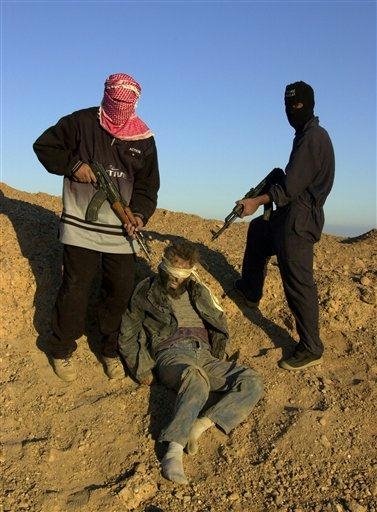
Michelle Malkin is conducting a heroic battle against Associated Press over on her site, beating off a sustained PR campaign from the agency over the over their photographer – and terrorist sympathiser - Bilal Hussein, who took the delightful picture shown on the left (Michelle explains the context).

Interestingly, it was also AP which fronted the "rebuttal" over the Qanagate affair, rushing into print to condemn this blog's work without so much as having interviewed its editors.

At least this time, Michelle had the dubious privilege of being interviewed by AP reporter Robert Tanner but, as she says:

Instead of focusing on AP's questionable news suppression and Hussein's so-called journalism, Tanner quotes a few critical bloggers and then devotes the rest of the article reiterating the AP's defense of Hussein's work, quoting the AP and left-wing human rights crowd's call to free or charge him, and quoting liberal bloggers accusing conservative bloggers that unearthed this story of "thuggery:"
There seems to be something very sinister about the activities of AP and news agencies in general and my guess is that they have ceased to become agencies as such, and are now in the business of peddling influence.

That relates back to Nelson Ascher's paper in Politics Central yesterday, where he observes that, in a democracy, "influence is power".

Interestingly, of all the agencies, AP is possibly the most Europhile, displaying a clear bias in favour of the European Union, but it only just beats Reuters, whose chairman just happens to be Niall FitzGerald, also a member of the rabidly Europhile Britain for New Europe group. As is the EU largely anti-Israel, it seems no coincidence that two agencies which are largely pro-EU should also display a clear anti-Israeli bias.

It seems to me, therefore, that the agencies are no longer content with their passive role of reporting the news and are now seeking to make it – setting the agenda. If that is the case, they are getting above their station and need putting back in their box.

COMMENT THREAD

Wednesday, September 20, 2006

Britons ever shall be slaves

That is what will happen, according to the headline over Simon Heffer’s op-ed piece in The Daily Telegraph today, which tells us: "Britons could all too soon become slaves of Europe".

While I am fully aware that authors do not write their own headlines (or rarely do), one must assume that – from the tone and content of his piece – Heffer agrees with the sentiment expressed. It is also one held by many Eurosceptics and one which, via multiple e-mailings, I have been invited to share and endorse.

read more…

COMMENT THREAD

When all we can do is bitch

A man amongst women: I think they call this 'assisted suicide' - double-click to enlargeAn intriguing and illuminating article, brought to our attention by one of our forum members, dissects the relationship between the MSM, politicians and NGOs. It is an important contribution to the debate about the way we are governed, a debate which should be pursued here with much more intensity, but has hardly started.

Headed "MSM, NGOs and paranoia", and written by Nelson Ascher for Pajamas Media, the strap tells us that the article looks "at the strange symbiotic relationship between the Mainstream Media and Non-Governmental Organziations and what it means to our lives", but this is one of those occasions when the strap undersells. Ascher also tells us a great deal about modern politics.

read more…

COMMENT THREAD

Winds of change?

HMS Victorious - one of the submarines to receive an upgraded sonarAs with Kremlinology, you look for clues where you can find them – and they are beginning to suggest that there has been a sea change in British foreign policy, away from Euro-enthusiasm and genuinely pro-US. All that just at a time when the British public seems to be turning the other way.

It is not just what Blair says - words are cheap, especially when they are uttered by our prime minister. And he tends to be one of those Walter Mitty characters who seems to agree with the last person he met.

read more...

COMMENT THREAD

Tuesday, September 19, 2006

Outing the lobbyists


The shady world of Brussels lobbyists gets a little light shed on it today by the blog England Expects, with CorpWatch on the case as well.

Their target was Burson-Marsteller, one of the leading professional lobbying groups in Brussels, part of an industry that itself is huge, employing a workforce of some 15,000 lobbyists who spend €60-95 million ($76 - $120 million) a year to buy access to the EU's regulators.

read more...

COMMENT THREAD

Choosing sides - 1

The Parliamentary All-Party Inquiry Into Antisemitism, whose report makes for interesting reading, says the following about Melanie Phillips’s written evidence:
In her written submission Melanie Phillips expressed the view that, with Israel being blamed for endangering the free world, the only Jews who are considered respectable are those who distance themselves from Israel. She says: "British Jews who try to defend Israel against these calumnies and uphold its right to defend itself against genocide are accused of 'dual loyalty'."
I suspect most of us have come across those attitudes, not least in the main-stream media or, as Rush Limbaugh describes them, the drive-by media. I remember discussing the matter with a very proper young man who had been in the army, was doing a second degree in International Relations or Politics and, I suspect, was aiming to join the Foreign Office. When I asked whether Israel had the right to defend itself, his comment was "well, -ish". He, or perhaps his tutor, had decided in their wisdom that, uniquely, Israel had no right to defend itself and its enemies had every right to do what they liked up to and including complete genocide, as threatened by a number of leaders in the countries that surround it.

read more ...

COMMENT THREAD

Is there a hidden message?

In a breathless piece on the Conservative Party website shadow defence secretary Liam Fox is warning that one the Royal Navy's main bases at Portsmouth or Plymouth could be closed down in a programme of "radical reductions" being masterminded by Labour ministers who have already slashed back the number of warships in the fleet.

We are told that, after defence secretary Des Browne slipped out his scheme to review UK naval bases in an obscure written statement - hoping to hide the news by coinciding the announcement with a briefing on his first major speech - Dr Fox questioned the Government's commitment to the Royal Navy.

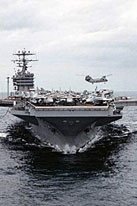
Accompanying the piece though is a picture of an aircraft carrier (shown above) – but not as you might think a Royal Navy vessel. This is an aircraft carrier from the US Navy – probably Nimitz class.

Is there a hidden message here – or is this just the usual incompetence, the Conservative website managers being so thick they do not even recognise a US warship?

COMMENT THREAD

Heh!

Once again, ladies and gentlemen, those of you who have bothered to read the blog would have found themselves ahead in the game. Yesterday I wrote about the Hungarian Prime Minister, his lying, his very understandable refusal to resign and the various threats issued by students and trade unions.

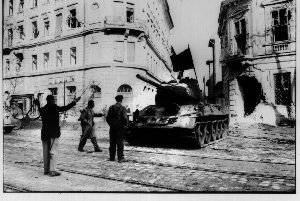
I also pointed out that a month or so before the fiftieth anniversary of the 1956 Hungarian Revolution was not, perhaps, a good time to challenge everybody in sight. The last time I was there in early 2005 I noticed that the number of memorials to that event was growing almost exponentially. Huh, I said to myself, time they had another revolution. They are becoming a little obsessed with the last one.As it happens, I do not think there will be another revolution now but the news this morning is of interest. According to the Guardian (and others)
“Protesters have clashed with police and stormed the headquarters of Hungary's state television, enraged at a leaked recording in which the prime minister admitted the government "lied morning, evening and night" about the economy.”
Hmmm. Sounds awfully familiar. There are, however, a few differences, not least the fact that at least one reason why the government was lying and now finds itself in a bind is because of their anxiety to join the euro as soon as possible.

Under-rated blog of the week

It's a bit dry at times, and occasionally dull - then aren't we all - but there is also some remarkably perceptive analysis, which makes a refreshing change from the lightweight froth that we have to suffer.

It's The Purple Scorpion.

COMMENT THREAD

Making you feel better

The next three weeks is party conference time - a pretty miserable interval for anyone in Britain who is interested in serious politics. We are now to be tormented by the slap-stick version practised by our joke political parties, of which we suffer three – the Liberal Democrats (most often known as the Lib-Dims), the (New) Labour Party (or Zanu-Lab as it is sometimes called) and the Conservative Party (more usually called the Tories, by friends and enemies alike).

The Lib-Dims go first, filling their agenda with endless policy debates of increasing unreality – like the current proposals to increase annual car tax from £190 for a modest saloon to £2000, and to add £2000 to the annual Council Tax bill. To follow is Zanu-Lab and then come the Tories, all with their carefully controlled agendas and stage-managed presentations.

Unsurprisingly, while the media pretends to take all this garbage seriously, filling acres of news space and wasting gigawatts of broadcasting power on coverage - and the more pretentious of the blogging community rush in to play at being journalists - sensible people in the political game try to arrange their holidays for this period or find urgent work abroad.

By contrast, for this short period, even our real government in Brussels looks vaguely interesting, especially as it is on the verge of being hoist with its own petard.

read more...

COMMENT THREAD

Monday, September 18, 2006

Why on earth should he resign?

Ference GyurcsányNo, I am not talking about the Pope, who cannot resign, anyway and who is being threatened by far worse things by the peace-loving Islamists with the support of almost the entire MSM (dead tree and electronic). The chap in question is the Hungarian Prime Minister, who has been caught out by somebody in his own party who leaked a tape of the man’s speech to the media.

In April of this year, the Socialist Party broke the “curse” on political parties in Hungary, under which none had won two elections in a row since the establishment of a democratic system in 1989.

On May 26, Ference Gyurcsány, the less than totally popular Prime Minister made a curious speech at a closed meeting of the party. His comments, freely larded with obscenities, centred on the somewhat unsurprising fact that he and his government had lied to the people of the country about the economic situation and the need for reforms.

“"We lied in the morning, we lied in the evening," he said in a speech that was littered with obscenities, and referred to his own administration as "boneheaded".”
Somebody leaked the tape to the news media. A brief excerpt was broadcast on the state radio on Sunday and longer ones on various news websites. Upon this, there was a demonstration outside the Parliament building and calls for Mr Gyurcsány’s resignation.

While admitting that he did say all of that and yes, there has been a “deluge of lies” covering the country in the last few years, that was not a reason for him to resign. How right he is. If politicians started resigning for telling lies to the electorate, there would be precious few of them left in any position. Hmmm. Something to think about.

The BBC World Service has thoughtfully provided several excerpts from the speech:
“"There is not much choice. There is not, because we screwed up. Not a little, a lot. No European country has done something as boneheaded as we have.

"Evidently, we lied throughout the last year-and-a-half, two years. It was totally clear that what we are saying is not true.

"You cannot quote any significant government measure we can be proud of, other than at the end we managed to bring the government back from the brink. Nothing. If we have to give account to the country about what we did for four years, then what do we say?"”
It is entirely possible that the Prime Minister himself authorized the leak, in the hopes that harsh words will make harsh reform more acceptable. In this, he may well have been a little too clever (going round those revolving doors twice and ending up on the wrong side again perhaps).
Local elections are due on October 1 and they may well go against the Socialists. Furthermore, as Al-Jazeera reports:
“Student leaders have pledged to mass 10,000 people on the streets of Budapest this week, while trade unions said they would take action in October.”
Mr Gyurcsány cannot have forgotten the anniversary that is coming up this October. It is fifty years since the Hungarian Revolution, which was triggered off by a huge demonstration in which students, academics, trade unionists, all merged. I am not saying that history repeats itself. It never does, not exactly. But hubris is usually followed by nemesis.

COMMENT THREAD

This may cheer up a lot of our readers

Double-click to enlargeOne of those days, I fear, with more to come. As I opened my e-mails I found one of those round robin ones, which can be rather funny. I read it through and it was only moderately so.

Somebody, who clearly has more free time than is good for him/her put together various “spooky” things about number 11 (and I don’t mean the bus either). The list started with the fact that New York City has 11 letters, adding for good measure that New York is the 11th state. Well, blow me down. And so what? Anyone who thinks bad luck accrues to NYC has never been there.

It carries on with Afghanistan having 11 letters and Ramsin Yuseb (man who tried to blow up the Twin Towers in 1993) has 11 letters (in this particular transliteration) as well as George W. Bush. Wow and double wow. Actually, his full name is George Walker Bush, which is 16 letters.

We then get lots of adding up of figures about those planes, always making sure that inconvenient facts such as the real number of people on them remain carefully hidden. None of it really matters until one gets to the supposed translation of Verse 9.11 of the Koran.

Admittedly, there are disagreements on what that Verse really says as this debunking site points out. But what amused me was the complete stupidity of the person who thought that the quoted translation was somehow eerie or spooky:

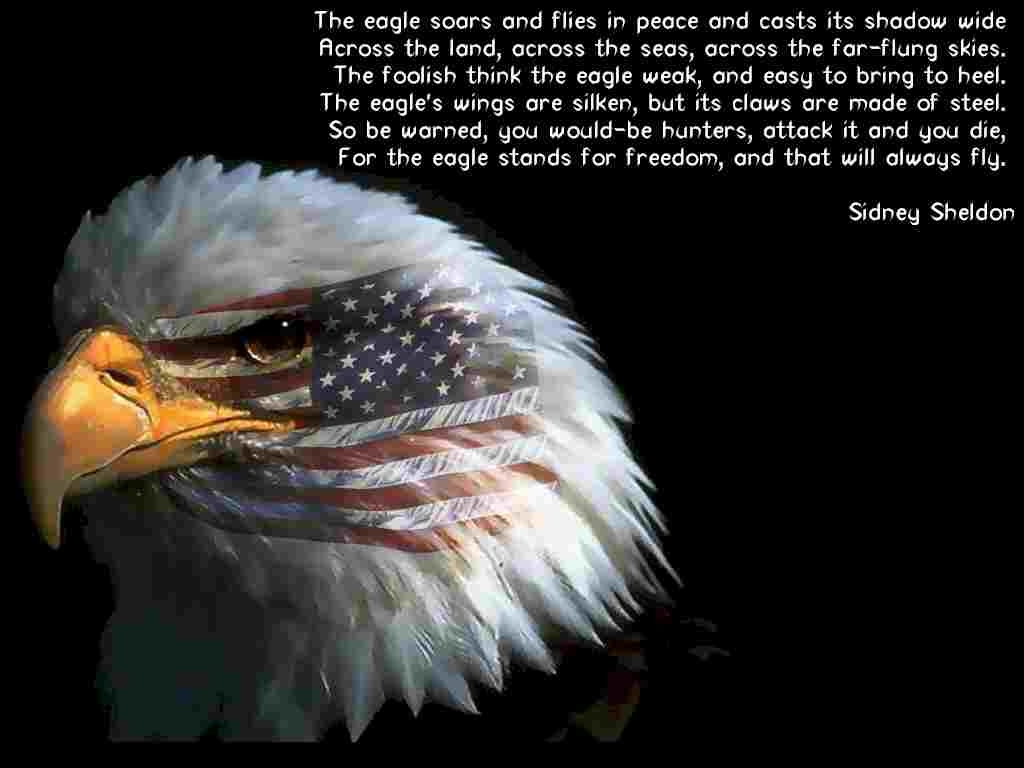
"The most recognised symbol for the US, after the Stars & Stripes, is the Eagle."

The following verse is taken from the Quran, the Islamic holy book:

For it is written that a son of Arabia would awaken a fearsome Eagle. The wrath of the Eagle would be felt throughout the lands of Allah and lo, while some of the people trembled in despair still more rejoiced: for the wrath of the Eagle cleansed the lands of Allah and there was peace.

To me that says that the Eagle is going to cleanse the lands of Allah, which would imply a victory for the Americans. The person who had sent me the e-mail could not understand what I meant when I pointed this out. You know what? I don’t really want that debunked but I guess it has to be.

Perhaps the Americans should have listened to Ben Franklin and adopted the turkey as their national symbol as an infinitely more useful bird.

COMMENT THREAD

A Eurosceptic paper?

Buried in the nether regions of The Daily Telegraph business section today is the most remarkable claim that "UK is now top dog in Brussels".

The story is penned by Edmund Conway who has previewed an as-yet unpublished report by the Europhile group "Business for New Europe" (BNE), comprised in the main of refugees from the now defunct Britain in Europe – itself an offshoot of the European Movement.

read more...

COMMENT THREAD

More grand but futile statements

It was only nine days ago that we wrote about grand but futile statements in relation to Darfur. Somewhat to our surprise, though, it seems Tony Blair does not read our blog, although perhaps he should. It would have saved him from making yet another er… grand but futile statement.

This one is in a letter to his 24 European Union "colleagues", telling them that he knows "…we are all determined to ensure that the international community does not fail to protect our fellow human beings facing slaughter," adding, "I am committed to do everything I can on this."

read more...

COMMENT THREAD

Sunday, September 17, 2006

A great day...


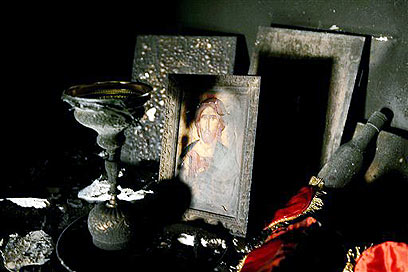
Picture of a damaged Greek Orthodox church in Tul Karem, on the West Bank, after a peaceful Palestinian protest.

Another great day for the religion of peace.

COMMENT THREAD

Another own goal

The closure of up to 60 hospital departments, planned by the government to enable it to meet the requirements of the EU's Working Time Directive, has been supported by the medical establishment, "as the only way to guarantee the highest standards of care for patients".

So says Jo Revill, health editor for The Observer today in a carefully spun article that effectively means the EU is causing the closure of key departments in hospitals throughout the country.

read more...

COMMENT THREAD

None so blind…

After my rant last Friday about the stupidity of Mary Ann Sieghart in The Times, for devoting her whole column to a complaint about the new seat belt law which comes into force tomorrow, while failing to mention that the law was implementing an EU directive, today it is the turn of The Sunday Telegraph to exhibit exactly the same level of stupidity.

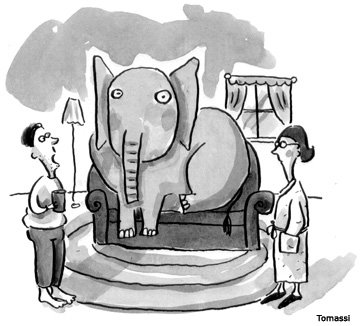
Even in their own terms, this is dismal hackery but, in their determination to avoid confronting the elephant in the room, these hacks are missing an even bigger story. Not only is the EU imposing "safety" laws of dubious value, it is also stopping the UK government from introducing much-needed road safety measures that would prevent thousands of accidents.

read more…

COMMENT THREAD

National identity

Chief Rabbi Sir Jonathan Sacks has told The Sunday Telegraph that "Britain must regain a pride in its identity".

Nice to see him catching up. You read it here first.

COMMENT THREAD

Putting it all together

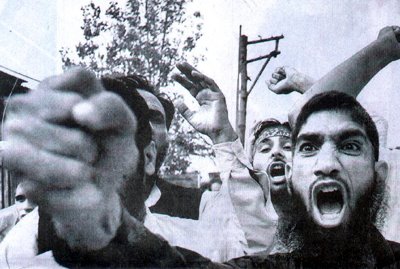
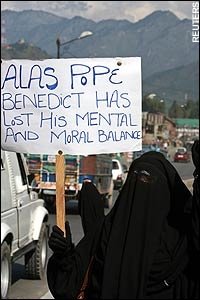
A Muslim demonstrating against the Pope's speechMore than anything else, the photograph tells you all… the face of Islam as it protests against the imagined slight from the Pope, heedless of the fact that no offence was intended or in fact given.

Now, we are told, the Pope has apologised although, as my colleague indicates, the words used hardly convey any regret. And nor should they.

In fact, the last thing the Pope should do is apologise – there has been far too much apologising of late. It is about time the Western world recognised that, when you are dealing with figures such as the one pictured above – face contorted with hate – you do not apologise.

You send them a signal that affirms your own rights and values. If that hatred then turns to violence which threatens our own wellbeing – as it has done – you respond first with counter-threats and then, if the violence does not end, you kill those responsible for it. This is the way it has always been. To pretend otherwise is to ignore history – and the consequences of submission.

read more…

COMMENT THREAD

Saturday, September 16, 2006

Is this an apology?

There seems to be an enormous amount of hot air being generated over the Pope’s lecture in Regensburg and the subsequent statement from the Vatican. Of course we saw all the usual demonstrations, effigy-burnings, threats to the Holy Father, demands for an apology, comparisons with Hitler and Mussolini (by a Turkish politician who did not precisely explain the basis of the comparison) and other suchlike charming displays of desire for peaceful dialogue.

Shamefully but not surprisingly the MSM joined in on the wrong side, chattering idiotically about the Pope’s lack of diplomacy or of media savvy. It did not seem to occur to any of these benighted journalists or the unnamed diplomatic sources that the ability to appeal to the so-called liberal media may not be high on the Pontiff’s list of priorities. Speaking the truth and calling for a revival of spiritual values, on the other hand, seem to be quite important to him.

Among other matters, he is insisting that a

“dialogue between Christians and Muslims "cannot be reduced to an optional extra," adding: "The lessons of the past must help us to avoid repeating the same mistakes. We must seek paths of reconciliation and learn to live with respect for each other's identity."”
And, of course, there can be only one response to this and to suggestions that some Islamists prefer to impose their ideas, if they can be called that, by violence: violent street demonstrations. You know the kind of language bullies use: “Don’t you dare to call me a bully or I shall beat the living daylights out of you.”

The question is, however, did the Pope apologize. I am not so sure. The Vatican statement insists that his words cannot be changed, though he holds to the view that Islam is to be respected as a religion of the Book and one that is, in many of its tenets, close to Christianity.

The ridiculous accusation that the quotation from Manuel II Paleologus somehow represents Benedict XVI’s own view is dismissed. Then comes the crucial paragraph:
“The Holy Father thus sincerely regrets that certain passages of his address could have sounded offensive to the sensitivities of the Muslim faithful, and should have been interpreted in a manner that in no way corresponds to his intentions. Indeed it was he who, before the religious fervor of Muslim believers, warned secularized Western culture to guard against "the contempt for God and the cynicism that considers mockery of the sacred to be an exercise of freedom."

In reiterating his respect and esteem for those who profess Islam, he hopes they will be helped to understand the correct meaning of his words so that, quickly surmounting this present uneasy moment, witness to the "Creator of heaven and earth, Who has spoken to men" may be reinforced, and collaboration may intensify "to promote together for the benefit of all mankind social justice and moral welfare, as well as peace and freedom" (Nostra Aetate no. 3).”
The Pope has, indeed, spoken of the dangers Western culture faces at the moment as it is his task to do. If only the Archbishop of Canterbury, head of another large international church, would make pronouncements of that kind instead of rabbiting on about “The Da Vinci Code” or, in more light-hearted moments, the war in Iraq.

But the famous “apology” places the onus on the Muslim faithful who are called upon to think a little more carefully about what the Pope has said. Those he did not read his speech, have obviously not bothered to read the full Vatican statement either.

COMMENT THREAD

A dialogue of reason

The most telling part of the Pope’s speech, which is causing so much outrage in (some) of the Muslim world, is the last part, the conclusion. Said the Pontiff:

The West has long been endangered by this aversion to the questions which underlie its rationality, and can only suffer great harm thereby. The courage to engage the whole breadth of reason, and not the denial of its grandeur - this is the programme with which a theology grounded in Biblical faith enters into the debates of our time. "Not to act reasonably, not to act with logos, is contrary to the nature of God", said Manuel II, according to his Christian understanding of God, in response to his Persian interlocutor. It is to this great logos, to this breadth of reason, that we invite our partners in the dialogue of cultures. To rediscover it constantly is the great task of the university.
And there we have it: "It is to this great logos, to this breadth of reason, that we invite our partners in the dialogue of cultures" … he is inviting a dialogue.

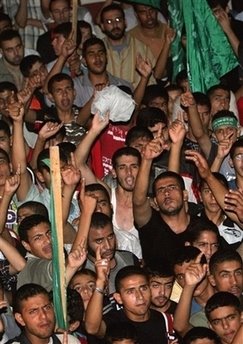
How many of the rioters, the effigy burners and protesters (such as the Palestinians pictured above, in Gaza) do you think have actually read the speech – the whole speech?

COMMENT THREAD

Friday, September 15, 2006

Death of a courageous journalist

This time from natural causes. The death of Oriana Fallaci was announced today. We have mentioned this astonishing and admirable lady before, one from whom our own mealy-mouthed journalists who used to complain because Alistair Campbell used bad words to them, could learn something.

Ms Fallaci had been a war correspondent and an abrasive and controversial journalist, whose interviews have become legendary. In the last two years she has found herself in serious trouble because she has dared to write and publish two books: “The Force of Reason” and “The Rage and the Pride”.

Briefly, they are angry, even enraged calls on the West to stand up for its principles and not to give in to the Islamist demands. Inevitably, she was attacked, not just by the usual suspects from the Islamic community (no doubt a few demonstrations were organized in countries as far away from Italy as possible) but, sadly, by others as well.

Environmental Republican describes the American left-wing attitude to this woman whose cardinal sin was speaking what she believed to be the truth, even if it did not agree with “liberal” ideology. (Quotation marks are needed, since that ideology has no relation whatsoever with genuine liberalism.)

Michelle Malkin has an excerpt from her essay on the London bombings. Here is the full text. In it she appeals directly to Pope Benedict XVI to lead the fight for Western values. Whether the Pope listened to her or made up his mind separately, we know that he has taken up that challenge. And guess what. There were demonstrations denouncing his Regensburg lecture in Kashmir and other places where it is unlikely they have ever heard of the place or the man.

The Left in Europe hated her as well. But the saddest part of the story is the caving in of the Italian judicial system. Fallaci was found guilty of insulting Islam and sentenced to two years’ imprisonment.

She had to stay in the United States, though I note that her death seems to have occurred in a Florence hospital. Perhaps, she was allowed home to die. Alas, we shall not see her like again.

COMMENT THREAD

Why don't they just belt up?

That is the headline awarded to pontificator extraordinaire, Mary Ann Sieghart, in The Times today, who is deploring the new seat belt law due to come into force on Monday. This requires that most children up to the age of 10 (and shorter children of 11) must be strapped into special child seats or made to sit on booster cushions, on pain of a £50 pound penalty.

Sieghart makes some good points, not least the inconvenience caused when children are occasional passengers and there are no booster seats available.

Yet, she writes, "I don't suppose ministers thought twice before enacting it (the law). To them, it is a trivial piece of legislation, nothing like as important as, say, welfare reform or NHS governance. What they fail to realise is that this sort of law has a far greater — and more annoying — impact on most people's lives than either of the above."

And here we go again… these dismal, opinionated little hacks, so full of themselves that their brains have long been empty. Mary Ann, dear girl, this law is implementing an EU directive, specifically Directive 2003/20/EC. It was passed under qualified majority voting – a system where Britain has less than 13 percent of the vote (going down) and can be over-ruled. Thus, ministers had no choice about it – because it was EU law, they had to implement it.

But such intelligence is not for a dim little hackette like Sieghart. She launches off into demolishing the safety case for the new law – fair enough – but then concludes that, "This argument is too sophisticated for ministers. So the rest of us will suffer…."

No, you vain, stupid woman. The ministers were well aware of the arguments, and Dr Ladyman, the current transport minister probably has twice the brains you have. But he had no choice. I say again, it is EU law and must be obeyed.

At least Tom Utley knew it and was able to write a stonking piece last March, putting the blame exactly where it belongs. So, lady, if you can't get it right, why don't you just belt up?

COMMENT THREAD

Little things…

Turning away from great events and life and death matters, for the moment, we turn to er… life and death matters – and a particularly egregious demonstration of how Britain (and the rest of the 25 member states of the European Union) are run by an alien government – a matter which, potentially, has massive international implications.

To put this in context, few people will forget the scourge of BSE – or "mad cow disease" as it became popularly known – a disease which made its official appearance first in Britain and has since been detected in countries throughout the world.

In the initial stages of the disease – as in any animal disease, with or without human implications – early detection is vital, and control authorities rely on farmers and owners to report any ailing animals (or birds). To facilitate early discovery, it is common and necessary to pay compensation to the owners, to overcome the disincentive of a financial penalty arising from making reports.

At the early stages of what turned out to be a major epidemic, however, our government decided only to pay 50 percent compensation for cattle in which BSE was detected (which invariably followed a report from a farmer). As a result, there was a national outcry, with enormous media pressure for 100 percent compensation, for fear the disease would be concealed.

The then government quickly caved into the pressure and full compensation was paid, even in the 2001 Foot and Mouth epidemic, reinforcing the principle that such payments were an essential part of any disease control programme.

But, from 1 January 2007, all that is set to change – not through any desire or action on the part of the UK government, or via a process over which the government has any control at all.

The instrument of change is to be the EU commission which, hitherto has permitted the payment of compensation to agricultural enterprises through what is called a "block exemption" to state aid rules – without which such compensation would be considered state aid and thus illegal under EU rules.

But the sole arbiter of what is and what is not state aid is the commission, which is acting under the mandate of the Treaties and needs no approval or authorisation from member states to change the detailed rules as it thinks fit.

Therein lies a bombshell. Issued on 8 September with a closing date of 17 September was a "consultation paper" from our own ministry concerned with agricultural affairs, known as the Department of Environment, Food and Rural Affairs (Defra) telling us that the commission intends to change the rules. This, of course, is "consultation" in name only, as no changes can or will be made to the document under consultation.

Set out in the commission document is a move away from universal full compensation that limits aid (i.e., compensation) to small and medium-sized enterprises (SMEs), and then to the 75 percent of the market value of animals slaughtered (80 percent in less favoured areas (LFAs)), plus an overall limit for animals slaughtered to outbreaks of disease which result in a 30 percent production loss on the holding concerned.

In the case of BSE, where losses were often confined to small numbers of animals (typically in ones or twos) in often quite large herds, this would have meant that no compensation at all would have been paid to the majority of farmers, with the likelihood that detection of the full extent of the epidemic might well have been delayed.

And, since we know not what might lie in the future, waiting in the wings is perhaps another disease or similar epidemiological characteristics, for which no compensation will be paid and which farmers, therefore, will be reluctant to report.

Nevertheless, since this is being put in place by a Commission Regulation, there will be no negotiations or vote on these issues. Says Defra in its consultation document, "the Commission will decide having listened to the views of the Member States and those with an interest."

What is stunning members of the farming communities (and, we are told, Defra) is the suddenness with which this issue has emerged and the speed with which it is to be implemented – and the fact that no one is able to block it. The commission is not in any way required to take account of the views of member states.

The UK, also, is particularly disadvantaged, in that its average farm size is seven times that of the community average, which means that fewer farms will in any event qualify for compensation that their continental neighbours will be able to pay.

In international terms, though, it is in the interests of every nation in the world that diseases are detected quickly and effective action is taken before they spread not least because – as is so often the case – disease knows no boundaries.

With one fell swoop, therefore, the commission is putting at risk the whole world. It is also abandoning a system that has been in place in the UK for several centuries - before most EU member states were countries - which is well founded, relatively equitable (not that all farmers would agree) and which gives the authorities a fighting chance of containing disease epidemics.

But our government in Brussels has spoken. No longer in vast areas of public policy and lawmaking are we an independent nation and, in this case as with so many others, our job is but to obey – like it or not.

More details on our partner site and Farmers Guardian today.

COMMENT THREAD

Thursday, September 14, 2006

Well, they've buggered that one up

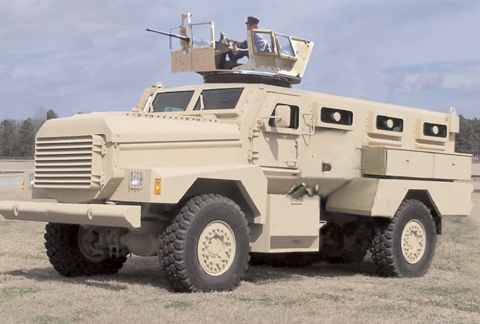
The new Cougar being put though its paces on Salisbury PlainRevealed in The Daily Telegraph today is the shape of the new Cougar, 100 versions of which the MoD is purchasing to "relieve the hard-pressed snatch Land Rovers in Iraq and Afghanistan."

Curiously, the paper refers to the vehicle being a six-seater, where the original six-wheeled version, as ordered for the Iraqi Army, is intended to carry 14 troops.

From previous information, we understood that the vehicle was to have additional armour and now we see from the photograph what the MoD had in mind – great slabs of side armour, presumably to protect against explosively formed projectiles (and possibly, RPG-7s).

Compared with the original design (right), therefore, the armoured side windows to the troop compartment have gone, thus depriving the occupants of that all-important asset, situational awareness – the ability to see what is going on outside the vehicle and to assess the tactical situation, instead of being forced to dismount blind.

Additionally, the windows had gun ports, from which it was possible to fight from protected positions within the vehicle. This will not be possible with this version.

Further, the crucial feature of the basic design is the v-shaped hull, which deflects blast sideways and away from the vehicle – an attribute which contributes greatly to its survivability. This accounts for the fact for that, since their introduction by the US Forces, they have taken over 1000 IED "hits" without a single loss of life.

But, with the addition by the MoD of the new side armour which extends below the top line of the "v", a blast trap is created which will contain rather than deflect a bomb detonated under the vehicle. A large enough bomb will be able to flip the vehicle on its side, leaving the crew vulnerable even if they do survive the initial blast.

Then, unlike the US patrol vehicles, there is no top turret. From the look of the wire guards (the projections from the front of the cab) the MoD intends to have "top guards" standing unprotected in an aperture in the roof. Thus, for all the protection given by the vehicle, one or two crew members will still be highly exposed.

Basically, there is always a fine line to be drawn between additional armour, situational awareness and the fighting capability (with troop gun ports). Given that the unmodified vehicle has an unbroken record for protecting its occupants, it seems to me that the MoD has crossed the line.

Then, on reflection, you would expect the MoD to take a basically sound design and completely bugger it up. The civil servants have to justify their existence somehow.

COMMENT THREAD

Targets?

If nothing else, the last-minute intervention of the Polish government, in volunteering an additional 900 troops for deployment in Afghanistan, has temporarily saved the reputation of Nato. Failure to have fielded any additional forces would, as SecGen Jaap de Hoop Scheffer made clear, have called into question the whole future of Nato as a viable military alliance.

One cannot help thinking, in this context, that this may well one of the factors that have been behind the reluctance of European governments to contribute troops. Expediting the demise of Nato has perhaps influenced members such as France, Italy and Germany, which are particularly keen to establish an autonomous military capability under the EU banner.

That it also puts the UK "on the rack" might also be seen as a beneficial outcome – a coded warning to future British governments that unless military action is planned within the EU framework, the support of the "colleagues" cannot be assured.

However, while Nato may live to see another day – but probably not many more – the Polish announcement does not offer immediate relief. The troops are not scheduled to arrive in theatre until February next year, and then they are to be deployed in the east rather than the south where Gen. Richards has called urgently for a mobile reserve.

In effect, the offering is too late to affect the immediate outcome of the current battles and will be going to the wrong area. Furthermore, winter will be here. This will force a slackening of campaigning and also give the Taliban an opportunity to regroup.

Then, without in any way denigrating the courage and determination of individual soldiers, the Polish Army is not yet amongst the most capable in the world rankings.

As an amusing but relevant digression, a very good friend of mine – now sadly deceased – was a military aviation fanatic and in the top world rankings of plastic aero-modelling. His models were so good that you could almost have been looking at the real thing. In recognition of his reputation, he was once invited to judge an international competition of military vehicle modelling. To the dismay of the organisers (and competitors) as he walked into the hall where hundreds of models awaited his inspection, his eyes lit up and he pronounced loudly and firmly, "Ah! Targets!"

Certainly, this was the fate of many of the Soviet units which were despatched to Afghanistan, some with equipment which dated from 1946 (the picture above right shows BTR152 APCs which were first introduced at that time). It took time for the Soviet tactics to evolve and, where they did achieve military success, it was with the combination of special troops (Spetznatz), attack helicopters – mainly the Mi 24 Hind and, latterly, the Su-25 "Frogfoot" (below left), the Soviet equivalent of the US A-10.

While the Soviets were eventually forced to withdraw in 1989, theirs was not entirely a military defeat but, like Vietnam for the Americans, was brought about by failures on the political front, both domestically and internationally. It would this be a brave – and stupid – man that ignored the Soviet military experience in Afghanistan, and failed to learn from the successes they did have.

But that is precisely what the western powers are doing. The Soviet campaign underlined the role of airlift for re-supply, the vital need for attack helicopters and all-weather, fixed wing ground attack aircraft and for high levels of mobility and firepower. These are precisely the assets which are most lacking in the current campaign.

Without this type of modern equipment necessary to fight a counterinsurgency, the fear is that the Polish forces may prove of little value and could instead be a liability, as indeed are the other forces – and especially the British – which simply do not have the equipment to do the job.

COMMENT THREAD

The words motes and beams spring to mind

There seems to be a good deal of excitement, especially on the American blogs, about Tony Blair's "withering attack on Thursday on what he called "mad anti-Americanism" among European politicians".

All well and good, say we. It is, for some reason, an accepted wisdom that while Europeans are anti-American, the British are not. This has long ago ceased to be true. There is a great deal of anti-Americanism among politicians and not just those on the left; there is a great deal of ignorant and bigoted anti-Americanism in the media, again, not just on the left; and there is a great deal of ignorant and bigoted anti-Americanism among the people of this country in general, despite the wholesale adoption of many American words, customs and practices.

I have heard too many people in this country, on all positions of the political spectrum, who seem convinced that every single American is stupider than every single Briton and this despite the obvious evidence of far more serious publications per head of population, far better university departments and research (not all, naturally) and greater achievements in many fields, as proven by my colleague's postings on defence and our general discussions of the situation in Iraq.

So, Mr Blair, if you are reading this blog. May we respectfully suggest that you contemplate Chapter 7, Verse 5 in the Gospel according to St Matthew:
"Thou hypocrite, cast out first the beam out of thine own eye; and then shalt thou see clearly to cast out the mote out of thy brother's eye."
Here endeth the Lesson.

Nothing seems to change

The Non-Aligned Movement started in the 1950s, supposedly as a third way between the Communist camp, led by the Soviet Union and the Western camp, led by the United States. As the leading actors of this Movement were Pandit Nehru, the openly fellow-travelling Prime Minister of India (the country is well rid of him and, one hopes, his entire family) and Tito, one can seriously doubt its non-aligned nature.

Democracy Project refers to it, quite correctly, “as a lever for aid from each” but it was also a political weapon frequently used by the USSR in the United Nations and the burgeoning trans-national movement.

Things went slightly wrong over Afghanistan. With a large proportion of the NAM countries being Muslim they found it difficult to go on being pro-Soviet in the face of the blatant aggression. (Incidentally, it is worth emphasising that for several decades before the 1979, or to be quite precise, before growing Soviet interference Afghanistan was not a problem in international terms and was not particularly oppressive. The problems the world has had with that country and is still facing have grown out of those events.)

The results of the Soviet invasion of Afghanistan were far-reaching, as they contributed to the collapse of the Soviet system and the withdrawal of Soviet funds from various dictators and unpleasant vaguely Communist or Marxist parties. For a while there was some toing and froing and it even began to look like some of the Third World countries might slowly move towards some form of democracy and openness, politically and economically.

The jury is still out on some of the countries (not India, as it happens, which is doing remarkably well at the moment but, then, it is an Anglospheric country) but the Non-Aligned Movement is still with us and still bellyaching.

It can no longer play one superpower against each other in order to get aid, though the European Union would love to be in the position the Soviet Union was. (As the Russians say, “their guts are too thin”.)

So, instead, the NAM has readjusted its position to being solely, rather than just primarily, anti-American, claiming the virtues of multilateralism and anti-unipolarism for themselves.

118 of these countries (all members of the wondrous UN) are meeting in Cuba, that well-known (at least, to the BBC) haven of peace, freedom and brotherhood. Among those present are Mahmoud Ahmadinejad of Iran and Hugo Chávez of Venezuela, both of whom, as we know are then heading to New York City for the opening of the UN General Assembly.

Who else is there?
“Among some 50 leaders attending the heads of state portion of the Havana summit will be some of the world's most controversial political figures, including Iranian President Mahmoud Ahmadinejad, Venezuela's Chavez, President Robert Mugabe of Zimbabwe, Sudan's Omar al-Bashir and Syrian President Bashar al-Assad. North Korea will be represented by Kim Jong-il's deputy, Kim Yong-nam. Whether ailing Cuban President Fidel Castro will attend remains unclear.”
I am not sure “controversial” is quite the word I would use but Democracy Project is quoting CNS Report.

Here is a summary of the aims of this organization:
“Among the summit's purposes, it says, is "to condemn all manifestations of unilateralism and actions marked by attempts at hegemonic domination."

Principles guiding the NAM include "non-interference" in other states' affairs, "abstention from ... exerting pressure or coercion on other countries" and "abstention from resorting to the threat or use of force."

The document calls on NAM members to strengthen "multilateralism" and to work together at the U.N. and other international agencies on issues of priority to the movement.

These priorities, as listed, include "the rejection of unilateralism and the attempt to impose a unipolar world," "the condemnation and rejection of the imposition of coercive unilateral measures" and "the support of the Palestinian cause."

Apart from the statement on the "present international situation," NAM representatives also will adopt other statements, including a final summit declaration which - according to its draft - expresses support for Venezuela's populist left-wing president, Hugo Chavez, and concern about "aggressive" U.S. policies against his government.”
Good to know that when Chávez interferes in other countries’ affairs it is not interference. In fact, one would guess it is brotherly assistance and support.

It seems that the draft declaration on terrorism, which condemns Israel but does not even mention Hezbollah or, one assumes, any other terrorist organization has upset even Amnesty International, an organization not given to fair-mindedness or, even, sensible comments. In fact, the sooner Amnesty International gets back to what it was set up to do, that is campaigning for prisoners of conscience (just a few in Cuba, Iran and other countries we can think of) the better for all concerned, especially the unhappy staff of that organization.

On the other hand, if this meeting managed to provoke Amnesty International into making a more or less rational statement about the situation in Lebanon and northern Israel, some good may have been achieved, though inadvertently.

Anne Bayefsky’s comment in the New York Sun is to the point:
“Together, these nations represent the majority of the 132 developing states and the majority of 192 U.N. members. They are unified not by a desire to democratize, or even to develop, since many are quite content with kingdoms and with servitude in their own backyards. They are a team because they are adroit at U.N. politics, and they have learned that the cartel is good for business. This holds true particularly for the largest single bloc amongst them – the 56-member Organization of the Islamic Conference.”
And no, in case you are wondering, their various ambassadors to the UN and other minions will not leave the despised flesh-pots of Manhattan. They will never try to relocate the UN headquarters to one of those non-aligned countries.

Of course, what really worries the richer Non-Aligned Countries (none of whose population is even remotely well-off) is the possible fluctuation in oil prices and what that will mean to the income of those at the top of those countries. Words are cheap, fuel is not.

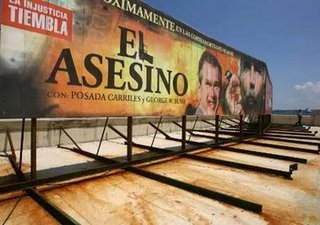
Just to remind us of the historic past of the Non-Aligned Movement, huge posters have appeared in Cuba, “advertising”:
“Injustice trembles, Coming soon to a court in north America: 'The murderer' starring Posada Carriles and George W. Bush'”
Now Posada Carriles is really a controversial character. A leading anti-Castro and anti-Communist activist he has been accused of numerous terrorist actions by the Cuban and Venezuelan governments. Perhaps Amnesty International could investigate the truth of those accusations.

Even the bureaucrats are complaining…

…about bureaucracy.

That is the plaint from none other than EU commissioner Günter Verheugen, the so-called "European enterprise commissioner". And my heart bleeds for him – or at least it would if I could stop sniggering long enough.

His sorry tale of woe is recorded in Eupolitix where he at one calls for the EU to "repatriate researchers" and then declares that "less research bureaucracy is needed" if that is to happen.

I toyed with a career in academia once, after I had completed my PhD and was even offered a research/teaching post. But I had already spent years alongside my supervisor – a gifted and imaginative scientist – watching him spend most of his days processing forms and more forms, and attending meetings about processing forms, all to attract the meagre research funding that would keep his department functioning – and most often failing. And the bureaucracy – mind-sapping enough normally – was never more complex than when EU funding was involved.

To be a senior academic these days is to be a bureaucrat and it is no wonder that the people who are really interested in research for its own sake steer clear of the academic scene. They either go into industry or – what is worrying Verhuegen – depart for more liberal (and better paid) climes, such as the United States.

We see this reflected in the starkness of the figures. Europe produces more PhD science graduates than the US but has fewer people working in research than America or Japan – five per 1000 compared to nine per 1000 in the US and ten in Japan.

And there is a real economic penalty, as Verheugen readily appreciates. "This is an issue we have to get to grips with," he says. "We have no objections if people who did their training in Europe go elsewhere. But we have to pay the costs, what is learned by these people becomes acquired by others."

The insoluble handicap for Verheugen though is he is a bureaucrat, trapped in a nexus of the biggest bureaucracy in the world. And it is to that bureaucracy that he is turning for ideas, asking for proposals to be submitted for discussion at an informal European Council on 20 October.

Nothing he will be offered will do anything to solve the problem and anything that might solve the problem he could not accept. Thus he is doomed, just as are the attempts at improving EU communications.

That is the final hope for us all – bureaucracies become so cumbersome that they cease to be able to function and, being inherently incapable of reform, they must eventually self-destruct. Out problem is the amount of damage they do on the way, and the mess they leave behind them.

COMMENT THREAD

Wednesday, September 13, 2006

Research?

There has been much alarm in some sections of the eurosceptic community over an alleged EU proposal to transfer issues of criminal law and police co-operation from the third pillar of the EU treaties into the first pillar. This has been fuelled by an Open Europe "research" paper which claims:

At the European Council on 15 June, EU leaders instructed the EU Commission to draw up proposals to transfer This would abolish the national veto and would greatly increase the powers of both the EU Commission and European Court of Justice (ECJ) over a sensitive area of national policy. It would give the Commission sole right to propose laws in this area. So the Commission would actually gain even more powers over criminal law than it would have had under the EU Constitution (where the right of initiative was shared).
Oddly, for a paper which is described as research, there is no citation for the European Council conclusions and there is no direct quotation from them. Reference to the document, however, elicits the following declaration:

In the context of the review of the Hague Programme, the European Council calls upon the incoming Finnish Presidency to explore, in close collaboration with the Commission, the possibilities of improving decision-making and action in the area of Freedom, Security and Justice on the basis of existing treaties.
What stands out here is the Council has not "instructed" the commission to do anything, but "calls upon" the Finnish presidency, "in close collaboration with the Commission". Further, one notes the phrase: "on the basis of existing treaties".

And Open Europe calls its work "research"?

COMMENT THREAD

A failure to communicate

Argue all you like – the decision of this blog is final (until my co-editor weighs in). The most memorable line in any film, for all time, comes in that fabulous scene in Cool Hand Luke, when Luke is returned to the prison after an abortive escape attempt, to be confronted with the "Captain" – mirror glasses and all – who declares in that wonderfully laconic drawl, "What we've got here is … failure to communicate".

Anyhow, it is precisely that "failure to communicate" which is still troubling the "colleagues" in the European Union, to which effect the EU parliament has commissioned a series of reports from its favourite think-tank, the Centre for European Policy Studies.

Theses reports, according to the summary in Euractiv complain that there are still weaknesses in the commission's strategy which means that the EU as a whole is still failing to "reconnect to its citizens".

One cannot avoid the comment - which we've no doubt made before - that an organisation that is trying to "reconnect" when it has never connected in the first place hasn't even got past first base.

Predictably, though, the CEPS studies find a "lack of resources" and "inflexible internal rules for financial control" as the main culprits for a failing communication strategy.

Inevitably, a bureaucratic organisation will always complain of lack of resources – their standard response is always to throw more money (other peoples' money) at a problem, so it is the problem of "inflexible internal rules" that is especially interesting.

According to a high-level official this is because the executive "still has a bureaucratic culture of non-communication where the making of legislation is more important than the communication with citizens". Apparently, the current financing rules are too strict and prevent the commission handling the "mostly small amounts of money for communication measures more flexibly".

In other words, they can handle the big, legalistic projects that take months and years to plan and set up but, when it comes to acting quickly and flexibly, in response to rapidly changing circumstances, the rules and procedures are slowing the corporate monster down.

CEPS is arguing that the system should be decentralised, giving commission representations in the member states the necessary resources to do the communications job locally. It then spoils it all by suggesting that "more common standards" are needed – i.e., more centralisation.

In a way, this is all very encouraging. What the CEPS is advocating are the very two things a vast, centralised bureaucracy cannot do – acting locally and flexibly. And, if those two elements are the key to success, as the CEPS seems to think they are, then they are effectively (albeit unwittingly) writing off any chances of an EU communications strategy ever being effective.

On the other hand, for all the poverty of the eurosceptic movement, it is certainly decentralised and it can be highly flexible, not least because there is no central direction. In the final analysis, that may be why we are going to win.

COMMENT THREAD

Someone seems impressed by Western negotiations with Iran

The New York Post reports that our good friend, Iranian President Mahmoud Ahmadinejad has been continuing his campaign to promote freedom and democracy in Iran.

Two of the remaining opposition newspapers have been closed down for criticizing (rather mildly) the government. Anyone who thought that it is the job of opposition newspapers to criticize the government needs to be sent to a re-education camp.
“Iran's most prominent reformist daily, Shargh, or East, ran a cartoon Thursday depicting a horse and donkey facing each other on a chess board. The donkey - a symbol of ignorance in Iran - has his mouth open and light around him.

Iranian judiciary officials apparently took the donkey to represent Iran in nuclear negotiations with the West, journalists said.

Ahmadinejad reportedly said he felt there was a light around him, and that world leaders focused unblinkingly on him when he addressed the U.N. General Assembly last year.”
I am a little puzzled by the fact that it is Iran that is portrayed as the donkey in the nuclear negotiations with the West but the newspaper has its own battles to fight. I recall an evening spent with Russian friends in Moscow in 1990, a few months before the Soviet Union bade the world farewell. We had a discussion about newspapers and what Western ones might have written about the Soviet Union. In response to some question I said airily: “Oh well, it’s only newspapers. You can’t really believe them.” There was a shocked silence round the table. Eventually, somebody asked rather timorously: “What not yours either?”

The link to the story came from AllahPundit, who, in the same posting compares the large Iranian competition for the best anti-Semitic cartoon to the Israeli competition run in response to it. I have to agree with AllahPundit – the Israeli cartoons are much funnier. Still you can judge them for yourself.

COMMENT THREAD

European Union backtracks on promises

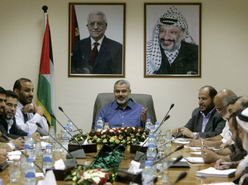
The creation of a Palestinian government through an agreement between Fatah and Hamas has encouraged the European Union to start backtracking on their assurances that they will not lift the economic embargo (except for a large amount of money sent in supposedly for humanitarian purposes that allow the PA to use other funds to pay their armed militias) until Hamas agrees to the “ending violence, recognizing Israel and accepting previous accords between Israel and the Palestinians”.

Far from insisting on the three conditions, according to Ahmed Yusef, political adviser to Palestinian Prime Minister Ismail Haniyeh, an acceptance of the Hamas stand on all those issues – i.e. a complete refusal – will now be known as “a more balanced stance regarding the Arab-Israeli conflict”.

To be fair, the information comes from the new Palestinian government that has not had time to achieve anything very much or, even, make its presence felt in the Palestinian territories but we have not had a denial from the European Union.

The argument is that the new government is not a Hamas one but a coalition between the two main political groupings. So, that’s all right. Furthermor, as Ha’aretz quotes Ahmed Yusef saying:
“Recognition and other political issues will be part of the negotiations Abbas will hold. We have granted him full legitimacy to negotiate on behalf of the entire Palestinian people. If he can achieve a diplomatic solution, his plan will be presented before the Palestinian institutions, such as the government and the parliament, and they will need to authorize his proposal. The Arab initiative and the previous UN resolutions will be part of the government's future political agenda.”
Which means precisely nothing. The Arab initiative is the Saudi plan for Israel to withdraw to the 1967 borders (which, of course, did not involve the existence of a Palestinian state, Gaza being then in Egypt and the West Bank in Jordan).

The purpose is greater pressure on Israel, though, clearly no pressure is needed on such states as Syria or Iran or such organizations as Hamas and Hezbollah.
“We will put forth a broad political program that will result in greater European support for the Palestinians, and that will create more diplomatic pressure on Israel, in the hope that this will soon end Israeli occupation. A new diplomatic initiative is needed to bring about change and a solution through peaceful means. The initiative must include greater European, international and Arab involvement than the failed initiatives of the past.”
Can’t wait to see the broad political programme. Will it include democracy and freedom of the press in the Palestinian territories as it exists in Israel? In the meantime, let us remember that, according to Hamas, all of Israel’s territory is regarded as occupied. By supporting the new Palestinian government’s point of view the EU accepts that reading of the Middle Eastern situation.

COMMENT THREAD

The king minnow

It is not only highly fashionable to believe the worst of politicians but experience also tells us caution is the best policy – the oft-quoted jibe about knowing when a politician is lying (when he/she moves their lips) being more true than most can imagine.

Less obvious are the legions of politicians who are quite frankly stupid – without the wit to hold more than one idea in their heads at one time. These gravitate naturally to political parties, which require of their members only that they hold the "right" idea and nothing else.

Most of these have devised stratagems to conceal their stupidity from their voting publics – and even themselves – although there was one Member of Parliament in Yorkshire (the UK equivalent of Texas, without the charm) who positively paraded his stupidity, declaring that there were many stupid people and they had a right to representation in parliament. (I guess he wasn't that stupid – holding his seat for over forty years in celebrated idleness before retiring on a handsome state pension.)

However, if the stupid are allowed their representation, there is one larger and more strident group that is not allowed that luxury. That group is the eurosceptics – a band of brothers (and sisters) who have that weird idea that, to be an independent, sovereign state, you actually need your own elected government, in your own country, and should not hand over your law-making powers to a bunch of unelected apparatchiks in a foreign country.

So far has our ruling elite degenerated in a country that many outsiders still believe is a democracy that, in 1992 or thereabouts, when a group of dedicated patriots decided to form their own political party to take their case to the people, their message was treated as heresy.

Thus, a party by the name of the United Kingdom Independence Party, seeking to regain that independence which too many people do not even realise we have lost, has been ignored, mocked, ridiculed, slandered and generally insulted – but largely ignored.

The inevitable result is that, outside this country of ours, very few people have even heard of UKIP, as it is more generally known, much less its new leader, elected yesterday by 45 percent of its members who bothered to send in their voting slips, a stunningly unimpressive 3,329 people.

That leader goes by the name of Nigel Farage, a member of the EU parliament since the 1999 elections and leader of an equally unimpressive group of MEPs totalling ten, including himself, the Party having lost two since twelve were elected in the ground-breaking 2004 Euro-elections.

Fortunately, Mr Farage presents a respectable and genial face to the public – although his private life is often less so. His lack of political acumen and intellectual ability barely shows alongside his lacklustre colleagues, which enabled him to crawl rather than storm to victory yesterday.

Also fortunately, the deliberate determination of the media and the political establishment to ignore UKIP reflects in the almost total lack of publicity the Party gains, which means that very few of the voting public realise how dire and uninteresting it really is, and how little it has to offer.

Fortified by that ignorance, a significant number (not large, even by UK standards, but certainly significant) are therefore prepared to vote for it, knowing the one thing they need to know – that it is the only political party dedicated to securing British withdrawal from the European Union.

At the last general election, that amounted to 618,898 people or 2.3 percent of the popular vote – too widely spread to gain a representative in parliament but enough to influence the outcome in as many as 30 seats.

Such is the growing disillusionment with the current party system, however, that more and more people are prepared to ditch their traditional party loyalties and vote for the minnows, of which UKIP is one.

Provided Mr Farage can keep up his geniality in public and the media continues to ignore his party, such is the public mood here that, come the next general election - which could be in two or three years time - UKIP could do even better than it did last time.

This will not be reflected in any seats gained but, with the closeness of the two main parties, Labour and Conservative, the former gaining 9,556,183 and the latter 8,772,598 votes in 2005, it could act as king maker in enough seats to decide the overall outcome of the election.

UKIP members themselves are scarcely aware of their own power in this respect and even electoral pundits who make their forecasts about the state of the parties rarely take it into account - not least because their computer models cannot cope with the complexity. But it is the likes of UKIP, the so-called "extreme" right-wing party, the BNP, plus a myriad of independents and smaller parties which are subtly changing the nature of British politics.

With Mr Farage at the helm of UKIP, the day may now be closer when the political giants are brought down by the minnows. And the immensely enjoyable thing about that will be the media which, having largely ignored the Party all these years, will be the last to realise what is happening.

COMMENT THREAD
Tuesday, September 12, 2006

A little more attention would go a long way

Most of our readers know that I am seriously uninterested in toys. Any kind of toys, not those with wings or those with wheels. I am, however, aware of the political aspects of defence and, even, of toys. So, I want to call attention to Professor Jeremy Black’s latest publication “The Dotted Red Line”, subtitled “Britain’s Defence Policy in the Modern World”.

Professor Black is an eminent historian who seems to be able to publish more than any person alive. There are big books, small books, essays, papers and articles as well as many reviews on The Social Affairs Unit blog. In fact, this book was published by the SAU earlier this year as a sort of companion volume to last year’s “The European Question and the National Interest”.

We are not simply talking about an eminent historian but one who is concerned with the sort of ideas that we in our own humble way (do stop sniggering, there) try to analyze on this blog. Furthermore, Professor Black exhibits the most profound scepticism about the European Union and, indeed, transnational organizations. Unfortunately, his scepticism, also well-merited about Tony Blair’s policies overcomes the others.

The problem with these short volumes is just that: they are short and try to pack in an enormous amount of information and discussion. One comes away from reading them feeling absolutely breathless and, I am sad to say, somewhat disappointed. If people like Professor Jeremy Black cannot get it straight in their minds, what hope is there for the rest of the country?

“The Dotted Red Line” follows the pattern of the previous book, with a chapter on history, the immediate past or the ending of the Cold War, the present situation and future scenarios. It is with the last one that I had problems with.

Well, to be honest, one always has problems with future scenarios, particularly at the end of a book that has shown all past future scenarios as being completely erroneous. The problems with Professor Black’s analysis that, although he does appreciate that the EU is intending to become a political union, that is, a state, he seems to ignore the fact of defence integration as being part of it.

Thus, he talks a great deal about procurement and whether Britain should have closer links with the United States in this respect or the European Union, coming to the conclusion that the future for British defence policies should concentrate on
“… strategic roles that are framed without being directed by the exigencies of particular alliance partners. This latter comment applies to both the EU and the USA. The British military needs to cooperate with both by drawing on a force package which is strong in particular roles that build on national expertise and needs. Commerce protection is an obvious example. In contrast, whatever the future requirements of allies, there is no need for a large-scale tank force capability, or for a large-scale aerial interception equivalent.”
I shall leave the question of “large-scale tank force capability” to one side as my colleague has discussed it already and will, no doubt, do so again. It is not unreasonable to urge future British governments to try to influence whatever defence alliances this country might be part of, with a view to British interests (not, I fear, properly defined in this book). But the whole argument would be more interesting and more acceptable if Professor Black made it clear that the EU is not simply another alliance.

As David Cameron in his speech, so Professor Black in his book: neither seems to grasp that the EU’s defence policy involves total integration. We cannot be part of that and America’s allies (or part of the Anglosphere, a possibility Black does not discuss) at the same time.

COMMENT THREAD

The legacy of Mr Heseltine

Heseltine as defence minister, 1984 - He is with Lt Gen Martin Farndale and Dr Worner.  The picture was taken on or around the 21 Sep 1984 on Exercise Lionheart, one of the last very large West German cold war exercises.This is a defence posting, and one almost feels the need to apologise for putting up yet another one. However, that is the way the cookie crumbles. This one has wider implications than just defence – posts on other subjects will follow.

Something of the debate about defence spending that should be happening in the UK is beginning to emerge in Germany, where the German Armed Forces have announced ten "mission-oriented procurement and modernisation programmes" worth a total of €5.5 billion (just short of £4 billion).

While the programmes await parliamentary approval, critics have already piled in, saying the Army needs more protected vehicles than have been called for in the procurement plans.

The Dingo 2 mine protected vehicleNot least, it has emerged that, while defence minister Franz-Joseph Jung has issued orders that German ISAF forces in Afghanistan should to conduct patrols only in protected vehicles, this order cannot be obeyed. Despite the deployment of mine-protected Dingos, and the decision to buy more, there are not enough to go round. Thus, most of the troops must ride in unprotected “Wolfs” – the Mercedes Benz equivalent of the Land Rover.

While the Army goes begging, however, the big winner is the Navy which gets €3.18 billion, mainly for new frigates and submarines. One of the key items of expenditure, though, is a Luftwaffe programme worth €1.1 billion which includes "Eurofighter Typhoon aircraft role adaptation, integrated logistics support for role adaptation, adjustment, retrofitting and role equipment". This will cost a cool €540 million.

This has had retired Lt. Gen. Manfred Dietrich, president of the German Army Association, fuming. He says that "although the Eurofighter is an important and necessary asset in the German Armed Forces, one cannot draw a requirement of 180 aircraft based on today's missions conducted by the Bundeswehr and other nations."

On the other hand Bernd Siebert, defence spokesman for the ruling Christian Democrats has asked for an extra €2 billion on top of the budget to be spent on military equipment over the next two years.

He is backed by Dietrich, who has called for an "annual special programme fund, which is not part of the defence budget" worth €2 billion "carefully controlled by the parliament", enabling the Bundeswehr to acquire, even on short notice, what they need for missions.

He says the Army needs more than "3,000 protected vehicles and a lot more Future Infantry Systems," just to give the Bundeswehr protection for its current commitments.

One immediate point emerges from this. Like in the US, defence procurement spending requires the specific approval of the elected representatives, which does ensure that there is debate on the proposals made by government.

This is quite unlike the UK where the Ministry of Defence has a global budget, voted annually as part of the government's general expenditure. Announcements are then made piecemeal by the Ministry, most often by way of a ministerial statement, with no debate and no specific parliamentary approval required. Decisions are examined after the event and any debates that follow can only deplore government actions, without being able to force changes.

If there was one reform in the UK which would substantially enhance MoD performance, it would be to make all defence procurement decisions subject to parliamentary approval.

But the central point here is the similarities here between the German Army situation and that of the British Army. Both have forces deployed in Afghanistan and both are starved of resources while the "big projects" get the funding, not least the Eurofighter.

The European white elephant - aka EurofighterWith 232 of these machines on order for the RAF, at £60 million each – with the bills only now coming in – we are saddled with a Cold War project which has little relevance to our current operational needs – as indeed even The Daily Telegraph recently observed.

Whatever the merits of the current machines, it must be remember that the multi-national project was originally conceived for wholly political reasons, as a means of fostering European defence integration via common defence industrial projects – on which basis it was enthusiastically endorsed by that rabid Europhile Michael Heseltine.

Had we then bought US F-16s – at a third of the cost of the Eurofighter – we would have been better served not only financially but operationally as, unlike the current Eurofighter version, these aircraft have a potent ground attack capability. Even now, the MoD is having to spend another £73 million on preliminary work to develop the Eurofighter for the ground attack role.

This is by no means the end of the expenditure as European-designed weapons for the Eurofighter are far more expensive than their US counterparts, all of which means that our forces are struggling to make ends meet, while money drains into the sand to fund the great European fantasy.

That is the legacy of Mr Heseltine and the malign effect of a failed experiment which, even now, is costing lives.

COMMENT THREAD

Freedom of the media, Chinese style

Next time we hear delighted media accounts from China, it might be worth remembering the following report from Xinhuanet.

Chinese Foreign Ministry Spokesman Qin Gang explained to the foreign media at the routine monthly press conference:
“He said the measures are aimed at standardizing the foreign media's distribution of news and information and regulating domestic users' subscription of news and information from the foreign media, promoting the sound and orderly dissemination of news and information, and protecting the legitimate rights and interests of foreign media and domestic users.”
He did add that “China [was] an open society and has always taken a welcome attitude towards foreign media and journalists' reporting work in China”. Well, as long as it was properly regulated and standardized, particularly as far as domestic readers were concerned.