Friday, May 26, 2006

Boring us all to death

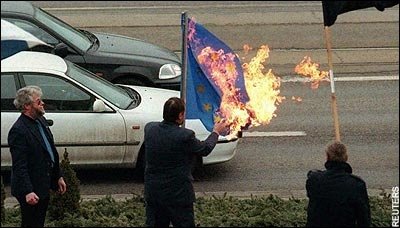
Burn, baby, burn!A slightly left-of-field question: what have the EU and the anti-EU party, the UK Independence Party – and, to an extent, other political parties - got in common? The answer, it seems to me, is that for each, their favourite occupation is talking about themselves – to the exclusion of practically everything else.

Certainly, this has to be true of the European Union which, we are told, is planning yet another interminable round of navel-gazing for this weekend.

Foreign ministers of the member states are to gather in Klosterneuburg outside Vienna on Saturday, "to brainstorm ways to end the political stalemate over plans for an EU- wide constitution", even though almost all member state leaders say they have already come to the conclusion that it is on ice for the foreseeable future, and with it any prospect of closer European integration.

That hasn't stopped Luxembourg premier Jean-Claude Juncker wailing on German radio that "Europe has lost its bearings”, reiterating that "there is no consensus" on what to do about the constitution.

Needless to say, the meeting is not due to produce any decisions, but one "idea" – which is very far from new - is a proposal to open to the public Council of Minister discussions on new legislation. Another is to bolster cross-border cooperation in fighting crime "by removing national vetoes over EU initiatives", something that should be a real "wow" in Eurosceptic Britain.

Given the drearily repetitive refrains, one is almost nostalgic for the days of "up yours" Delors, wishing for a little spark and controversy. Now, the wonder is whether the "colleagues" are trying to bore us all to death, or whether they are in danger of suffering that fate themselves. Perhaps, though, this is all part of a secret plot, hoping we will all switch off, whence they can get on with building their new superstate.

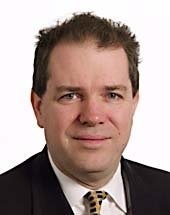
As for the relevance of the photo – there isn't any. Just a nice pic, nicked from David Rennie's blog.

COMMENT THREAD

Thursday, May 25, 2006

The best laid schemes…

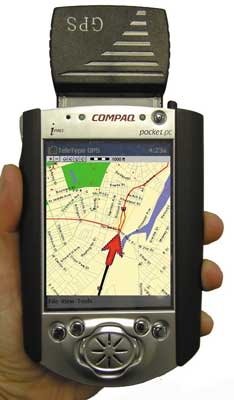
A GPS receiver - the money-making end of the systemEU plans to rake in a financial bonanza from its Galileo satellite system seem to be in jeopardy, and projections of thousands of jobs stemming from the project have also been cast into doubt. China, on the other hand, looks poised to reap the rewards from the £2.5bn European investment, which includes an estimated £200 million of British taxpayers' money.

This is the sombre conclusion to be drawn from recent statements by Rainer Grohe, executive director of the Galileo joint undertaking, the EU's executive authority charged with managing the development of the system. He is contradicting the hubristic predictions by the EU that variously 100,000 and 150,000 "high qualified jobs in Europe alone" could be created, with three billion receivers and revenues of some €275 billion per year by 2020 worldwide being generated, warning that China is gearing up to mass-produce cheap receivers.

This potentially catastrophic scenario is one of the EU's own making. Failing to attract sufficient capital from its own members to get the system up and running, it has sold a development partnership to China, which is contributing nearly £150 million, and is negotiating with India on the same basis.

Unlike the US government and its "Navstar" system, which holds the exclusive copyright on chipsets required for the receiver units and is able to control commercial exploitation, China – and possibly India - has acquired rights to mass produce receivers, and will be able to undercut European enterprises.

Thus, while US manufacturers are confident of being able to cash in on a GPS market which is estimated to be worth nearly £14 billion a year by 2008, EU-based firms expecting Galileo to provide a similar bonanza may go empty-handed.

This adds to the woes already affecting the project, which is now €400 million over budget in its first phase. Not only that, the EU has, as yet, failed to secure all the funding needed to deploy the full constellation of 30 satellites.

With the commissioning date also having slipped from the original 2008 to 2010, there is very little good news emanating from the project. One very small consolation though, is that the EU court of justice has upheld the commission's right to use the Galileo name.

The commission had been challenged by a Barbados IT firm, Galileo International Technologies, when it transpired that the commission lawyers had not even checked ownership of the rights to the name before the EU started using it.

However, after a German court initially found against EADS Astrium GmbH, a German unit of the eponymous European company that is building part of the system, the ECJ has weighed in with a ruling that Galileo International Technologies had not established that the commission's use of the name hurt their trademark rights.

Nevertheless, this may prove a hollow victory. In all, the EU is proving to be about as skilled in managing this project as it has been in running the Common Fisheries Policy.

COMMENT THREAD

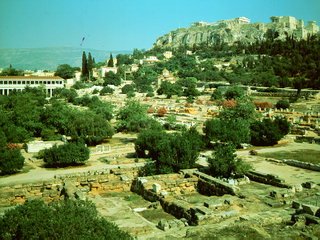
D for agoras

They do love their pretensions, don’t they. Agoras! I ask you. An agora was a marketplace in the Greek cities just like the forum was in Rome and the various other cities of the empire.

A marketplace is where you discuss things and where individuals can make decisions that might or might not affect bigger issues. That is why it is possibly the most democratic institution in the world but it is not really conducive to legislation in the modern world. Ah but it is not legislation we are talking about but another way of bringing the citizens closer to the European project.

The EUObserver reports that some MEPs would like to revive what they fondly imagine was the agora (I think they mean only the Athenian one, which was the hub of that city’s political and judicial life for many centuries – as long as you were a free, male Athenian).
“The idea of "agoras" has been filed by the parliament's vice-president, French Green MEP Gerard Onesta whose original ambition was to present the project to the public exactly one year after his co-citizens rejected the new EU constitution, on 29 May.

"Through the no vote in the Netherlands and France - I hope - the citizens did not say no to Europe but they said stop! Now we want to participate. Please help us to participate," Mr Onesta told EUobserver.

Under his proposal, the parliament would organise five to six forums per year with around 300 participants to discuss issues chosen by the parliament's political group leaders.”
Well, one can argue what it is the citizens of France and the Netherlands said “no” to and my guess would be that a good deal of it had to do with the sort of managerial, unaccountable governance that M Onesta is part of but one cannot quite expect him to see it.

The big question is why does he think that the rather negative attitude as expressed in the “no” votes should change because the European Parliament gets together groups of carefully picked citizens of various EU member states or, perchance, representatives of various businesses and lobbying organizations and allows them to discuss some carefully selected topic.

M Onesta’s response to all the carping criticism that greeted his proposal was to point to the fact that if it is introduced, at least some of the lobbying will be done openly in a transparent fashion.

Apart from admitting that at the moment there is a great deal of untransparent lobbying going on behind the scenes, M Onesta seems not to have understood the basic problems. (And neither have some of his critics like the usually astute Jens-Peter Bonde, who said initiatives like this should be from the bottom up.)

In the first place, there are already assemblies in all the member states that are accountable (more or less) to the people through elections and who ought to be legislating but whose role has been reduced to powerless scrutineering.

Growing out of that is the second point that also seems to elude the various members of the Toy Parliament. No amount of organized jaw-jawing (and whom precisely will 300 people six times a year represent?) makes up for the fact that the EU legislative process will not change.

It is not Europe that the “no” votes were cast against. One cannot actually vote against a continent or a very general cultural concept. They were, one way or another, cast against the European project and adding a few little tucks and frills to it is not going to alter the fact that the dress does not fit and is, in any case, unappealing.

COMMENT THREAD

Between a rock and a hard place

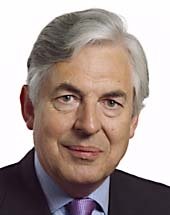
Dr Charles TannockThe odious but not unintelligent Charles Tannock MEP has a letter published in The Daily Telegraph today, which raises interesting questions in the wake of the Montenegrin vote for independence.

He points out that if countries in the western Balkans, such as Montenegro and Kosovo (also demanding sovereignty), not to mention future possible extension to tiny EEA states such as Iceland and Liechtenstein, join an enlarged EU under the current Nice formula, each with its own commissioner, minimum of six MEPs and disproportionate votes in the Council of Ministers, this will cause a serious political imbalance unfavourable to large member states such as Britain.

It is also clear, writes Dr Tannock, that a state the size of Montenegro (with a population of 620,000 people) will be severely administratively stretched to hold the six-month rotating presidency.

His conclusion, therefore, is that even if (he writes "once") the EU finally abandons the unlamented constitution, and given that the Nice Treaty is inoperable beyond 27 states (ie, after Romanian and Bulgarian accession), the EU will need to consider adopting a new, slimmed-down, consolidated treaty.

That is the point. Come what may, the member states (not the EU) are going to have to negotiate a new treaty, if they are going to continue with the core policy of enlargement. That means another intergovernmental conference, opening up the whole can of worms all over again. The crucial question for us will then be whether our then prime minister will feel it necessary (or be forced) to permit a referendum prior to ratification of any new treaty. The words, "rock" and "hard place" come to mind.

COMMENT THREAD

A one-way street?

Valéry Giscard d'EstaingThank heaven for Valéry Giscard d'Estaing. If we ever needed reminding that the political élites of Europe are represented by an arrogant, detached, totally self-absorbed technocrat, here he is for all to see, popping up in The Financial Times to give us the benefit of his wisdom.

And, oblivious to the fact that, even now – nearly a year after their rejection of the EU constitution - Giscard says the French should be given "a second chance" to vote on the treaty.

The very nature of his phrasing betrays the man – a "second chance", as if he was doing his countrymen a favour. But then the scenario he paints is positively surreal as he tells the FT that, "It is not France that has said no. It is 55 percent of the French people - 45 percent of the French people said yes."

There is a sting in the tail though, because the man's idea of a "second chance" is either a second referendum or a parliamentary vote - after next year's presidential elections. No prizes for guessing which one he would actually prefer. "If we had chosen to have a parliamentary vote last year the constitution would have been easily adopted. It is the method that has provoked the rejection."

Then, ignoring the very fundamentals of treaty law, he argues that because 16 out of 25 countries that have ratified the constitution – the latest being Finland – there is a "qualified majority". Effectively, he is saying – or certainly implying – that a group of countries can vote to take power from other countries. All he is concerned about is the "modalities" of adopting the constitution.

Nor does he think that the idea that resubmitting the same question to the French people is "anti-democratic". "People have the right to change their opinion. The people might consider they made a mistake," he declares.

Pity, therefore, that the FT did not put to him the logical outcome of this statement. If people who have said "no" can be asked to vote again, do people who have said "yes" also have the right to change their opinion – or is change a one-way street?

COMMENT THREAD

Wednesday, May 24, 2006

Going after the real enemy

[Health warning: this post is not going to be about immigration. Some readers might, therefore, decide to skip it.]


Careful readers of this blog would have noticed that we oppose all unaccountable transnational organizations (hereinafter referred to as tranzis). This includes erstwhile charities that became NGOs some time ago and whose political activism – always on the anti-Western, anti-capitalist, above all, anti-American side – far outweigh any good they may achieve on the ground.

Of these one of the most obnoxious ones is Amnesty International. I find that particularly difficult as I have worked with sections of Amnesty in the past and know that it has a hard-working and underpaid staff (not the people at the top, of course) who do try to achieve the impossible – help individual people in the many countries where they are imprisoned for expressing their opinions. All those people who get so worked up about the unproven horrors of Guantànamo might like to know that this is the case in the rest of Cuba. (Oh you didn’t know Gitmo was in Cuba? Well, well, well.)

Amnesty also, theoretically, tries to fight maltreatment of prisoners (of conscience and others) in the many countries where this happens a great deal.

The trouble is that Amnesty International as an organization always had a political agenda. Its research department, based in London, may produce very valuable information and may undertake useful campaigns. The people at the top prefer to strut around in tranzi politics, claiming all sorts of rights that unaccountable organization should not have and attacking democratic governments considerably more ferociously than others. In part, of course, the reason is that it is so much easier to find out what is happening in the democracies.

The other part of Amnesty is the national organizations, which consist mostly of volunteers. The idea is that each national organization follows developments in other countries not its own.

For various reasons, too complicated to evaluate here, these national organizations have tended to attract activists who, though undoubtedly well-meaning, tend to come from the left of the political spectrum.

It is not hard to see that all this can cause problems of credibility. For example, last year we were treated to the extraordinary spectacle of the Secretary-General of Amnesty International announcing that Guantànamo (yes, it’s them again) was the modern Gulag. When challenged, she blithely explained that while, of course, nobody has been killed in Guantànamo while many thousands perished in the Gulag; and while, of course, the shocking maltreatment of prisoners in the latter has been well documented and appear to be somewhat worse than not getting the right amount of peanut butter; nevertheless, in essence the two were the same.

I was told by a very good friend who works extremely hard in this benighted organization that the staff were horrified not least because they realized that much of their careful research will now be dismissed. In fact, I understand that even some of the national organizations were shocked and the Swedish one put up a robust rebuttal on its website. Eventually, under pressure from on high, this was taken down.

So that is the background or some of it to the present row about Amnesty International. It has now produced its annual report on the state of human rights in the world. That in itself is a blatant misreading of their remit. They are supposed to be working on behalf of prisoners of conscience.

The Secretary General’s press statement sums up the problem. It is devoted almost entirely to Guantànamo and the possible but still non-proven detention centres that are allegedly being set up as part of the war against terror. SecGen Irene Khan seems seriously uninterested in the many prisoners of conscience in countries such as China, Egypt, Iran, various African states, Saudi Arabia, and so on, and so on.

In fact, SecGen Khan decided to use another hyperbole:

“Not since the Universal Declaration of Human Rights was adopted in 1948 has there been such a sustained attack on [its] values and principles.”
Unexpectedly, she even managed to mention Katrina and its aftermath, the need to fight poverty by giving aid and the French riots (the first lot not the second).

“2005 saw the biggest ever mobilization of civil society and public support to eradicate poverty. But in response, the UN Summit showed governments miserably failing to match promise to performance on the Millennium Development Goals. In the aftermath of Hurricane Katrina and riots in France, 2005 was also a year which showed the glaring disparity, discrimination and alienation in the heart of richest countries of the world.”

What any of that has to do with prisoners of conscience is anybody's guess.

As a study produced by Capital Research Centre says, Amnesty International has concentrated most of its ire and condemnation on the United States and Israel. The obsession with Guantànamo is paralleled by the fact that more reports were produced about Israel in the last 16 months than any other country or organization. It seems that when Palestinians are attacked, imprisoned and tortured by the PA or other militias their fate no longer matters. And, of course, everyone imprisoned in Israel is a prisoner of conscience!
“Soft on tyrants and terrorists, hard on the free nations that confront them, Amnesty International has squandered its reputation as an impartial advocate for human rights," and has become "just another voice of the transnational Left.”
How true. But Amnesty International must be a little surprised at the moment. For the American government has decided to hit back.

Once again, through the invaluable Little Green Footballs, we have news of a statement:
“State Department spokesman Sean McCormack dismissed allegations by the Nobel Prize-winning rights group, which cited reports that US prisoners at Guantanamo Bay, Cuba and elsewhere were subject to "torture and ill-treatment."”
Mr McCormack then went on the offensive:
“He went on to point out Amnesty's role in documenting rights abuses during the 24 years of Saddam's rule before he was deposed by the Americans in 2003 and later captured and charged with crimes against humanity.

"But when it came time to put Saddam Hussein on trial, which is happening right now, they (Amnesty) are absent. They've done zero, zip, nothing, to assist in those efforts," McCormack said.

"So in terms of where they might focus some of their efforts, I would just offer the humble suggestion that they might follow through in actually assisting with or providing some support to this trial for what they acknowledge is one of the great human rights abusers of recent times."”
I particularly like that “humble suggestion”. Who says the State Department has no sense of humour?

COMMENT THREAD

Unintended consequences

A multilingual roadsign in Wales - a model for Ireland?The UK, of course, is by no means the only country to be affected by the wave of immigration from the new accession countries. A significant "beneficiary" of the population movement has been Ireland, which has taken more than its fair share of Latvians, including Russians posing as Latvians, and Poles.

This however, has had unintended and unfortunate consequences, in that it has reversed the downwards trend in road deaths, with the new carnage being wholly attributed to these migrants, a point we noted in our blog.

Nearly a quarter of all road traffic fatalities now involve immigrants, partially because they drive on the wrong side of the road and partially because they have a devil-may-care attitude to drink driving. Many, it is said, believe they will not be caught for traffic offences.

Given this clearly identifiable problem, and the extremely dubious nature of the driver testing systems in the accession countries, the most obvious – and undoubtedly effective - stratagem would be to require entrants from these countries to take the local driving test, and to prohibit them from driving until they had done so.

The trouble is that Ireland, like the UK, is no longer an independent country and is obliged under the EU dictum on non-discrimination to recognise Latvian, etc., licenses.

Thus we come to the absurd situation of Fine Gael's road safety spokesman, Shane McEntee, proposing that road signs in Latvian, Russian and Polish should be installed on Ireland's twisting country roads, to remind these killer drivers to drive on the left and avoid alcohol.

The absurdity of this suggestion can readily be seen from our illustration of a Welsh road sign. Millions have been spent on multilingual signing and the net result is to add confusion and incomprehension. With the Irish authorities already having created their own quota of confusion, having converted their road signs to metric, one can now see chaos reign.

Absurdity, however, should not be confused with amusement. In the final analysis, this situation is leading to a not insignificant number of unnecessary deaths and injuries, all because governments have been so keen to surrender their powers to our masters in Brussels.

COMMENT THREAD

Enough

Both The Daily Telegraph and The Times today point out that British citizenship has been granted to nearly one million foreign nationals since Labour came to power in 1997.

Not only that, a record 161,000 obtained a UK passport last year, a 15 percent increase on 2004, and a further 214,000 lodged applications that are now being processed. Similar numbers are likely to have applied this year, on top of 750,000 new citizens already created in the previous eight years.

The rate of overseas settlement in Britain, say both papers, is now the highest ever and is four times greater than in the mid-1990s - reflecting unprecedented levels of immigration. In the late 1960s, about 75,000 new citizens a year were accepted for citizenship but this fell to about 50,000 after new laws were introduced in 1971.

For about 25 years the annual figure remained near or below this level, falling to a low point of 37,000 in 1997, the year Labour took office. Since then, there has been a spectacular increase, with the rate of growth accelerating every year. The scale of new settlements is a principal driver behind the increase in Britain's population, which is expected to grow by five million by 2020 while birth rates fall in other countries.

Whatever view you take of the general merits or otherwise of immigration, there can be no dispute that the absorption of so many people, so fast, into our society, is problematical. It is also fair to say that this government had no electoral mandate to open the gates and permit such a massive increase in immigration, in what is obviously a policy-driven issue.

Thus, one cannot disagree with Sir Andrew Green, the chairman of Migrationwatch UK, who says that, "Immigration on this scale is changing the nature of our society without public consent. It is no longer acceptable."

In fact, most people would agree, as indicated by a Populus/BBC survey for the Daily Politics programme poll yesterday, which indicated that immigration is regarded as the most important issue facing the country, with more than half of voters placing it higher than health or education on a list of concerns. Interestingly, the poll suggested that almost half of those questioned were "more worried about immigrants coming into Britain from Europe" than those coming from further abroad.

This is where the current figures are highly misleading, in that they record immigrant from non-EU member states, with about 30 percent of the new citizens last year born in Africa and 19 percent were from the Indian sub-continent, with Serbia and Montenegro close behind.

When it comes to the EU, however, there is nothing close to an accurate record. The official figure disclose that 392,000 individuals from the eight Eastern European states which joined the EU in May 2004 have come to Britain, but this figure relates only to those who have chosen to register for work. There are no statistics on how many entered unofficially, how many stayed and how many returned.

We are thus in the double bind of having to cope with a massively increased immigrant population while also being hampered by having no real idea of how many people have actually entered, and from where. It is hardly surprising, then, that people are saying "enough".

COMMENT THREAD

Not big enough for both of them

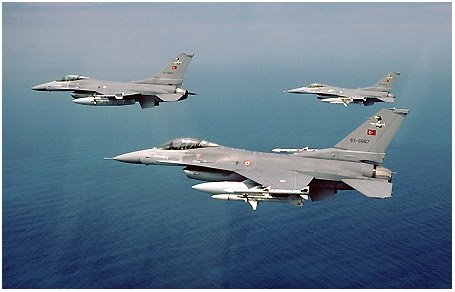
Turkish Air Force F-16s on patrolAn odd feature of this blog – not always easy to explain – is how we can leave a subject for a while and then return to it, only to find that it then crops up again immediately afterwards.

Thus is it with the Turkish-Greek situation, which we touched on briefly yesterday, in the context of the Cyprus elections, having not dealt with it for some time. Then, not 24-hours later, we find ourselves returning to the subject, with news yesterday of a mid-air collision between Greek and Turkish fighter aircraft in disputed airspace over the Aegean Sea.

The Guardian, amongst others, does not hesitate to draw serious inferences from the event, talking of a "crisis" and the re-ignition of age old rivalries.

The crisis seems especially serious as the two aircraft are believed to have rammed each other, in full view of a passing commercial passenger aircraft. The Turkish pilot, Halil Ozdemir, was rescued by a merchant ship after ejecting, but last night emergency services were still searching for the downed pilot of the Greek F-16 jet.

The Greeks are claiming that the aircraft collided at 30,000ft after the Turkish fighter had "violated air traffic rules", causing the collision by a "sudden manoeuvre". On the other hand, the Turkish military claim that the crash had been caused by a Greek fighter interfering in Turkish manoeuvres in international airspace.

However, although this incident has just now hit the news, we drew attention to the continued jousting between Greek and Turkish aircraft in October 2004 and, of course, it had been going on long before that.

That much is confirmed by the mayor of Karpathos, the island closest to the collision, who told the Guardian, "We see them up there fighting it out every day … At some point something like this was bound to happen."

Up to press, Greece, supposedly, has been a leading champion of Turkey's bid to join. But this incident, added to the tensions in Cyprus following the weekend elections, makes it very hard now to see how the Greeks can be reconciled to Turkish accession to the EU. It is not only aircraft that collided yesterday, but two political systems. The thinking now is that the European Union is not big enough for both of them.

If that proves to be the case, the political ramications for the European Union are huge.

COMMENT THREAD

Tuesday, May 23, 2006

The pace quickens

Only a few days ago – on 19 May to be precise – we saw in The Telegraph a poignant plea from the Spanish authorities in response to a new flood of illegal immigrants into the Canary Islands.

"This is Europe's problem too," went the refrain, after more than 1,400 immigrant had arrived in Tenerife and Gran Canaria in the previous week, making 2,000 landing in the month, mostly from Senegal and Mali. This compared with 4,751 in the whole of last year.

It cannot have been a complete coincidence that, only two days later, we read in the Sunday Telegraph of plans to set up an EU coastguard service, not least of the functions of which would be to assist member states in controlling illegal immigration via maritime routes.

Now, courtesy of Associated Press, we learn that the EU is preparing to deploy aircraft and patrol vessels in support of the Spanish authorities, in an attempt to stem the flood of migrants headed for the Canaries.

The "help" was announced by EU justice and home affairs commissioner Franco Frattini, himself a staunch advocate of an EU coastguard service. He has pledged the EU to "provide operational support as fully as we can to the Spanish government to deal with an urgent and difficult situation."

In addition, the EU's external border security agency, Frontex, would send two emergency coordination teams to the Canary Islands.

Frattini added that Frontex would also co-ordinate in the coming weeks surveillance aircraft and patrol vessels, manned by soldiers and police, drawn from eight EU member states to prevent the would-be migrants from making their way to Europe.

"We already have eight which are prepared to express their solidarity and make available to us rapid offshore vessels and reconnaissance planes," Frattini said, adding that the EU-mandated mission would patrol the coast off western Africa down to Gambia and Senegal, from where most of the would-be migrants are sailing. Frattini said member states governments, including Spain, will be able to benefit from joint EU repatriation flights.

But, if these are temporary expedients, the commission is not being reticent about exploring the longer-term potential of this "beneficial crisis". Frattini is also calling for member states to back plans for an emergency EU fund for quick responses to mass flows of migrants, as well as setting up a permanent plan for EU patrols in the Mediterranean to intercept illegal migrants – with a start-up kitty of €3 million already earmarked.

From a vague, theoretical concept, the EU's ambitions are taking on a more tangible form with remarkable rapidity.

COMMENT THREAD

Baroness Nicholson is displeased

Baroness Nicholson, formerly known as Emma Nicholson, now a Lib-Dim MEP and Vice-Chairman of the Toy Parliament’s Foreign Affairs Committee, is justifiably unhappy. Countries are apparently behaving foolishly and she would like the European Parliament or the Foreign Affairs High Panjandrum, Solana do something about it. What they can do, remains a mystery but:

“She said she would put forward an emergency resolution and a parliamentary question to commissioner Benita Ferraro-Waldner, Austrian ex-foreign minister and the commissioner for foreign affairs in the European Commission.

She would also raise it with the EU foreign policy chief, Javier Solana.”
Loath though I am to say it, but she is right – paying ransom to terrorists is a very bad idea. Given how many different gangs there are in Iraq, many of whom appear to have no political ideology at all but think that kidnapping journalists, aid workers and the odd engineer is obviously a wonderful money spinner, governments that fall for this are endangering their own nationals first and foremost.

It was an article in the Times yesterday that created the fuss. Daniel McGrory maintains that the newspaper has seen documents that prove the handing over a total of $45 million by the governments of France, Italy and Germany in order to rescue their nationals.

This is not precisely a new story and we have covered it on numerous occasions. What Mr McGrory has provided is definite figures:

“FRANCE $25 million
 Florence Aubenas: held for 157 days, freed June 2005. Ransom $10 million
 Christian Chesnot and Georges Malbrunot: freed December 2004. Ransom $15 million

ITALY $11 million
 Giuliana Segrena: taken February 2005, freed March 2005. Ransom $6 million
 Simona Pari and Simona Torretta: taken September 2004, freed 20 days later. Ransom $5 million.

GERMANY $8 million
 Susanne Ostloff: taken November 25, 2005, and freed three weeks later. Ransom $3 million
 Rene Braunlich and Thomas Nitzschke: taken January 24, 2006, and freed on May 2. Ransom $5 million.

BRITAIN No ransom paid
 Kenneth Bigley: taken September 16, 2004; seen being beheaded on video released on November 16
 Margaret Hassan: abducted October 19, 2004; murdered on November 16”
As it happens, I believe there is some doubt as to what really happened to Margaret Hassan.

Furthermore, as the article explains, Britain is not entirely blameless. Though the government, rightly, refuses to pay ransom, it gives in on other matters.
“British officials have been criticised for giving the kidnappers of the peace activist Norman Kember time to escape to avoid the risk of a gun battle with Special Forces troops sent to rescue him and his two fellow captives from a house in central Baghdad in March.

Only when Jill Carroll, an American journalist, was freed eight days later did intelligence experts discover that she had been held by the same notorious crime family, who were working with Abu Musab al-Zarqawi, the wanted al-Qaeda leader in Iraq. That revelation infuriated US officials in Baghdad, who had let Britain take the lead in tracing and freeing Professor Kember, 74, and his two Canadian colleagues.”
This is particularly annoying because of the difference in behaviour exhibited by Jill Carroll, on her release, and that of the grumpy and ungrateful peace activists.

The three governments continue to deny the payment of ransom but give no explanation as to why their hostages were released on those dates.

COMMENT THREAD

Credit where it is due

Geoffrey van OrdenIf Dr Liam Fox seems oblivious to the growing encroachment of the European Union in defence affairs, not so the Tory defence spokesman in the EU parliament, Geoffrey van Orden MEP.

In the Telegraph today, which has finally reported on the EU defence procurement developments, van Orden is cited as saying, "Of course we want to encourage European armies to procure more effectively. But the driving impulse behind this is European political integration."

To give him due credit, van Orden has been consistent in warning of the moves by Brussels to promote European defence integration, although his concerns do not seem to have percolated into the hierarchy of the domestic Conservative Party. But then, as we all know, the Boy King doesn't "do" Europe. Telling us all to be "happy" is much more important.

COMMENT THREAD

Another EU success

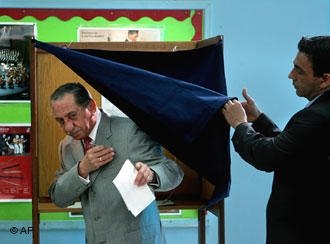
Presdient Tassos Papadopoulos casting his voteThe European Union might be about promoting fraternal feelings between member states – or so it keeps telling us - but something is going badly amiss with the "project" in Cyprus.

The entry of the island into the EU two years ago was supposed to bring forth a classic demonstration of “soft power”, reconciling the warring Greeks and Turks who have been divided since the Turkish invasion in 1974. But, at the time – even with the intervention of the UN (or perhaps because of it) -reunification did not occur and only the southern half of the island is within the EU.

Now, two years later reunification seems further away than ever after elections in the Greek south. Voters have brought back the ruling coalition with an increased majority, endorsing leaders who oppose reunification attempts.

Half a million Greek Cypriots were voting for 56 representatives – their first chance to pick MPs since a referendum on reunification was rejected in 2004 – and, according Deutsche Welle, president Tassos Papadopoulos' DIKO party won 18 percent of the vote - up 3 percent on its last showing. His allies from the communist AKEL party won 31 percent and the pro-reunification opposition party, the DISY, lost ground to come a close second with 30 percent of the vote. The European party, a new right wing group, won a mere 5.7 percent of the vote.

The result dashes hopes that the Greek Cypriot government would show flexibility on the Turkish Cypriot community’s demand to be allowed to trade directly with the EU, and is regarded as the latest setback to attempts to re-unify the island.

Some commentators believe it could even undermine Turkish efforts to join the EU. The pinch point here is Turkey refusing to allow Cypriot ships and aircraft access to its ports and airports as long as the island remains divided. So bitter has this dispute become that Papadopoulos has given Ankara an ultimatum that, if they are not given access by the end of the year, Cyprus will veto Turkey's bid to join the EU.

So much for the peacemaker extraordinaire – two years on and things are worse than when the EU first got involved.

COMMENT THREAD

Monday, May 22, 2006

The engineer of human souls

Taking over from Ken Dodd in the happiness stakes?Reluctantly I once again turn my attention to the Boy-King of the Conservative Party, who, according to Peter Oborne in the Evening Standard, is the coolest leader that party has ever had. Mr Oborne, to be fair, admits that it makes him and Conservatives like him feel queasy but he sees some merit in Our Dave and his lovely wife attending a party given by the Beckhams. My own feeling is that attending parties given by the Beckhams is vieux jeu. Just about every airhead has done that.

In order to show that he is not a complete airhead but has serious ideas (cue: drawing together eyebrows, narrowing eyes and looking soulfully into the middle distance) the Boy-King has been pronouncing on happiness.

It is tempting to draw a parallel with Ken Dodd, who sang a song called “Happiness” and had a “Happiness Show” but I feel that is an insult to a talented and hard working entertainer who was extremely popular and gave pleasure to a large number of people.

In a way, that is the point the Boy-King seems incapable of grasping: that happiness, contentment and many other things that make life worth living are not to be provided by politicians or the state, assuming he is ever in charge of that vehicle.

His latest pronouncement (approved by the Guardian as something that wrong-foots Gordon Brown) tells us that “there is more to life than money”. Sheesh. There is something I would never have thought of myself. I mean I really need a wealthy politico who has never had to work for a single thing in his life to tell me that life consists of more than just a bank balance. (Mind you, for people who have had to struggle to achieve a bank balance, it may well be the epitome of happiness.)

What these comments do is expound the Boy-King’s own Third Way (Gorbachev, Blair and now Cameron – will they never learn?).
“The traditional response of the right – that government can't do much about all this and shouldn't try – is inadequate. But equally, the response of the new left – that government should regulate the specific details of working life – is too ineffective. It produces unintended consequences that end up damaging our competitiveness. It's vital to create a space... which stands firmly between regulation and indifference. I refuse to choose between the intolerant impulse to right every supposed wrong by passing new laws, and the coldly amoral refusal to even take a view on the actions of others.”
Of course, enabling people to make the best of their abilities is not precisely coldly amoral but shows a belief in freedom, individual rights and responsibilities as well as faith in people.

Furthermore, the number of people on the right who believe there should be no rules at all and any employer be allowed to do whatever they like on the basis that the market will take care of it all, is strictly limited. So to say that those of us who believe in freedom of enterprise, absolutely minimal government and the importance of private life are refusing “to even take a view on the actions of others” is stupid, ignorant and insulting, not to mention ungrammatical.

What is it the Boy-King really means? Since he manages to throw in the compulsory reference to “competitiveness” whatever he might think that is, one assumes that he means such matters as minimum wage and benefits. What are they if not money? What on earth makes the man think that money handed out in the form of benefits will somehow contribute to the sum total of human happiness? Surely, if anything, it is money earned that is much more likely to do so.

In any case, what of those benefits, minimum wage, state run health service, the lot? What if it becomes so expensive that jobs will have to go to other places and unemployment will rise? (In fact, it is doing so already.) The state sector cannot leach off the private one for ever. Will that make people happy?

But who am I to argue with such noble impulses? If the Boy-King really does want to be the engineer of human souls, as Joseph Stalin called Soviet writers according to Commissar Andrei Zhdanov at the 1934 Writers’ Congress; if he really thinks that there is some kind of a utopia in which happiness can be provided by political actions; this blog is ready to suggest some ideas.

Many of us would be reasonably pleased if this country once again became an independent state and a constitutional democracy. That would mean taking it out of the EU and negotiating completely new agreements with other European countries. It might also mean a new Bill of Rights and possibly another constitutional document that enshrined what we consider to be the ancient liberties of this land.

In order to protect this country, its liberties and individual rights we need security – defence for the country and a workable police and judicial force for the individual. It would make us very happy if the Conservatives turned their minds to these matters.

Many people were made happy by the fact that they acquired their own property and could aspire to a better life, to give an even better and more spacious life to their children and could achieve all that on the basis of their own efforts not because goodies were handed out.

Much unhappiness is caused by our educational system, which does not train our children to get jobs and does not provide them with personal development and knowledge, the very tools that create personal happiness. We would all be immeasurably happier if the Conservative Party, led as it is by people whose families were immensely fortunate in being able to afford good education, would introduce changes into the system that allowed parents to choose the best for their children and for schools to provide the best education. No, dear Dave, it cannot be done by well-meaning toffs or gentlemen and ladies in Whitehall or the Town Hall. That has been tried and has been found wanting. Our children are neither able to compete nor are they happy.

In fact, one could sum it all up by the following comments: in so far as happiness can come out of politics, we would all be much happier if we had an effective opposition and if we had at least one party that did not mouth outdated semi-socialist shibboleths.

Since, however, happiness is not provided by politics (the arrogance of the man!) we should all be a lot happier, more fulfilled and more contented if the government, the politicians and all the officials simply butted out of our lives. Not much to ask for, is it? Think how much that will do for the sum total of human happiness.

COMMENT THREAD

Can he deliver?

Dr Liam Fox"What is the point of defence?" That is the question asked by shadow secretary of state for defence, Liam Fox, in a speech this morning at Chatham House on "the challenge of defence and energy security".

In his speech, Fox turns the defence issue into one of protecting our energy supplies, pointing out that we are no longer self-sufficient in energy. Therefore, he says, energy security now acts as a driver of foreign policy and, in defence terms, we have to "balance our security through … effective military structures to underpin our diplomacy".

That much is hardly new – it has always been thus – and it is thus self-evident that, as Fox says, "an indivisible energy security and national security policy will inevitably have consequences for the necessary shape and capabilities of the armed forces required to serve those interests". Fox then goes on to declare, very much in the same vein, that:

Politicians need to provide a very much clearer framework within which national security interests can to be served. In other words. We need a foreign policy out of which a credible defence policy – rather than merely spending plans – can flow.
So far, so good but what Fox then dismally fails to do is set out in any detail – or at all – the specifics of that framework, or how it would impact on our current defence policy.

What he does tell us is that he wants to develop global associations with nations and regions that can contribute to countering the key threats to our energy security, directed primarily through NATO – something which he acknowledges would put us at odds with EU ambitions. But as to our defence policy, all we get is that our approach to energy security must be "underpinned by a security margin of resilience which only updated global military structures can provide".

What that actually means is anyone's guess – and is it any wonder that we are so despairing (and contemptuous) of politicians when they cannot express themselves with any clarity? But, insofar as there is any meaning in the words, Fox seems to be making a pitch for greater seapower to protect our energy supply lines, working closely with a range of allies that includes the USA, Japan, and other players within the Pacific region.

If that is the case, Fox has a problem. The bulk of our future naval equipment plans, including the purchase of the two aircraft carriers – for which further design contracts were recently awarded - are currently predicated on building up an expeditionary force to support the European Rapid Reaction Force, a force which is (or will be) primarily dedicated to fulfilling Petersberg Tasks.

This is not a force which will be capable of projecting seapower or one with any significant independent global reach – and neither is it one designed to mesh with US or Pacific forces.

As to the Army, huge expense – some £16 billion - is being devoted to re-equipping it as an expeditionary force, with a rapid reaction capability, again with a view to it becoming a component of the ERRF. The RAF, on the other hand, is primarily equipped (with the Eurofighter) for a static, air superiority role.

None of the intended armed forces structures would seem at all capable of undertaking the primary role of protecting our energy supply lines and, given the necessary limitations on our defence spending – and the huge cost of equipping a credible expeditionary force – we do not have the cash to spare for both roles.

It is all very well, therefore, for Fox to argue the need to provide a much clearer framework but, as it stands, the framework set by the current administration for future conduct of operations is that of an integral part of the ERRF.

From that stems procurement decisions with a multi-billion price-tag and a reach of twenty years or more, committing us to the strategy thus defined. Unless Fox is prepared to gainsay the current structures and commit to a fundamental restructuring of our forces, should the Conservatives gain power, what he is actually saying is so much hot air - he will not be able to deliver.

COMMENT THREAD

A vote for serfdom?

I am probably one of the least qualified to pronounce on the merits or otherwise of the Montenegrins' referendum, but it is interesting to note that the BBC website is running the headline Montenegro chooses independence.

With 55.4 percent of the electorate voting to secede from Serbia, just over the 55 percent hurdle set by the EU, however, one must recall that the primary driver behind the separation movement is not independence per se. What is uppermost in the minds of its advocates is the expectation that the new state, divorced from the delinquent Serbia, will find it easier to join the European Union.

With a population of 620,000 people, this would be barely a mouthful for the EU to absorb, and the influence that those few people could exercise over the European empire would be minuscule. Thus, it would seem, the Montenegrins are not so much voting for independence as serfdom.

For the time being, that status will have a substantial cheque attached to it, and it will take many decades for the Montenegrins to learn the reality of the construct they join – if they are allowed in – but the "colleagues" will no doubt take succour from the fact that yet another nation is rushing, lemming-like into the fold.

COMMENT THREAD

The march of the EuroArmy

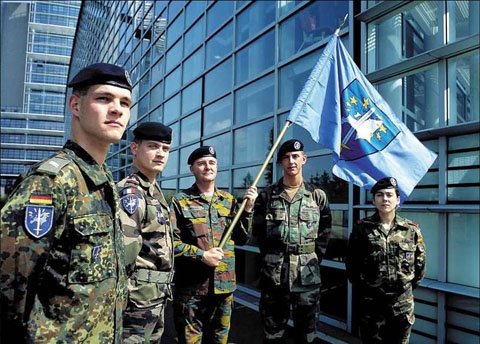
Eurocorps soldiers - the proto EuroArmyAs flagged up just over a week ago, twenty-two European Union member states have signed up to the "voluntary" code of conduct of defence procurement.

By so doing, they are agreeing to open defence contracts worth €1 million or over to competitive tendering from any company within the EU, so waiving their "national interest" rights under Article 296 of the Treaty which, hitherto, have excluded the bulk of defence purchasing from the procurement directives.

The agreement is only "voluntary" in the sense that there is no legislative compulsion, but it was reached against the background of the commission threatening to propose legislation if the member states did not come into line. No doubt, a concerted effort by the EU leaders could have seen off the commission but this would have led to an undignified public scrap and, it appears, none of the players seemed willing to fight this out in a public arena.

As it is, two nations to opt out of this round of integration – Spain and Hungary – with Denmark having a permanent opt-out. Whether the commission will takes steps to hoover up the stragglers remains to be seen.

Business Week reports this move as "designed to open the 25-nation bloc's euro30 billion (US$39 billion) arms industry to increased cross-border competition," citing European Defence Agency, but, of course, it is no such thing.

This is all part and parcel of the commission's plan to create a European defence industry which is the precursor to developing a European defence identity. The Eurocrats are well aware that, in these days of technology-driven warfare, he who controls the procurement decisions can eventually control the shape and structure of the armed forces which rely on the equipment and thence decide on deployment plans.

Needless to say, we get the ritual burbling from Nick Witney, CEO of the European Defence Agency, who tells us that, "This regime will create new opportunities for companies across Europe, strengthen our defence technological and industrial base and offer better value for money to the armed forces and to taxpayers."

That is so much bullshit. The arrangements are designed primarily to exclude non-EU bidders and keep defence procurement within the EU "family", many of which players are party or wholly state-owned and heavily subsidised.

However, the business-orientated language is enough to gull the increasingly dim and ill-informed media commentators into believing that this move is simply a commercial issue, to be relegated to the business columns, if indeed it is reported at all. That it is a major step forward in the progressive integration of the armed forces of EU member states will completely pass them by.

And thus, stealthy step by stealthy step, does the process of integration continue, unrecorded and unchecked, all because our media fails to do its job, our politicians have lost the plot – and no one gives a damn anyway.

COMMENT THREAD

Nuclear fission

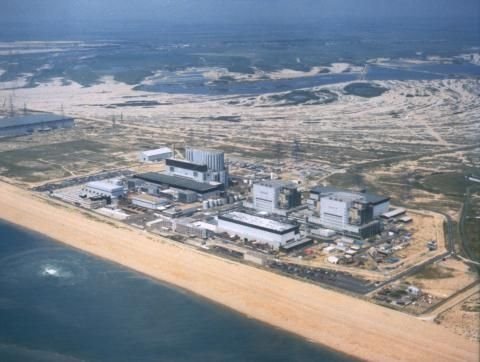
Dungness A&B nuclear power stationsAlthough Tony Blair has put the nuclear option "back on the agenda with a vengeance", his avowed enthusiasm is creating stresses in the European Union, where there is a considerable divergence of opinion on the utility of nuclear power.

This, reports Reuters could well impact on the attempt by EU member states to forge a common energy policy, highlighted by a meeting in Austria of energy and environment ministers this weekend.

For instance, Austria's environment minister, Josef Proell, believes that nuclear power "isn't the future.". He is to stage a debate in the EU parliament in June to discuss "strategic planning" on nuclear energy, when he will try to convince his EU partners to look at other sources such as renewable energy.

On the other hand, Finnish Environment Minister Jan-Erik Enestam, who will be in the chair when his country takes on the rotating presidency of the EU in July, believes that nuclear is a necessary, if temporary, solution. "Climate change will bring new elements to the discussion. It's not that black and white anymore," Enestam says. "If you have to choose among the existing resources and existing technology, you can't exclude nuclear power."

The Finns are already planning to add a fifth nuclear plant to their portfolio. The want to avoid using coal and prefer building its own plants to importing nuclear-generated electricity from Russia. "In Finland you have to choose between two evils: nuclear power or coal, and nuclear power is not as bad as coal," Enestam declares.

To add to the discord, his near-neighbour, Latvian Environment Minister Raimonds Vejonis, has other ideas. More than 60 percent of his population is against nuclear yet it relies on nuclear power plants in next-door Lithuania, from which it imports some of its electricity. The country will suffer after 2009 when Lithuania closes nuclear plants and no decision has yet been made on how to compensate for that loss.

In Germany, however, there is very little debate, as the government plans to phase out nuclear power completely. German environment minister Sigmar Gabriel argued that it is unfair to solve our energy problems and to put the waste to future generations. He also takes the view that, if industrialised nations chose nuclear energy, they will have fewer arguments to prevent countries such as Iran and North Korea from attempting to do the same.

Other major players, like Italy, Spain and Poland, have yet to declare their views but we do know that France is committed to expanding its nuclear capability.

The current technology, of course, still relies on nuclear fission – splitting the atom – but, as the arguments develop, it seems that this will not be the only nuclear fission in the EU. The member states also are – it seems – irreconcilably split.

COMMENT THREAD

Sunday, May 21, 2006

All that glitters is not gold

The aggressively Europhile Observer has today trotted out a strident condemnation of the CAP, under the strap, "Exports of cheap European dairy products are crushing the livelihoods of developing world farmers".

Lest one think that the paper has gone soft, and joined that ranks of the loony Xenophobes – aka Eurosceptics – the title of the piece gives that game away: "Who's creaming off EU subsidies?" This is a left-wing, anti-capitalist rant, picking up recently obtained data that demonstrate that the "fat cats" are the primary beneficiaries of the EU's agricultural subsidies.

Thus does the newspaper tell us that British-based exporters, including Nestle and Dairy Crest, have claimed £126m of taxpayers' money over the past two years for sending surplus butter and milk powder to poor countries such as Nigeria and Bangladesh. The biggest winner, Fayrefield Foods, was able to bank more than £22m over two years, 2004 to 2005.

Philpot Dairy Products, the export arm of Dairy Crest, which owns well-known brands such as Country Life and Clover, also claimed a total of almost £22m. These levels of subsidy are enormous relative to the size of the companies: the £10m claimed by Fayrefield Foods in 2004 was worth almost 10 per cent of its turnover, for example, and dwarfed its profits, which were less than £1m. Nestle, whose export of skimmed-milk powder to developing countries has long been controversial, received more than £7m.

Interestingly, the paper sources this information to "to a new report obtained exclusively by The Observer", now obligingly placed on the internet by its author Jack Thurston of campaign group farmsubsidy.org.

Jack ThurstonA further clue as to the left-wing provenance can be gleaned from the short cv of Thurston. He is currently a non-resident Transatlantic Fellow of the German (strongly pro-EU) Marshall Fund of the United States. He was formerly a political adviser to Nick Brown, when Minister for Agriculture, and has been a Senior Research Associate at the Foreign Policy Centre in London since 2002.

As to his writings, his articles have appeared in The Guardian, The Observer, European Voice, New Statesman, Prospect and Tribune and, firmly to cement his left-wing credentials, he is also a regular contributor to BBC Radio Four's Farming Today.

That said, the article in The Observer today is grist to the Eurosceptic mill, pointing out that the total cost of the dairy subsidy regime across the EU is more than €1bn, and then giving a neat little resumé of the EU’s export restitution system and its baleful effect on third world economies.

For instance, it points out that British firms were handed £11.8m over a two-year period for sending milk products to Nigeria, for example, and almost £6m for sending products to Côte d'Ivoire. This is on top of a recent report by Cafod that found that imports of cheap, EU-subsidised milk powder had devastated the Jamaican dairy market, causing domestic production to plunge, and damaging the livelihoods of small-scale, local producers.

It is intriguing that lefty, pro-EU campaigners should apparently have common cause with the Eurosceptic movement, but the explanation is probably very simple. Basically, the commission and most intelligent Europhiles would like to see the back of the CAP, not least because it provides an endless fount of bad publicity, with which to attack the EU.

More importantly, because CAP funds are fixed by regulation, to which qualifying farmers are automatically entitled, the funds (which still account for over 40 percent of the EU budget) give the commission very little political leverage. The commission would much rather have discretionary power of disbursement of funds, by which means it could increase its influence over a much wider range of issues.

But for France – and to a lesser extent Germany – the CAP would by now have been abolished and it is very much in the commission’s interest that it should be. Thus it was that Franz Fischler in his last days as agriculture commissioner brokered the “poison pill” of the CAP mid-term review, anticipating that it would bring down the policy. And, as part of that objective, it was fully expected that, through diverse sources – such as farmsubsidy.org – the commission would also start briefing against the CAP, undermining the last vestiges of political support for it.

Thus it is that Eurosceptics – who have always targeted the CAP – are now in the uncomfortable position of supporting the commission’s own agenda, and acquiring some strange bedfellows in the process. But these people are not Eurosceptics – we need to be mindful of the old adage, "all that glitters in not gold".

COMMENT THREAD

A reason to support the EU?

Oddly enough it was just this morning that I pointed out that, despite not being quite as old as Methuselah, I can remember a time when football was something only sports writers commented on. If you followed a team you knew all about it; if there was a particularly interesting event going on, the rest of the country knew about it; otherwise we were mercifully free of endless articles, pictures, discussions of footballers, managers, their girlfriends, their salaries, their clothes and whatever else may be considered essential by our media. In parenthesis, let me note that no other country has the same attitude – mostly football stays on the sports pages.

It seems that we have the solution to this problem. According to an article in the Sunday Telegraph the EU is producing a plan to control various aspect of football.

“The scheme, to be unveiled this week, will propose an EU-wide "good governance" structure to overrule national football associations on almost every issue. It will include "strict rules" on the ownership of clubs and even a salary cap for high-earning players.”

As we know from bitter experience, anything that comes under EU governance tends to get ignored by the MSM. Once the EU runs the wretched thing, we shall not hear about Wayne Rooney’s toes, Beckham’s tattoos or feet, anybody else’s night out with the lads. We shall be spared stories that can all be entitled: “Young footballer has girlfriend”. The next manager of whichever football club happens to have lost the last one will no longer be front-page news. Well, one can dream.

As a matter of fact, I quite like the game. I don’t think it is the “beautiful game”, a phrase that is so stupid as to require no particular discussion. But it is a good game and, as a child, I played it. As a child and as an adult I have watched it.

The political aspect of sport is also something I am very conscious of. There is no need to drag out the Berlin Games again to remind people of the political implications of major sporting events and of sporting teams. One only needs to think back to the great Hungarian football team of the early fifties and the attempt to make it into a symbol of the new socialist Hungary; or to that famous final in the 1954 World Cup, which profoundly both the losers (Hungary) and the winners (West Germany). (Not to mention the various Olympic Games and World Cups that have taken place in the last few decades.)

In other words, this is our old friend the Adonnino plan to create a European identity at the expense of national ones. First we shall control the structures of the football teams and the associations, then we shall think of an EU team, though how they can ensure that all the member states field at least one player remains a mystery. Theoretically, that will ensure a greate feeling for the European project. In practice, people will go on supporting their local teams.

Unsurprisingly, “football sources” maintain that the suggestion will create more problems than it will solve. Well, naturally. That is what centralization at the “European level” does – create more problems. Then we can have more officials and more regulations to deal with the problems created and more officials and regulations to deal with the problems these create and so on, ad infinitum.

I have a feeling that Blair, being more of a “man of the people” than, apparently, the sports minister who waxes lyrical about “European football”, may declare this one off side. Alas, we shall continue to read about the wretched footballers in every section of the newspaper.

COMMENT THREAD

The EuroNavy cometh… slowly

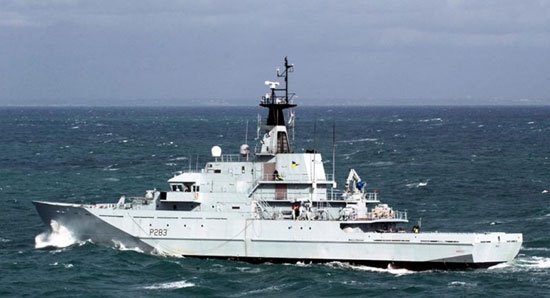
A River Class patrol vessel - ideal equipment for an EU NavyJustin Stares has come up with a good story in The Sunday Telegraph this morning, claiming that Brussels is drawing up a plan for an "EU navy".

This is the EU commission planning to set up a European coastguard, giving rise to fears of a back-door attempt to create an EU navy with its own powers to stop and search shipping.

According to Stares, the plan involves upgrading the European Maritime Safety Agency (EMSA) into a fully-fledged coastguard, and is "buried" in a document revising European Union (EU) transport policy that is due to be published next month.

Apparently, the commission is says that a European coastguard would help to enforce maritime legislation. It would have the authority to intercept shipping across all of Europe's traditional maritime borders, which could require that crews be armed - and raises questions of national sovereignty over coastal waters.

The issue was raised last week in Lloyd's List (for which Stares works), which accused the commission of attempting to build up a navy by stealth in a leading article. "The concept of a European coastguard has a federalist charm about it that causes eyes to brighten instantly among gatherings of Europhiles, tired of endless discussions about fish or agriculture," Lloyds List said. "In a way, it is a European navy, by the back door."

Oddly enough, we raised precisely this spectre way back in October 2004 when we retailed the comments of an official from commission’s enterprise DG, Ronal Vopel, declaring:

We've established the EU's right to define territorial waters for the purposes of ship pollution control, ship safety and fisheries policy. The next step is littoral security and that points to coastguard and naval issues.
Even then we were remarking that the eventual destination might be the creation of a EuroNavy, and we followed this up with a story December 2004, reporting that the fledgling European Maritime Safety Agency (EMSA) was to charter its own emergency oil spill vessels, covering most of Europe's sensitive coastline.

But, while the commission has been beavering away in the background, the most strident calls for an EU coastguard have in fact been coming from the member states themselves, as in last March, when EU justice commissioner Franco Frattini was calling for an EU coastguard service in the Mediterranean, "to fight human trafficking and rising numbers of illegal migrants".

Although Frattini is a member of the commission, he was speaking very much as an Italian politician, his agenda being to obtain EU financing to help towards the cost of policing Italian waters in order to control illegal immigration. And that agenda goes way way, with a report in January 2003 of the launch of an “EU fleet” to patrol the southern shores of Europe and head off the pirate flotillas that ship illegal immigrants from North Africa.

The scheme, called Operation Ulysses, involved five European nations, including Britain, which contributed a Customs cutter, Seeke, and was viewed as the first step towards a common EU border guard. The "fleet" was made up of vessels belonging to Spain's Guardia Civil, with Italy, France and Portugal also sending vessels.

One could now say that the issue is coming back onto the agenda, except that it has never been taken off it – just that no one has been taking any notice. Sure enough, though, it will disappear from the media after the brief attention from The Telegraph, representing yet another classic example of the slow, incremental progression of European integration.

In the fullness of time, we will be seeing armed patrol vessels sporting EU flags and the proto-EuroNavy will be there – by which time it will be too late to protest. In the meantime, of course, any suggestion that the EU is planning to create its own navy will be strenuously denied.

COMMENT THREAD

You wonder what they use for brains

Believe it or not but journalists in the MSM do actually get some training. And they are told the facts of life occasionally. But there are times when you wonder whether they just spend their time sleeping through the training.

Through the invaluable Little Green Footballs we find a story filed by Reuters about events at a Middle Eastern business conference, organized by the World Economic Forum at Sharm el-Sheikh.

It seems that at the press conference the “guest list raised questions”, according to the title of the piece. Questions from whom? Well, the assembled media, of course.

Did they want to know what ideas the 1,200 businessmen had about trying to develop the economies of the Middle East? Goodness me, no. Did they ask how Sharm el-Sheikh was surviving and whether it had overcome the blow it had experienced a couple of years ago of the massive terrorist explosion? Pshaw, such trivialities.

No, what the fourth estate’s finest wanted to know was why had the Forum not invited Iran, Syria and Hamas to the gathering. It apparently had not occurred to any of these people that terrorism is not considered to be legitimate business.

In any case

“Klaus Schwab, executive chairman of the World Economic Forum, said he did not want political tensions from any Iranian presence to overshadow the meeting”

Given Iran’s tendency to use every international gathering to promise the speedy destruction of Israel and an equally speedy jihad against all its enemies, which include numerous Middle Eastern countries as well as the West, it is probably sensible not to have them along. They can hardly contribute a huge amount to any discussion on economic development.

The CIA has estimated that for 2005 Iran’s per capita GDP was $8,100, despite as one correspondent on LGF put it, the country sitting on a sea of oil. Given what we know about levels of unemployment and the poverty in many of its regions, this does not sound inaccurate.

Syria, Mr Scwab implied, was invited or, at least, he did not precisely explain what happened there. It is, of course, possible that the organizers decided not to invite either of the biggest terror masters in the region.

What of Hamas? Well, it seems that Mahmoud Abbas, the leader of the Palestinian Authority is there, being the recipient of the invitation. Hamas did not have a separate one from the Palestinian Authority.

What precisely can Hamas, who is busy fighting a civil war with Fatah in Gaza, contribute to a discussion about economic and business matters? On past record, it is likely to be a long whine about how badly they are treated by the whole world, which is not handing over large sums of money for them to buy even more guns and explosives. President Abbas can do that for them.

COMMENT THREAD

Saturday, May 20, 2006

Week-end rumination

My colleague is away for a couple of days (back tomorrow evening), which means that some of our readers will ignore this blog till he returns. Which, in turn, means that I am free to ruminate and not post about toys at all.

Possibly predictably my thoughts return to the subject of my previous posting – the need for a set of British values – and the comments on it. I was intrigued to see that my insistence that learning one’s language, its grammar and punctuation was either ignored or greeted with some hostility.

Let me, quite unusually, tell a personal story. (No, it is still not about toys, though I do know what a tank looks like having seen them roll down streets as a wee child.)

On my family’s arrival to the UK (yes, sorry guys, we did come in and ask for political asylum but then, I expect, many of our readers’ ancestors did as well) I was sent to the local grammar school. It was a very ordinary grammar school in north-west London and the parents of most of my class-mates had not been educated beyond the age of 14.

So, the fact that they had passed the 11-plus (I admit that one can argue about that particular exam) and were receiving a first class education, most of them heading towards some kind of college or university, did not mean that they were rich. Quite the contrary.

I am making this point because in his latest pronouncement, David Cameron, the Boy-King of the Conservative Party, proclaimed himself and his party to be against any kind of choice and selection in education as that would benefit only the rich. No-one seems to have told him that the system as it exists, with complete control by the state either centrally or through local government, benefits nobody but those who can afford to opt out. But I digress.

For some reason, my grammar school had a hang-over from a previous system, whereby at the end of the third year we all took a set of Lower School Certificate exams. They made no difference, except maybe to one or two people, but gave an indication.

At the end of the exams, the top results were as follows: first came a girl whose parents were refugees (or, possibly, economic migrants) from Cyprus and could barely speak English. (All three children went to good universities.) Second came a boy from an Indian family, who were also first generation immigrants. I came third.

What astonished me even then was the reaction of at least one of my classmates’ parents. She went home and told them about the results, making the point that the three top places were taken by people whose native language was not English, who were, in short, foreigners. She was then told by her father that naturally, they would come top, precisely because they were foreigners. She repeated this piece of wisdom to me, clearly agreeing with it, and using it to warn me against too much swank.

In some ways, I suppose, attitudes have remained the same. We (times have changed and I am no longer a foreigner, except maybe to one or two of our readers) still accept it as given that foreign students will know our language better than those educated here.

The fact, that there are differences in English usage around the world, each with its own set of rules, is used as a good argument for not learning our own rules. It is sad. The English language is, let me repeat, one of the great treasures of world culture. Its literature, which is read more and more attentively in other countries, is possibly the richest in the world.

By sheer coincidence, the Wall Street Journal, which runs a Saturday series of “five of the best” today listed the five “top books” on the history of the English language, as perceived by David Crystal, himself a prolific writer on the subject.

Of course, one can argue about his choice and any other choice. But there can be no real argument in my own mind about the excellence of two of the books he mentions: “The Oxford English Dictionary” and “Roget’s Thesaurus”. I inherited several versions of the first from my father, who used his incessantly, and my mother, herself a lexicographer; and the Thesaurus, also inherited, is, alas, falling apart from over-use.

I should, however, add another book to that list, without which life is immeasurably duller: Partridge’s “Dictionary of Slang and Unconventional Language”. Oh yes, there is Fowler’s “Modern English Usage” – incredibly useful in settling ferocious debates. And for all matters American, Webster’s Dictionary. There I shall stop and not even mention the various dictionaries of quotations as they are not really about the history of the language. How's that for self-control?
The £15 million heist

Give me the money!  Spot the difference between this robber and the governmentA robbery of mega-million magnitude is normally big news – but not, it seems, if the perpetrators are the government… and the victims are immigrants.

We have heard a great deal of late about illegal immigrants and the failure of the Home Office to deport foreign criminals, but very little is written about that band of legal immigrants, who have made their applications, gone through all the hoops and are here perfectly legitimately, making valuable contributions to the British economy.

But, for want of dealing with the illegals, it is these people that the Home Office is shafting, to the tune of £15 million.

The people affected are those from outside the EEA and include those who have been granted work permits on the "Highly Skilled Migrant Programme". They entered this country through stringent, merit-based immigration schemes and, as part of the schemes, the government undertook that, after four years of continuous contribution to the Exchequer, and not seeking any public funds or benefits, we would be entitled to apply for "Indefinite Leave to Remain" (ILR).

On the 3rd of April 2006, however, the Home Office arbitrarily changed the rules, extending the qualifying period for ILR status from four to five years, not only for new entrants to the schemes, but to existing permit and visa holders.

Thus, the people already in the country, making an active contribution to the economy – many of them in skilled occupations, where there are acknowledged shortages of skills – are finding themselves in the position of having their existing visas and permits running out before they are entitled, under the new rules, to apply for ILR.

And here lies the heist. With no option but to continue with the extra year, the Home Office is demanding one year visa and work permit extensions, at respectively £335 and £153, the total coming to just over £15 million.

According to the Home Office announcement, this change is to “bring our practice for the qualifying period required in line with the European norm”, which means that and administrative diktat is being applied retrospectively to people who can't fight back.

In an attempt to draw attention to this manifest injustice, a group of these immigrants have set up their own website and are attempting to mobilise MPs to support them – with little effect to date.

Clearly, these people have missed the point. If they had turned up without papers and demanded asylum, they could have lived off benefits without a care in the world. But their biggest mistake was to trust this government, so putting their fates in the hands of a gang of thieves.

COMMENT THREAD

Of rumours dark and devious

Matthew Parris in The Times today argues that the Boy King and his pals, far from sliding towards the centre in all things, have in matters of foreign and defence policy shifted the opposition to the right.

He thus asserts that we could be just a few years from a Cabinet in which the prime minister, the foreign and defence secretaries and the chancellor are to the right of Margaret Thatcher in their view of Britain's place in the world, in what he calls a "Europe-hating and Pentagon-loving party".

Parris cites a number of speeches and events to support his thesis, which are worth having a look at. For myself, I am not at all convinced. We are all too old and wise to rely on hints, innuendo and reading the runes. When you are dealing with politicians, and especially Tory leaders, you watch their hands, not their lips. And their hands are not reaching across the Atlantic.

That said, The Scotsman is retailing a Reuters report that tells us the Conservative Party has ignored a last-ditch attempt to put off their exit from the EPP, and are ready to form a new political grouping in the EU parliament. According to a "senior party source", the deal is all but done, even if the final move may have to wait until after the summer, for administration reasons.

The Conservative Home site chews over the details, which leave the editor less than impressed. "The Tory leader must not think delivery on the EPP pledge will satisfy the demands of Britain's Eurosceptic majority," he writes. "In itself it will do nothing to restore powers to Britain. 87 percent of Tory members want the European Union to return responsibility for fishing and aid policies to member states and, in good time, Mr Cameron's new grouping must lead calls for such repatriations of power."

That, rather than the vapourings picked up by Matthew Parris, will be acid test and there is no sign at all that the Boy is prepared to take it on board.

There are, however, some dark rumours which if true, could change the political dynamics. According to one "highly placed source", the current leader of the UKIP MEP group, Nigel Farage, is to make a bid for leadership of the party, whence he and a small-group of like-minded MEPs intend to defect to the Tories.

This would not be the first time Farage has considered defection and now – as then – his problem could be that the Tories themselves would not entertain the switch. But, should details of any deal – even if not fulfilled – become officially known, they could have considerable ramifications for both parties. For the moment though, we are dealing with rumours – about as firm as the idea that Cameron is a Eurosceptic.

COMMENT THREAD

Friday, May 19, 2006

Guns but no butter

Great excitement in the European Parliament on Tuesday when Mahmoud Abbas, otherwise known as Abu Mazen addressed that august assembly, they having nothing much to do at the time, and explained that there was one Palestinian politician around who was ready to negotiate with Israel.

That politician was himself and it is true that he did signal before the last set of elections that the notion of acknowledging Israel’s right to exist and the creation of two states in Palestine were things he could live with. Unfortunately, this did not extend to anything like a control of the various terrorists. Instead, he spent almost all the money the Palestinian Authority received from the World Bank and other organizations on employing more and more people to work for the authority and to join various militias, not forgetting money for the families of members of the Al-Aqsa Martyrs’ Brigade who had suicided, successfully or unsuccessfully, themselves.

Still, Mr Abbas is viewed as a moderate in Palestinian politics and was greeted rapturously in the Toy Parliament, whose members seem to be uncharacteristically modest and silent on the subject of the effective civil war that is going on in Gaza. Usually, those overpaid bozos in Brussels/Strasbourg pass resolutions and demands at the drop of a hat.

The Parliament President Josep Borrell flattered the man mercilessly and, inevitably, touched on the subject of the impoverished Palestinian Authority that is creating a humanitarian crisis in Gaza and the West Bank:
“The EP President said Europe fully respected the results of January's legislative elections, even though these had caused serious concerns in the international community. "That community is starting to realise the dangers of cutting off aid. The Quartet meeting this week gave the EU responsibility for finding a mechanism for aid to the territories at least to keep public services running." He noted that the Euro-Mediterranean Parliamentary Assembly had warned of the chaos that could result if aid was cut off. The EU, he said, was the only body capable of talking to all parties at the same time. He told Mr Abbas: "You are the umbilical cord linking to the path of peace."”
I guess President Borrell is too busy to read the reports his researchers must have given him (mustn’t they?) about what is going on in Gaza, where Hamas, the leaders of that impoverished Palestinian Authority, have just put on the streets yet another 3,000 strong militia, complete with first-class guns and ammunition.

Little Green Footballs reports that
“The Palestinian Authority is asking a federal judge to reconsider an order to pay nearly $200,000 to the estate of a couple killed in Israel in a terrorist attack, saying the PLO Mission here will have to close if the money is turned over.”
The heading of the piece “Don’t Whine For Me, Abu Mazen” implies a certain amount of scepticism about pleas of poverty.

There is a link to another blog that sums up the story of the new militia, the existing militias and the “shocking and astonishing” revelation that the late unlamented Chairman Arafat had spent large amounts of aid money on arming terrorist groups. Whatever his wife did not secrete in Paris, one assumes. Well, of course, none of us knew this. Goodness me, no.

Nothing much changes, it seems. As the Hedgehog Blog puts it: “Millions for Kalashnikovs Not a Penny for Economic Development”. And not just Kalashnikovs but many other kinds of guns, ammunition, rockets and explosives. Somehow, despite the humanitarian crisis being created by the wicked West not giving bucketfuls of money directly to the Palestinian Authority, there is never any shortage of it for the arming of the various militias.

COMMENT THREAD